

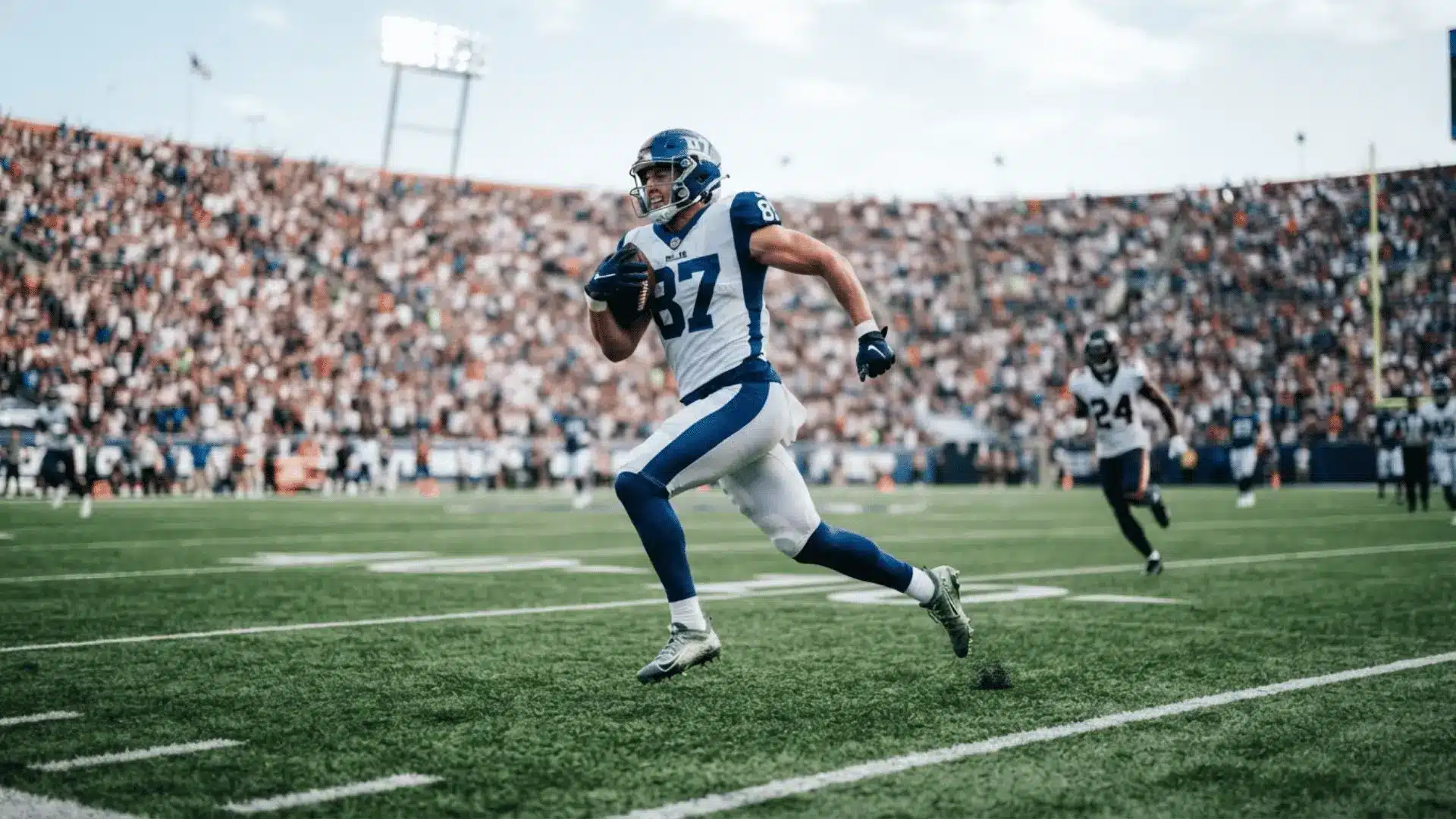

I still remember the first time I saw a tight end blow past a linebacker like he wasn’t even there. That’s the seam route in action, and once you know how to spot it, you’ll never watch football the same way again.
This article breaks down exactly what makes this play so hard to stop. You’ll learn where it fits in an offense, how quarterbacks read the defense before throwing it, and why linebackers and safeties often get caught flat-footed.
I’ll also show you the routes that pair well with it and the small errors that shut it down. By the time you finish reading, you’ll be able to call out this route before the ball is even snapped.
If you’re a player, a coach, or just someone who loves the game, this one’s worth understanding.
What is a Seam Route in Football?
A seam route is a vertical pass pattern run straight up the interior seams of a defense. The seams are the imaginary lines running down the field along the left and right hash marks, separating the outside boundary coverages from the deep middle coverages.
Unlike a standard streak route on the outside, the seam route is typically run by an inside receiver such as a slot receiver or a tight end.
The objective is to stretch the deep zone coverage vertically, forcing linebackers and safeties to defend open grass in the middle of the field.
Seam Route vs. Go Route vs. Fade Route
These three routes look similar at first glance, but each one attacks the defense differently. Knowing the difference helps you read the play before it even develops.
| Feature | Seam Route | Go Route | Fade Route |
|---|---|---|---|
| Path | Runs straight up the field through the middle seam of the defense | Runs straight up the sideline at full speed | Angles toward the sideline near the goal line or boundary |
| Typical Runner | Tight ends and slot receivers | Outside wide receivers | Outside wide receivers |
| Best Against | Zone coverage, especially between the linebackers and safeties | Man coverage with no safety help deep | Press coverage near the end zone |
| Throw Timing | Quick read once the receiver clears the linebackers | Deep ball thrown in stride | High, arcing throw placed toward the sideline |
| Common Use | Attacking the soft spot in a zone defense | Stretching the field vertically | Scoring near the goal line |
| Risk Level | Moderate, since it can be jumped by a safety | High, since it requires accurate deep timing | Moderate, since it depends on precise ball placement |
Best Coverages to Attack With a Seam Route
A seam route works best against defenses that leave gaps in the middle of the field. Zone coverages are the main target because they ask linebackers and safeties to cover space instead of a specific player.
Once you know which zones struggle to close that space, you can predict when this route will hit. Here are the coverages where a seam route tends to succeed:
- Cover 2: The safeties split the field in half, leaving a gap in the middle that the seam route exploits before either safety can close it.
- Cover 3: Three deep defenders spread across the field, which often leaves the seam open between the middle and outside thirds.
- Tampa 2: A linebacker drops into the middle zone, but if he’s too slow getting depth, the seam route runs right past him.
Man coverage is tougher to beat with this route since a defender runs step for step with the receiver. That’s why offenses call it mostly against zone looks, where empty space matters more than pure speed.
How to Run a Seam Route: Step-by-Step
Running a seam route looks simple, but small details make the difference between a big gain and a broken play. Here’s how to run it the right way from snap to catch.
1. Line Up in the Right Spot
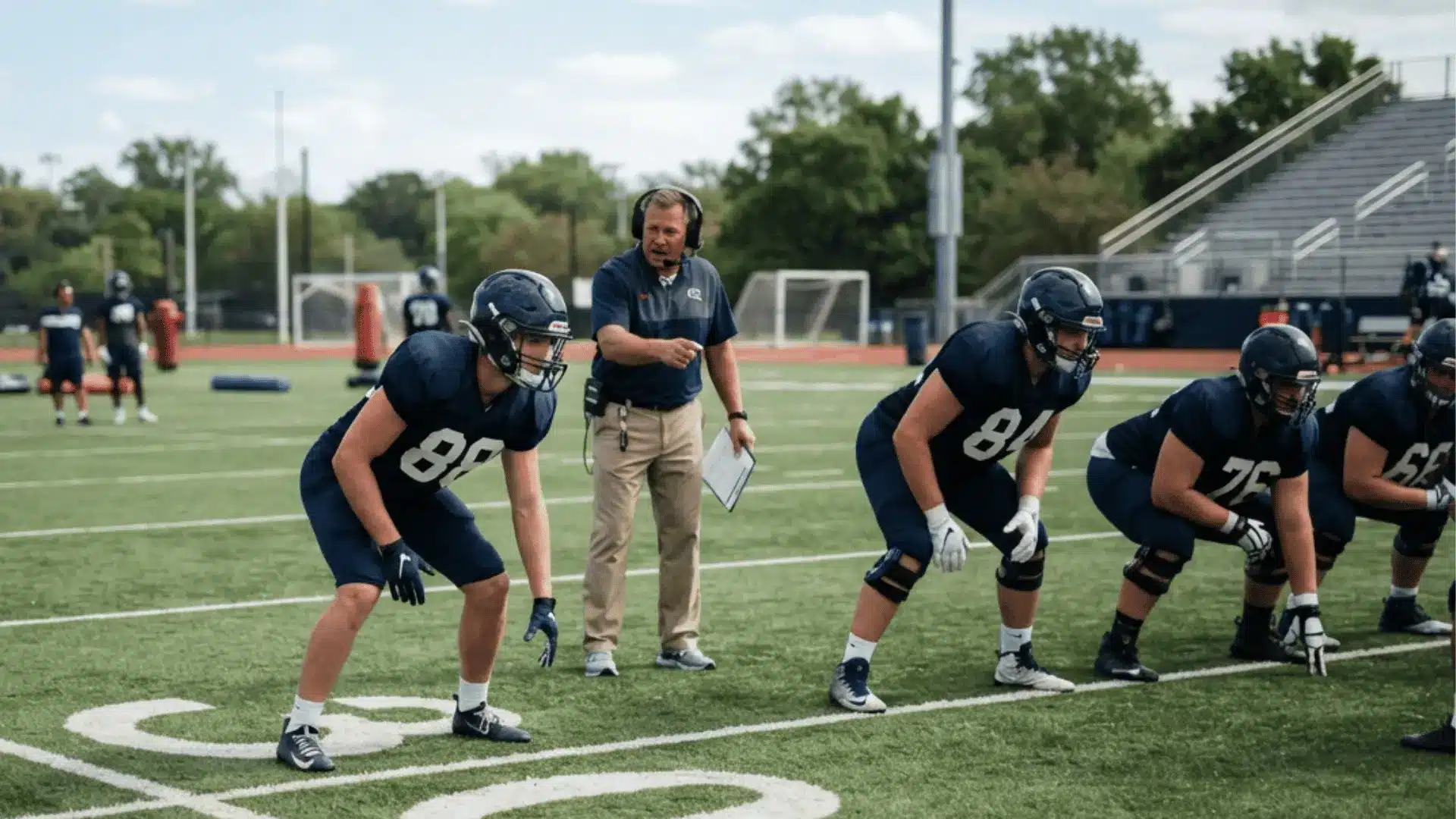
Before the snap, you need to line up between the numbers on the field, neither too wide nor too far inside. This spot is what gives the seam route its name.
Tight ends usually line up close to the tackle, while slot receivers set up a few yards off the line. Getting this alignment right sets up your path down the field and keeps you clear of outside defenders early in the route.
2. Read the Defender Before the Snap
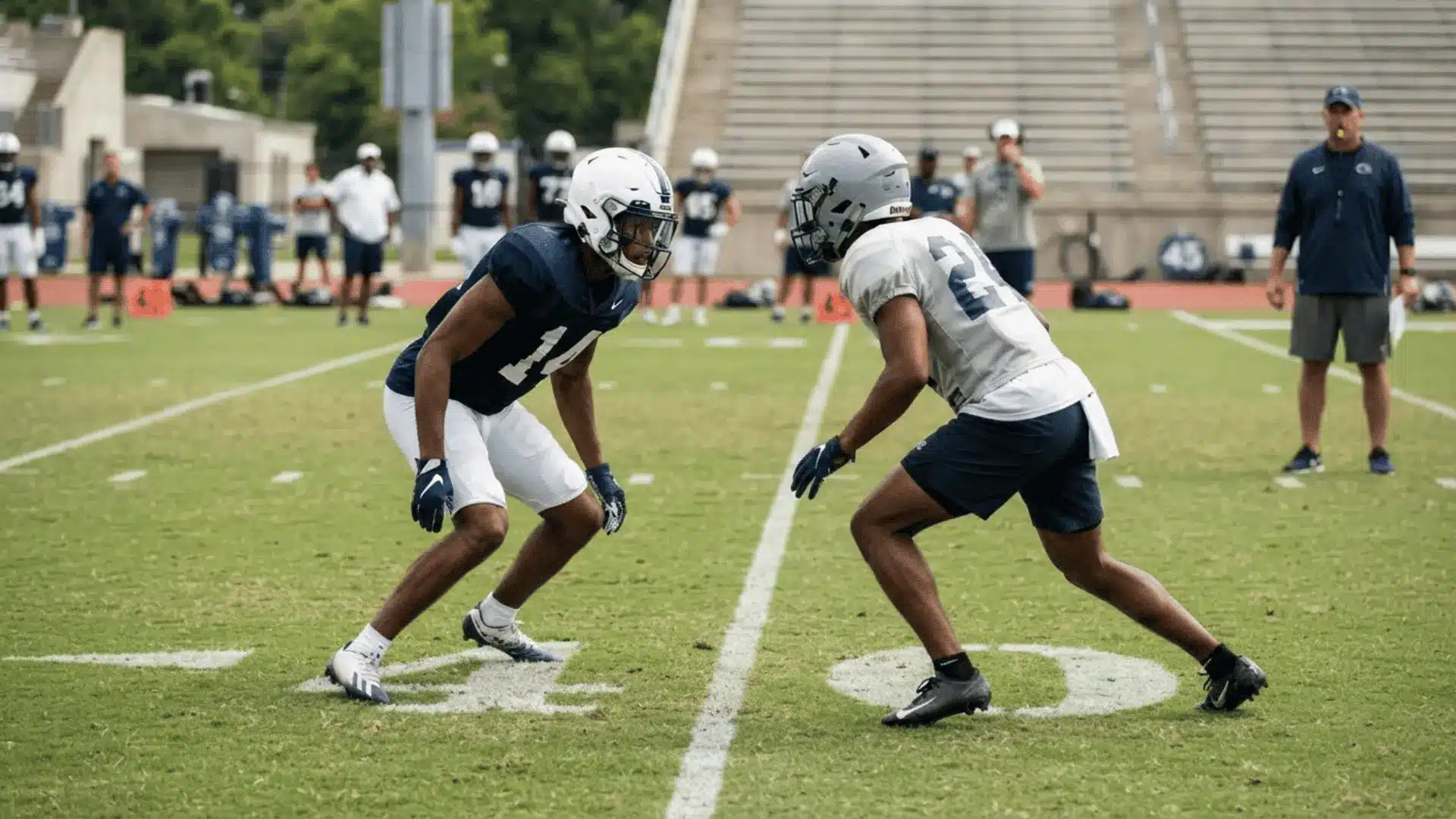
Before you move, take a quick look at how the defender in front of you is lined up. If he’s shading toward one side, you’ll want to plan your release the other way.
I always tell young receivers to check leverage first, since it tells you where the open space will be. This small habit helps you get a clean release rather than running straight into contact at the line.
3. Use a Quick Move to Create Space
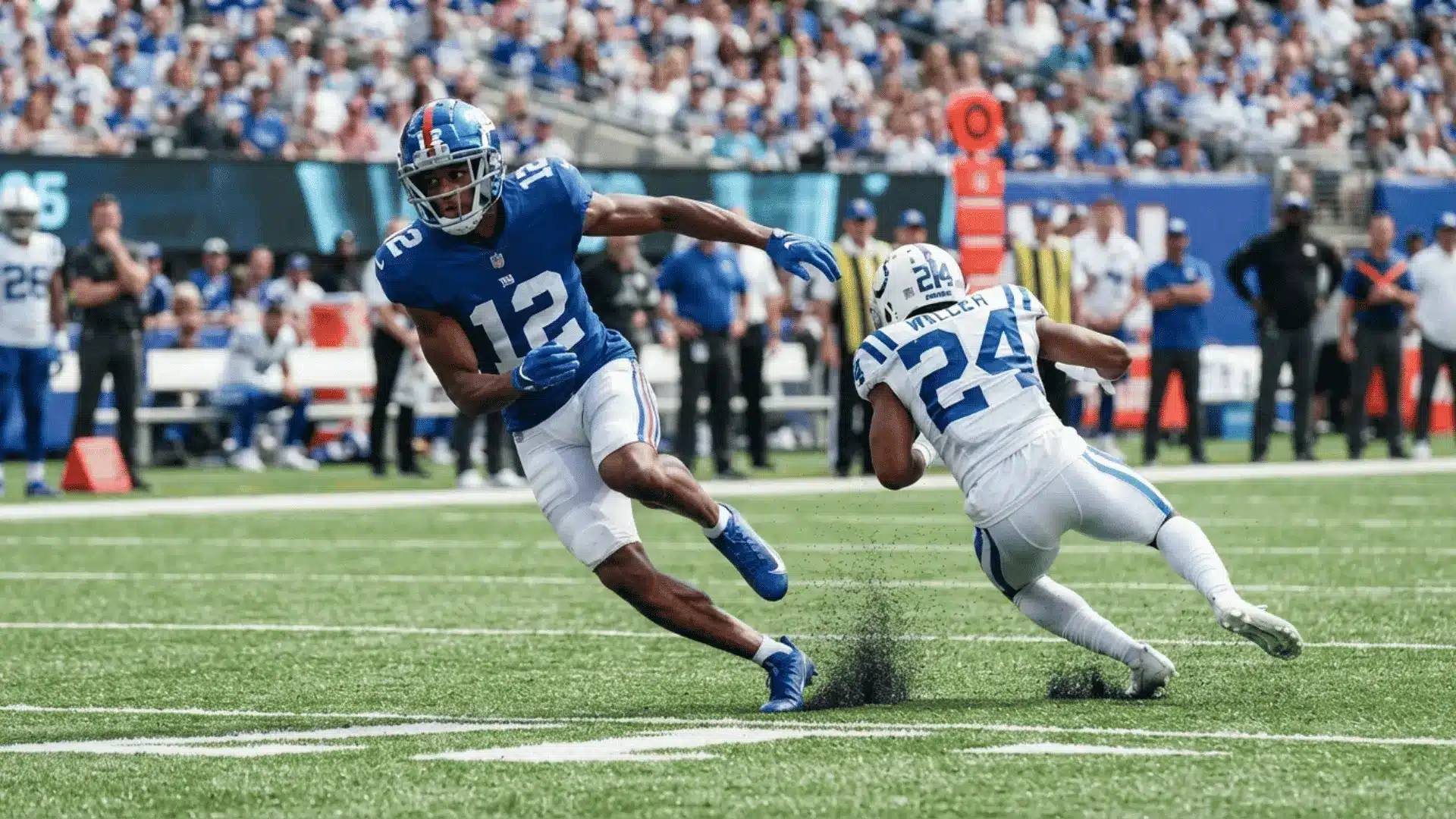
Right at the snap, use a fast juke or head fake to get the defender off balance. This move doesn’t need to be fancy. A simple shoulder dip or quick step works fine.
The goal is to gain half a step before you turn upfield. I saw a high school tight end use this move to beat a linebacker clean off the line, and it turned into a 40-yard gain. Speed matters less here than timing.
4. Sprint Straight Down the Field
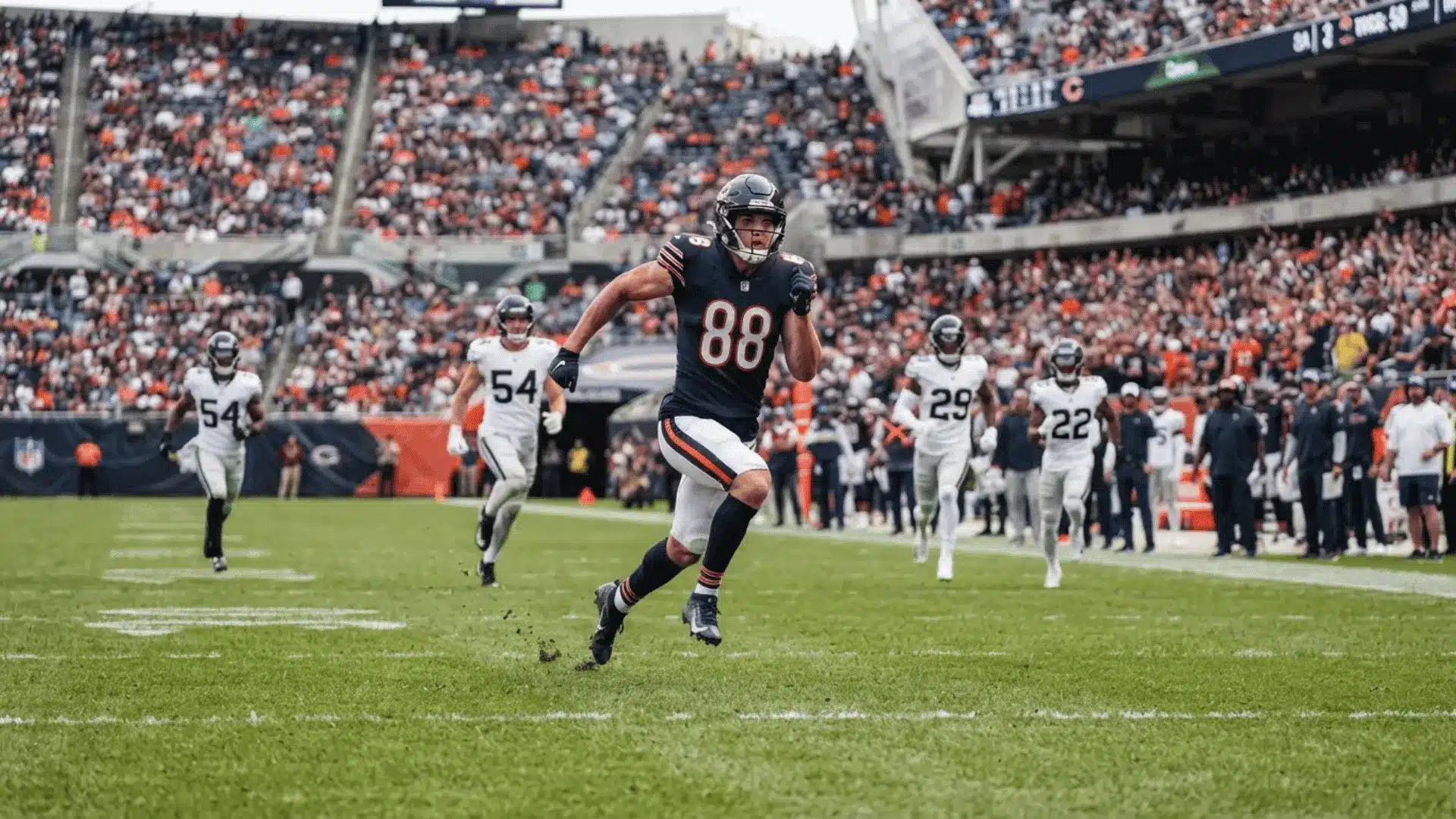
Once you clear the line, run straight down the field as fast as you can. This part of the seam route stays simple since it’s built like a go route through the middle.
Keep your arms pumping and your eyes forward until you’re deep enough to check for the ball. Running in a straight line also keeps you inside the seam, which protects you from safeties closing in from either side.
5. Adjust Your Angle Based on Coverage
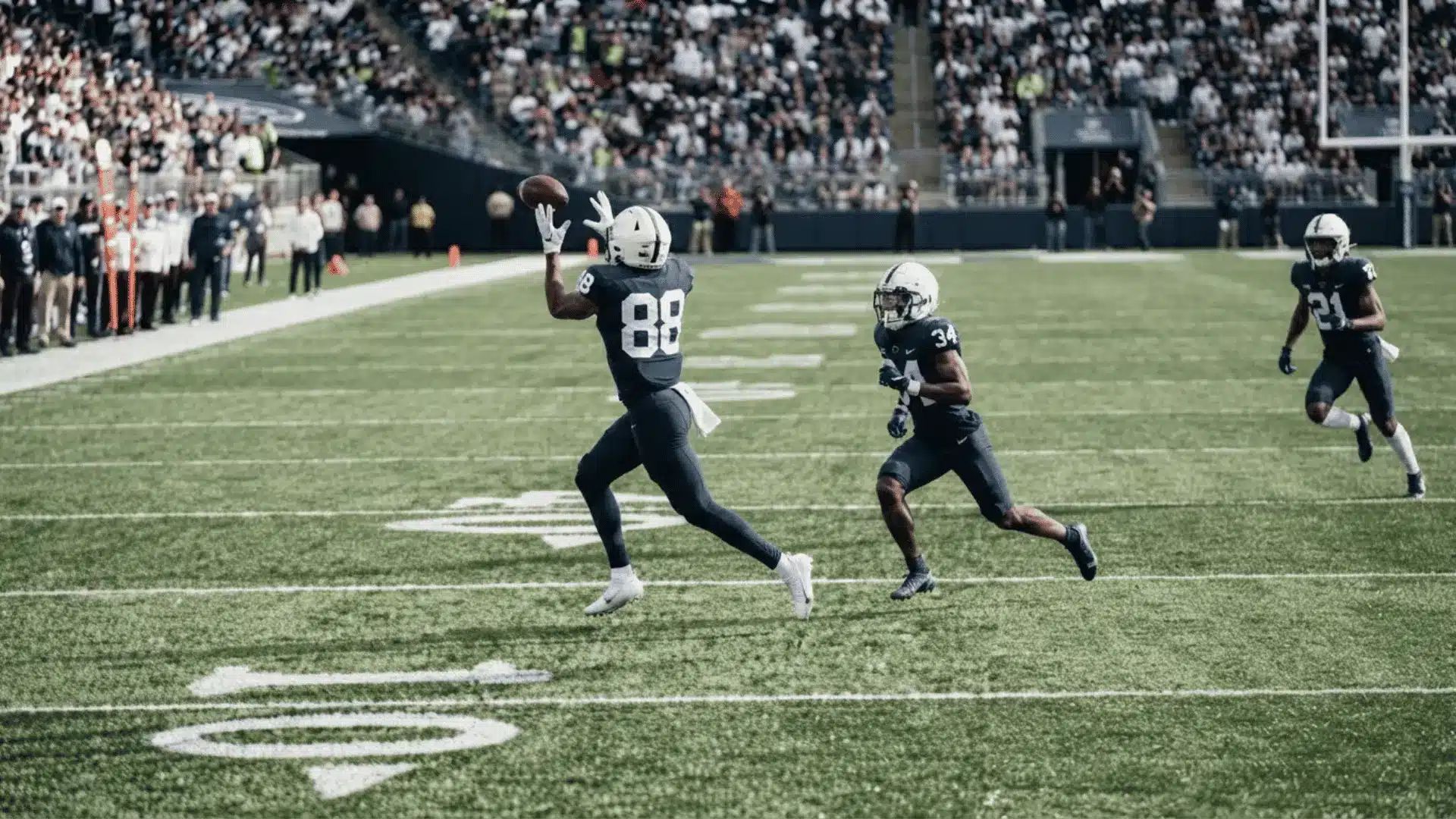
As you run, watch how the safeties react. If one safety starts sliding toward you, angle slightly away from him to stay in open space. If both safeties hang back in a two-deep shell, you can run a truer, straighter path.
This small adjustment keeps the quarterback’s throwing window open. Related routes like the post or bender use similar angle adjustments, so learning this skill helps beyond just the seam.
6. Look Back for The Ball at the Right Time
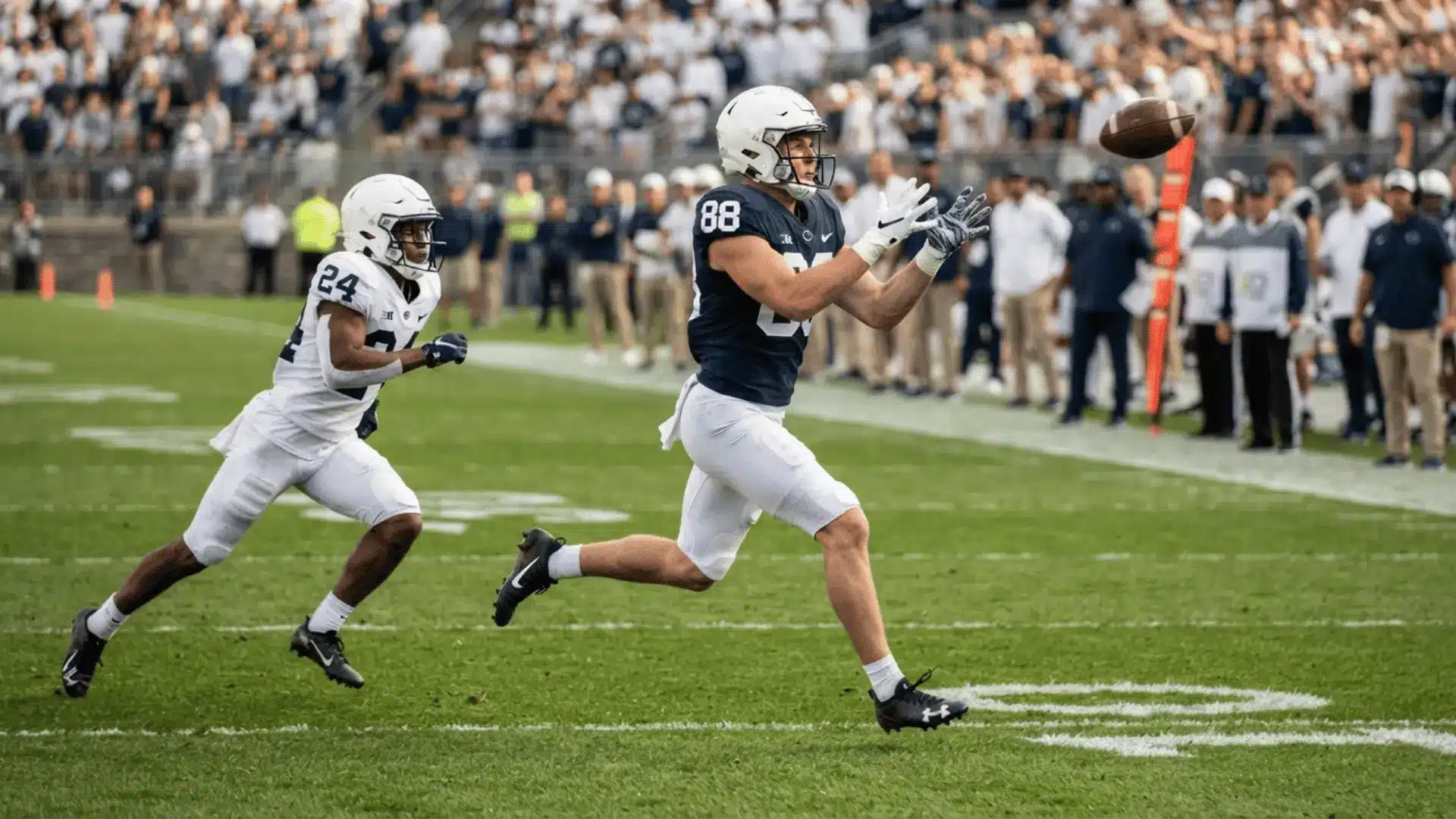
Don’t turn your head too early. Wait until you’re about ten yards downfield before looking back for the pass. Turning too soon can slow your speed and give the defender a chance to catch up.
My old coach used to say the ball will find you if your eyes stay patient. Once you spot it, adjust your hands and body to the flight of the throw and finish the catch strong.
Best Formations for Calling a Seam Route
To maximize the seam route, use formations that spread the defense horizontally, creating wider interior lanes.
- Spread (2×2): Placing two receivers on each side clears out the middle of the field and puts both slot receivers in a prime position to attack the seams simultaneously.
- Trips (3×1): Three receivers on one side create a numerical advantage. Running the #2 or #3 receiver on a seam forces inside linebackers to drop deeper than they’d like.
- Empty (3×2): With no running backs in the backfield, five vertical receiving options spread the secondary thin, creating immediate vertical lanes for interior targets.
When Not to Call a Seam Route
A seam route is not the best call when the middle of the field is crowded, or the quarterback does not have enough time to wait for the route to open.
Avoid it if a safety is sitting deep over the seam, the linebacker is dropping quickly, or the receiver cannot win inside leverage. It can also be risky near heavy traffic because late throws over the middle can lead to interceptions.
In flag football, do not force a seam route if defenders are packed inside. Use a flat, drag, curl, or quick out instead when the safer throw is available.
Best Route Combos to Pair With a Seam Route
A seam route works best when nearby routes force defenders to choose between deep middle space and short passing lanes.
These route combos help quarterbacks make faster reads and give coaches simple ways to attack common coverages.
| Route Combo | Best Against | Use |
|---|---|---|
| Seam Route + Flat Route | Cover 2 and soft zone | Use the seam route to pull the defender deep and hit the flat if he drops. |
| Seam Route + Drag Route | Man coverage and zone coverage | Pair a seam route with a drag to stretch defenders vertically and horizontally. |
| Seam Route + Go Route | Single-high safety looks | Run the seam route inside while the go route holds the outside defender deep. |
| Seam Route + Dig Route | Middle-field zone defense | Let the seam route clear space so the dig route can open behind linebackers. |
| Seam Route + Curl Route | Soft coverage | Push the seam route deep and use the curl as a safe underneath answer. |
| Double Seam Routes | Cover 2 and 4-wide looks | Send two seam routes inside to stress both safeties and open one vertical lane. |
| Seam Route + Corner Route | Two-high safety coverage | Use the seam route to hold the safety while the corner route breaks away. |
| Seam Route + Post Route | One-high safety coverage | Force the safety to pick between the seam route and the post over the middle. |
Quarterback Reads and Throw Timing
A quarterback should read the safety and linebacker before throwing a seam route. Before the snap, the QB should check if the defense has one deep safety or two deep safeties.
After the snap, the main read is the linebacker or seam defender in the middle. If that defender stays low, the quarterback can throw the seam route into the open window behind him.
If the defender drops deep, the QB should move to the underneath option. Timing matters because the seam route closes fast once the safety reacts.
The best throw usually comes just after the receiver clears linebacker depth and before the safety can close over the top.
How to Use Seam Routes in Flag Football
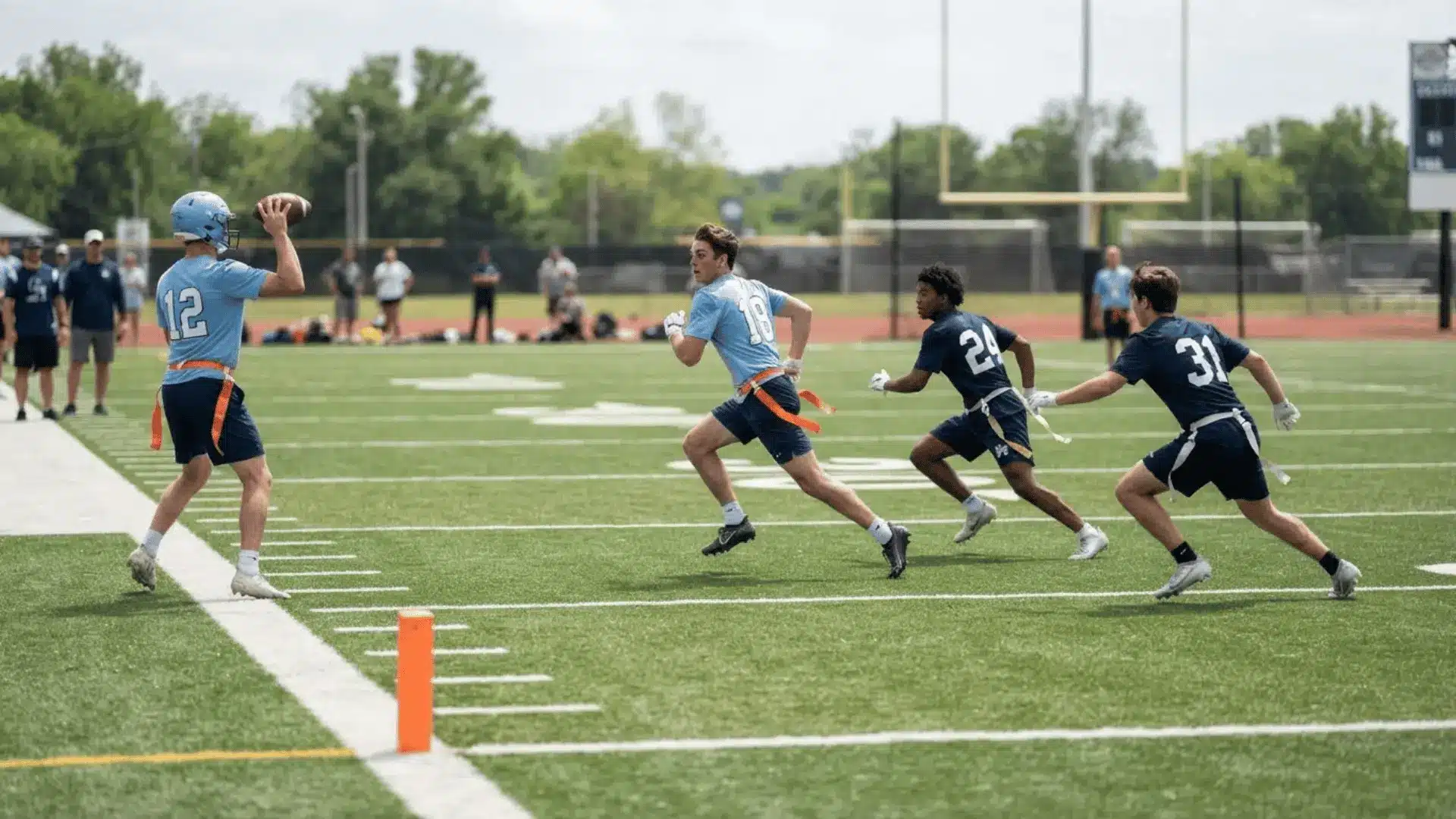
Flag football has fewer players and lighter contact, which changes how this play works compared to tackle football. Here’s what to adjust to keep it creating the same open-field advantage.
- No Blocking Changes Timing: Since flag football doesn’t allow blocking, the seam route relies more on quick reads and fast releases instead of protection from linemen.
- Smaller Field Width: Most flag football fields are narrower, so the seam route often runs closer to the center, giving the receiver less room to angle away from defenders.
- Fewer Defenders To Beat: With smaller rosters, there are usually one or two defenders covering the middle, making it easier for a fast receiver to find open space.
- Flag Pulling Affects Speed: Since the play ends when a flag is pulled rather than on a tackle, receivers running this route should stay balanced and avoid slowing down early, as defenders can end the play with a quick pull from behind.
- Shorter Route Depth Works Better: Full-length seam routes can be harder to complete in flag football because of shorter fields, so many teams shorten the route to 15 or 20 yards rather than a full sprint downfield.
- Quarterback Timing Is Key: Since there’s no pass rush pressure from linemen, quarterbacks have more time to read the field, making it easier to time throws to a receiver running the seam route.
- Good For Extra-Point Plays: Many flag football teams use a quick seam route near the goal line because it forces defenders to choose between covering the middle and the sideline.
How Coaches Use the Seam Route in a Passing Attack
Coaches use the seam route to attack the space between linebackers and safeties. It is a strong passing concept because it forces middle defenders to make a fast choice.
If the linebacker stays low, the quarterback can throw the seam route behind him. If the safety moves toward the seam, another route may open outside or underneath.
A seam route also works well with flat, drag, curl, and go routes because it stretches the defense at different levels. In flag football, coaches often use it from slot, trips, or 4-wide formations to create a clean inside passing lane.
Seam Route Practice Drills
Seam route drills should help the receiver run a clean inside vertical path and help the quarterback throw on time before the safety closes the window.
- Release Drill: Have the receiver start from the slot, use one quick move, and get vertical without drifting wide.
- Linebacker Clearance Drill: Place a coach or cone at linebacker depth and teach the receiver to look for the ball after clearing that spot.
- QB Timing Drill: The quarterback should throw as the receiver enters the open seam window, not after he is already covered.
- Safety Read Drill: Use one deep safety so the quarterback can practice choosing when to throw the seam route or move to another option.
- Double Seam Drill: Run two inside receivers up the seams from a 4-wide set to teach spacing and timing.
- Flag Football Spacing Drill: Keep Receivers in Separate Lanes so The Seam Route Does Not Crowd the Flat, Drag, or Crossing Route.
Common Seam Route Mistakes
Small errors can turn a clean middle-field concept into a covered or risky throw.
This table gives coaches quick fixes to make each seam route sharper, safer, and easier for the quarterback to read.
| Common Mistake | Why It Hurts the Play | One-Line Coaching Fix |
|---|---|---|
| Receiver Drifts Too Wide | The seam route loses its inside lane and crowds the outside receiver. | Keep the receiver vertical through the hash or inside the field landmark. |
| Receiver Looks Back Too Early | The route slows down before the open window appears. | Teach the receiver to clear linebacker depth before finding the ball. |
| Quarterback Throws Too Late | The safety has time to close on the seam route. | Throw as the receiver enters the window, not after he is fully open. |
| No Underneath Route Built In | Defenders can drop deep without being punished short. | Pair the seam route with a flat, drag, curl, or checkdown option. |
| Poor Spacing From Other Routes | Receivers bring extra defenders into the seam window. | Keep each route in a clear lane so the quarterback sees open grass. |
| Forcing the Throw Into Safety Help | The seam route becomes a high-risk middle-field pass. | Move to the next read when the safety sits over the top. |
| Slow Release From the Slot | The defender disrupts timing before the route develops. | Use one quick move and get vertical without extra steps. |
Final Thoughts
A seam route looks simple, but the details decide whether it becomes a big play or a risky throw.
When the receiver gets vertical, maintains clean spacing, and clears the linebacker depth, the quarterback has a strong chance to attack the middle of the field.
For coaches, the real value comes from pairing the route with smart answers like flats, drags, curls, and double seams. That gives the offense options instead of forcing one throw.
In flag football, the seam route can be even more useful because timing, space, and quick reads matter so much. Try it in practice, test it in different formations, and see which version best fits your players on game day this season.
Have you used a seam route successfully? Share your experience in the comments below.
Frequently Asked Questions
Who Usually Runs a Seam Route?
Tight ends, slot wide receivers, or running backs out of the backfield typically run seam routes because they line up inside and have a direct path to the hashes.
Can You Run a Seam Route Against Man-To-Man Coverage?
Yes. If an inside receiver has a speed advantage over a trailing linebacker or safety, a seam route turns into a footrace that favors the offense.
What is the Difference Between a Seam and a Post Route?
A seam route stays linear up the hash marks without crossing the middle of the field. A post route breaks inside at an angle toward the goalposts.