



Football defenses can look confusing until you understand what each coverage is trying to stop. One scheme that often creates questions is the Cover 5 defense.
You may hear analysts mention it during NFL or college games without fully explaining what happens after the snap. Although the name sounds complicated, the idea is simple.
The defense keeps two safeties deep while the remaining defenders protect receivers underneath using man or match principles. This helps limit explosive passing plays while forcing quarterbacks to make difficult throws.
Once you understand the responsibilities of each defender, spotting Cover 5 during a game becomes much easier. The first step is understanding exactly what coaches mean when they call Cover 5 because the terminology is not always identical across football programs.
What is Cover 5 Defense?
Cover 5 defense belongs to the family of two-high safety coverages. In many coaching systems, it is another name for two-man under, although some teams teach slight variations using match principles.
The coverage places two safeties over the top while five defenders handle underneath responsibilities.
Depending on the defensive system, those underneath defenders may follow receivers directly or match routes after reading the offense.
Because coaching language differs from team to team, you may hear different explanations. The overall goal, however, stays the same. The defense wants to stop deep passes while making short throws difficult.
Understanding that basic structure makes it easier to follow each defender’s assignment before learning how everyone works together after the snap.
How does Cover 5 Defense Work?
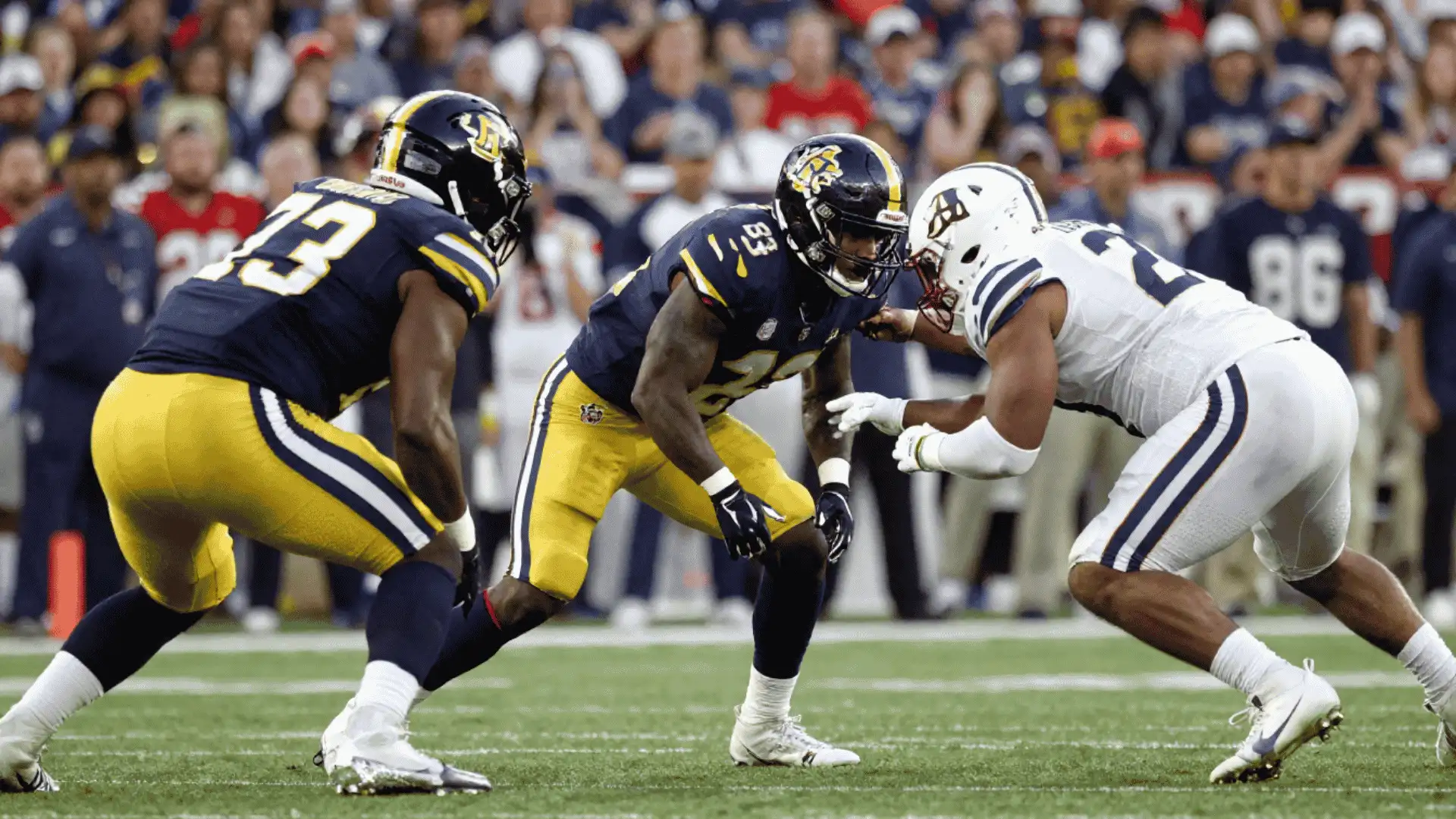
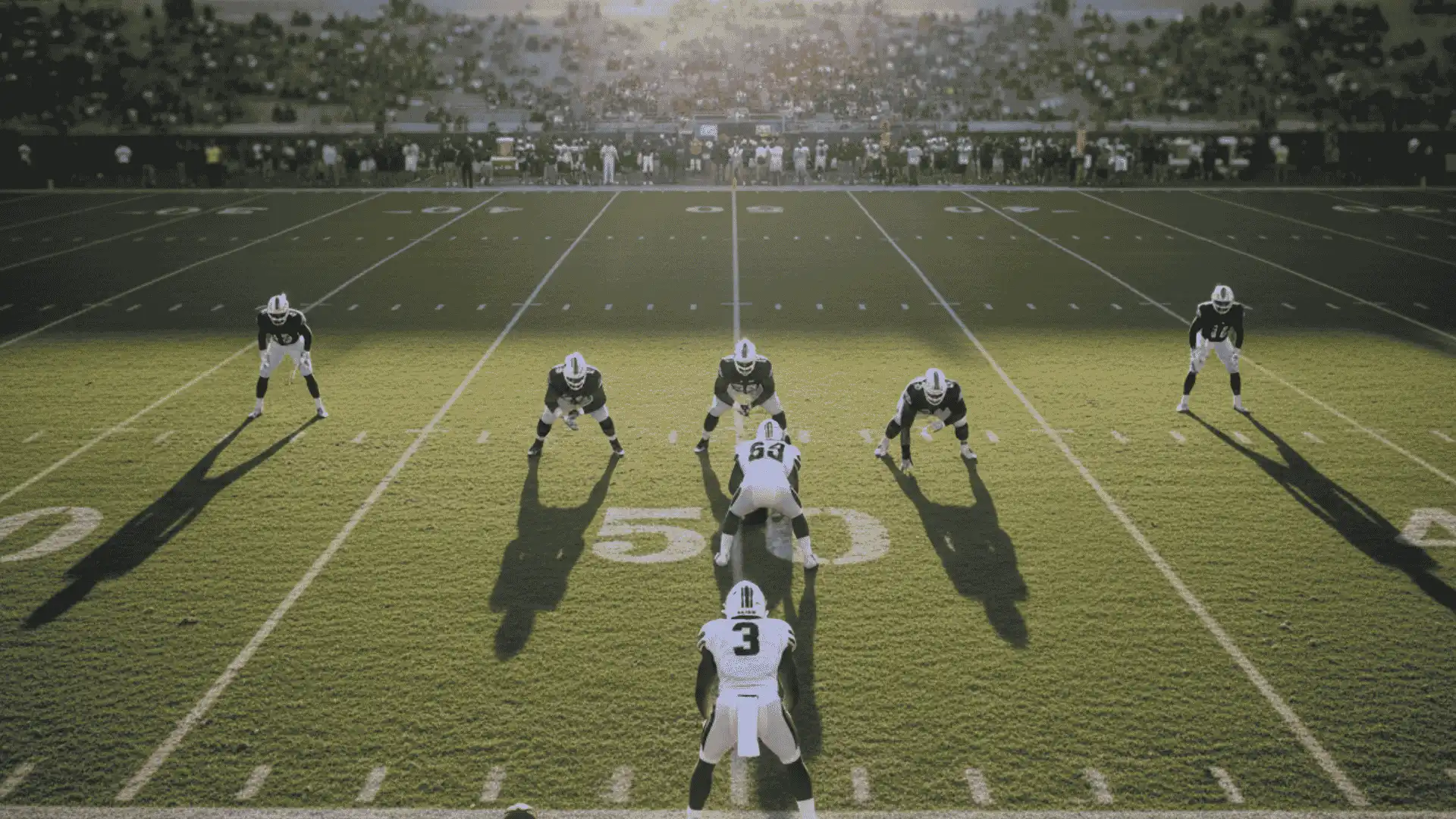
Before the ball is snapped, defenses often show a two-high safety look. Both safeties line up deep, making it difficult for the quarterback to predict the coverage.
After the snap, the two safeties split the deep field into halves. Cornerbacks, linebackers, and the nickel defender usually match receivers underneath instead of guarding empty areas.
This combination allows the defense to stay aggressive underneath without giving up easy vertical throws. Quarterbacks must hold the football longer while receivers fight through tighter coverage.
Recognizing each player’s role helps explain why this coverage remains popular against modern passing offenses.
Player Responsibilities
Each defender has a clear role in limiting open passing lanes and forcing the quarterback to make accurate throws.
- Safeties: Protect the two deep halves and prevent long completions over the top.
- Cornerbacks: Cover outside receivers and challenge routes near the sidelines.
- Linebackers: Defend underneath routes, including short crosses, hooks, and checkdowns.
- Nickel Defender: Covers the slot receiver and supports against inside passing routes.
- Entire Defense: Works together to reduce passing windows and remove easy completions.
Understanding these responsibilities helps explain why some offenses struggle to create open receivers against Cover 5.
Strengths and Weaknesses of Cover 5 Defense
Cover 5 can limit explosive passes, tighten throwing windows, and support the pass rush.
However, its effectiveness depends on disciplined coverage, strong communication, and defenders who can handle quick routes, traffic, and extended assignments
| Strengths | Weaknesses |
|---|---|
| Two deep safeties protect against long throws and make vertical routes harder to complete. | Defenders may need to stay with receivers longer, increasing the risk of lost leverage. |
| Underneath defenders stay close to receivers and reduce easy separation on short and intermediate routes. | With both safeties deep, fewer defenders are available near the line of scrimmage. |
| Quarterbacks may hold the ball longer while searching for an open target, giving pass rushers more time to reach them. | Slants, screens, and timing routes allow quarterbacks to release the ball before defenders fully react. |
| Teams can show a similar pre-snap alignment before rotating into another coverage after the snap. | Bunch formations, motion, and pick plays may disrupt man or match responsibilities. |
| Cover 5 protects deeper routes and contests intermediate throws needed to reach the first-down marker. | One missed switch or assignment can leave a receiver open for an easy completion. |
How Offenses Attack Cover 5
Offenses usually try to create quick separation, force communication mistakes, and take advantage of the lighter numbers near the line of scrimmage.
- Use quick underneath routes: Slants, shallow crosses, and option routes allow quarterbacks to release the ball before defenders fully react.
- Create confusion with motion: Pre-snap motion forces defenders to adjust assignments quickly and may reveal if the coverage is man or match-based.
- Attack with bunch formations: Closely aligned receivers create traffic, making it harder for defenders to switch assignments and maintain proper leverage.
- Run mesh concepts: Crossing routes naturally create picks and congestion, giving receivers space if defenders hesitate or lose contact.
- Test the running game: Two deep safeties leave fewer defenders near the line, creating possible openings between the tackles.
- Force a safety adjustment: Consistent rushing success may bring a safety closer to the box, creating more space for deeper passing routes later.
Why Coaches Like Cover 5 Defense
Modern offenses attack every part of the field. They use vertical routes, crossing concepts, and quick throws to stretch defenses.
Cover 5 helps limit explosive plays by keeping both safeties deep. It also allows underneath defenders to challenge receivers much earlier than traditional zone coverage.
Another advantage is disguise. Many defenses show the same pre-snap look before switching into different coverages after the snap. That uncertainty forces quarterbacks to make slower decisions.
Even with those strengths, no football coverage is perfect. Every defensive call has weaknesses that smart offenses try to attack.
When Coaches Call Cover 5
Cover 5 appears most often during obvious passing situations. Third-and-long is a common example because offenses usually need significant yardage. Defenses expect deeper routes and want additional protection over the top.
Teams also use Cover 5 against quarterbacks known for attacking vertically. Keeping two safeties deep reduces opportunities for explosive completions. Late-game situations also favor this coverage when preventing a deep touchdown becomes the highest priority.
How to Recognize Cover 5 During a Game
You do not need coaching experience to identify Cover 5. Watching a few key details before and after the snap can make football much easier to understand.
Start by looking at the safeties. If both line up deep before the snap, the defense may be showing a two-high safety look.
Next, watch the cornerbacks and linebackers after the snap. If they closely follow receivers instead of dropping into open areas, the defense is likely playing man or match principles.
Finally, pay attention to long passing situations. Cover 5 appears more often on obvious passing downs than during early running situations.
After practicing these observations for a few games, recognizing defensive coverages becomes much easier.
Cover 5 vs Other Defensive Coverages
Comparing Cover 5 with Cover 2, Cover 4, Cover 6, and nickel defense shows how each system handles deep passes, underneath routes, offensive formations, and different game situations.
It also helps fans separate coverage schemes from personnel packages while understanding why coaches choose certain defensive calls.
| Comparison | Cover 5 | Other Coverage |
|---|---|---|
| Cover 5 vs Cover 2 | Usually uses man or match coverage underneath with two deep safeties protecting the deep halves. It is stronger at limiting short passes but requires excellent communication and athletic defenders. | Cover 2 is primarily a zone coverage, where defenders protect areas instead of following receivers. It is simpler to execute but can leave short zones open if defenders react slowly. |
| Cover 5 vs Cover 4 | Uses two deep safeties covering the deep halves while underneath defenders handle receivers. It works well when tighter underneath coverage is needed. | Cover 4 divides the deep field into four quarters, with each defensive back covering a smaller deep zone. It is often used to defend multiple vertical passing threats. |
| Cover 5 vs Cover 6 | Maintains a balanced two-high safety structure across the field with consistent coverage responsibilities. | Cover 6 combines Cover 4 on one side and Cover 2 on the other, giving defenses flexibility to match offensive formations and tendencies. |
| Cover 5 vs Nickel Defense | Cover 5 is a coverage scheme that determines how defenders cover receivers after the snap. | Nickel defense is a personnel package with five defensive backs. A nickel defense can play Cover 5, Cover 2, Cover 3, Cover 4, Cover 6, or other coverages. |
Is Cover 5 Man or Zone?
This question causes confusion because the answer depends on the coaching staff.
Many football coaches teach Cover 5 as two-man under, meaning defenders cover specific receivers while two safeties stay deep. Others teach a match version that begins like zone coverage before defenders react to route combinations.
That is why analysts sometimes describe Cover 5 as a hybrid coverage rather than calling it purely man or purely zone. Instead of focusing only on labels, it helps to watch how defenders react after receivers begin their routes.
Why Cover 5 Remains Popular
Football offenses continue evolving every season. Quarterbacks throw deeper, receivers run more complex route combinations, and coordinators constantly search for mismatches.
Cover 5 gives defenses a dependable way to limit explosive passes without completely giving away underneath coverage.
Its flexibility also makes it attractive. Coaches can teach different match rules while keeping the same overall structure. That balance explains why Cover 5 remains a regular part of defensive playbooks across college football and the NFL.
Common Mistakes About Cover 5 Defense
Different coaching systems use different terminology, so identifying Cover 5 correctly requires understanding the difference between coverage rules and defensive formations.
| Common Mistake | How to Avoid It |
|---|---|
| Assuming Cover 5 is always pure man coverage. | Remember that many teams use match principles where defender responsibilities change based on receiver routes and offensive concepts. |
| Confusing Cover 5 with nickel defense. | Understand that nickel refers to having five defensive backs on the field, while Cover 5 describes the coverage scheme. |
| Believing every two-high safety look is Cover 5. | Watch post-snap movement because Cover 2, Cover 4, and Cover 6 can use similar pre-snap alignments. |
| Judging the coverage only before the snap. | Focus on how defenders react after the ball is snapped to identify their actual assignments. |
At the End
The Cover 5 defense is one of football’s most effective ways to defend modern passing offenses. By keeping two safeties deep and matching receivers underneath, defenses reduce explosive plays while forcing quarterbacks into tougher decisions.
Although coaching terminology may differ, the main objective stays consistent across systems. Understanding player responsibilities, strengths, weaknesses, and common variations makes watching football much more enjoyable.
It also becomes easier to recognize why coaches choose this coverage during key moments of a game.
As you watch future NFL or college matchups, pay close attention to pre-snap safety alignment and post-snap movement.
The more you recognize these details, the easier it becomes to understand defensive strategy and appreciate how the Cover 5 defense shapes today’s game.
Frequently Asked Questions
What does Two-Man Under Mean in Football?
It refers to two deep safeties protecting the field while underneath defenders closely cover eligible receivers.
Can Cover 5 Stop Mobile Quarterbacks?
It helps against passing plays, but mobile quarterbacks can create problems if defenders lose contain outside the pocket.
Do All NFL Teams Use Cover 5?
Most teams include Cover 5 or a similar two-high coverage, although terminology and coaching rules differ.
Which Offensive Formations Work Well Against Cover 5?
Bunch formations, motion, mesh concepts, and quick passing plays often challenge the coverage effectively.
Is Cover 5 Better than Cover 2?
Neither coverage is always better. Coaches choose each based on offensive tendencies, down, distance, and game situation.