


Linebacker drills are practice exercises that help linebackers improve their footwork, tackling, pursuit angles, block shedding, and pass coverage.
It does not matter how athletic a linebacker looks on paper. If he can’t shuffle without crossing his feet, nothing else matters yet.
That’s why I run linebacker drills weekly: footwork, angles, tackling, coverage.
Here’s a stat that backs that up: according to PFF’s 2025 grading data, Ohio State’s Sonny Styles posted a 2.2% missed-tackle rate on 90 attempts, the lowest among college football linebackers with 50-plus tackles.
That’s not just talent. That’s drilling leverage, angle, and hand placement until it becomes automatic.
The best linebacker drills build movement first, then contact, then reaction.
Quick Answer: Linebacker drills build clean footwork, better pursuit angles, safer tackling, stronger block shedding, sharper coverage skills, and measurable game-speed movement through steady weekly practice reps.
Linebacker Drills Quick-Reference Table
Here is a quick way to compare the main linebacker drills before breaking each one down by purpose, setup, and coaching points.
| Linebacker Drill | Primary Skill | Equipment | Best For |
|---|---|---|---|
| Backpedal and Shuffle | Footwork | 2 cones | All linebackers |
| Bag Shuffle | Footwork, zone drops | 5 bags | Inside linebackers |
| Freeze-Step | Pre-snap reads | None | All linebackers |
| Angle Pursuit | Pursuit angle | Cones | All linebackers |
| 45-Degree Cut | Change of direction | Cones or markers | Outside linebackers |
| Alley Fill | Gap discipline | Cones | Inside linebackers |
| Shoulder-Leverage Tackling | Tackling technique | Bag or partner | All linebackers |
| Form Tackle Progression | Tackling technique | Dummy, bag | All levels |
| Open-Field Tackling | Tackling in space | Open field | All linebackers |
| Shock and Shed | Block destruction | Blocking shield | Inside linebackers |
| Two-on-Two Leverage | Leverage, shed | Shield, ball | All linebackers |
| Zone Drop | Coverage | None | All linebackers |
| Man Coverage Mirror | Coverage | Route runner | Coverage linebackers |
| Read-and-React | Run/pass diagnosis | Cones, players | All linebackers |
| Three-Cone | Agility | 3 cones | Combine prep |
| Short Shuttle | Lateral quickness | 2 cones or lines | Combine prep |
How Linebacker Drills Reduce Missed Tackles And Injury Risk
Effective linebacker drills decrease missed tackles by teaching players to control their approach, take better angles, and finish each time safely.
I no longer grade athletes solely on speed because fast players still miss when they overpursue, drop their heads, or reach rather than wrap.
PFF tracks missed tackle rate; in 2025, Drue Tranquill posted a 3.6% rate on over 100 attempts.
These drills emphasize technique over game-day adrenaline and reduce injury risk by teaching shoulder-first contact before full-speed tackling.
NFL research (2015-2019) found helmet-led tacklers had over five times the concussion risk of shoulder-led tacklers.
Linebacker Drills for Footwork and Backpedal Technique
If I only had five minutes with a linebacker, I’d spend all five on footwork.
Backpedal, shuffle, plant, repeat in that order.
Get this wrong, and every pursuit drill is built on sand.
Brandon Butcher, defensive coordinator and linebackers coach at Tennessee-Martin, teaches that the first one to two steps decide whether a linebacker keeps leverage or loses it.
1. Backpedal and Shuffle Linebacker Drill
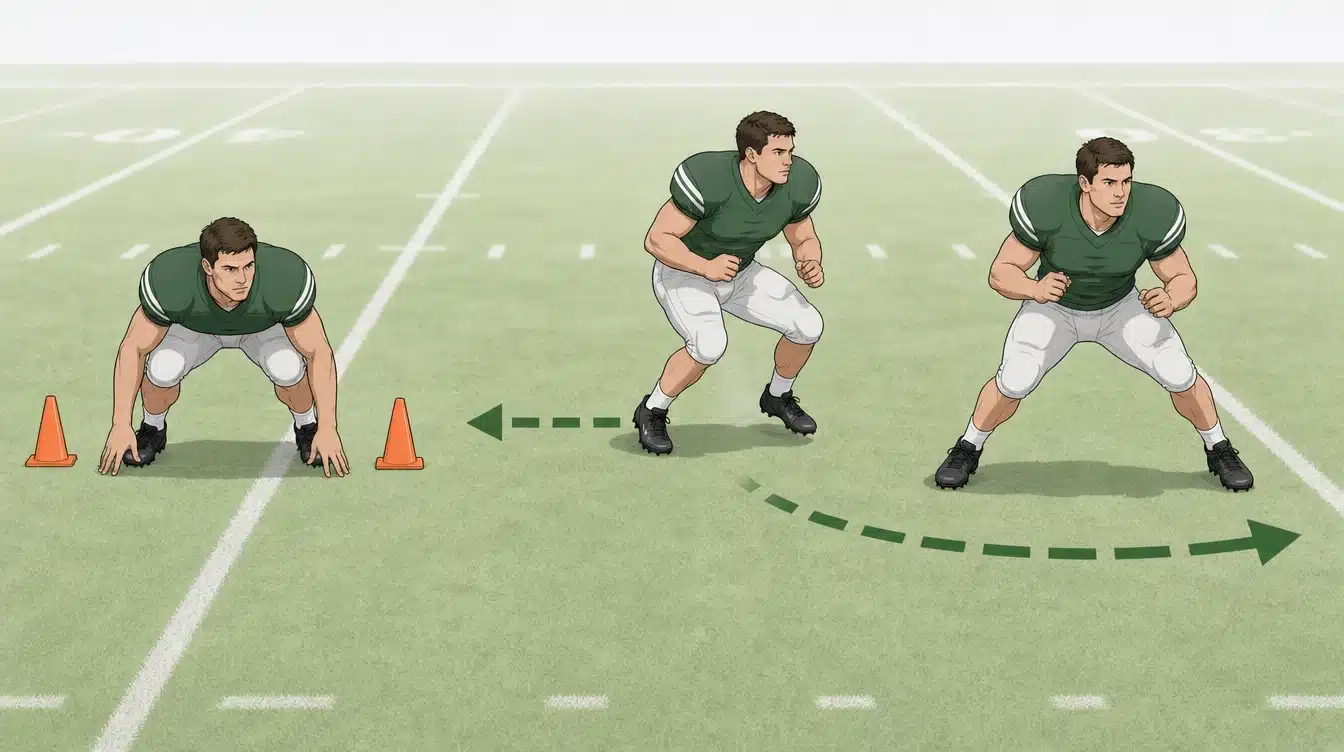
The first drill to go for.
How to run it:
- Set two cones five yards apart
- Backpedal to the first cone, sink the hips
- Shuffle to the second cone
- Shoulders square, eyes forward, not on the feet
- Five reps each direction
2. Bag Shuffle Linebacker Drill
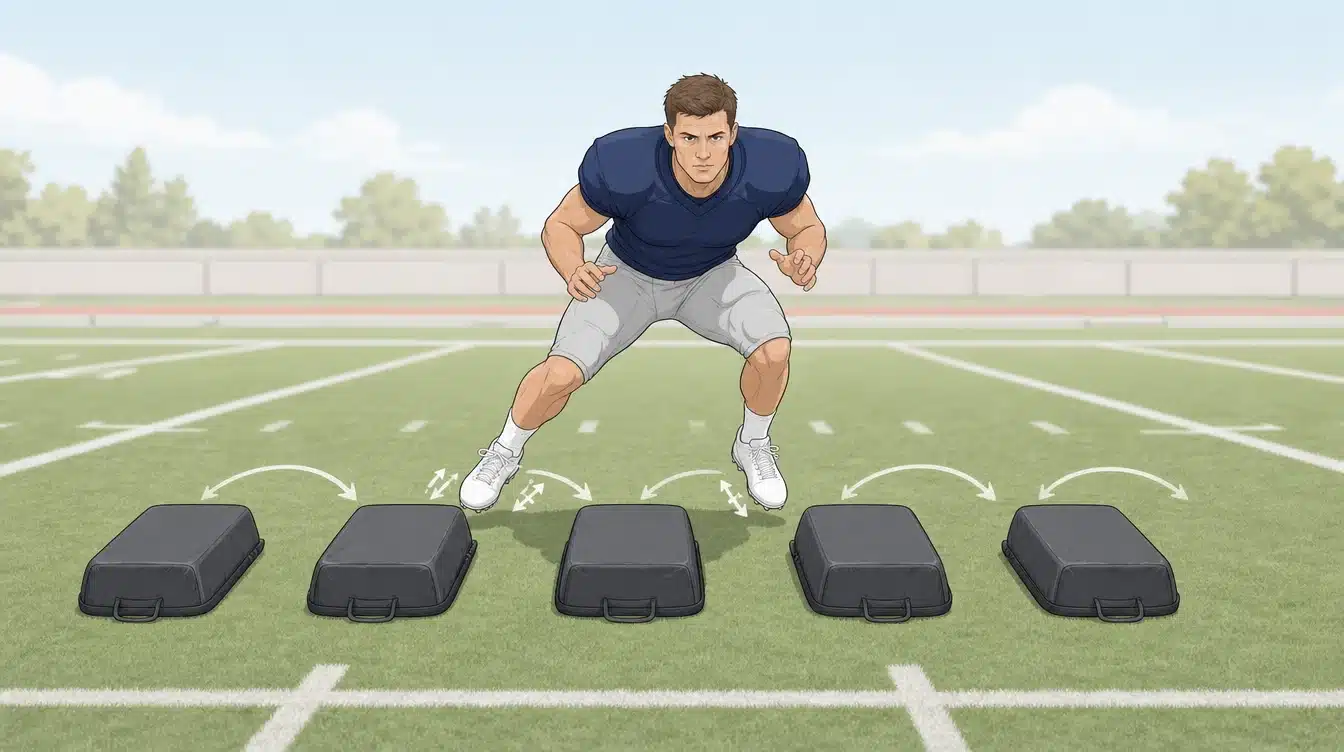
How to run it:
- Space five bags two yards apart
- Backpedal behind the first bag
- Shuffle around it, plant, sprint to the next gap
- Repeat down the line, then reverse
Tip: If an athlete crosses his feet here, he’ll cross them in a zone drop too.
3. Freeze-Step Linebacker Drill
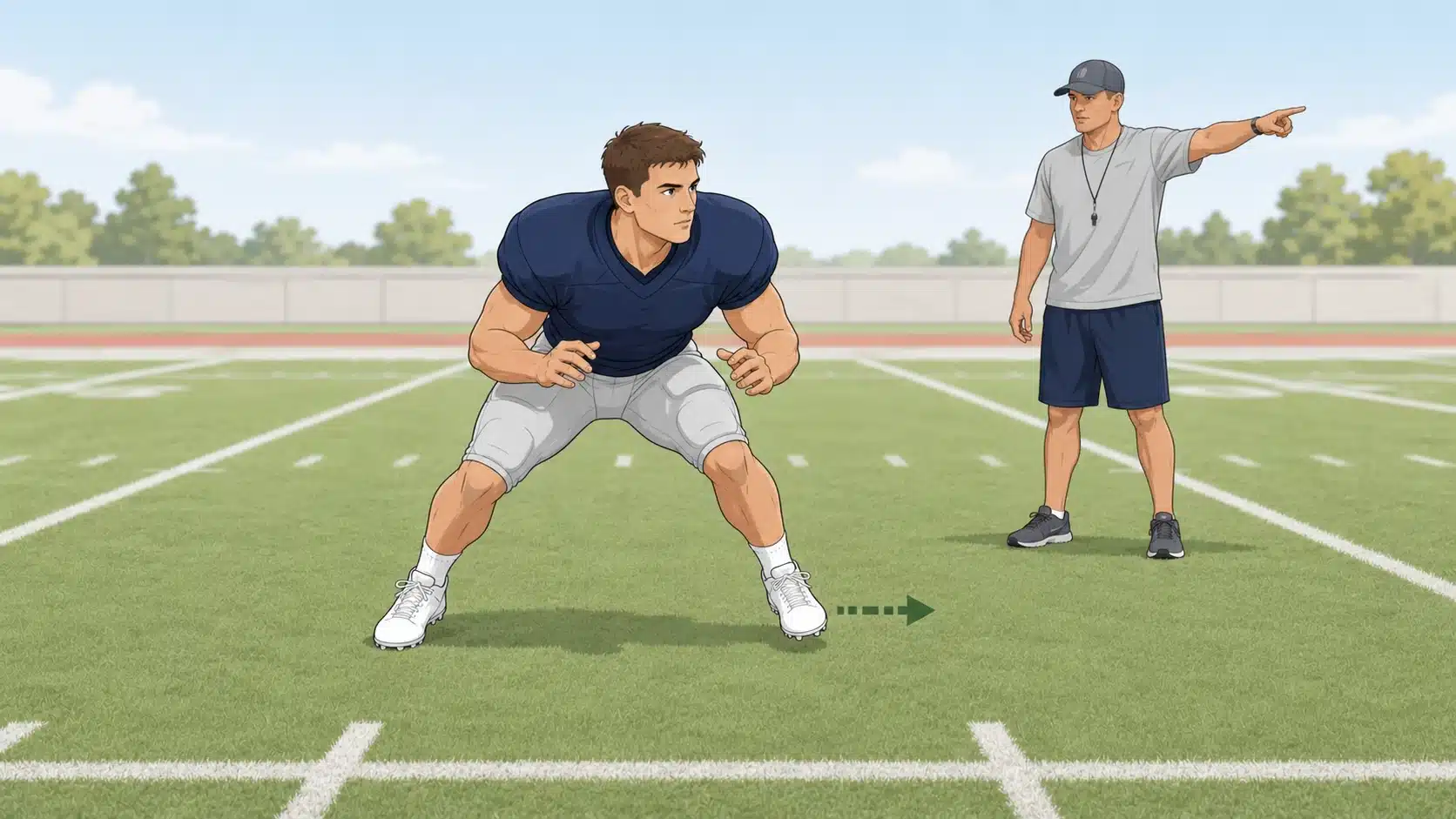
How to run it:
- Linebacker starts in his stance
- Coach points left or right
- The player takes one small, six-inch step in that direction
- No lunging, no over-committing
Linebacker Drills for Pursuit Angles and Change of Direction
Linebackers are not just training to run in a straight line. They are training to close space, read the ball, and arrive at the right angle.
That is the main goal of pursuit drills.
Most plays don’t break directly in front of a linebacker. The ball moves, blockers shift, and a bad angle can turn a short gain into a big play.
Speed matters, but angle judgment matters just as much. That is why pursuit speed should be trained year-round, not only on the day of testing.
1. Angle Pursuit Linebacker Drill
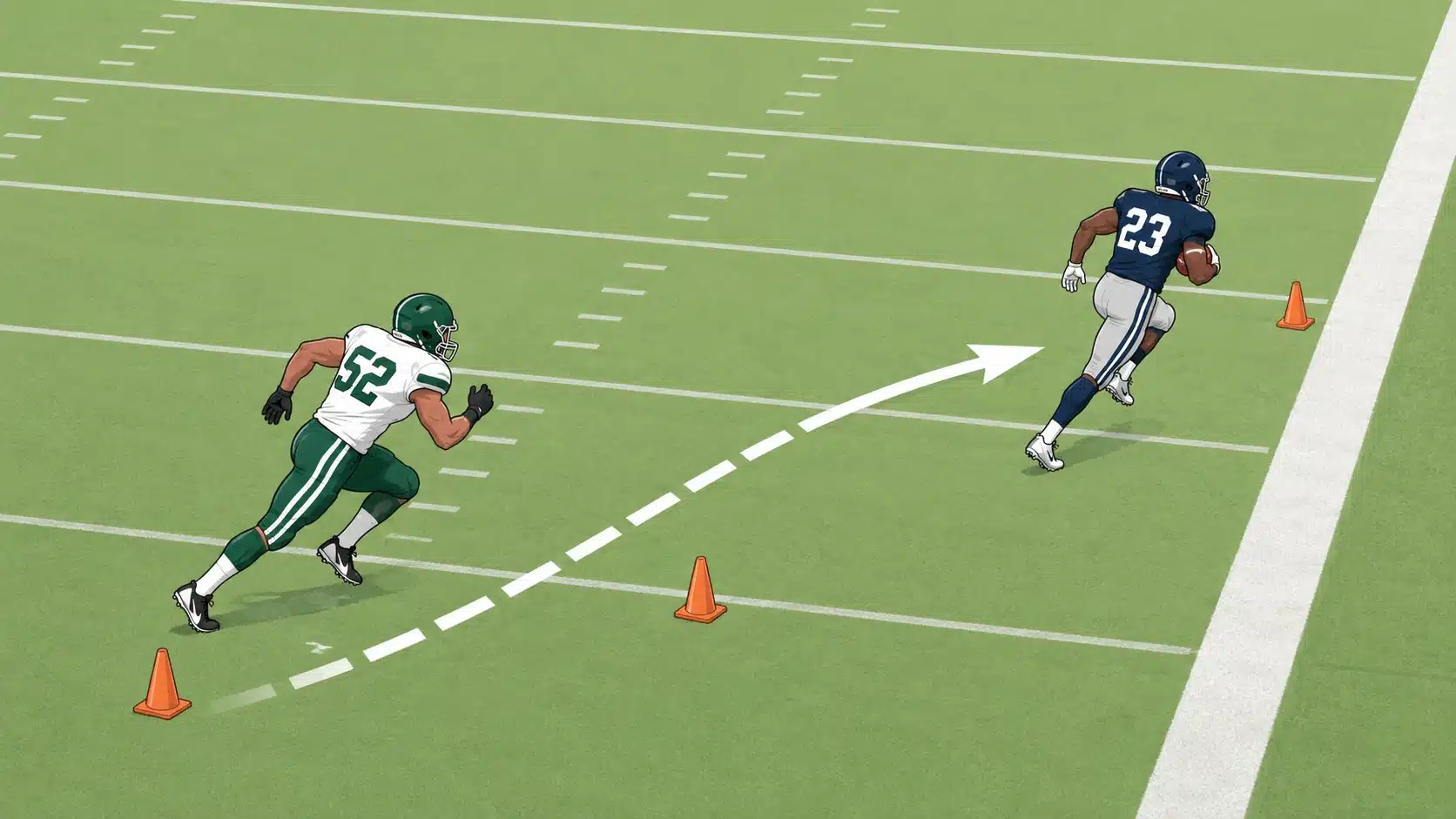
How to run it:
- Place cones at different field points
- A coach or teammate runs toward one cone
- Linebacker sprints at an angle to intercept him
2. 45-Degree Cut Linebacker Drill
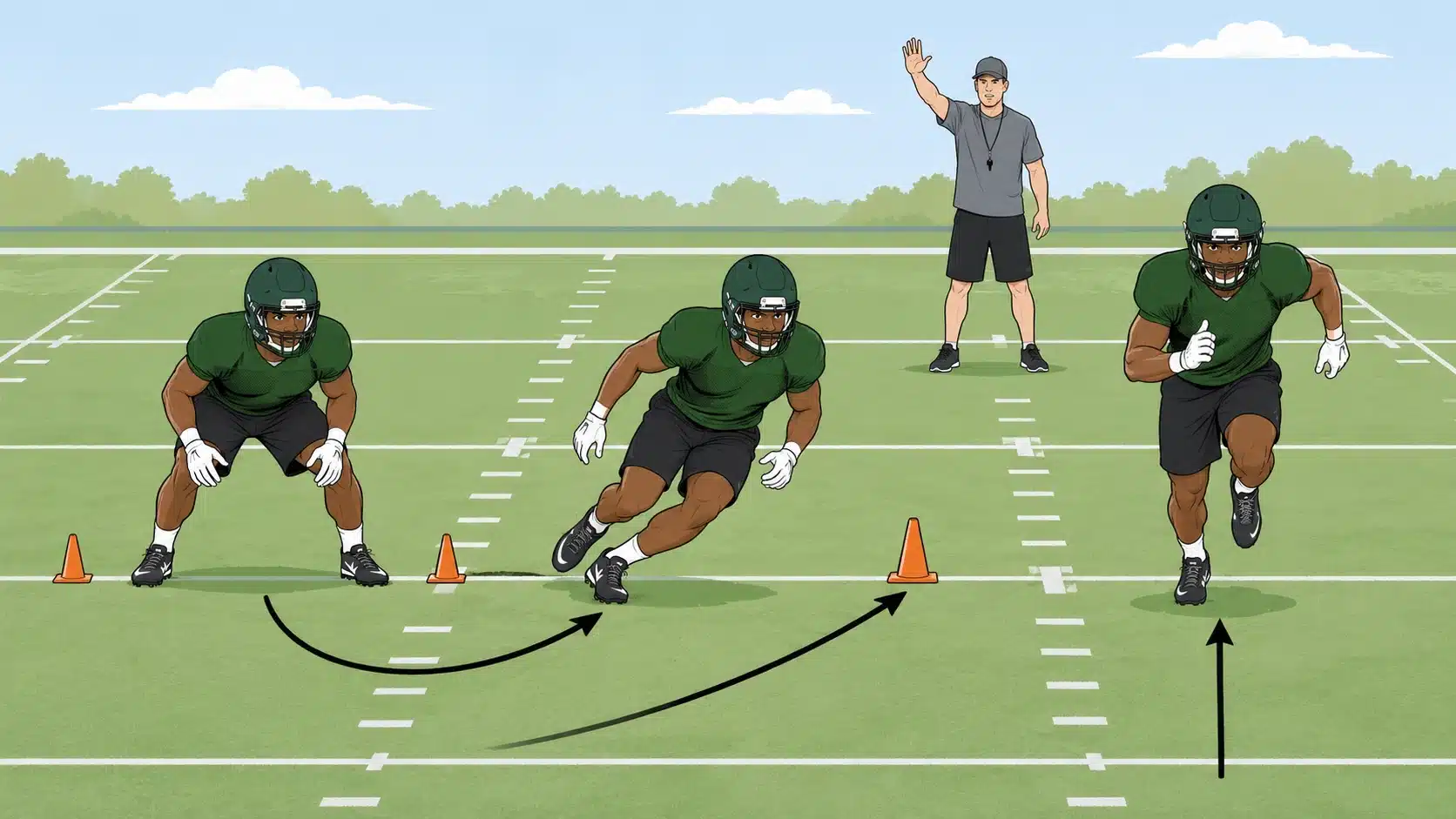
How to run it:
- Start between two five-yard markers
- Take a freeze step
- Break at 45 degrees toward a cone, using crossover steps
- On the coach’s signal, square up and sprint forward five yards
Tip: Watch the hips. That’s usually where the form breaks down.
3. Alley Fill Linebacker Drill
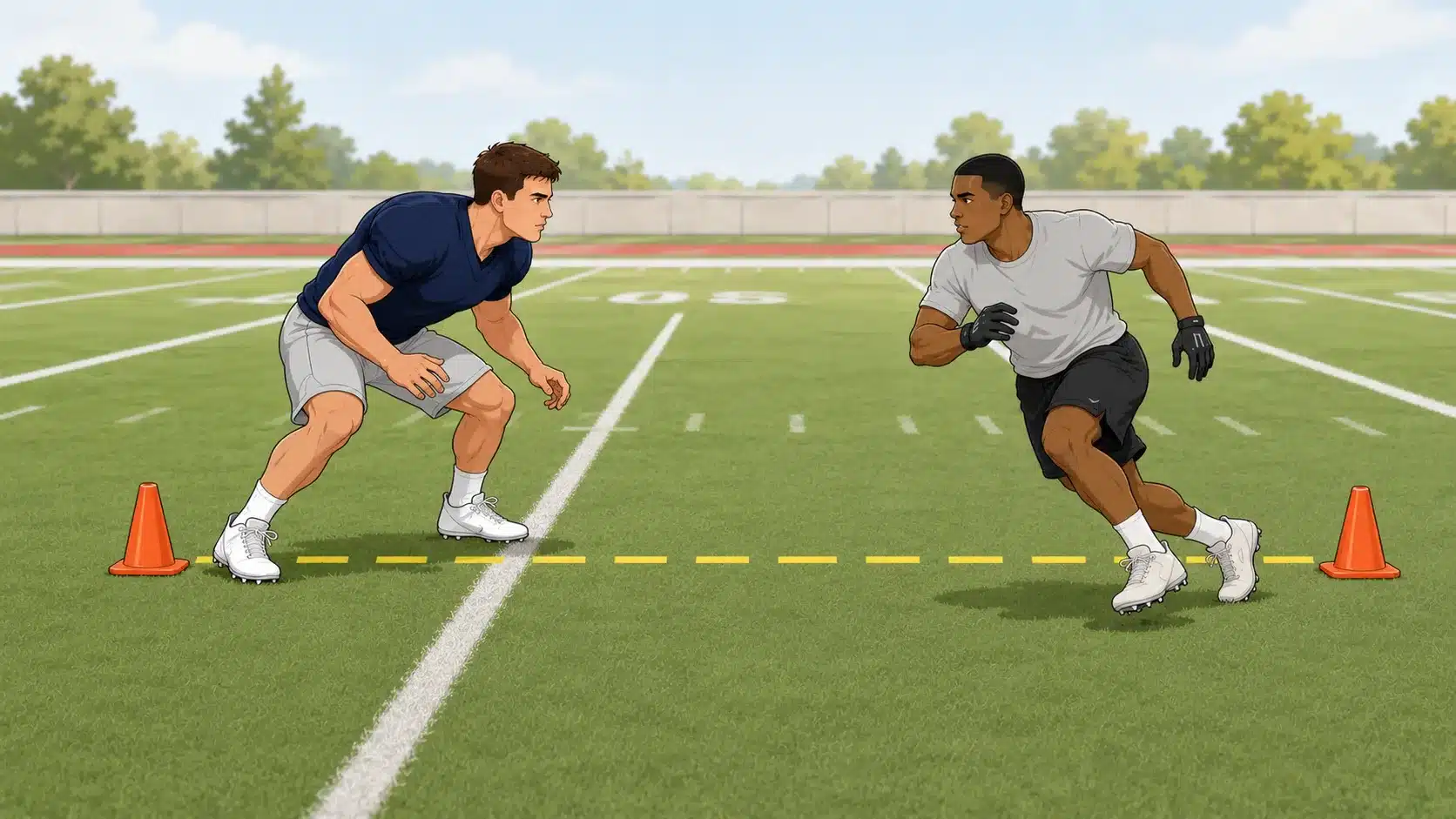
How to run it:
- The runner moves laterally in front of the linebacker
- No crossing the line of scrimmage
- Linebacker shuffles and mirrors, shoulders square
- On “alley,” plant and attack downhill
Linebacker Drills for Tackling Technique and Safety
NFL research covering 2015 to 2019 found that helmet-leading tacklers faced over five times the concussion risk of shoulder-leading tacklers.
Placing the head on the correct side of the ball carrier sharply reduces that risk.
Grant Caserta, the linebackers coach at Ferris State University, uses leverage-based drills rather than full-speed collisions for most reps. Same principle I use with progression training.
1. Shoulder-Leverage Tackling Linebacker Drill
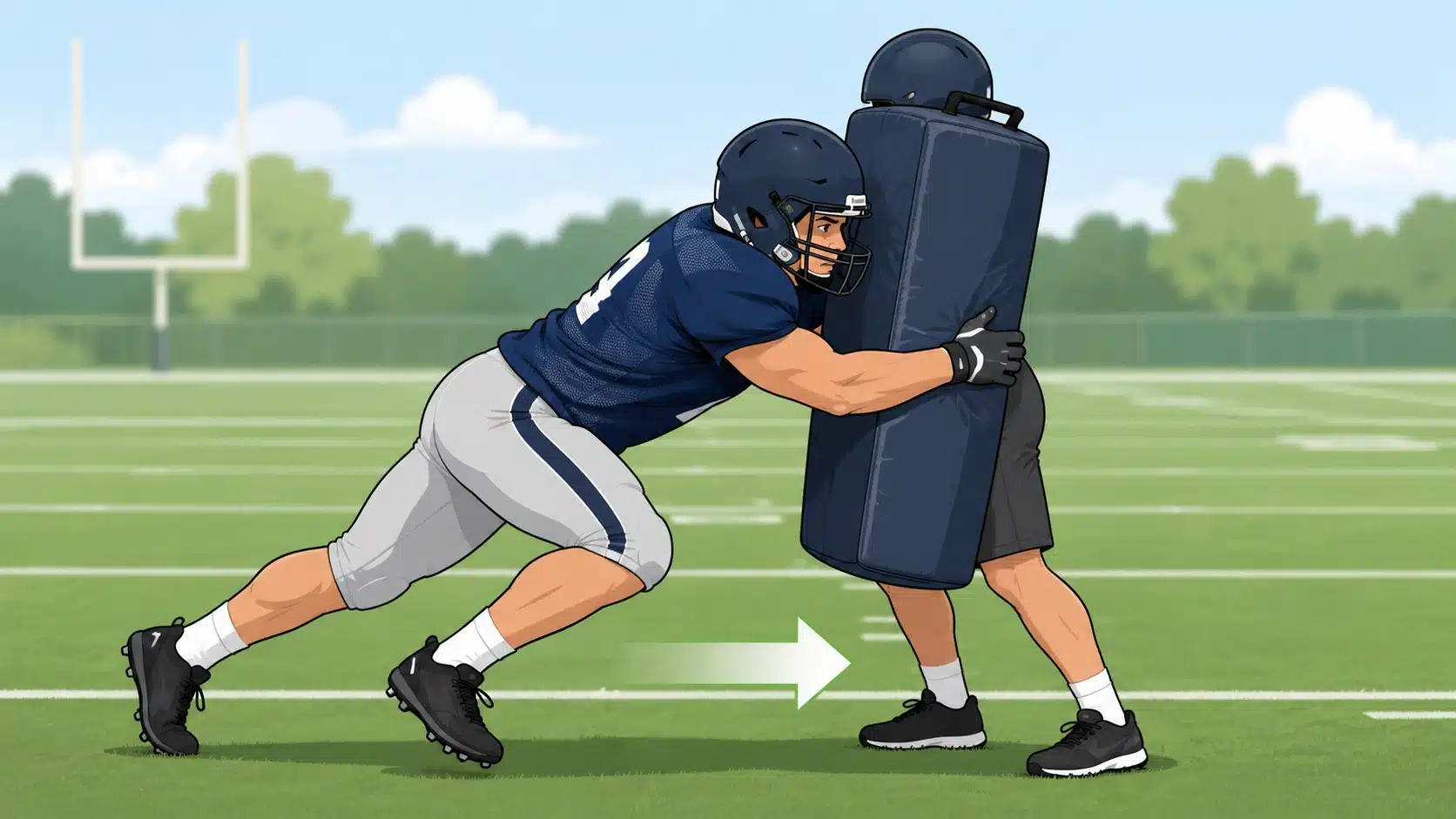
How to run it:
- Approach a bag or partner
- Drive the near shoulder into the target
- Wrap both arms, drive the hips forward
- Head stays to the side, never into the ball carrier
Tip: Half speed first. Stop the drill the second you see a head drop.
2. Form Tackle Progression for Linebackers
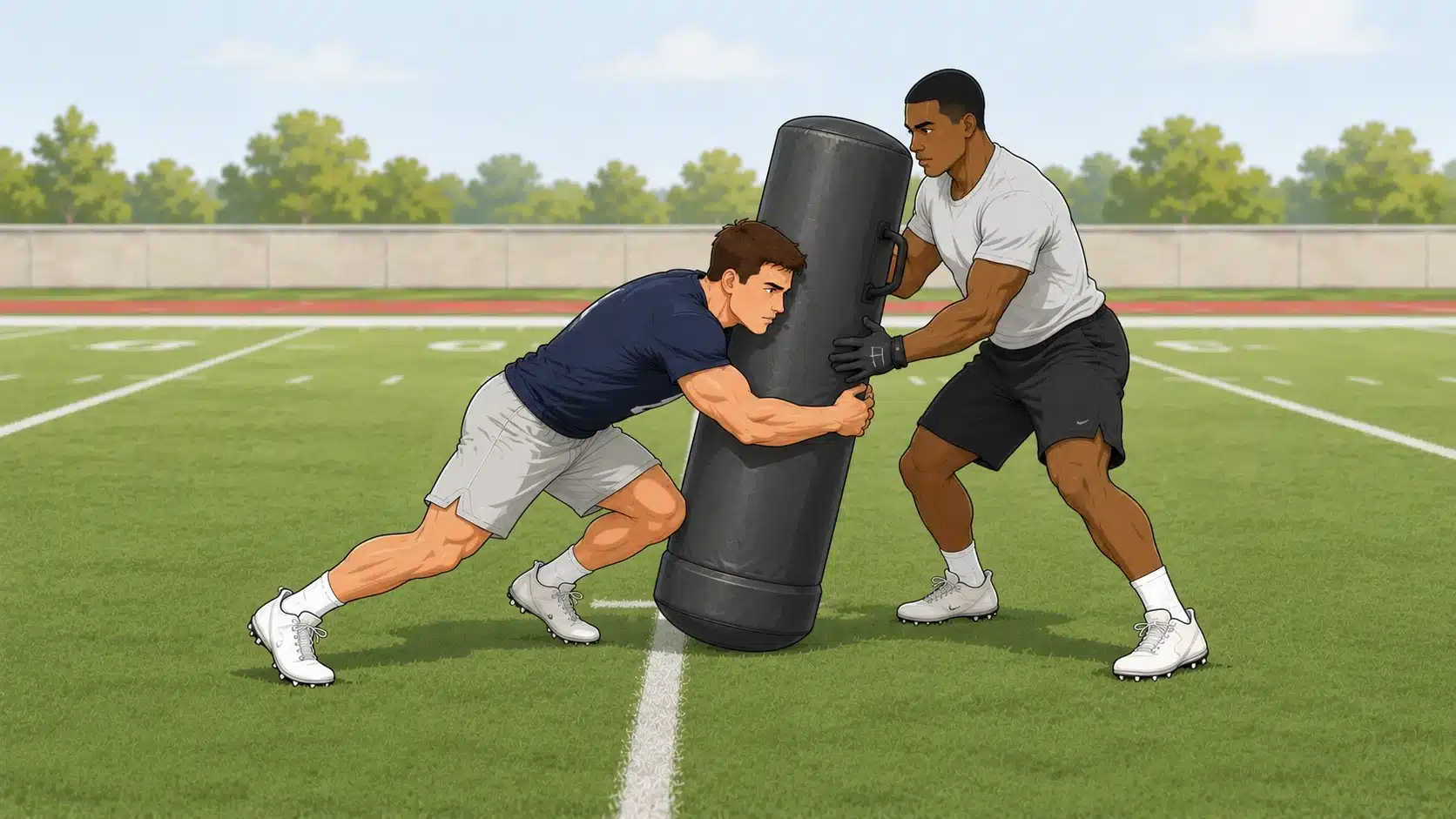
How to run it:
- Stationary target: walk-through approach, wrap, drive
- Add movement next
- Add a blocker for a more game-realistic look
3. Open-Field Tackling Linebacker Drill
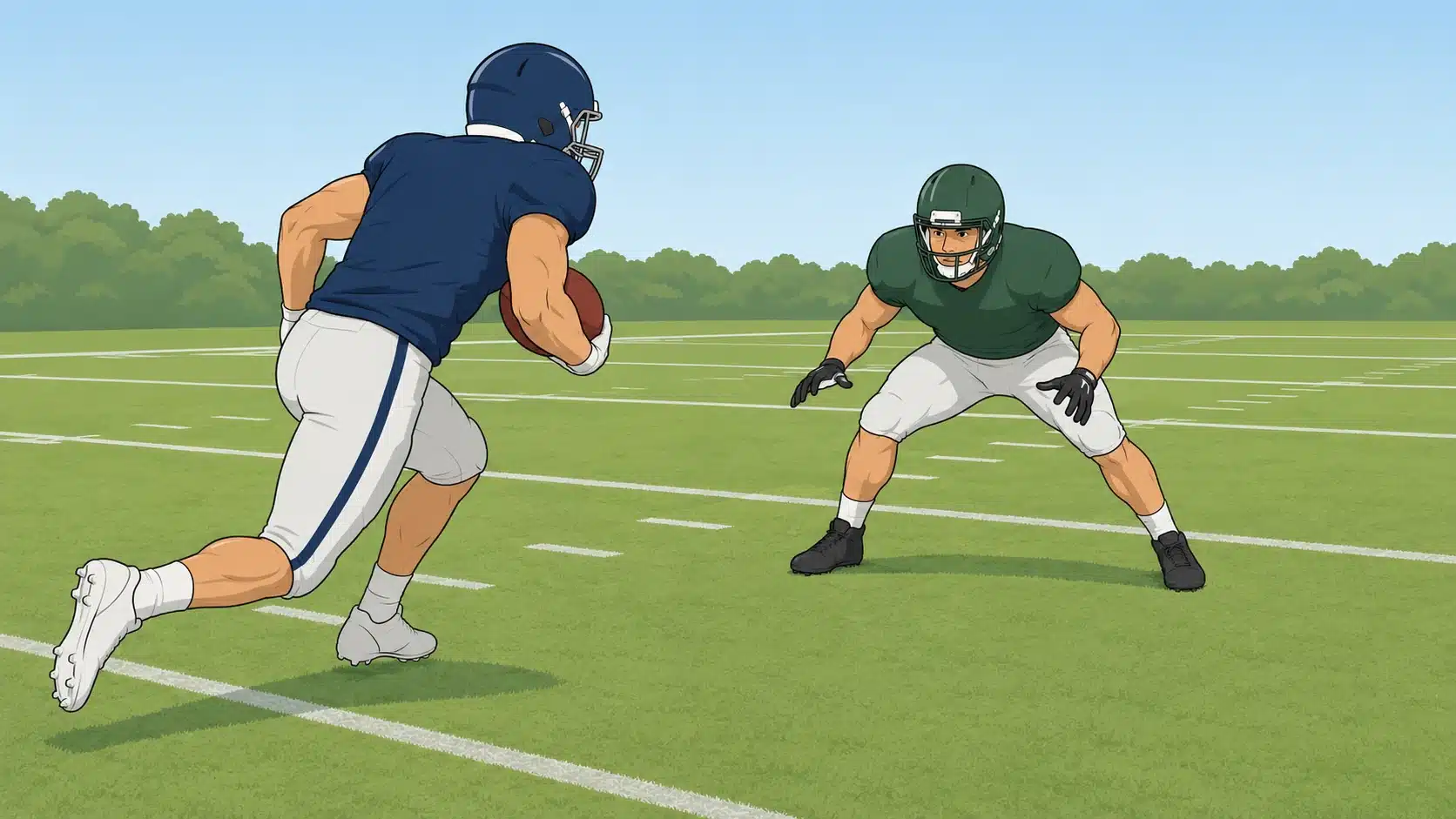
How to run it:
- One linebacker, one ball carrier, no help
- Runner gets space to make a move
- Linebacker breaks down, stays square, finishes alone
Linebacker Drills for Shedding Blocks and Block Destruction
Inside linebackers’ drill: shock-and-shed, since they face linemen directly. Outside linebackers lean on dip-and-rip, since their job leans toward contain.
I’ve moved most block-destruction work to bags and shields rather than live blockers, mainly to reduce unnecessary wear during the week.
1. Shock and Shed Linebacker Drill
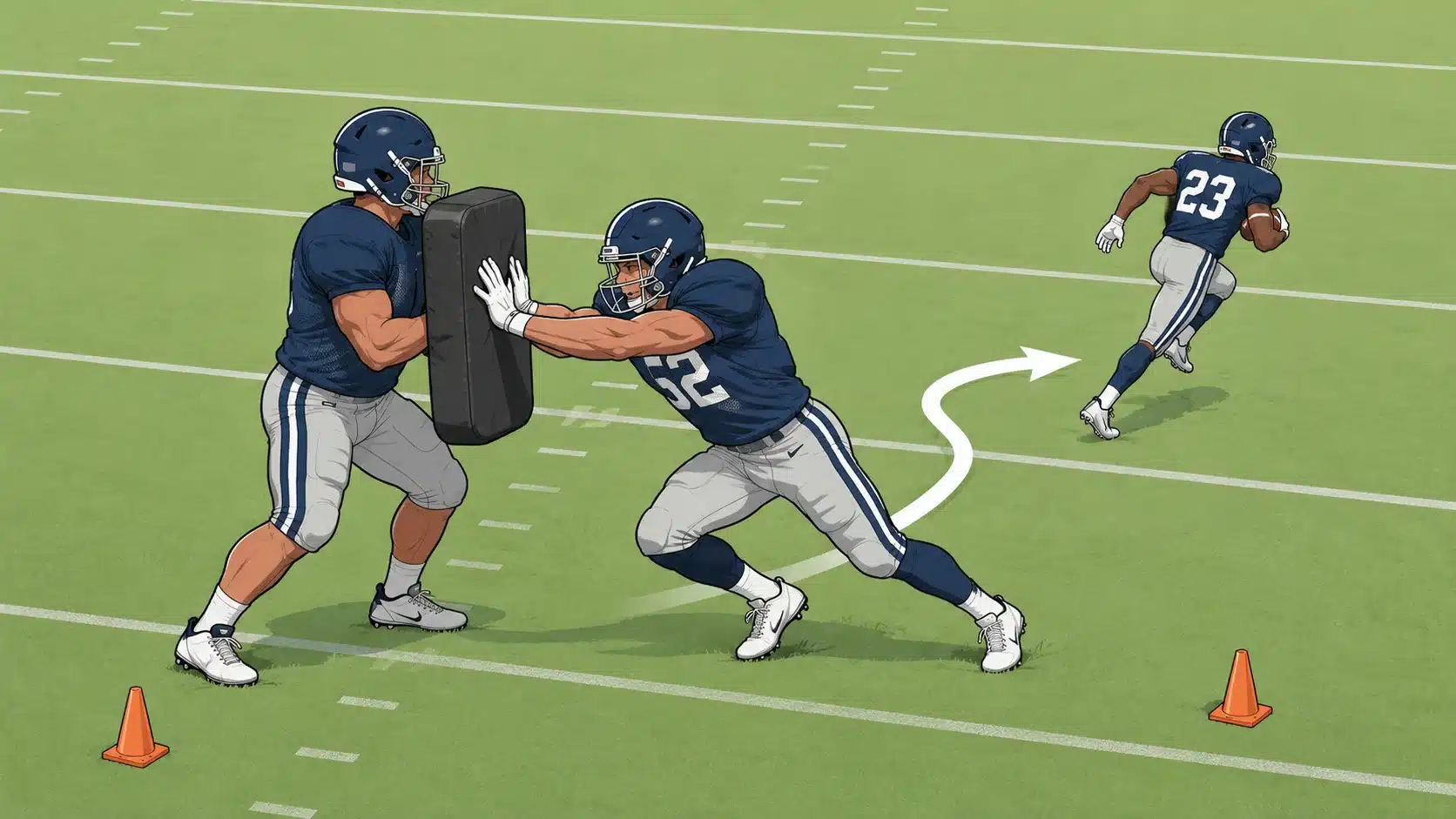
How to run it:
- Two-hand strike into the blocker’s chest
- Extend arms to create separation
- Rip free toward the ball carrier
Tip: Hands stay active, never resting on the blocker. Full speed only once the technique is clean.
2. Two-on-Two Leverage Linebacker Drill
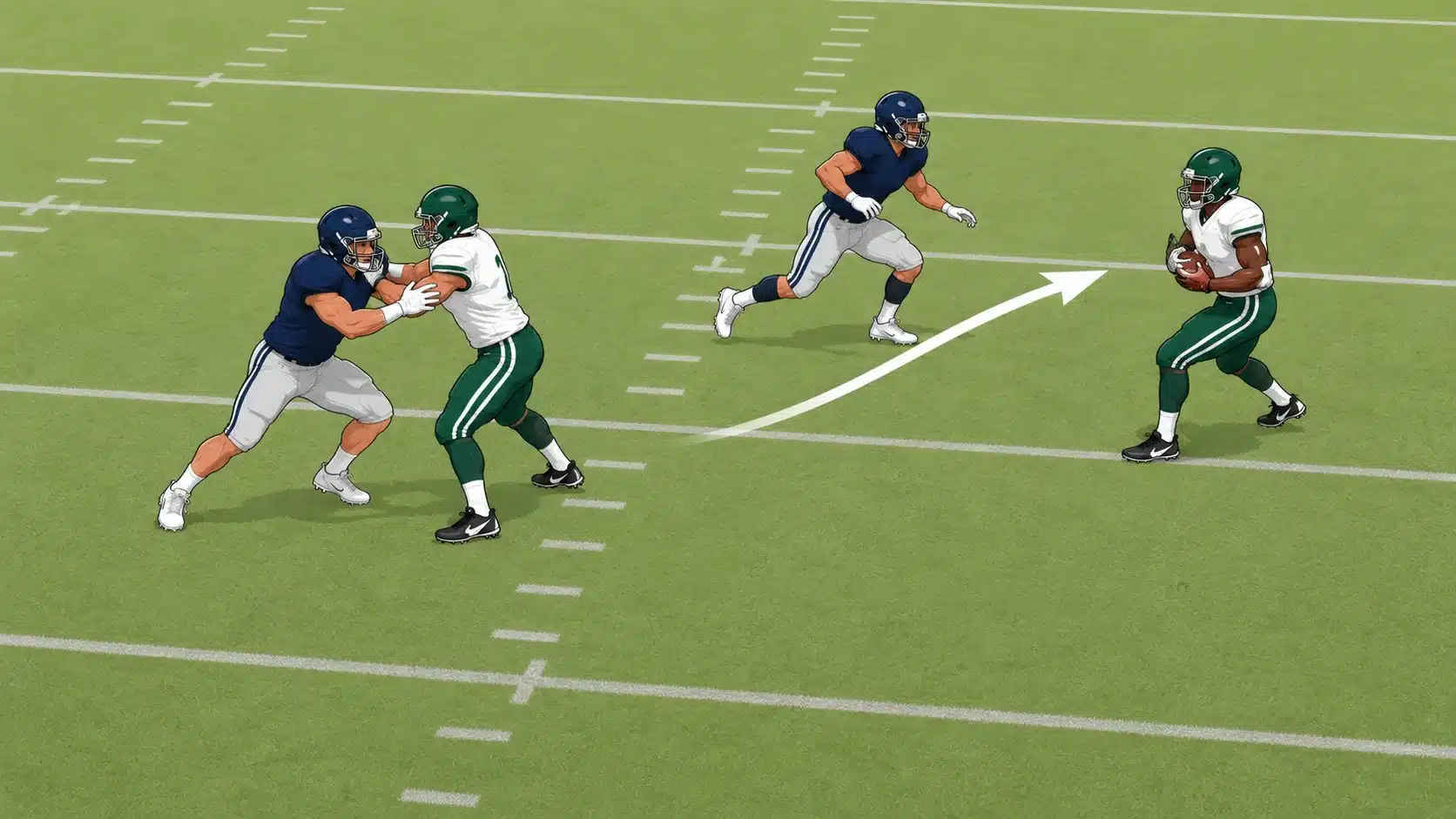
How to run it:
- Add a blocker to the mix
- Nobody knows who gets the ball until the coach delivers it
- One linebacker fights for leverage, the other sheds the blocker
Linebacker Drills for Coverage and Reaction Reads
Coverage used to be an afterthought for linebackers. Not anymore. Modern linebackers cover as often as they fill run gaps.
Keying the guard’s pads is a cue worth building into every session: guard pulls, linebacker flows; guard sets back, linebacker reads pass.
1. Zone Drop Linebacker Drill
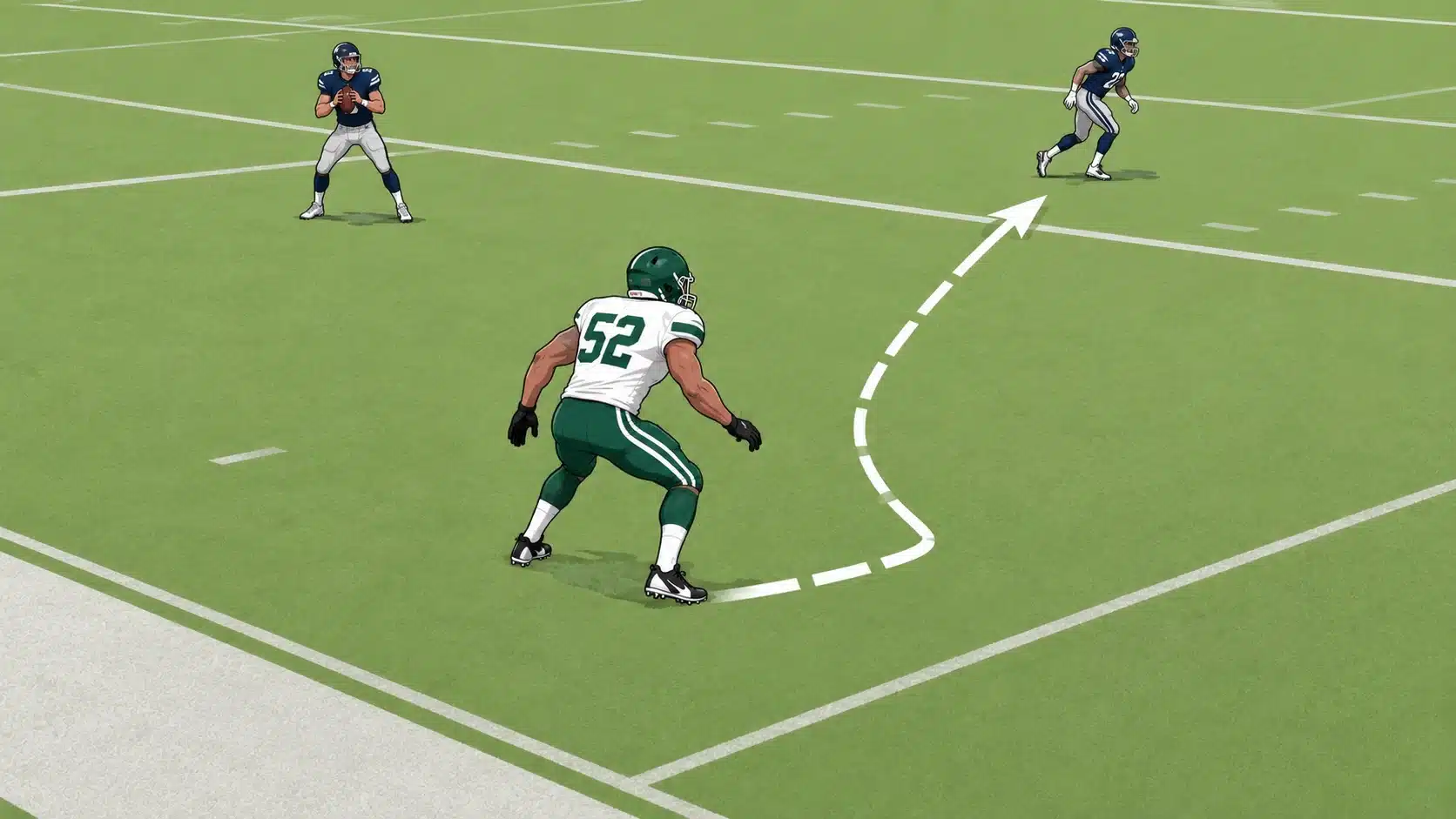
How to run it:
- Backpedal to a landmark
- Read the quarterback’s eyes the whole time
- Break toward whichever receiver enters the zone
2. Man Coverage Mirror Linebacker Drill
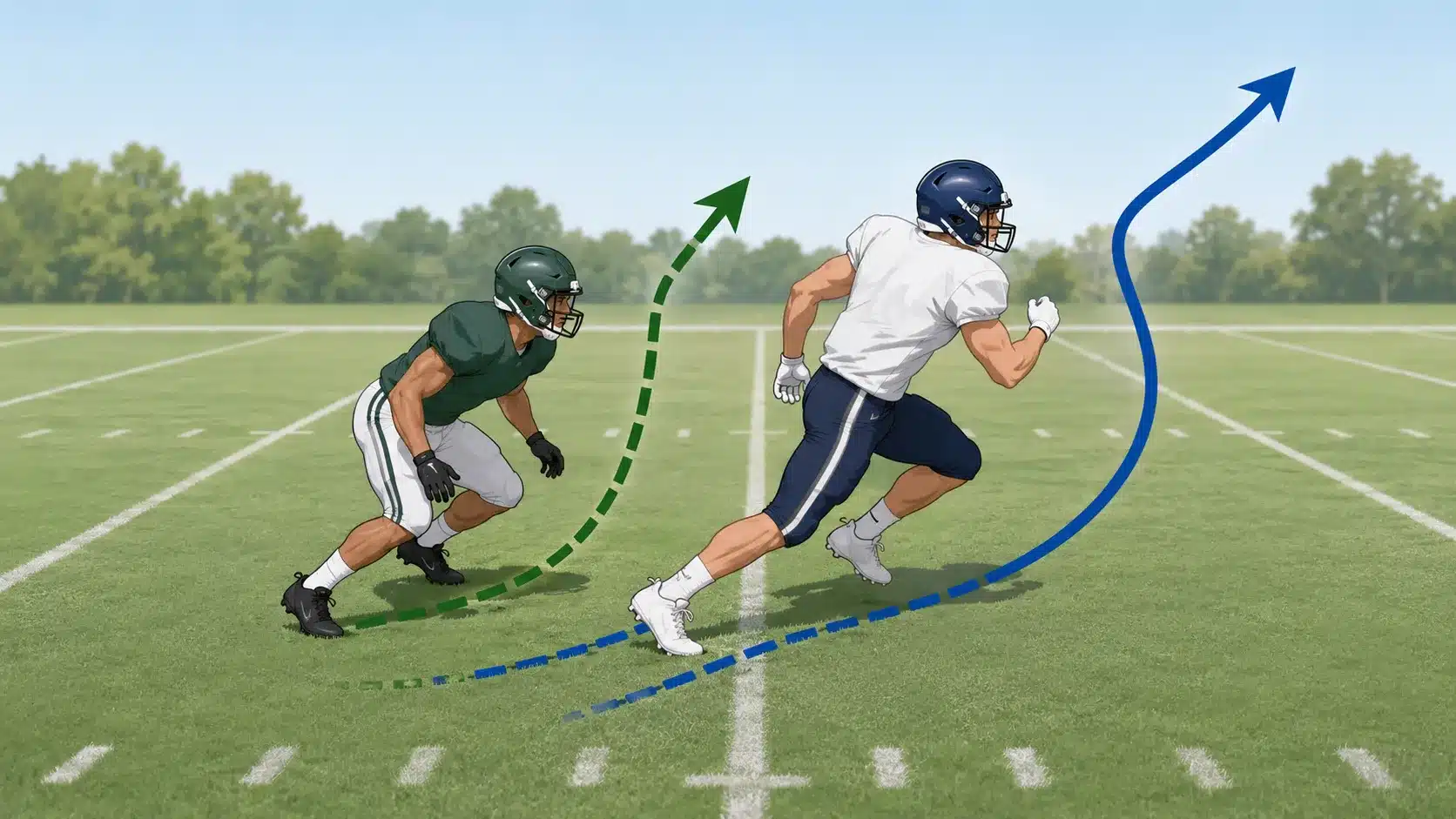
How to run it:
- Mirror a running back or tight end through his route
- Stay a step behind, slightly inside
- Take away the shortest path to the quarterback
Tip: Route breaks should force a plant-and-drive, never a flat-footed reaction.
3. Read-and-React Linebacker Drill
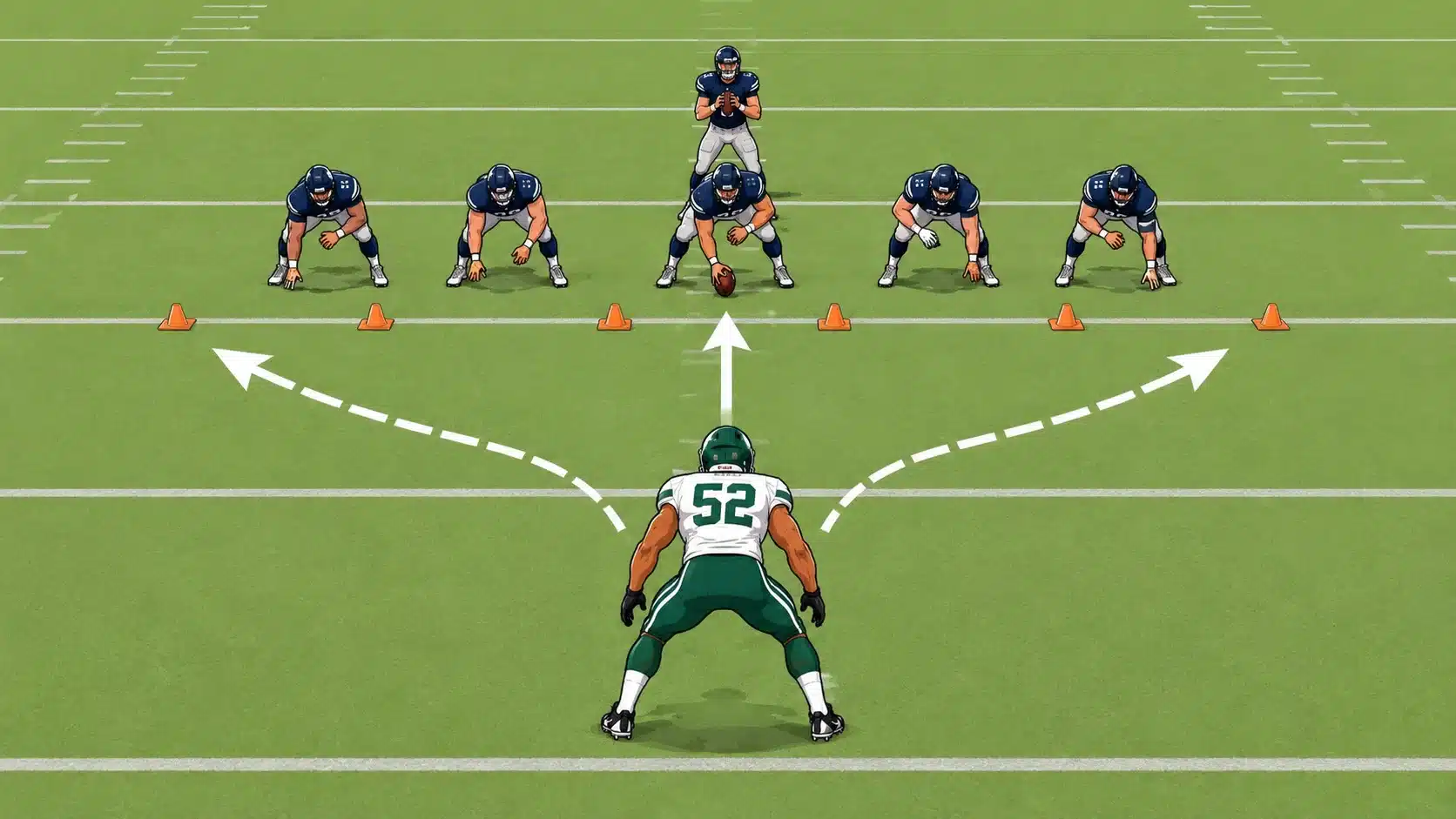
How to run it:
- Cones mark the line of scrimmage
- Coaches or players show a formation
- Linebacker reads the play after the snap and reacts
Linebacker Drills for Speed, Agility, and Combine-Style Testing
Same tests NFL scouts run at the combine: 40-yard dash, three-cone, short shuttle.
According to DraftKings Network’s combine analysis, linebackers averaged a 4.71-second 40-yard dash, a 4.3-second short shuttle, and a 9-foot-8-inch broad jump.
1. Three-Cone Linebacker Drill
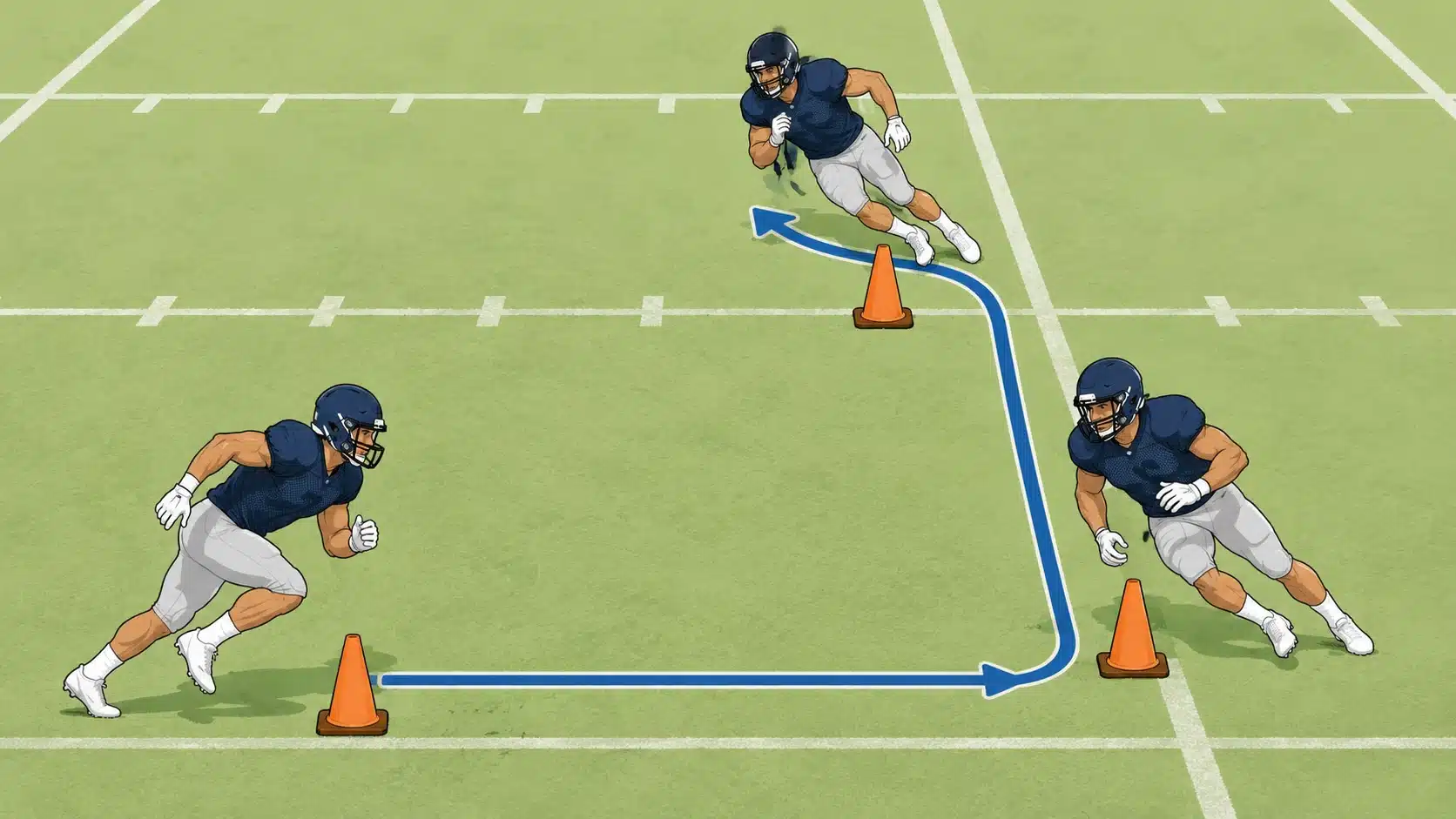
How to run it:
- Three cones in an L-shape, five yards apart
- Sprint to the first cone, back to the start
- Cut around all three cones in a tight pattern
2. Short Shuttle Linebacker Drill
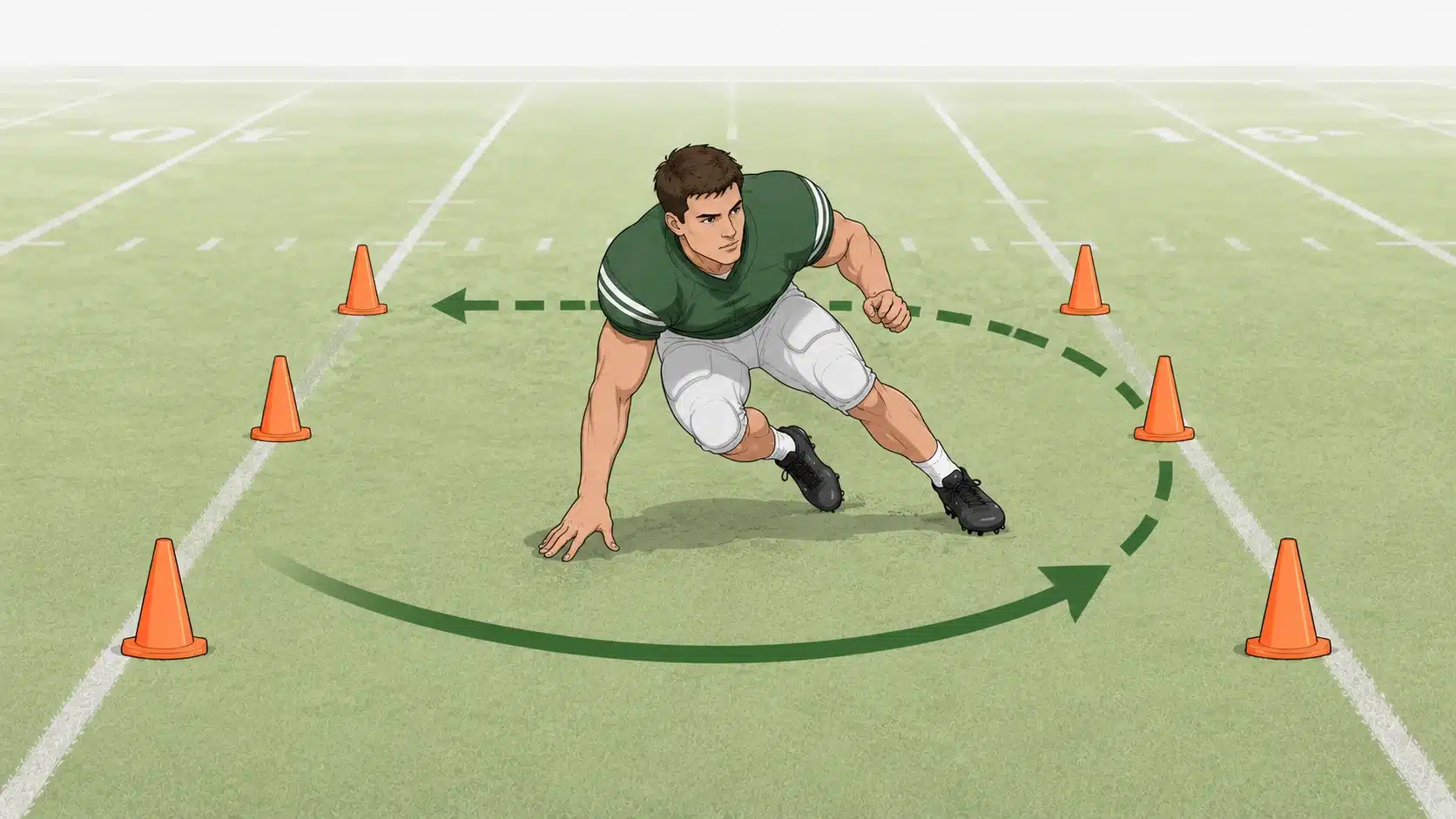
Also called the 20-yard shuttle.
How to run it:
- Sprint five yards one way
- Five yards back the other way
- Five yards through the start
NFL Combine Linebacker Testing Averages
To understand what linebacker drills measure, it helps to compare the main combine tests with typical linebacker benchmarks.
| Combine Test | Linebacker Average | What It Measures |
|---|---|---|
| 40-Yard Dash | 4.71 seconds | Straight-line speed |
| Short Shuttle (20-yard) | 4.3 seconds | Lateral quickness |
| Broad Jump | 9 feet 8 inches | Explosive lower-body power |
Source: DraftKings Network combine data.
How To Make Linebacker Drills Stick
Footwork grants leverage. Pursuit angles block ball carriers early. Proper tackling technique reduces missed tackles and protects athletes’ health.
Block destruction clears the path to the ball. Coverage drills develop the eyes modern defenses need. Combine-style testing shows if it’s working.
One last thing: program these linebacker drills in short blocks, several times a week. Don’t cram them into one long session; it doesn’t stick that way.
Progress shows up as fewer missed tackles, tighter angles, cleaner reads. Over a season of consistent training. Not overnight.
Frequently Asked Questions
How Many Linebacker Drills Should a Training Session Include?
A good session should include four to six linebacker drills. Cover footwork, pursuit, tackling, and coverage, with each drill lasting five to ten minutes.
What is the Most Important Linebacker Drill for Beginners?
The backpedal and shuffle drill matters most for beginners because footwork errors affect every pursuit, coverage, and tackling drill that comes after it.
How Often Should Linebackers Train Tackling Technique?
Linebackers should train tackling technique two to three times weekly. Use bags and dummies for most reps to limit the risk of live-contact injury.
Do Linebacker Drills Help With Combine Testing?
Yes. Three-cone and short shuttle linebacker drills mirror combine tests directly, and SumerSports found these drills predict NFL success better than most positions.
What Equipment do Linebacker Drills Require?
Most linebacker drills require only cones, bags, a tackling dummy, or a blocking shield, so a full session does not require a large equipment budget.