



Patrick Mahomes has said he barely pays attention to the laces when he throws a football.
That surprises many players because most coaches teach the exact opposite. The truth is, every quarterback develops a grip that feels natural over time, but the basics still matter.
A solid grip gives you better control, tighter spirals, cleaner releases, and fewer dropped balls.
I have noticed that many young players try to throw harder before they learn to hold the football correctly, which usually slows their progress.
If you want to know how to grip a football the right way, this article breaks down proper hand placement, finger pressure, ball security, and simple adjustments that make throwing, catching, and carrying the ball feel more natural.
Why Your Grip Matters More than You Think
Most bad throws do not start with the arm. They start with the grip.
Your grip controls how cleanly the football leaves your hand, how tight the spiral looks, and how well you protect the ball when defenders close in.
Squeeze too hard, and your wrist gets stiff. Hold it too loose, and the ball can wobble, slip, or come out late.
USA Football notes that a strong spiral can spin around 450 to 600 rpm, and even a great throw still has a few small wobbles in flight. That is why grip matters so much.
You are not chasing a perfect throw. You are building a steady hold that gives your fingers control without adding tension.
The Three Grip Types
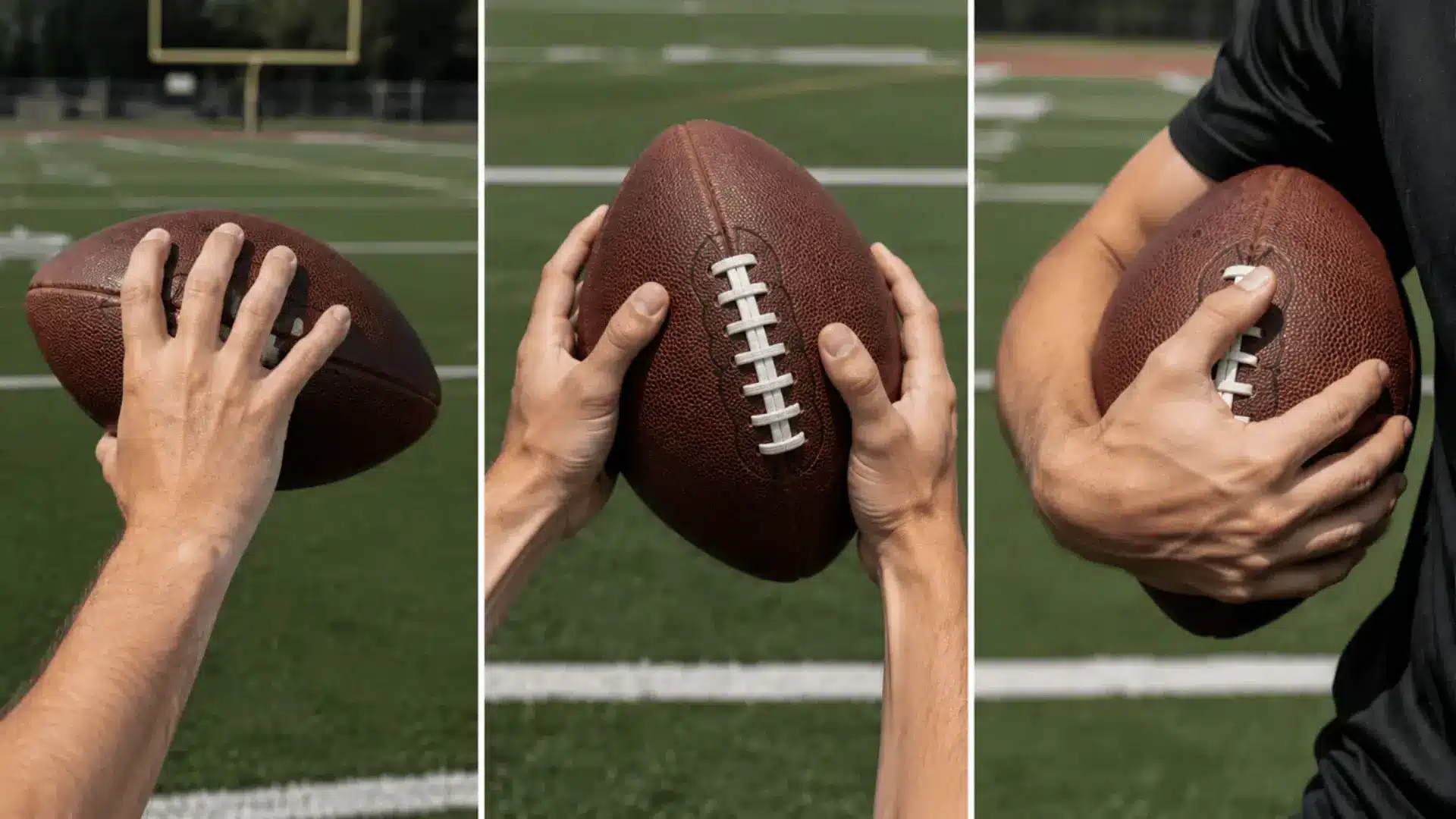
The right grip depends on what you are trying to do with the football. Throwing, catching, and carrying all require different hand positions because each one solves a different problem.
Use this quick-reference table to find the right grip for the situation, then follow the detailed instructions in the sections below.
| Grip Type | Finger Placement | Key Cue | Common Mistake |
|---|---|---|---|
| Throwing | Place 2 to 4 fingers across the laces with a small gap between your palm and the ball. | Hold the ball with your fingers, not your palm. | Pressing the ball flat into the palm or squeezing too tightly. |
| Catching | Spread all fingers wide around the ball to create the largest possible contact area. | Let the ball come to your hands before securing it. | Waiting on the ball or trapping it against your chest too early. |
| Carrying | Wrap your fingers firmly around the front half of the ball while pinning it against your forearm and chest. | Keep three points of contact at all times. | Carrying the ball away from your body or holding it with one hand in traffic. |
What Each Finger Actually Does
Your fingers do not all do the same job when gripping a football. Once you understand each finger’s role, it becomes easier to fix wobbles, slips, and weak releases.
- Thumb: Supports the football from the opposite side, keeping it stable in your hand.
- Index Finger: Helps guide the ball toward the target and is usually the last finger to leave the football.
- Middle Finger: Adds balance across the ball and helps create a cleaner spin during release.
- Ring Finger: Helps space the hand across the laces so the grip does not feel cramped.
- Pinky Finger: Supports the back end of the grip and helps the ball roll off your hand smoothly.
How Should You Grip a Football for Different Situations
The way you grip a football changes depending on the way you are throwing, catching, or carrying it. Each grip has a different purpose, but they all focus on control.
I have found that learning these skills separately makes it much easier to combine them in real game situations. Use the grip that matches what you are about to do with the football. Here’s what each one should look like.
How to Grip a Football to Throw

A throwing grip is all about control and a clean release. You do not need to copy an NFL quarterback’s hand position, as the right grip depends on your hand size and the football you use.
I recommend finding a grip that feels secure yet allows your wrist and fingers to move freely. If your hand feels tense before the throw, you are probably squeezing the football too hard.
| Grip Check | What to Do |
|---|---|
| Laces | Place 2 to 4 fingers across them |
| Palm | Leave a slight gap |
| Thumb | Support the ball without squeezing |
| Wrist | Keep it loose for a smooth release |
How to Grip a Football to Catch
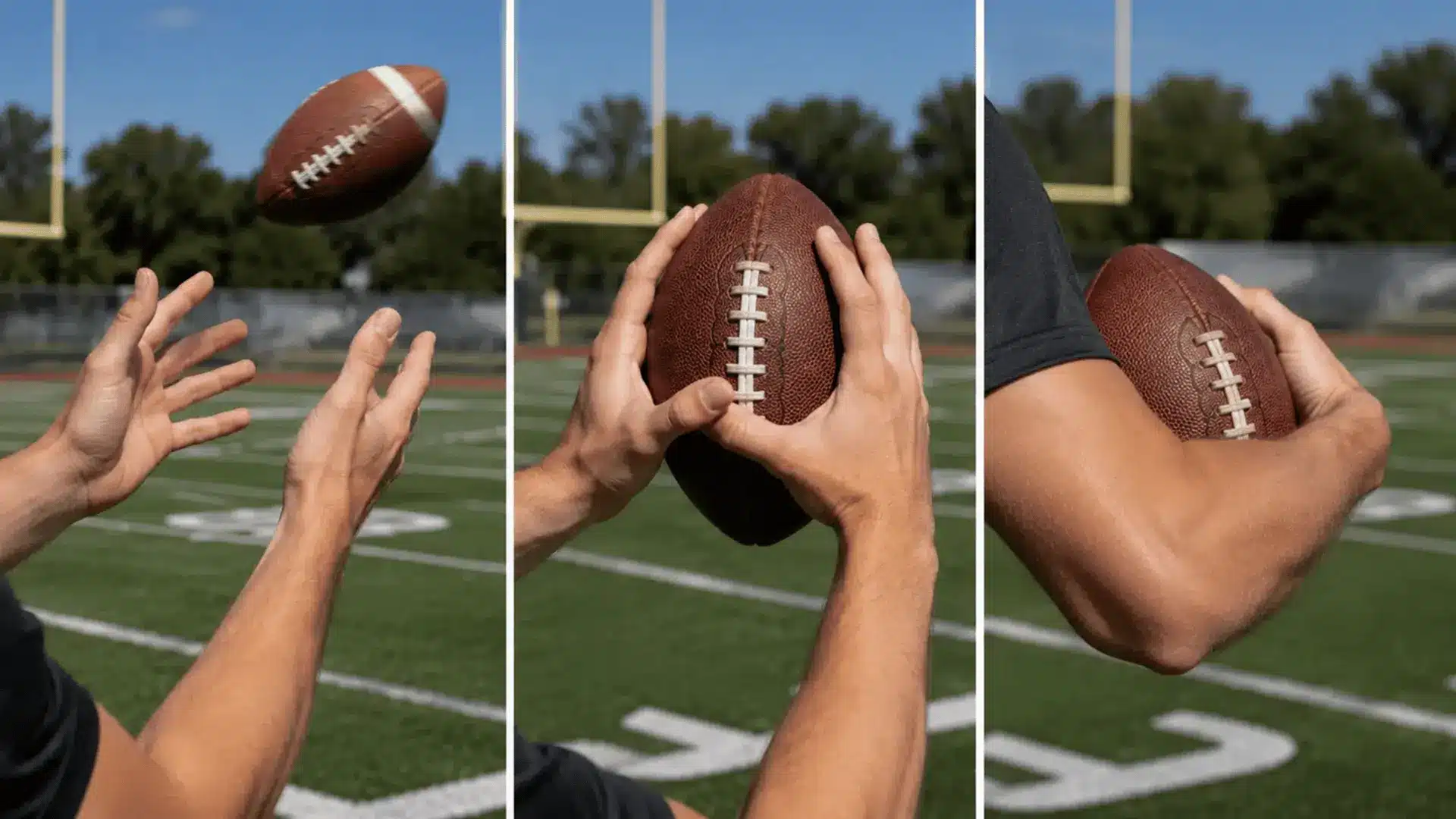
A clean catch starts before the football reaches your hands. Your goal is to create a large, soft target that helps absorb the ball instead of letting it bounce away.
I always tell new players to prepare their hands early rather than waiting until the last second.
Once you secure the football with your hands, pull it into your body. Catching with your chest first usually leads to dropped passes.
- High pass: Form a diamond with your thumbs and index fingers.
- Low pass: Bring your pinkies closer together.
- Secure the catch with your hands before pulling it in.
How to Grip a Football to Carry
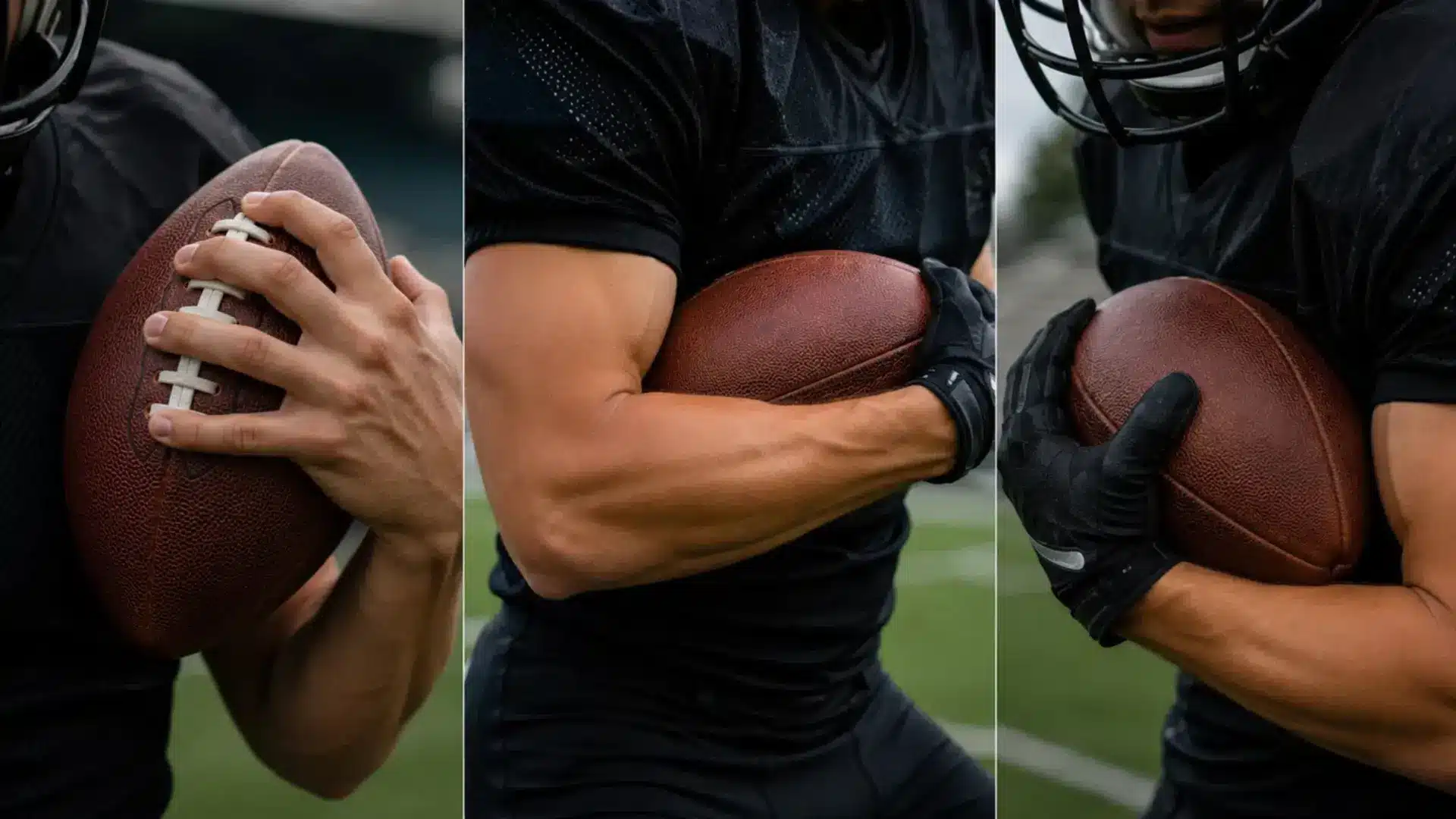
Carrying the football is about protecting possession rather than making a play with your hands. Once you become a runner, every defender is trying to knock the ball loose.
That is why coaches teach keeping the football high and tight instead of relying on grip strength alone.
I recommend checking your carry whenever you change direction or expect contact because that is when fumbles are most likely to happen.
| Contact Point | Purpose |
|---|---|
| Palm | Controls the football |
| Forearm | Stops it from shifting |
| Chest or Ribs | Protects it during contact |
Keep the football tight against your body, and cover it with your free hand whenever defenders get close. This simple habit adds another layer of protection without slowing you down.
Does Hand Size or Age Change Your Grip?
Yes, hand size and age can change how you grip a football.
A younger player or someone with smaller hands may not feel comfortable placing four fingers across the laces, and that is fine.
Forcing a full-size grip too early can make the ball feel heavy, stiff, and harder to release.
In that case, use fewer fingers on the laces and let the grip sit a little closer to the middle of the ball. The goal is control first, not copying how an NFL quarterback holds it.
| Ball Size | Typical Age Group |
|---|---|
| Peewee | Ages 6 to 9 |
| Junior | Ages 9 to 12 |
| Youth | Ages 12 to 14 |
| Official | Ages 15 and up |
A good grip should fit your hand. Your hand should not have to fight the football.
Watch NFL Quarterbacks Grip the Ball, in their Own Words
In this ESPN video, there is no single “perfect” football grip used by every NFL quarterback.
Tom Brady, Russell Wilson, Matt Ryan, Carson Wentz, Baker Mayfield, and Jimmy Garoppolo all hold the ball a little differently.
Some rely heavily on the laces, while others barely touch them at all. For most of them, the grip was not something they memorized.
It simply became the position that gave them the best control and confidence over thousands of throws.
That matches the same lesson throughout this guide: learn the fundamentals first, then let your grip adapt naturally to your hand size, comfort, and throwing mechanics instead of copying someone else’s exactly.
Grip Troubleshooting
Small grip issues show up fast when you throw, catch, or carry. Use these fixes to spot the problem before changing your whole technique.
- My Spiral Is Wobbly. What’s Wrong With My Grip?
Your fingers may be too tight, too flat, or too far off the laces. Check for a small palm gap, spread your fingers, and let the ball roll off your index finger last. - Why Does The Ball Keep Slipping In Wet Or Cold Weather?
Moisture and cold can make the ball harder to feel. Wipe your hands when possible, keep your fingers wide, and avoid squeezing too hard, as that can stiffen your release. - Is A Brand-New Football Supposed To Feel Harder To Grip?
Yes, a new football can feel slick or stiff before it breaks in. As the surface softens with use, your fingers usually get better contact and control. - How Do I Know If I’m Gripping Too Tight?
If your wrist feels locked, your forearm tightens, or the ball comes out late, you are probably over-squeezing. The grip should feel firm, not tense.
Quick Recap
Learning how to grip a football is not about copying your favorite quarterback. It is about finding a grip that gives you steady control every time you throw, catch, or carry the ball.
Start with the fundamentals, keep your hand relaxed but secure, and make small adjustments based on your hand size and comfort.
With regular practice, those small changes become natural, and your throws and catches become more consistent without you having to think about every finger.
The next time you pick up a football, spend a few minutes checking your grip before worrying about distance or power.
You may be surprised how much cleaner everything feels.
Which grip adjustment made the biggest difference for you? Share your experience or favorite tip in the comments and help other players improve their game.
Frequently Asked Questions
Can Gloves Improve Your Football Grip?
Quality receiver or quarterback gloves can increase grip in dry conditions, but good hand placement and technique still matter more than the equipment itself.
Should You Grip the Ball Before Every Snap?
Yes. Many quarterbacks quickly adjust their fingers after receiving the snap to confirm a comfortable grip before beginning their throwing motion.
Does Football Inflation Affect Your Grip?
A properly inflated football feels more predictable in your hand. An overinflated or underinflated ball can affect comfort, control, and release consistency.
How Often Should You Practice Your Grip?
Spend five to ten minutes during every practice handling the football. Regular repetition builds muscle memory, making your grip feel natural during games.