



I still remember the first time my football wobbled through the air like a dying duck. My friends laughed, and I knew something had to change.
That summer, I spent hours in my backyard trying to figure out how to throw a football spiral that flies straight every time.
It took practice, but I learned a few small tricks that made a big difference. Your grip matters. Your stance matters. Even the way you release the ball changes everything.
In this guide, I will show you exactly how to hold the ball, plant your feet, and follow through so your spiral stays tight. If you are just starting out or want to clean up your throw, these simple steps will help you build a spiral you can be proud of.
Why a Spiral Matters in Football
A tight spiral helps a football fly farther and land where it needs to go. Learning how to throw a football spiral is one of the most useful skills in the game, no matter the position.
A wobbly pass slows down in the air and drifts off course. That makes it harder for a receiver to catch and easier for a defender to knock down. A clean spiral cuts through the wind and holds a steady line, so the ball arrives faster and more accurately.
This matters in real games. Quarterbacks need to hit tight windows between defenders. Even a short pass can be picked off if the ball flutters rather than spins true.
A good spiral also builds confidence. Consistent mechanics lead to consistent results, which is why coaches spend so much time teaching this one basic skill early on.
How to Throw a Perfect Spiral
Getting a tight spiral takes more than just a strong arm. It comes down to small habits you can build one step at a time.
1. Stretch Before You Throw

Tight muscles lead to wobbly throws and sore arms the next day. Spend 10 to 15 minutes stretching before you start throwing.
- Shoulders
- Upper back
- Chest
- Lower back
This simple routine loosens the muscles you rely on most during a throw. Skipping it might not affect your very first few passes, but fatigue and stiffness build up fast without it.
A short stretching habit protects your arm and keeps your mechanics sharp throughout practice.
2. Use the Right Ball Size

A ball that’s too big or too small will throw off your control before you even start. Picking the right size sets you up for success from the first throw.
| Age Group | Recommended Ball Size |
|---|---|
| 14 and up | Size 9 |
| 12-14 | Size 8 |
| Youth/Pee-wee | Sizes 6-7 |
If your hand can barely wrap around the ball, it’s the wrong one. A properly sized football lets your fingers do their job without strain, which matters when you’re learning how to throw a football spiral the right way.
3. Grip the Laces Correctly

I remember my first real football. I gripped it like a baseball and wondered why every pass wobbled. The fix was simple.
Place your ring and pinkie fingers between the laces, with your thumb resting underneath the ball on the opposite side.
Some players add their middle finger too, depending on hand size. There’s no single correct hand size for this. Try a few grips until one feels natural and lets you spin the ball without slipping.
4. Place Your Index Finger Near the Tip

Your index finger plays a quiet but important role. Rest it close to the tip of the ball, near a seam, so it forms a right angle with your thumb.
This small placement affects how much control you have over the ball when it leaves your hand. Everyone’s fingers are shaped differently, so this takes some testing.
Larger hands may sit further from the tip while smaller hands sit closer. Once it feels steady, you’re one step closer to a clean release.
5. Grip With Your Fingertips Only
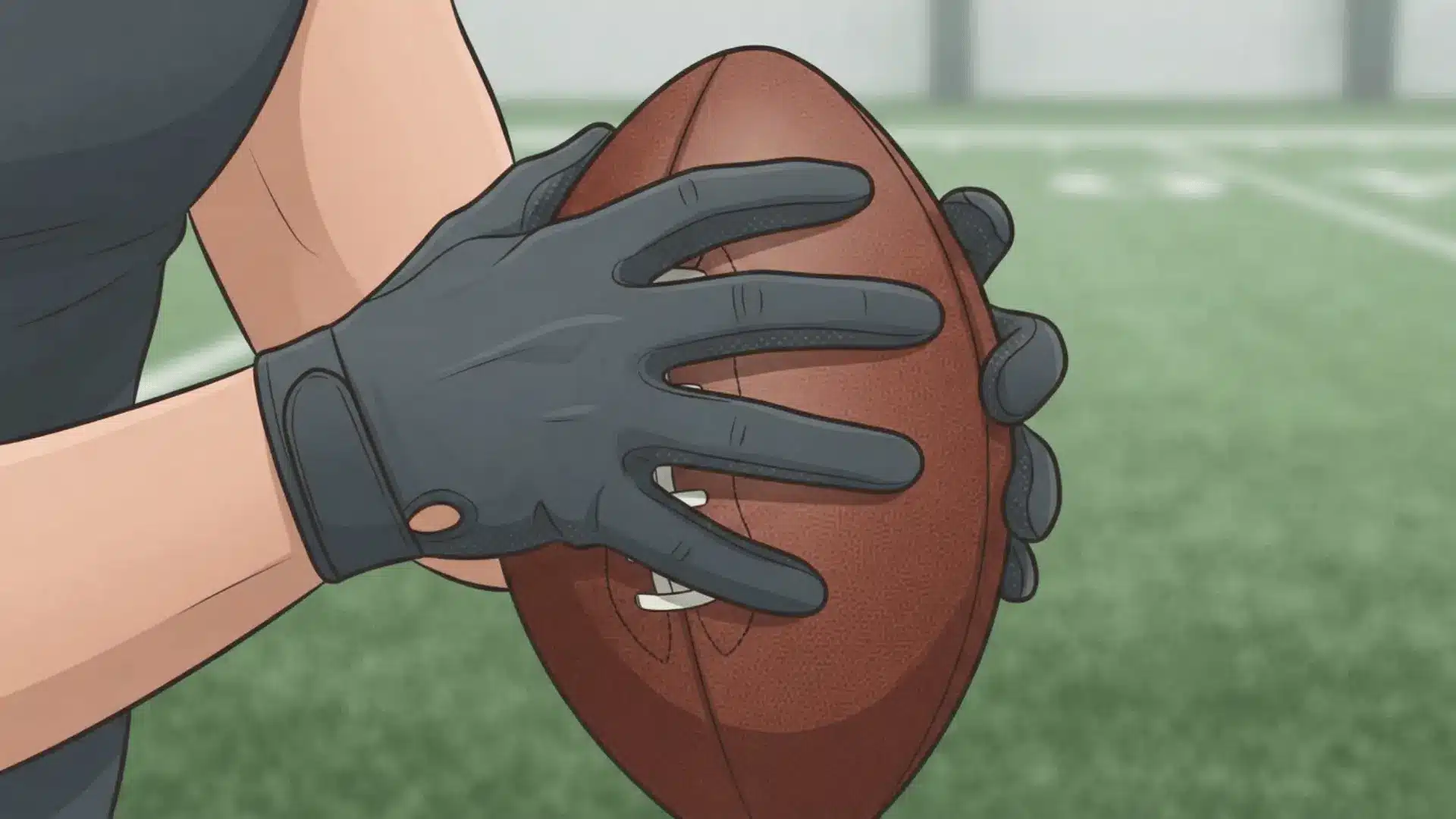
Gripping the ball with your fingertips gives it room to spin freely. A palmed ball has nowhere to rotate, which is one of the most common reasons throws wobble instead of spiral.
Do this:
- Keep space between your palm and the ball
- Let your fingertips carry the weight
- Keep your knuckles slightly raised
Don’t do this:
- Rest the ball flat in your palm
- Squeeze so hard your fingers tire out
- Hold it loosely enough to slip
6. Set Your Feet Shoulder-Width Apart
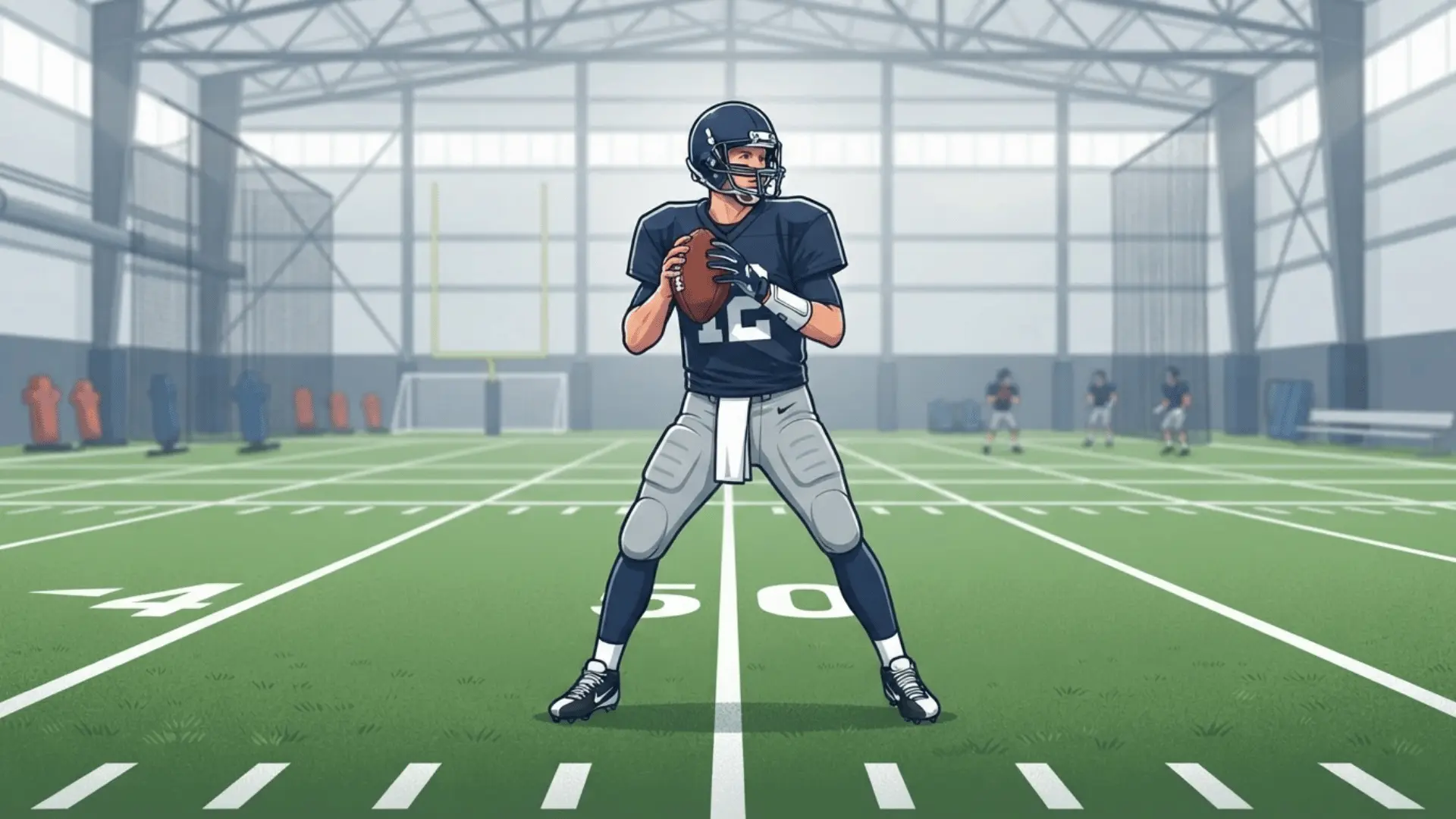
Your stance is the foundation of every throw. Stand with your feet shoulder-width apart and knees slightly bent. This gives you balance and lets you shift your weight smoothly as you throw.
Standing too narrow or too wide limits your power and throws off your aim. Keep your feet light, almost bouncing on your toes, instead of planted flat.
A flat-footed stance is one of the quickest ways to lose accuracy and strength in your pass.
7. Keep Your Body Sideways to the Target

My friend used to face the target straight on when he threw, and his passes always fell short. Turning your body sideways changes everything.
If you’re right-handed, your left shoulder should point toward your target, with your left foot forward. This position lets your hips and shoulders rotate naturally into the throw.
Facing forward limits that rotation and takes power away from your arm. A sideways stance is a small adjustment with a big payoff.
8. Cock Your Arm at a Right Angle
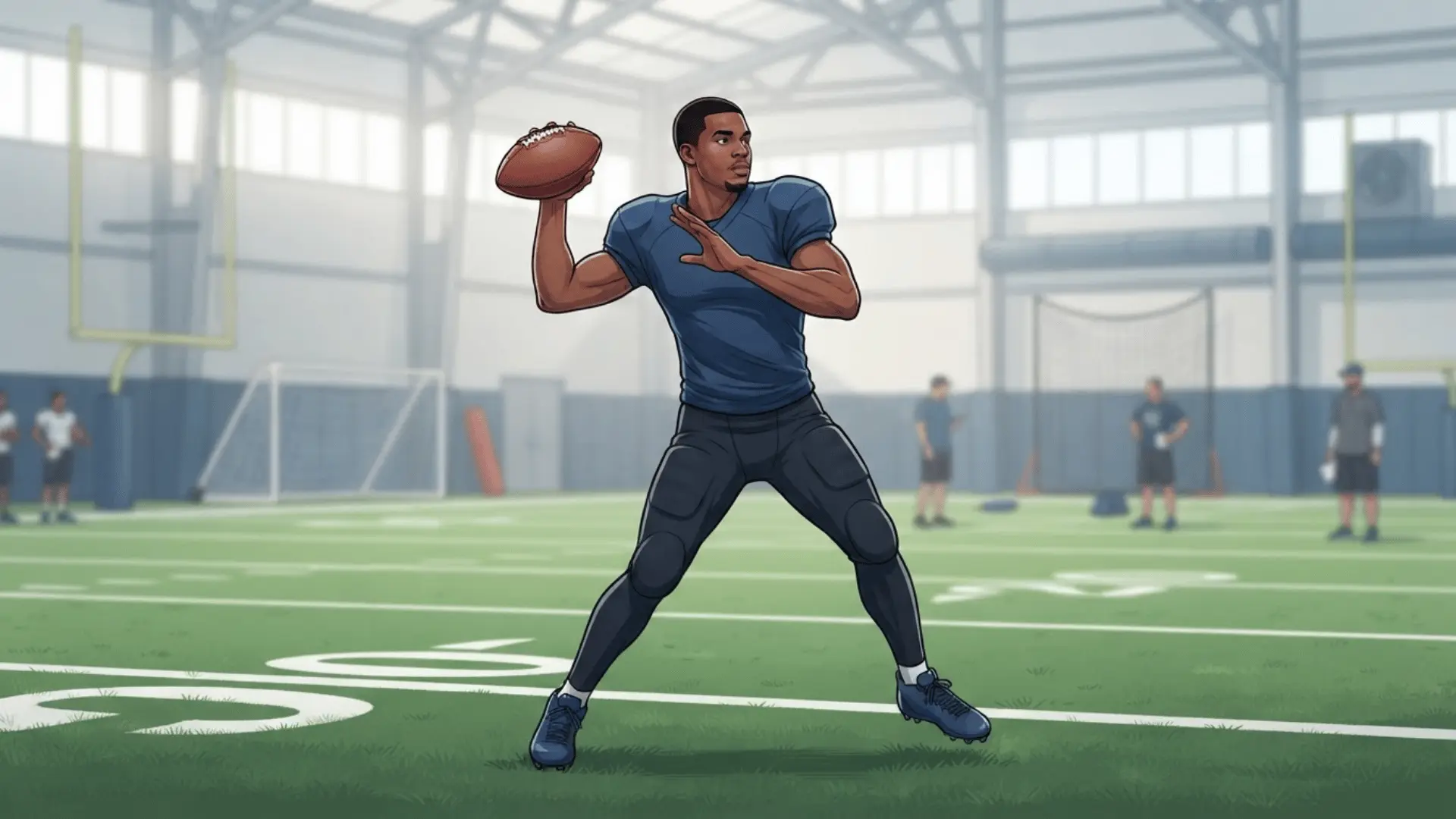
Think of your arm like a hinge. Your upper arm should sit perpendicular to your body, while your forearm holds a right angle at the elbow.
This position loads your arm for a strong, controlled release. Coaches often point to this angle first when fixing a wobbly throw.
Keep the ball pointed upward as you cock your arm back, and use your free hand to steady it. This setup keeps your motion consistent every time you throw.
9. Step Into the Throw

Plant your front foot. Rotate your hips. Push your throwing shoulder forward. Every good spiral starts with your legs, not just your arms.
As you begin your motion, step toward your target with your front foot while your back leg drives the power upward through your body.
Your non-throwing arm should reach out for balance. This full-body motion is what separates a strong, accurate throw from an arm-only toss that tires you out fast.
10. Release the Ball at the Highest Point
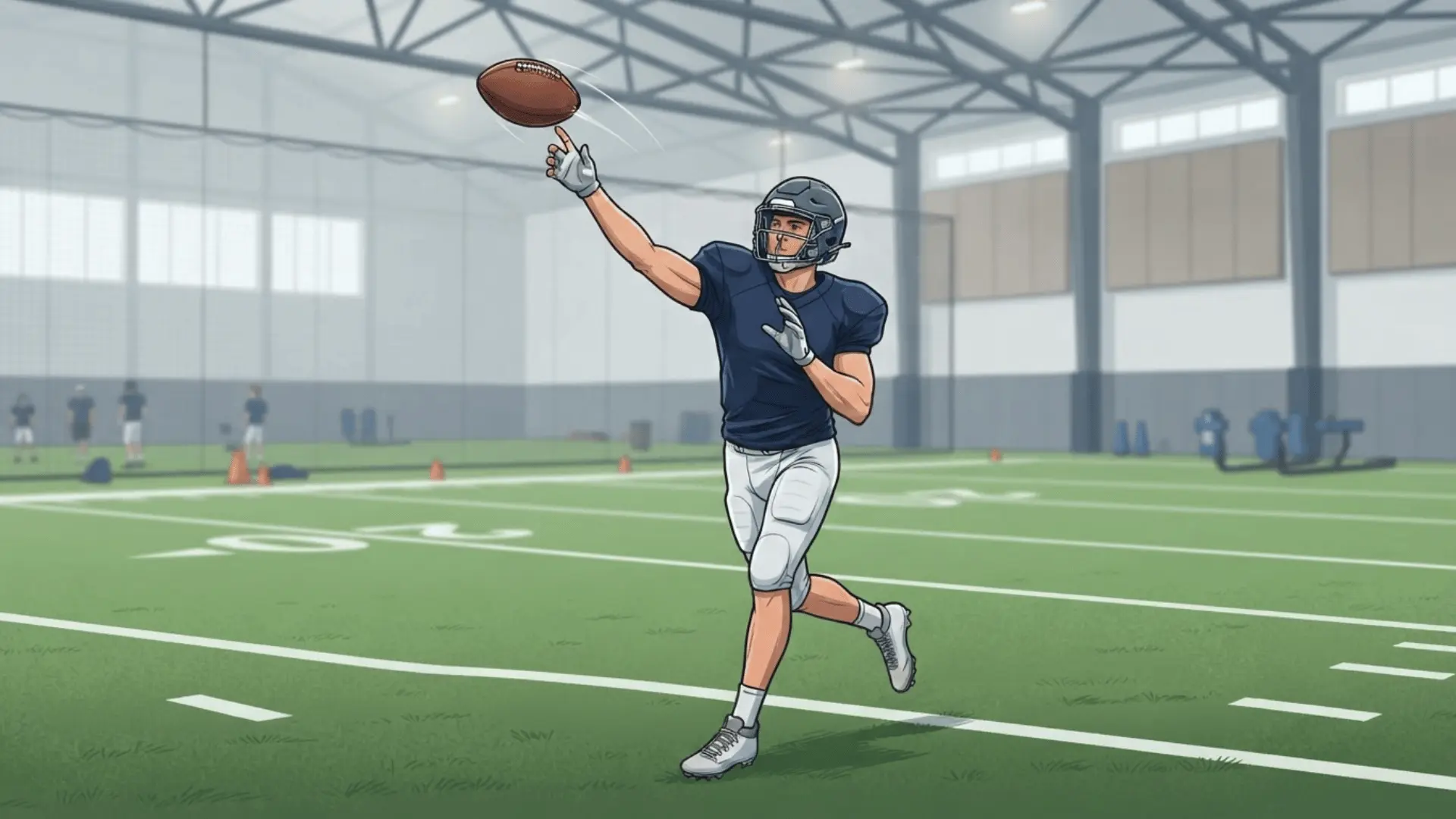
Timing your release is like catching a wave at just the right moment. Let go of the ball at the peak of your throwing motion, right before your arm starts moving downward.
Releasing too early sends the ball too high. Releasing too late drives it into the ground. Your palm should face down as you finish, almost like a chopping motion.
This exact timing takes practice, but it’s one of the biggest keys to a clean, tight spiral.
11. Spin the Ball With Your Fingers

Tip: The spin comes from your fingers rolling off the ball, not your wrist snapping.
As you release, let the ball roll off your fingertips, starting with your pinkie and finishing with your index finger last. This rolling motion is what creates the spin.
Your fingers act like the last point of contact, guiding the ball’s rotation. Without this motion, the ball leaves your hand flat, which causes wobbling instead of a smooth spiral.
12. Follow Through Every Time

A lot of players believe follow-through only matters on long throws. That’s not true. Stopping your arm the moment you release the ball is one of the fastest ways to ruin a spiral, even on short passes.
Rotate your throwing thumb down toward your opposite thigh and let your arm finish naturally. Your index finger should be the last part of your hand touching the ball.
This habit keeps every throw, short or long, consistent and controlled.
13. Check Your Wrist Snap at Release
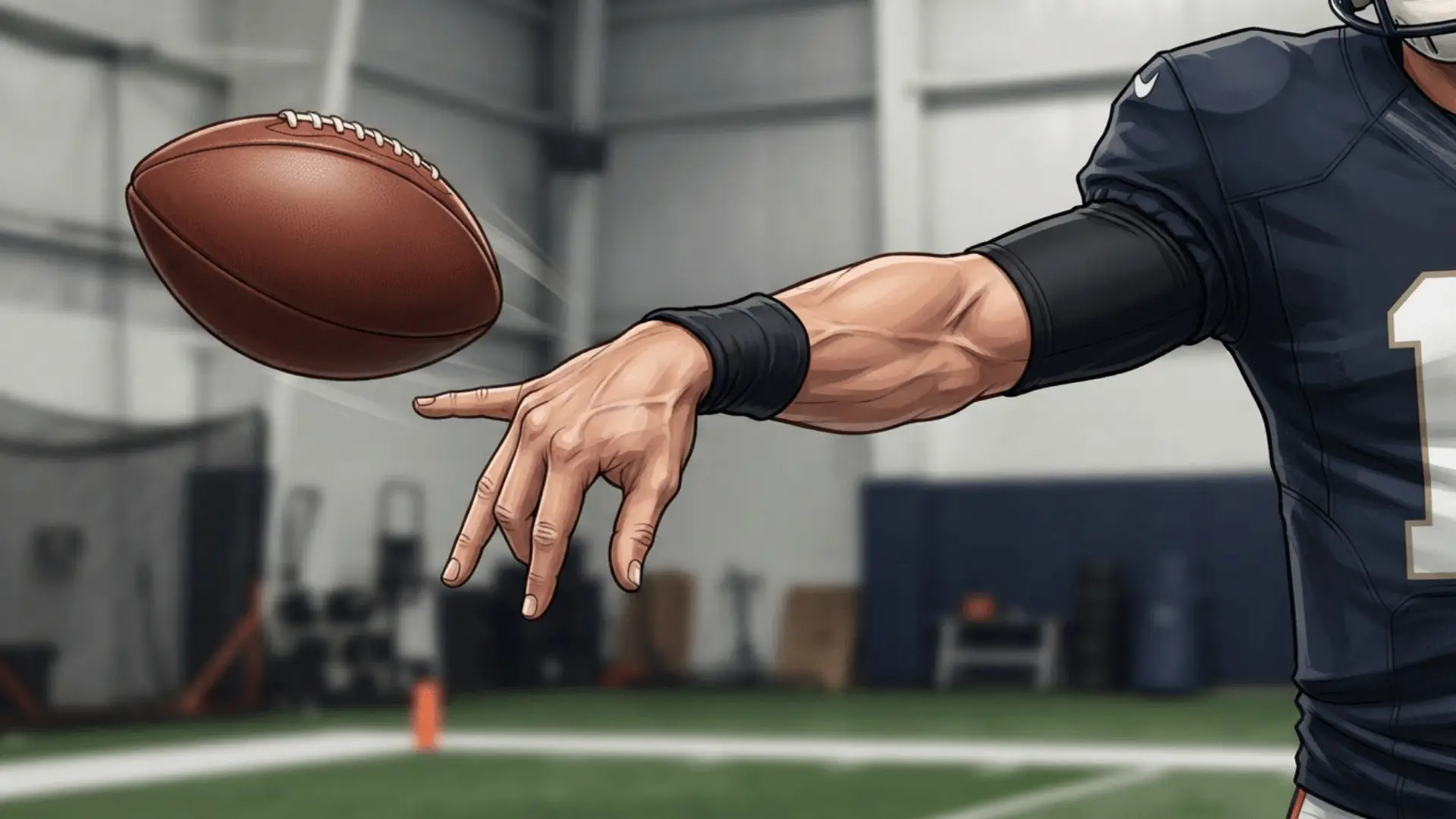
Your wrist should snap downward and slightly inward right as the ball leaves your hand, almost like turning a doorknob.
This motion adds extra spin without needing more arm strength. A stiff wrist is often the hidden reason a throw looks smooth but still wobbles.
Practice this snap slowly at first, then speed it up once it feels natural. When paired with the right grip, this small wrist movement can make your spiral tighter than working on arm strength alone can.
14. Start With Short Throws First
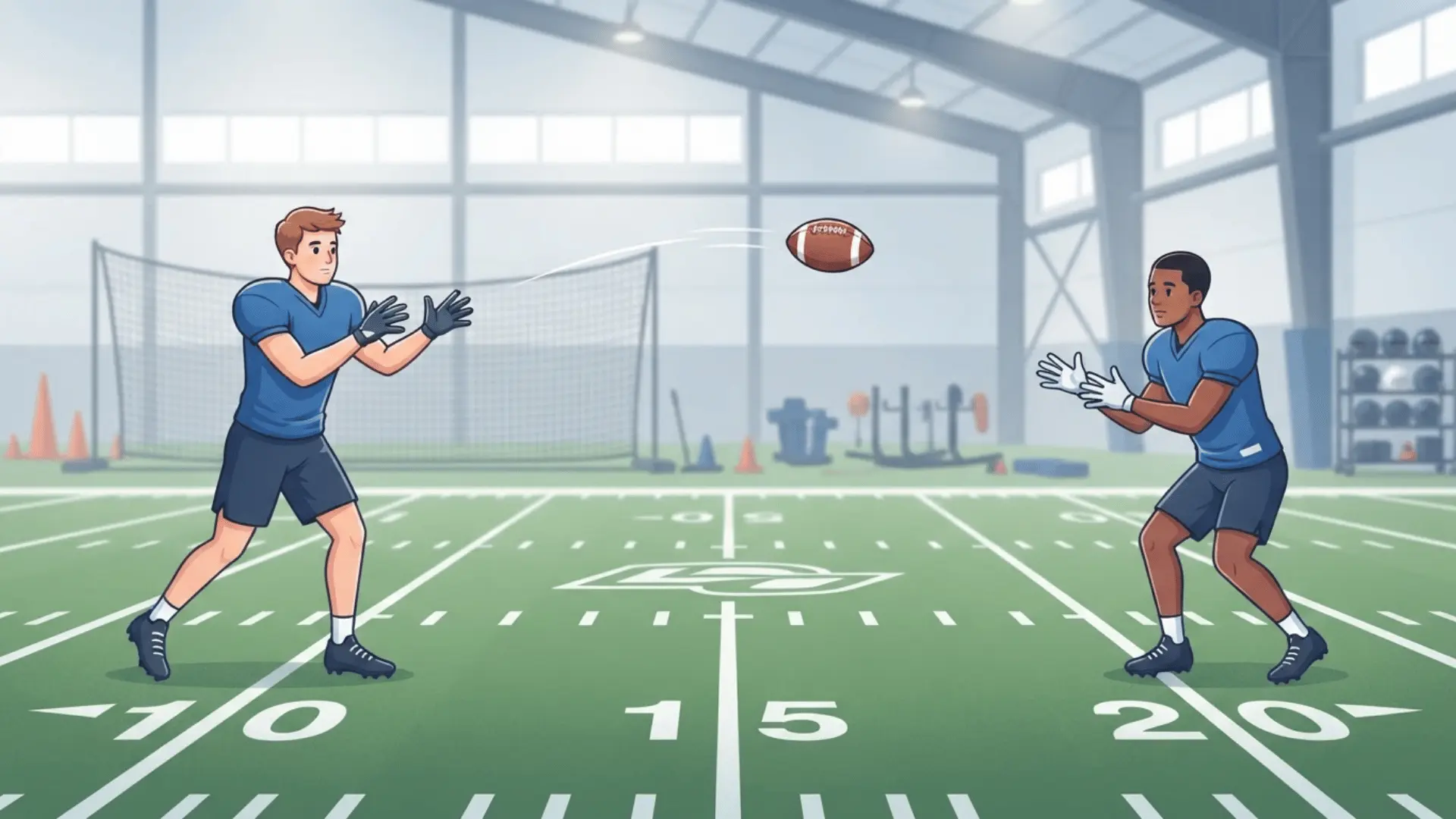
I saw a lot of beginners try to launch long passes before mastering the basics, and it never worked out well. Short throws help you build the muscle memory needed for a clean spiral.
- Start with throws of 10 to 15 yards
- Focus on grip and release, not distance
- Add distance slowly as your form improves
Once your short throws look tight and consistent, longer passes become much easier to control.
15. Build Arm and Hand Strength
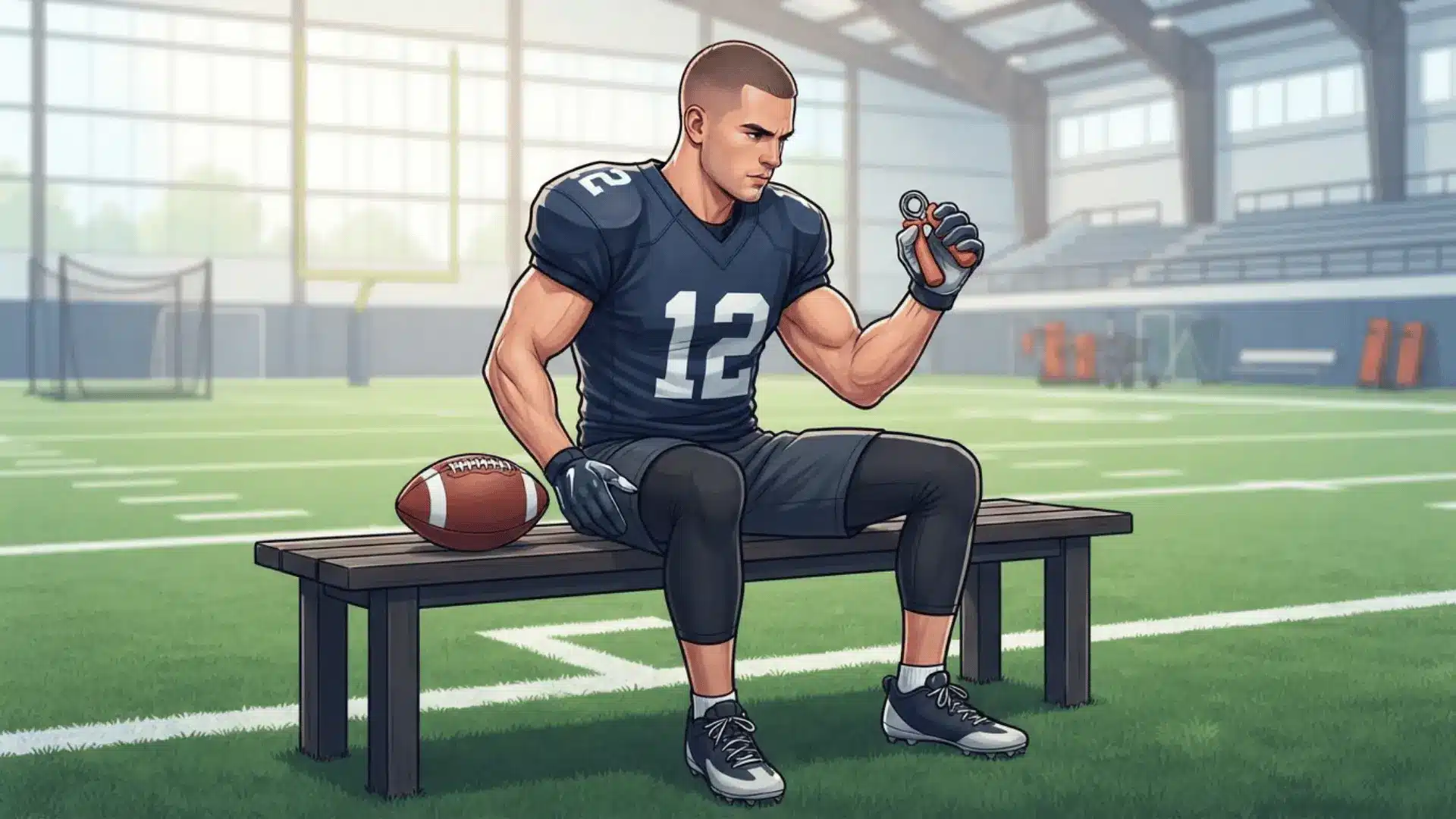
Good mechanics matter most, but strength gives your spiral more power over longer distances. I noticed a real difference once I added simple arm and grip exercises to my week.
Focus on your biceps, triceps, chest, and forearms, along with grip strength drills for your hands. Stronger hands help you control the ball’s spin, especially as throws get longer.
Pair this strength work with consistent practice, and your spiral will hold up no matter the distance.
Common Mistakes That Make the Ball Wobble
Small errors in grip or form are usually the real reason a pass wobbles instead of spins. Fixing these details is often faster than you’d expect.
| Mistake | Why It Happens | Quick Fix |
|---|---|---|
| Palming the ball | No space between the palm and ball limits spin | Grip with fingertips only |
| Flat-footed stance | Standing flat removes power from your legs | Stay light on your toes |
| Facing the target head-on | Reduces hip and shoulder rotation | Turn sideways before you throw |
| Releasing too early | Sends the throw sailing too high | Release at the peak of your motion |
| Releasing too late | Drives the ball into the ground | Time your release with your arm’s highest point |
| Skipping the follow-through | Cuts the spin short right after release | Finish with your thumb toward your opposite thigh |
| Gripping too tight | Tires your fingers and stiffens your release | Hold firm but relaxed |
| Using the wrong ball size | Makes control harder no matter your technique | Match the ball size to your age group |
| Throwing long before mastering short passes | Builds bad habits early | Practice 10 to 15-yard throws first |
| Skipping warmups | Leads to tight muscles and weaker throws | Stretch your shoulders and back before playing |
Most of these mistakes connect back to the basics of how to throw a football spiral, so correcting even one or two can noticeably tighten your throw.
What Actually Helps Players Throw a Better Spiral
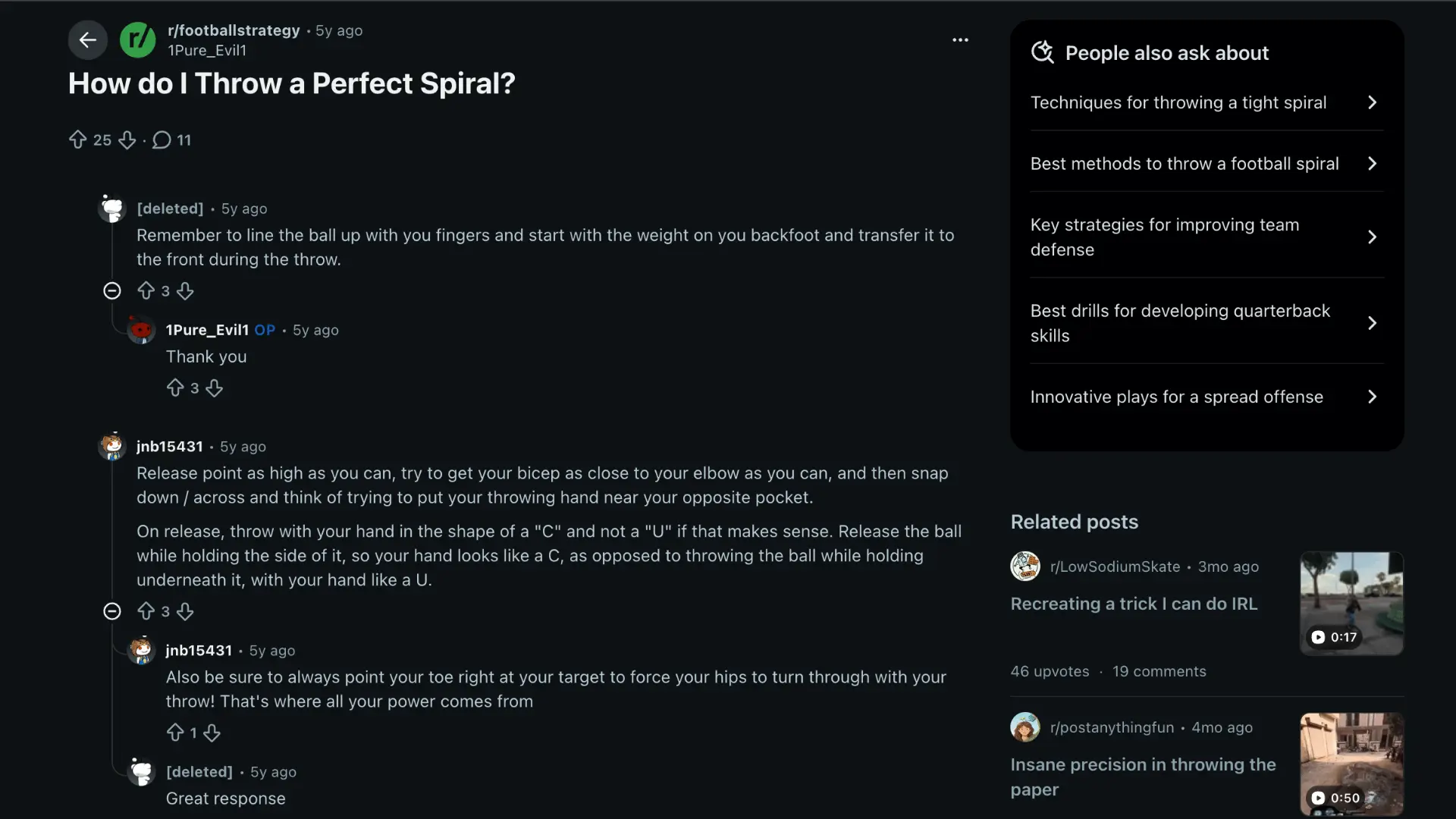
A Reddit user asking how to throw a perfect spiral got advice that comes back to one simple idea: mechanics matter more than arm strength.
The most useful comments focused on lining the ball up with your fingers, starting with weight on the back foot, and transferring that weight forward during the throw.
Another Reddit user explained that the release point should stay high, with the throwing hand snapping down and across toward the opposite pocket. That motion helps the ball roll off the fingers rather than slip out flat.
Tip: Point your toe at the target so your hips turn through the throw.
In simple terms, a better spiral comes from grip, weight transfer, high release, hip rotation, and steady practice.
Best Drills to Throw a Better Spiral
These simple drills build the muscle memory your arm needs without overwhelming your form. A few minutes of focused practice can sharpen your motion faster than random throwing.
| Drill | What It Trains | How Often |
| Fingertip ball drops | Fingertip control instead of palming | Daily, 2-3 minutes |
| Wall spiral drill | Consistent grip and release point | 3-4 times a week |
| Short toss with a partner | Accuracy and clean release timing | Every practice session |
| One-knee throwing drill | Upper body mechanics without leg power | 2-3 times a week |
| Footwork ladder drill | Foot placement and balance before throwing | Weekly |
| Follow-through freeze drill | Reinforces full arm extension after release | Daily, a few reps |
| Distance step-back drill | Gradually builds arm strength for longer throws | Weekly, as the form improves |
| Target throwing drill | Precision aiming while keeping the spin tight | 2-3 times a week |
Working through these drills regularly gives you a clear path for how to throw a football spiral with more control, even if you’re starting from scratch.
Final Thoughts
Throwing a tight spiral isn’t about talent. It’s about repeating the right steps until they feel natural. Your grip, your stance, your release, they all work together, and small corrections can make a big difference in how the ball flies.
You don’t need to fix everything at once. Pick one or two tips from this guide, practice them this week, and build from there. Progress in football often comes from these small, steady changes rather than one big breakthrough.
The next time you step onto the field, focus on the basics you just learned and trust your form.
Have you tried any of these tips? Drop a comment below and let us know how your spiral is coming along.
Frequently Asked Questions
Do You Need Big Hands to Throw a Spiral?
No, you don’t need big hands; an appropriately sized ball, fingertip grip (not on the palm), and sound mechanics matter far more than hand size.
How Long Does It Take to Learn a Football Spiral?
Most beginners can learn a decent spiral in a few focused practice sessions, but building consistent, game-speed spirals usually takes several weeks of regular reps.
How to Throw a Perfect Spiral More Consistently?
Use a fingertip grip, a stable wrist, smooth hip-and-shoulder rotation, and finish with your index finger last off the ball with a downward wrist pronation, then drill short, repeatable throws often.