



Football used to be a game where head injuries were just part of the deal. That’s wild to think about now. The first football helmet came from pure necessity, not fancy design.
Players got hurt, and something had to change fast. Nobody planned to invent modern gear overnight. It happened piece by piece, test by test, season by season.
Coaches and doctors argued over what worked and what did not. Some players even refused to wear the thing at first. Yet that clunky cap set football on a new path.
You can trace every helmet on the field today back to that shaky start. One small leather cap changed football forever.
Early Days of Football Without Helmets
Early football in the late 1800s looked nothing like today’s game. Players wore thick sweaters and leather shoes, but no helmets or pads.
Games often turned brutal, with mass pileups called “mass momentum plays.” Broken bones and concussions happened all the time, and nobody tracked them closely.
Doctors began noticing strange symptoms in players after hard hits. Some men suffered memory loss or confusion for days. A few even died on the field from severe head injuries.
Newspapers reported these deaths, and public pressure grew fast. College officials and coaches worried the sport might get banned entirely.
That fear pushed players, doctors, and universities to demand real safety changes.
Who Invented the First Football Helmet?

No one person invented the football helmet overnight. Early head protection grew out of necessity, not from a single clean idea. Joseph M. Reeves often gets credit for wearing one of the first helmets in 1893.
His leather cap looked like something borrowed from early aviation gear. Team doctors and players also experimented with padding on their own.
They wanted to stop skull fractures and repeated head injuries during rough games. Colleges became testing grounds for these early designs.
Many players resisted wearing helmets at first, calling them bulky or unmanly. Coaches worried gear might slow players down on the field. Slowly, safety concerns won out over stubborn pride.
What did the First Football Helmet Look Like?

Early helmets were simple and far from perfect. They offered some comfort but still left players open to injury.
Early Leather Construction
The first helmets were made of soft leather, nothing like the hard shells players wear today. Padding inside stayed thin and offered little real cushioning.
Simple chin straps kept the helmet from sliding off during rough plays. Some designs added ear flaps for a bit of extra coverage. These helmets looked more like padded caps than true armor.
They gave players some comfort but not much actual protection. Manufacturers were still learning what worked and what didn’t. Early testing relied heavily on trial and error.
Design Limitations
Early helmets came with serious flaws despite good intentions. These gaps left players exposed in ways we wouldn’t accept now. Here are the biggest limitations of these first designs:
- No face mask, leaving the face and jaw completely unprotected
- Limited shock absorption, so hard hits still reached the skull
- Loose fit that could shift or slide during fast plays
- Thin materials that wore down quickly with regular use
- No standard sizing, so protection varied from player to player
These flaws meant injuries still happened often, even with helmets on. Real improvements would take many more years of testing and change.
First Adoption in College Football
Ivy League schools and military academies were among the first to try helmets. These programs had access to new gear and money to test it. Players there slowly warmed up to wearing head protection during games.
Other competitive teams watched and eventually followed their lead. Rising injury reports pushed officials to consider real rule changes.
Some schools even threatened to drop football over safety worries. That pressure led to early rules that encouraged or required the use of protective gear.
Word spread fast once teams saw fewer injuries with helmets on. By the early 1900s, more college teams regularly adopted helmets. Safety concerns, not style, drove this slow but steady shift.
Evolution of Football Helmets Over Time
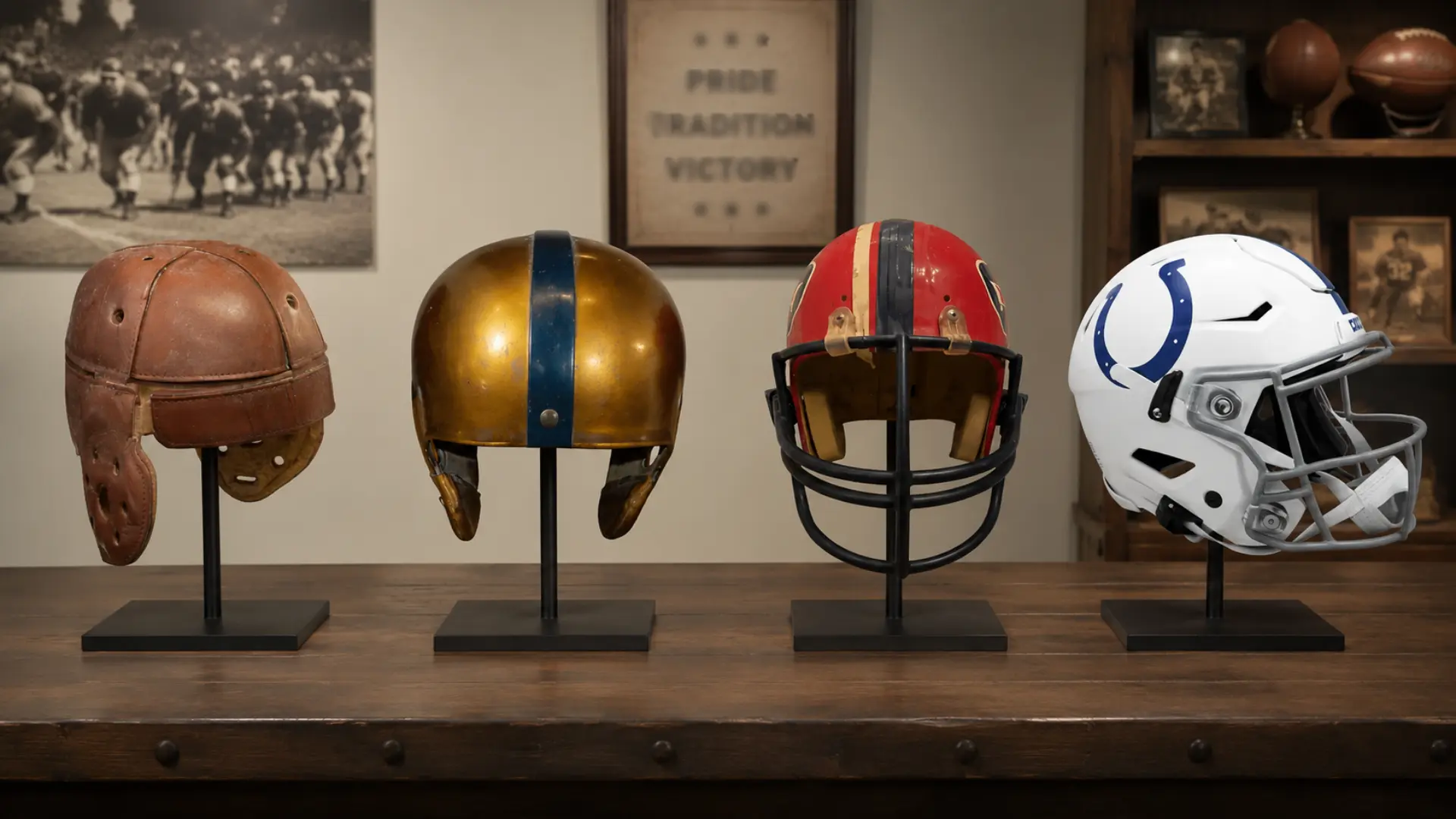
Football helmets have changed a lot over the decades. Each era brought new materials and smarter safety features. Here’s how the helmet evolved over time:
1900s–1940s: Leather Era
Early helmets were made of soft leather for several decades. Padding stayed thin and offered only basic protection. Players relied on these simple designs through many rough seasons.
Leather worked okay but wore out fast with heavy use. It also lost shape after repeated hits and sweat. Teams had few better options during this long stretch.
Change wouldn’t come until new materials appeared.
1950s–1960s: Introduction of Plastic Shells
Plastic shells finally replaced old leather designs in the 1950s. These hard shells held their shape much better over time. They also absorbed impact more effectively than soft leather ever could.
Players noticed fewer injuries once plastic became the standard choice. Manufacturers kept testing new shapes and materials during this stretch.
This shift marked a major turning point for player safety. Football finally had real head protection.
1960s–1980s: Face Masks and Additional Protection
Metal face masks appeared during this important stretch of years. They protected players’ faces from cuts and broken bones. Neck straps also became more common across college and pro teams.
Helmets began to fit more snugly around each player’s head. This snug fit reduced movement during hard collisions on the field.
Safety continued to improve as manufacturers listened to player feedback. Football gear looked more modern than ever.
1990s–Present: Modern Helmets
Today’s helmets use advanced padding made from high-tech foam. Air cushioning systems adjust to each hit’s specific force. Some helmets even include sensors that track impact data instantly.
This data helps coaches and doctors watch for signs of concussions. Modern designs focus heavily on reducing the risk of long-term brain injury.
Technology keeps pushing helmet safety further than early designs ever imagined. Football safety continues to advance every year.
How Football Helmet Safety Standards Were Developed
Football helmet safety standards developed as the game became faster and injuries became harder to ignore.
Early helmets were judged mainly by comfort and basic protection, but later football leaders started focusing on impact resistance and player safety.
The NFL and NCAA played important roles by creating rules that made helmets required equipment and by supporting safer playing conditions.
Over time, helmets also began to undergo testing to assess how well they handled impact during tackles and collisions.
Important safety improvements included:
- NFL and NCAA regulations: Helped make helmets part of standard football equipment
- Impact testing: Checked how well helmets absorbed and spread force
- Rule changes: Reduced dangerous hits and improved player protection
- Better design standards: Pushed companies to improve padding, fit, and shell strength
- Concussion awareness: Helped teams take head injuries more seriously
These standards did not remove all risks, but they made football much safer than before.
Materials Used in Football Helmets Today
Modern football helmets use advanced materials to give players better protection and comfort. Here’s a look at the key materials found in today’s helmets:
| Material | Where It’s Used | What It Does |
|---|---|---|
| Polycarbonate | Outer shell | Spreads the force of a hit across a wider area instead of one spot |
| EVA foam | Inside padding | Cushions the head and absorbs shock from tackles, blocks, and falls |
| Air-fit material | Inside padding pockets | Adjusts to create a tighter fit around the player’s head |
| Metal alloy | Face mask | Guards the nose, mouth, teeth, and jaw from direct hits |
| Nylon and rubber | Chin straps and jaw pads | Keep the helmet secure and stop it from moving |
Each material plays its own role in keeping players safer on the field. Together, they turn a simple shell into a real piece of safety gear.
Famous Moments in Helmet History
The history of helmets is full of turning points that shaped the game. Severe injuries in early football forced officials to rewrite the rules.
Deaths and serious head trauma pushed leagues toward mandatory helmet requirements. Once helmets became required, injury patterns began to shift across all levels of play.
The NFL later rolled out major safety reforms amid growing concerns about concussions. These reforms changed how tackles, hits, and contact drills were handled.
Medical research kept guiding these changes with new data and findings. Doctors and scientists helped leagues understand the long-term risks of brain injury.
Each reform built on lessons learned from past mistakes and tragedies. Together, these moments pushed football toward a much safer future.
First Football Helmet vs Modern Helmet
Football helmets have come a long way since the early 1900s. The difference between then and now is honestly hard to believe. Here’s how the first helmets stack up against today’s designs:
| Category | First Football Helmet | Modern Helmet |
|---|---|---|
| Protection Level | Offered minimal protection and still allowed frequent injuries | Offers strong protection built to reduce impact and concussion risk |
| Material Differences | Made from soft leather with thin, basic padding | Made from hard polycarbonate shells with advanced foam padding |
| Weight and Comfort | Heavy and stiff, with little thought given to comfort | Lightweight and snug, designed for comfort during fast play |
| Safety Technology | Had no face mask, sensors, or shock-absorbing systems | Includes face masks, impact sensors, and air-fit cushioning systems |
These differences show just how far helmet design has come. Player safety today looks nothing like it did over a century ago.
Bottom Line
Helmet design kept changing because players demanded better protection. Leather gave way to plastic, then to foam and sensors. Testing standards forced companies to build stronger, safer gear.
None of that progress happened by accident or luck. Injuries taught hard lessons, and those lessons shaped every new design. You now see face masks, cushioned pads, and impact sensors on every helmet.
Each piece exists because something failed before it. Football keeps learning from its past mistakes to better protect players. Gear will keep evolving as new research uncovers fresh risks.
Drop your thoughts on helmet safety in the comments below.
Frequently Asked Questions
When was the First Football Helmet Used?
One early example of football head protection is linked to Joseph M. Reeves, who reportedly wore a custom moleskin headpiece in 1893.
What were Early Football Helmets Made of?
Early football helmets were made from soft leather, moleskin, or thick leather straps. They offered only basic protection during rough contact.
Are Modern Football Helmets Completely Safe?
No, modern football helmets are much safer than early designs, but they still cannot prevent every concussion or serious head injury.