



Ever look at a stat sheet and see “snap count” next to a player’s name and wonder what it actually means? You’re not alone. It’s one of those numbers that gets tossed around a lot, but most people never learn how to use it properly.
Put simply, a snap count tells you how many plays a player was on the field for. But once you know how to read it the right way, it can tell you so much more, like who a coach really trusts or who might get a bigger role soon.
In this guide, we will break down what snap counts mean and how to read the percentages. We will also look at what rising or falling numbers can tell you about a player’s future.
Along the way, we will cover snap counts by position, common mistakes to avoid, and the best free tools to track them all season long.
How to Read Snap Count Percentage
Snap count percentage sounds complicated, but the math behind it is simple. Take the number of snaps a player played and divide it by the team’s total plays for that game. That’s it.
This percentage, often called snap share, is what most fans and analysts look at instead of the raw number.
Snap Share (%) = (Player’s Snaps Played ÷ Team’s Total Snaps) × 100
Example: If a wide receiver plays 55 snaps out of the team’s 70 total offensive plays in a game:
Snap Share = (55 ÷ 70) × 100 = 78.6%
This tells you the player was on the field for about 79% of his team’s offensive plays that game.
Here’s the catch. One game’s snap share can be misleading.
A blowout win or loss changes how many plays a team runs. Bad weather can slow things down. An injury during the game can push a backup’s snaps way up for reasons unrelated to his role going forward.
That’s why a single week’s number is not enough on its own. The better move is to look at 3 to 4 weeks of snap share together. A trend across several games tells you a lot more than any one game ever could.
What Snap Count Trends Signal for Upcoming Games
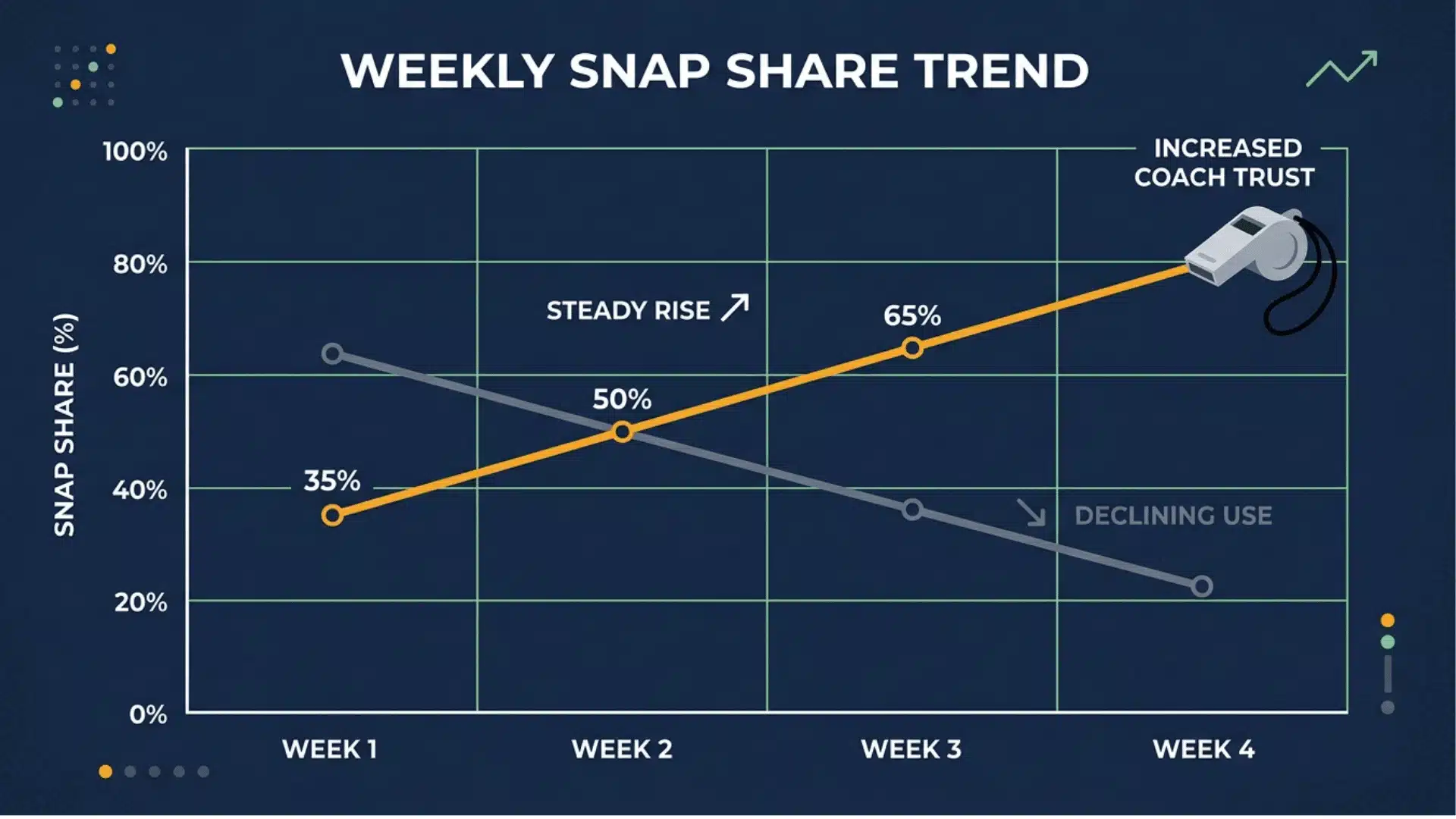
Once you start tracking snap share over a few weeks, the real value shows up in the direction it’s moving.
A rising Snap share usually means one thing: the coaching staff trusts that player more than before. Maybe he’s earned a bigger role. Maybe an injury ahead of him on the depth chart just opened up more reps.
A falling Snap share tells a different story. It could mean a committee is forming at that position. It could mean the player is losing snaps to someone else. Or it could point to a scheme change that no longer uses him as much.
So how do you tell a real trend from noise? Use these checks:
- Snap share rising for 2 or more weeks in a row, even in normal games, usually means real trust from the coaching staff
- Snap share rising only during a blowout is most likely just game-script noise, not a lasting change
- Snap share dropping with no injury reported is worth watching closely, since it can be a quiet sign a player is losing his role
This is really the whole point of tracking snap trends in the first place. Once you can read the direction correctly, you get a good idea of a player’s workload next week before the stats or the score ever prove it.
Snap Counts by Position
Not every position follows the same rules regarding snap share. What counts as a strong number for a quarterback would be a low number for a running back.
And a high snap share does not always mean a player is producing. Here’s a quick breakdown of what to expect at each spot.
| Position | Every-Down Role | Committee Role | Situational Role | Watch-Out |
|---|---|---|---|---|
| QB | ~100% | — | — | Anything less signals injury or benching |
| RB | 65%+ | 40–65% | Under 40% | A third-down or passing back may have low snaps but high value |
| WR | 70%+ | 45–70% | Under 45% | 3-WR sets can inflate slot snap share |
| TE | 60%+ | 35–60% | Under 35% | Blocking-heavy TEs can post high snaps with low production |
| DL/LB/DB | 70%+ | 40–70% | Sub-package only | Nickel and dime packages can cause misleading weekly swings |
Here’s the part a lot of people miss: high snaps do not always mean high production. A blocking tight end can play almost every snap and still barely touch the ball.
A third-down back might play half the snaps of the starter and still score more fantasy points. Always pair snap share with routes run, touches, or red-zone share before making any calls on a player.
Snap Share vs. Route Participation: Why They’re Not the Same
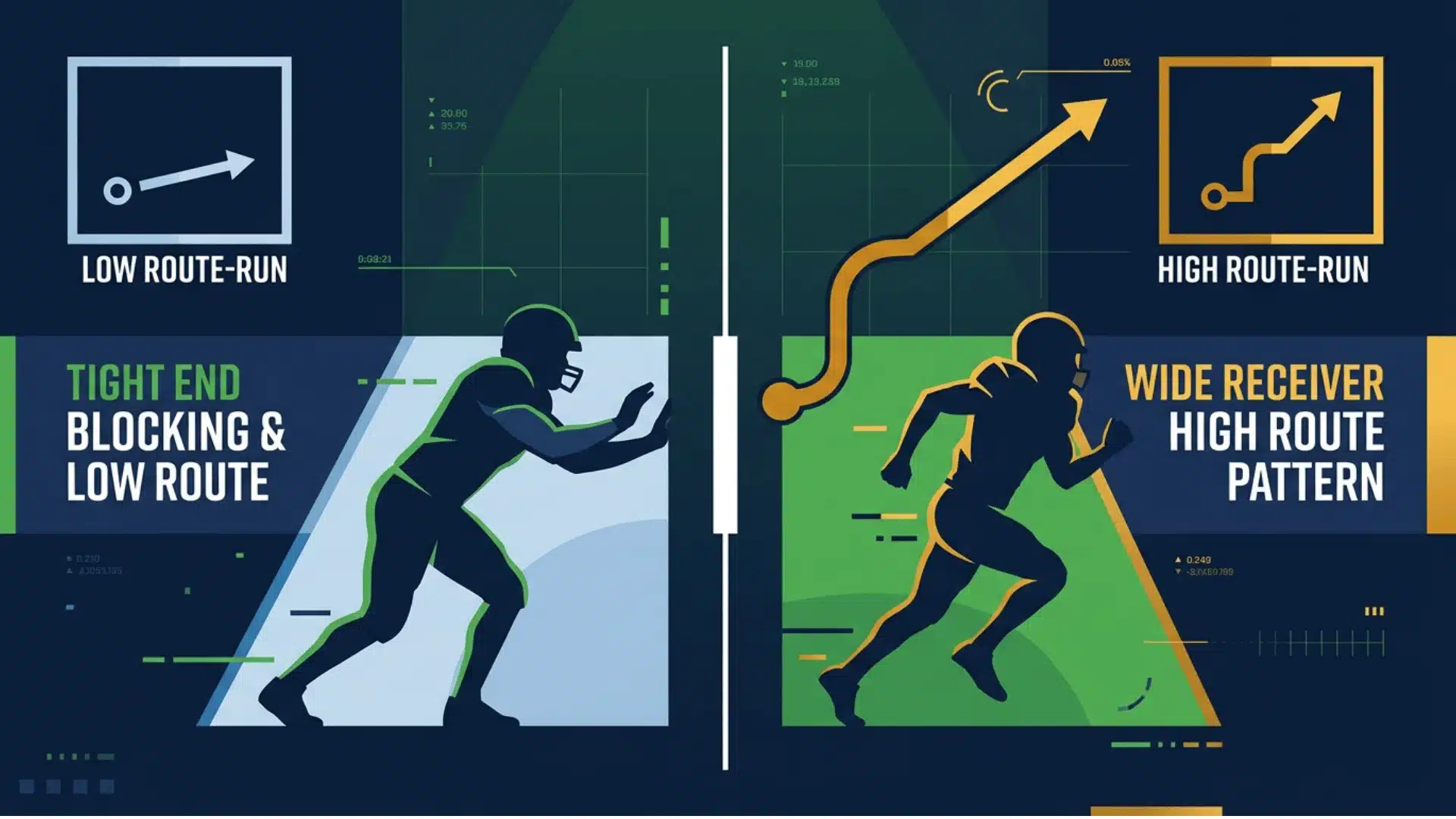
Snap share tells you how often a player is on the field. It does not tell you how often he’s actually getting the ball thrown his way.
This gap matters most at wide receiver and tight end. A blocking tight end might play 90 percent of the snaps and still run a route on less than half of them.
Meanwhile, a receiver playing 60 percent of the snaps but running a route on almost every one of those plays is getting far more real opportunity than the snap number alone suggests.
Route participation, which is the percentage of pass plays a player ran a route on, fills in that gap.
If two players have the same snap share but very different route rates, the one running more routes usually has the better shot at targets, catches, and production going forward.
The simple rule: use snap share to see how much a coach trusts a player on the field. Use route participation to see how much that player is actually part of the passing game.
How to Spot a Breakout (or a Bust) Using Snap Trends
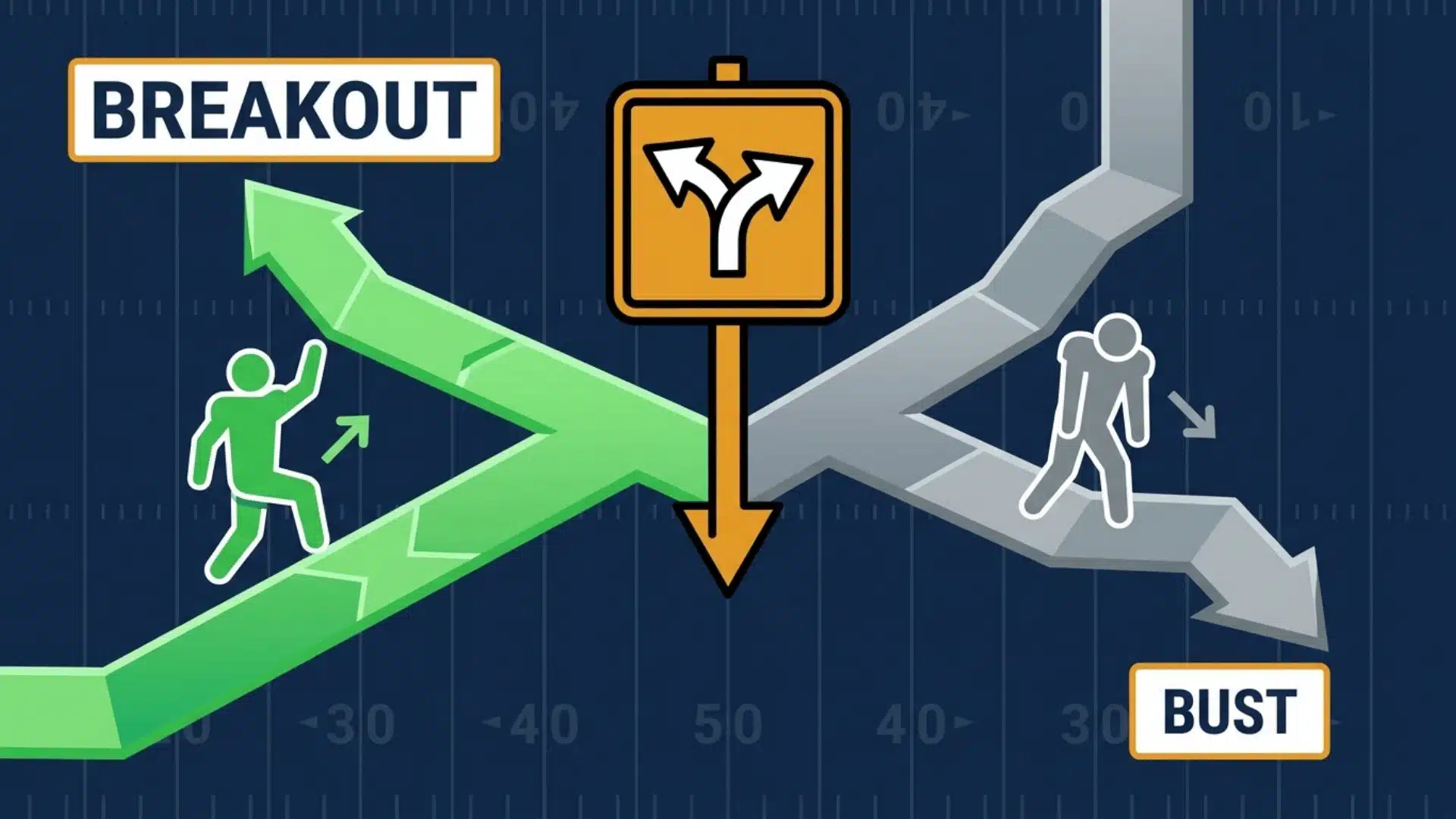
Now that you know what normal snap share looks like by position, the next step is to spot changes early. Here’s what to watch for.
Green flags:
- Snap share climbing over several weeks in a row
- The increase holds up even in games the team is losing
- A rookie or backup’s snaps rise after a trade or injury opens up a role
Red flags:
- Snap share drops two weeks in a row with no injury reported
- Snaps stay flat while another player at the same spot keeps climbing
- Snaps stay high, but routes run, or touches start shrinking
A common pattern looks something like this. A backup running back starts at 20 percent of the snaps in week 1.
By week 4, he’s up to 45 percent, even though the team hasn’t said much about it. His touches and yards slowly climb along with it.
By the time it shows up in the box score, anyone watching Snap Share had already seen it weeks earlier. That’s the real value of tracking the trend instead of waiting on the stat line.
Reading a Trend Week by Week
Here’s what a real trend often looks like when you track it properly.
| Week | Snap Share | What Changed |
|---|---|---|
| 1 | 22% | Backup role behind starter |
| 2 | 28% | No change reported |
| 3 | 41% | Starter dealing with minor injury |
| 4 | 47% | Role holds even with starter healthy |
Week 3 alone could be noise. An injury ahead of a player often bumps his snaps for one game, then fades back down.
Week 4 confirms it: the share held even after the starter returned healthy, showing a real role change rather than a temporary bump.
Plotted on a line, that’s a steady climb, not a spike. A spike that drops back is usually game script, not something to build a lineup call on.
Best Free Tools for Tracking Snap Counts
You don’t need to track snap counts by hand. A few free tools already do the work for you, and each one is good for something a little different.
| Tool | Best For | View Type |
|---|---|---|
| Footballguys | Scanning a full team’s depth chart, week by week | Team/position grid |
| FantasyPros | Fast league-wide snap count leaderboards | Count & percentage views by position |
| FTN Fantasy | Pairing Snap Share with Target Share in one place | Snap counts, game logs, and team targets |
If you want to check one team’s full depth chart at a glance, Footballguys is the easiest place to start.
If you just want to quickly compare players across the whole league, FantasyPros does that well. And if you want to see snap share next to target share without switching pages, FTN Fantasy puts it all in one spot.
One quick tip: use the count view when you want to see raw workload, and switch to the percentage view when you’re comparing players across different teams. Percentages give you a fairer comparison since not every team runs the same number of plays.
Common Mistakes to Avoid
Snap counts are useful, but only if you read them the right way. Here are a few mistakes that trip people up.
- Overreacting to one game: A blowout, bad weather, or an injury can throw off a single week’s numbers.
- Ignoring pace differences: A 55 percent snap share means something different on a fast-paced offense than it does on a slow one, since fast teams simply run more plays.
- Treating defensive snaps like offensive ones: Sub-packages like nickel and dime make weekly defensive numbers swing more, even when a player’s role hasn’t really changed.
- Forgetting to check production alongside snap share: The snap number alone never tells the whole story.
Key Takeaways
At the end of the day, a snap count is just a number, but the trend behind it tells a real story.
Track it over a few weeks rather than a single game, check it against the right benchmark for that position, and always pair it with real production before you make a call on a player.
Do that, and you’ll spot role changes weeks before they show up anywhere else.
The next time you’re setting a lineup or trying to figure out where a team’s offense is headed, pull up one of the tools we covered and check the trend for yourself.
Pick a player you’re unsure about, look at his last four weeks of snap share, and see what it tells you. Try it once, and you’ll probably keep doing it all season.
Frequently Asked Questions
What Counts as a Good Snap Share for a Fantasy Starter?
Look for at least 65-70 percent for running backs and receivers. Below that, a player usually shares touches with someone else on the roster.
Do Special Teams Plays Count Toward Snap Counts?
No. Snap counts only track offensive or defensive plays. Kickoffs, punts, and field goal units are tracked separately and don’t affect a player’s snap share.
How Early in the Season Can Snap Trends be Trusted?
Give it at least 3-4 games. Week 1 numbers often shift due to game plans, so early trends can be misleading on their own.
Can a Backup with Low Snaps Still be Worth Starting?
Yes. Some backups play fewer snaps but see most of the touches in their roles, such as a third-down back or red-zone target.