

A Division I college football team can carry up to 105 players under NCAA Division I Bylaw 17.2. The limit took effect for the 2025–26 season at schools participating in the House v. NCAA settlement, including those that opted in.
The rule covers both the Football Bowl Subdivision (FBS) and Football Championship Subdivision (FCS) at participating schools.
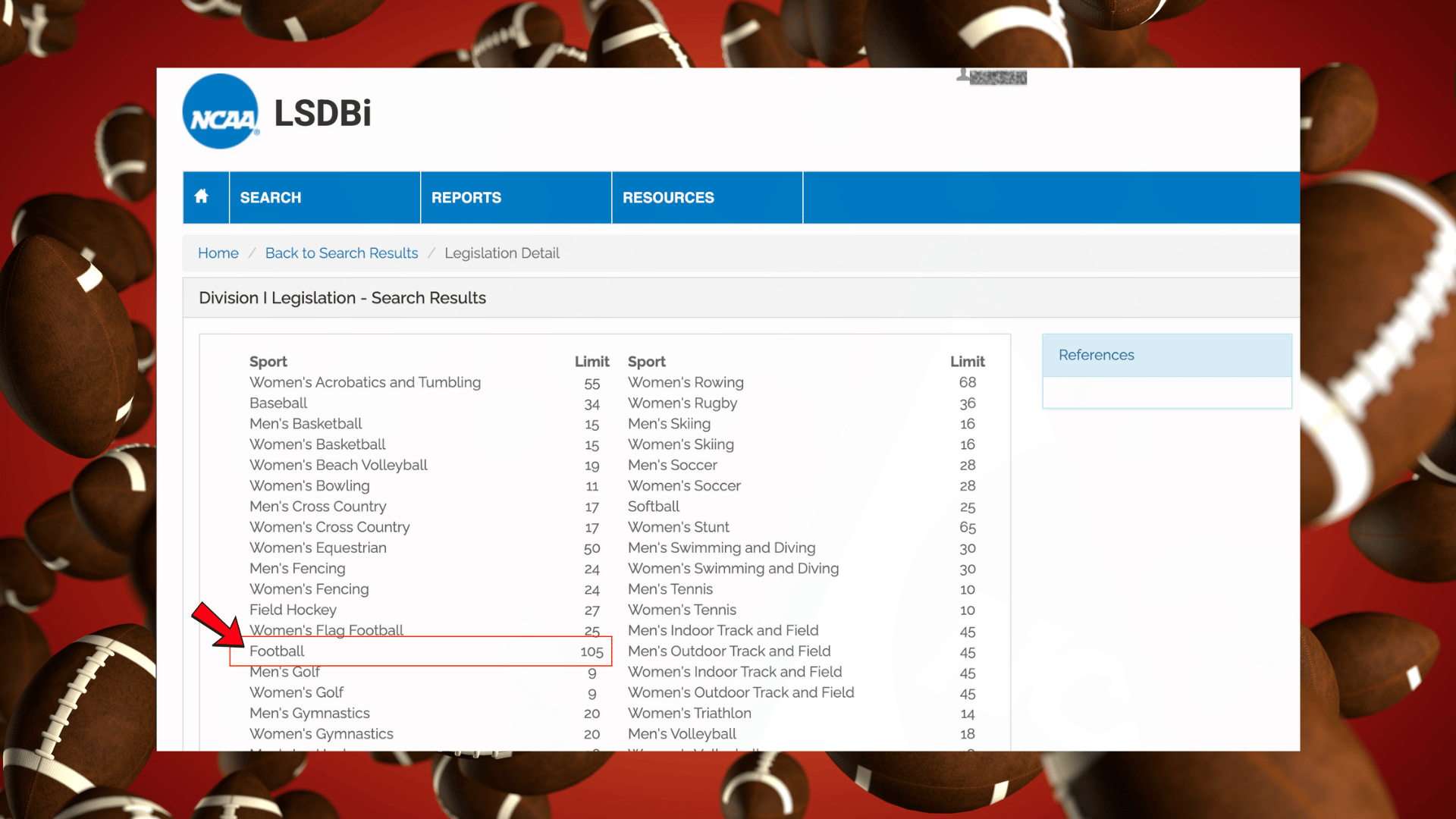
Source: NCAA LSDBi
Division II and Division III have no equivalent NCAA roster cap, so schools determine their own squad sizes.
There are exceptions to the limit, and you’ll know exactly what it is as you read.
So how many players are on a college football team in practice? The actual number depends on the school’s division, budget, recruiting needs, and coaching decisions.
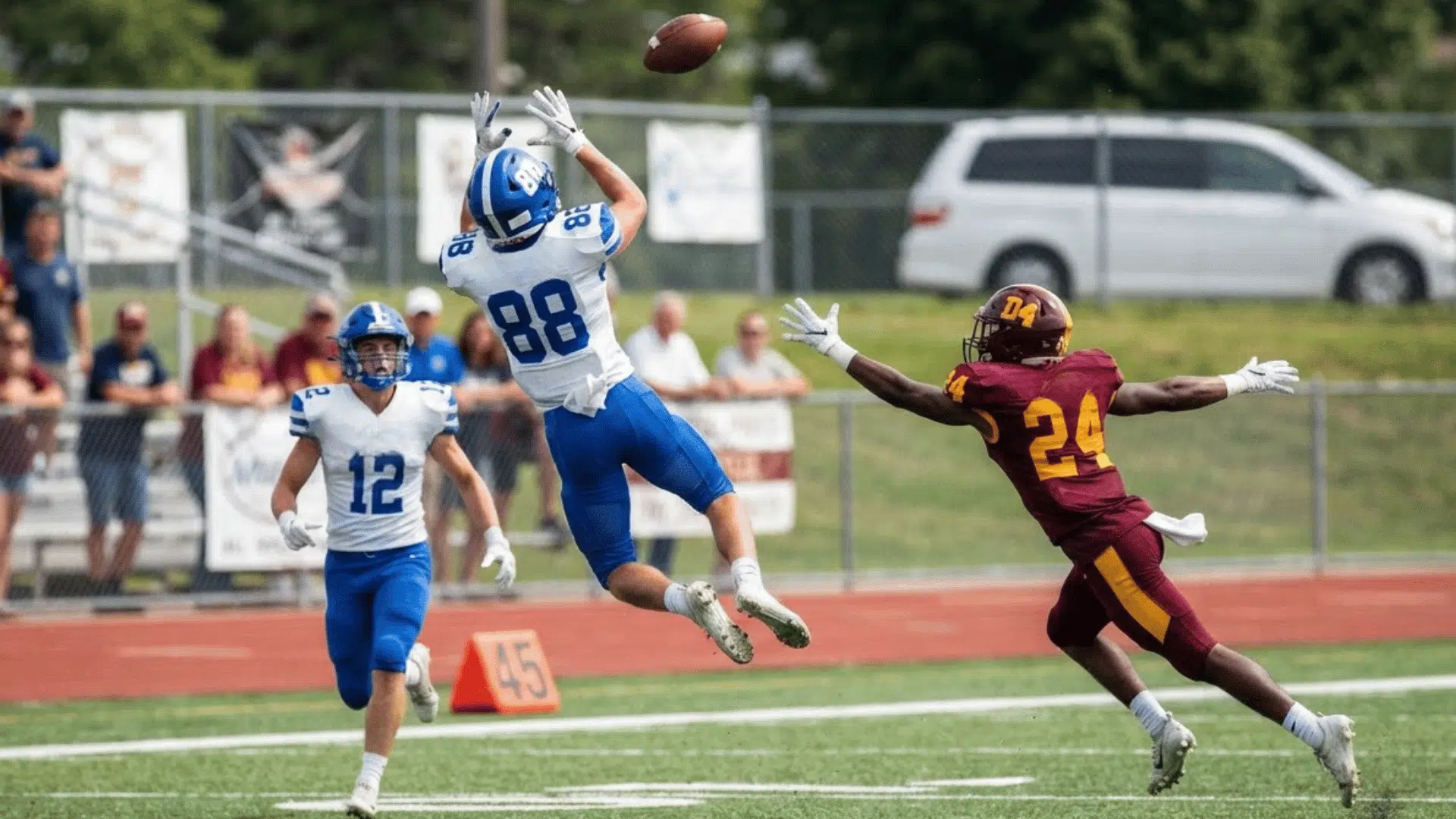
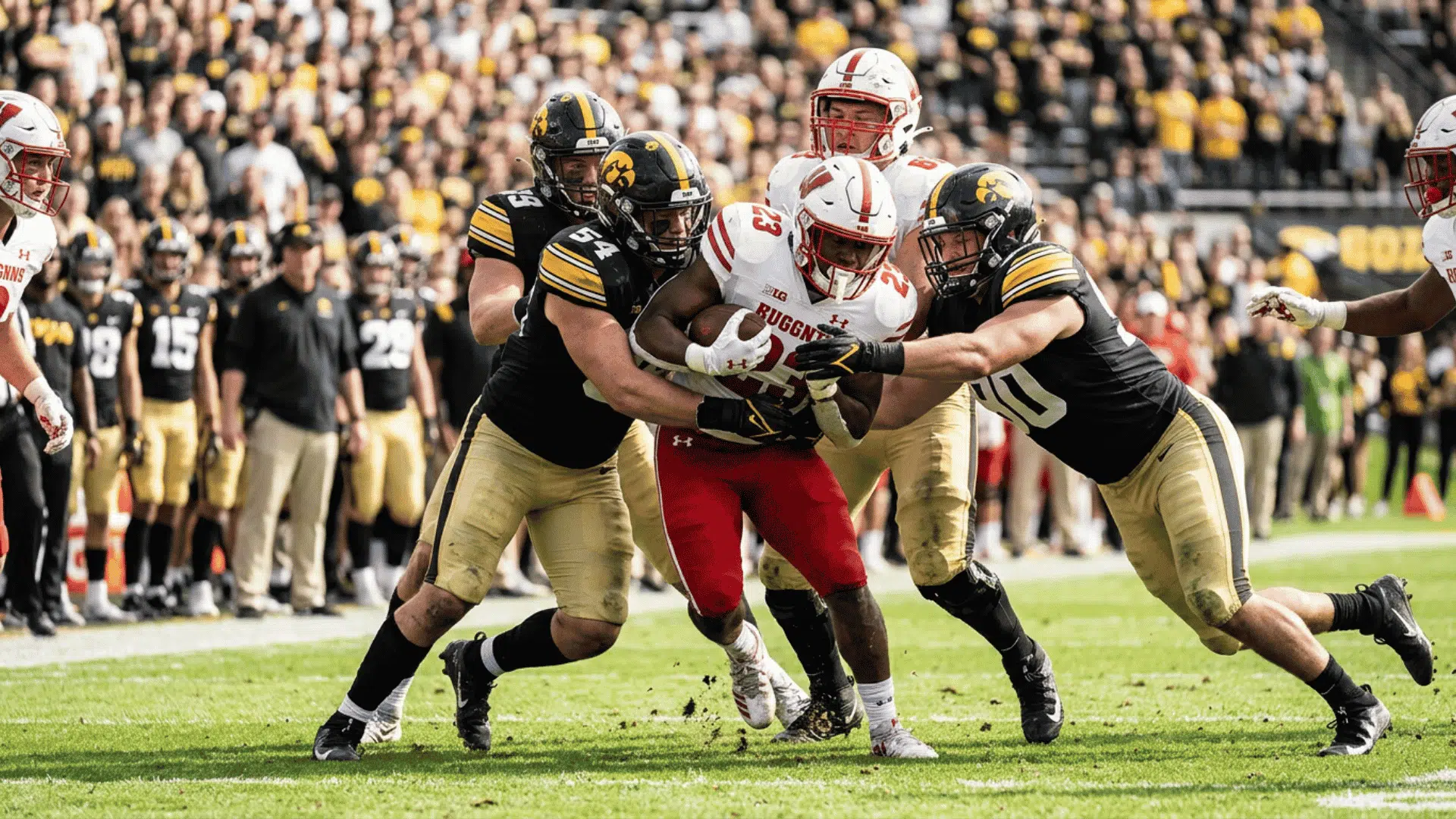
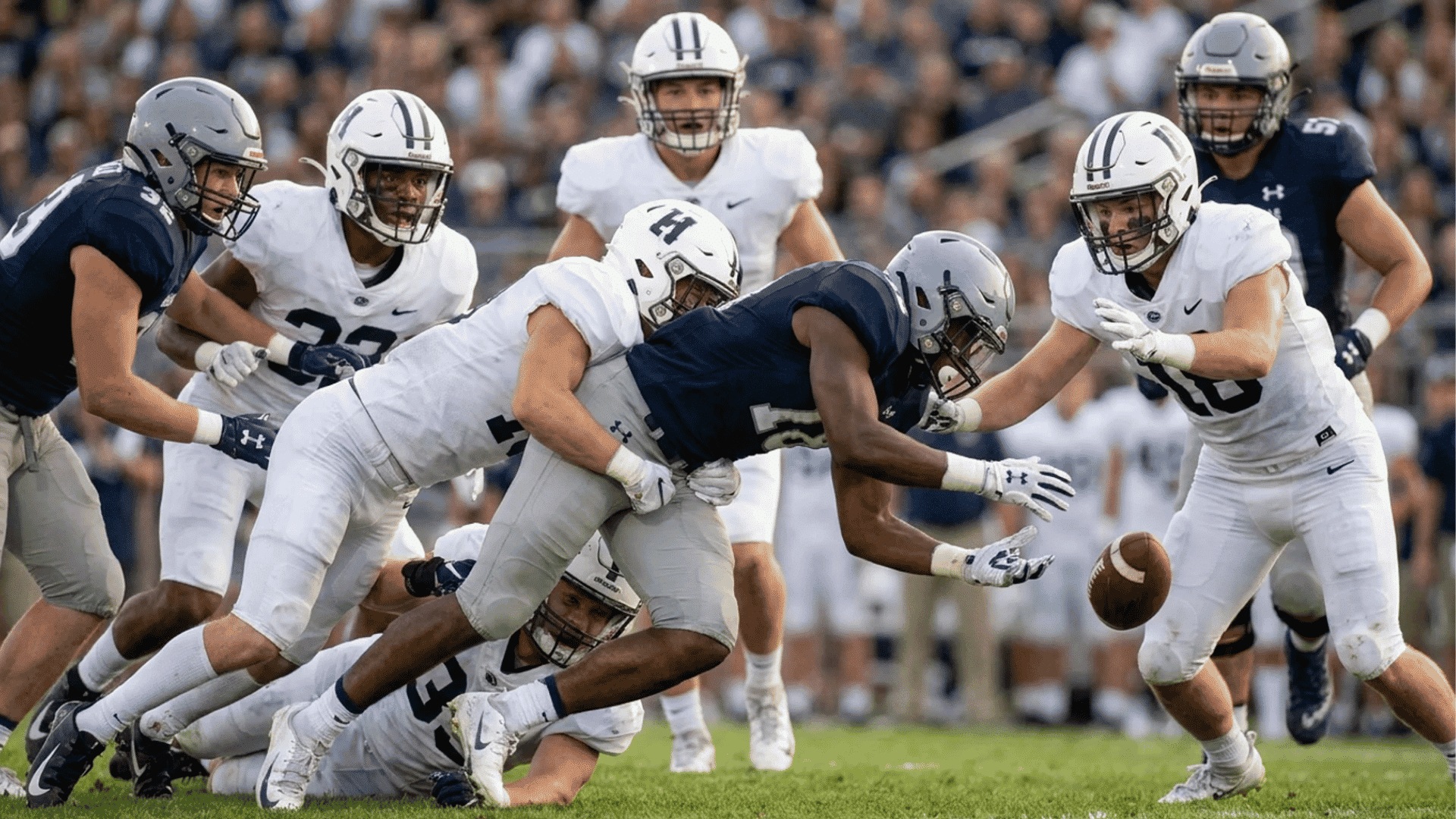
Only 11 players from each team take the field at once, but football requires larger squads because offense, defense, and special teams have different roles. Coaches also need backups for injuries and younger players who are still developing.
Unlike rugby, which fields 15 players per side, or soccer, which uses 11, American football relies heavily on substitutions between plays.
Which Players Don’t Count Toward the 105 Limit?
Designated Student-Athletes (DSA’s) are the main exception.
These are players who were cut, or would have been cut, because of the new limits, plus recruits who were promised a 2025-26 roster spot before April 7, 2025.
They don’t count against the limit for the rest of their eligibility, even if they transfer to another participating school.
That is why some rosters this year still list more than 105 names.
The exemption shrinks every year as those players graduate or run out of eligibility, so rosters will move closer to a true 105 over the next few seasons.
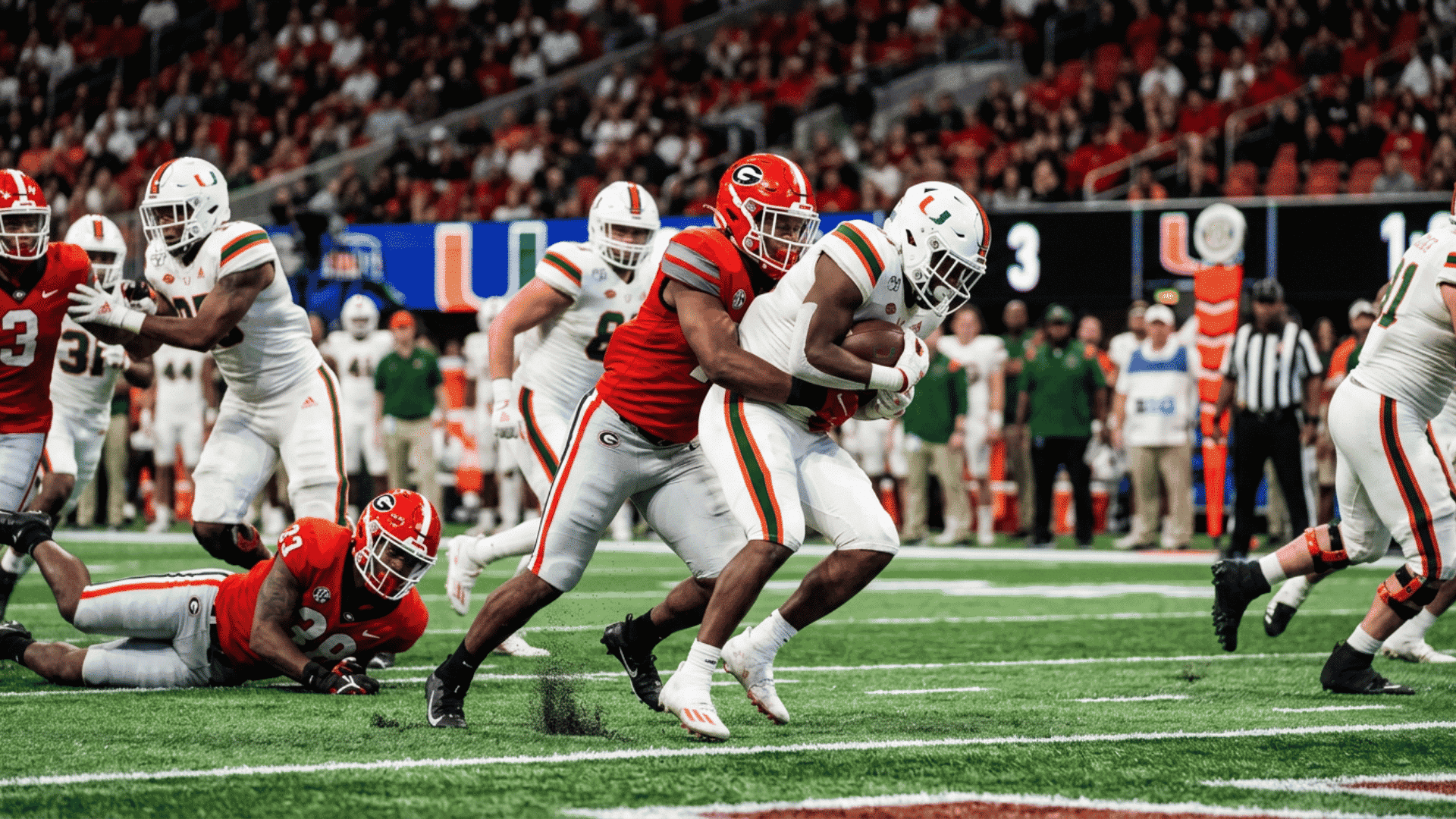
Miami, Georgia, Utah, and Indiana hold the top four spots in the first College Football Playoff rankings, released on November 3 this year.
How Do Roster Limits Differ Across NCAA Divisions?
Each NCAA division handles roster size and athletic aid differently.
Only Division I has a hard roster cap tied to the settlement, and only Division I and Division II offer athletic scholarships.
Level | Roster limit | Athletic aid |
|---|---|---|
Division I FBS | 105 at participating schools, plus any Designated Student-Athletes | Any rostered player can receive a scholarship. The old cap was 85. |
Division I FCS | 105 at participating schools. Not every FCS school opted in. | Same as FBS for participants. The old cap was 63 scholarship equivalencies. |
Division II | No NCAA roster cap | Up to 36 full-scholarship equivalencies, usually split into partial awards |
Division III | No NCAA roster cap | No athletic scholarships |
NAIA and junior college | Set by their own associations | Set by their own associations |
A common mistake is assuming that FBS programs always have bigger rosters than FCS or Division II teams. That’s not necessarily true.
Division II programs can carry big squads too, but they must spread 36 scholarship equivalencies across them, according to the NCAA’s description of the Division II partial-scholarship model.
Division III schools don’t award athletic scholarships, but many still carry large football teams and fund players through need-based and academic aid.
A roster cap tells you what a school may carry. It does not tell you who gets aid or who plays.
Why Do College Football Teams Need So Many Players?
Most programs start 22 players, 11 on offense and 11 on defense, and add kickers, punters, long snappers, and returners. Every one of those spots needs a ready backup.
Say a starting offensive tackle leaves with an ankle injury and the backup goes in.
If a guard goes down later in the same game, the coach needs a third lineman who knows the protections.
In 12 years of officiating, I saw teams lose a lineman early and spend the rest of the game working around the gap.
Scout-team players also run the next opponent’s plays during the week so the starters can rehearse against them.
How Do Coaches Divide Players Across Different Positions?
Coaches answer how many players are on a college football team one position group at a time.
The split below is one sample of 105 spots, not an NCAA rule.
Position Group | Sample Roster Spots |
|---|---|
5 | |
8 | |
13 | |
7 | |
18 | |
16 | |
12 | |
20 | |
Specialists | 6 |
Total | 105 |
Notice that offensive linemen and defensive backs get more spots than quarterbacks. Five offensive linemen play together on every snap, and defenses often use five or six defensive backs against passing teams.
One quarterback usually takes nearly every snap.
Coaches need enough replacements for each position group.
Special teams also use players from the offensive and defensive groups, so those jobs overlap rather than needing a separate roster.
What Happens If a Team Has 12 Players on the Field?
A defense with 12 players on the field at the snap is flagged for an illegal substitution, which usually costs 5 yards.
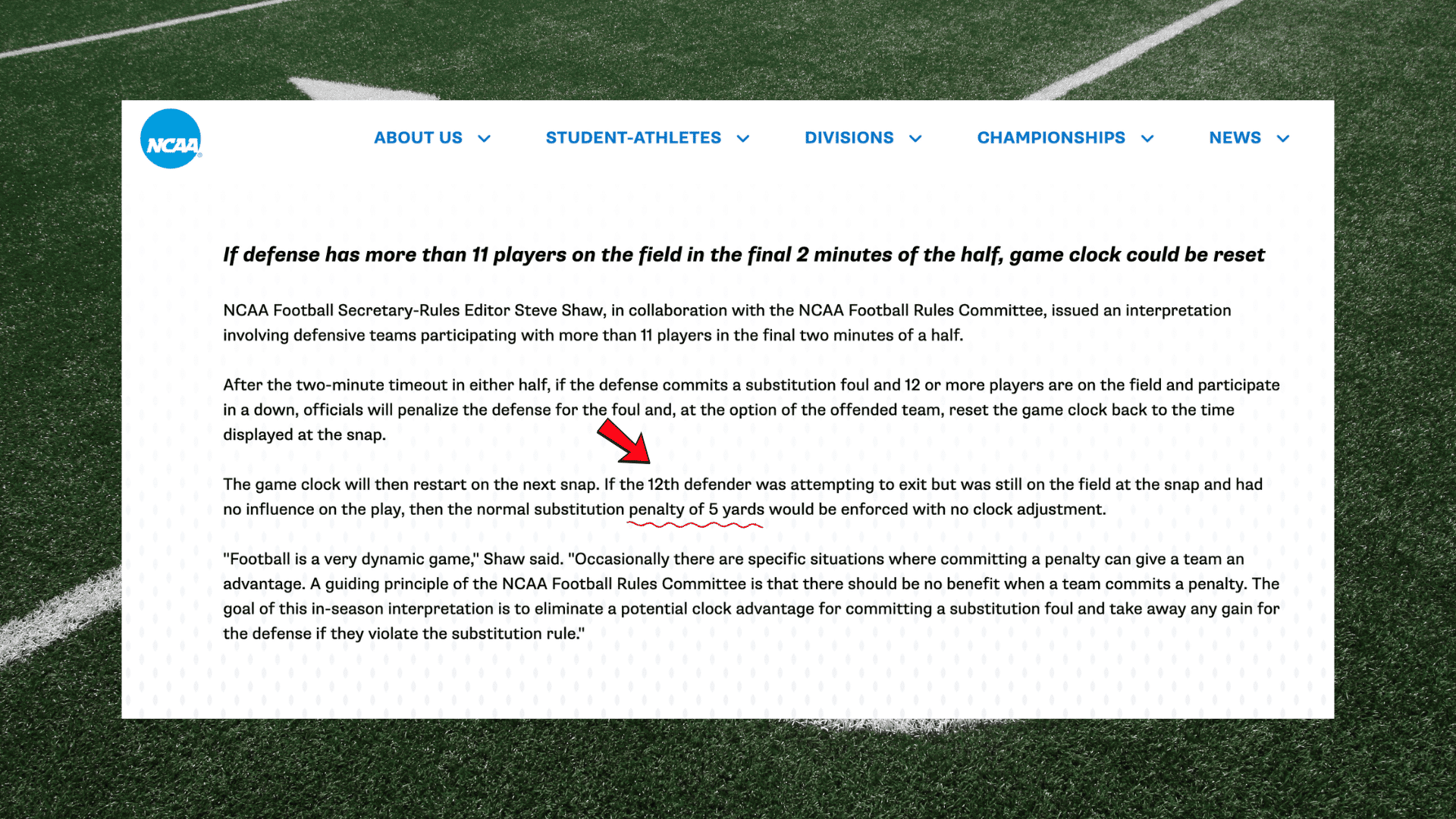
Source: NCAA
The common version is a slow substitution: a linebacker jogs off for an extra defensive back, and the offense snaps before he reaches the sideline.
When I officiated, the count before the snap was a habit, and late substitutions were where an extra player most often slipped onto the field. I kept one eye on the sideline every time a team changed personnel.
The best-known recent case came in October 2024.
Oregon put 12 defenders on the field late in its 32-31 win over Ohio State, accepted the 5-yard penalty, and ran 4 seconds off the clock.
The NCAA issued a rules interpretation days later. For 2025, the NCAA Playing Rules Oversight Panel made that fix permanent.
After the two-minute timeout in either half, the offense can now have the clock reset if 12 defenders take part in the play.
Does Every College Football Player Get to Play in a Game?
No.
Being listed on the official roster doesn’t guarantee that a player will enter a game.
A college might carry four or five quarterbacks, but the starting quarterback could play nearly every offensive snap. Meanwhile, certain backup defensive backs or linebackers might enter regularly because they also play on special teams.
The score often decides it.
For example, a team protecting a large lead may give younger players more snaps late in the fourth quarter. But during a close game, coaches may rely heavily on their established starters.
That’s why roster membership, game participation, and playing time should be treated as three separate things.
How Many Players Travel to Away Games?
There’s not a set number. Conferences set travel limits for league road games.
The SEC raised its limit to 74 players in 2023, according to the league office.
The Big Ten voted in August this year to raise its limit from 74 to 80.
Coaches decide who travels, and the list can change every week. For example, a team may carry five quarterbacks but take fewer on a particular road trip.
You can’t tell how many players are on a college football team just by counting the players you see at an away game.
A Coach’s Criteria for Choosing Which Players Travel!
The travel list starts with the depth chart and the opponent.
The coaching staff might make sure enough healthy defensive linemen and linebackers are available for a run-heavy opponent.
A different opponent could require more defensive backs because of its passing offense. Special teams matter more than fans expect.
A fourth-string safety who covers punts often travels ahead of a third-string receiver who doesn’t. Whereas a third-string quarterback might spend the entire game on the sideline but stay ready in case both players ahead of him can’t play.
Coaches also save a few seats for young players they want to reward. That doesn’t mean every traveling player will see the field.
Why Did the NCAA Change Its College Football Roster Rules?
The NCAA’s roster changes followed the House v. NCAA settlement, a class-action antitrust case over athlete compensation.
To settle it, the Division I Board removed sport-by-sport scholarship limits and replaced them with roster limits, effective July 1, 2025.
Previously, FBS programs generally had an 85-player athletic scholarship limit but could carry extra players without scholarships, and FCS programs could split 63 scholarship equivalencies.
Participating schools can now fund every player on a 105-man roster.
A roster spot still doesn’t guarantee a scholarship.
Alabama athletic director Greg Byrne said the Crimson Tide often carried more than 130 players before the cap.
More players can potentially receive scholarship support, but schools that once carried very large teams now have fewer openings for new athletes.
The New Rule’s Impact for Walk-On Players
A walk-on joins a college program without an athletic scholarship.
Under the previous FBS system, schools could add walk-ons beyond their 85 scholarship players. Now, participating programs generally must count those athletes within the 105-player limit unless they hold Designated Student-Athlete status.
Consider a school that previously carried 125 players. Cutting its roster to 105 means 20 fewer spots, assuming no exemptions.
That doesn’t mean walk-ons have disappeared. It means they face more competition for open spots.
I see this as one of the biggest changes for recruits who hope to earn a chance through practice rather than arrive with a scholarship offer.
How Does a College Football Roster Compare With an NFL Roster?
College football teams carry more players, roughly double the NFL’s 53, because their rosters serve different purposes.
The following table will help you understand better!
Feature | College Football | NFL |
|---|---|---|
Standard roster | 105 at participating Division I schools | 53-player regular-season active roster |
Extra players | Designated Student-Athletes above 105 | 16-player practice squad, plus 1 international spot |
Players on the field | 11 | 11 |
Player development | Includes younger athletes across college classes | Professional roster and practice squad |
Financial support | Athletic scholarships and other permitted benefits | Professional contracts |
Long Story Short!
The roster is everyone on the team, capped at 105 at participating Division I schools. The travel squad is the 74 or 80 players a team like an SEC or Big Ten program takes on the road.
So the short answer to how many players are on a college football team is up to 105 in Division I.
In Divisions II and III, each school sets the number, and every team plays 11 at a time.
One injury, a difficult matchup, or an unexpected substitution can change which players a coach depends on.
Which college football team do you follow, and which backup player deserves more playing time? Share your thoughts in the comments!
Frequently Asked Questions
Can A College Football Team Have 150 Players?
Not at participating Division I schools, unless the extras are Designated Student-Athletes. Division II, Division III, and NAIA schools have no NCAA roster cap, so very large rosters are still possible.
Do All 105 Players Get Scholarships?
No. Schools in the settlement can give a scholarship to every player on the roster, but they don’t have to. Each school decides how many to fund.
Can College Football Players Play Both Offense & Defense?
Yes. College players may play both offense and defense, although most specialize in one unit because the jobs are so different.
Do Redshirt Players Count Toward The 105-Player Limit?
Yes. Every rostered player counts unless he is a Designated Student-Athlete. Since June 2026, Division I’s age-based model has largely replaced the traditional redshirt, though players already enrolled can choose the old or new rules.
Can A College Football Player Be On The Team Without A Scholarship?
Yes. Walk-on players can hold roster spots without athletic scholarships, but at participating Division I schools, they still count toward the 105.
What Is The Difference Between A Starter, Backup & Reserve?
Starters begin games, backups replace them or join rotations, and reserves provide extra depth. Special teams players handle kicks and returns, often while serving other roles.