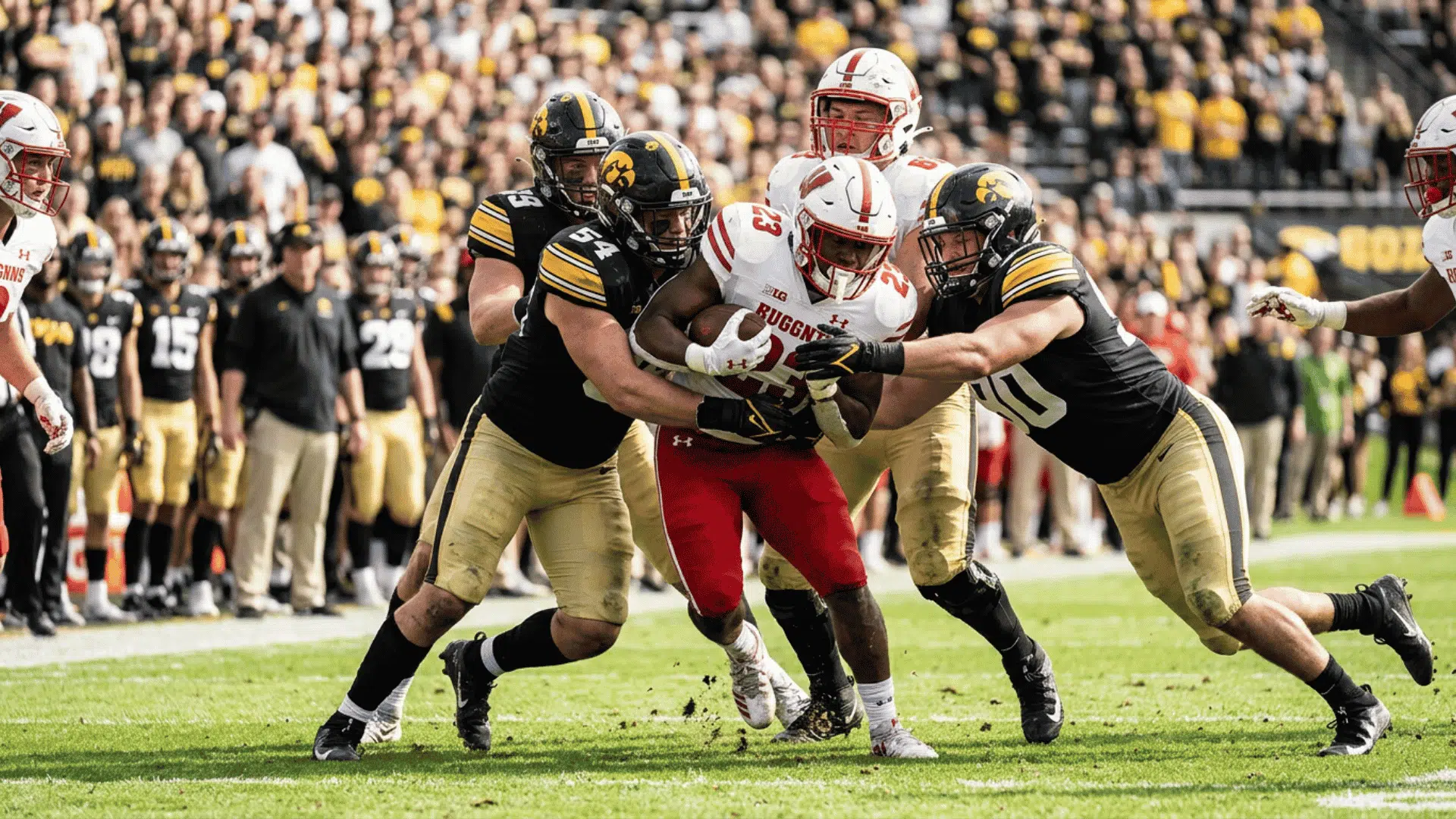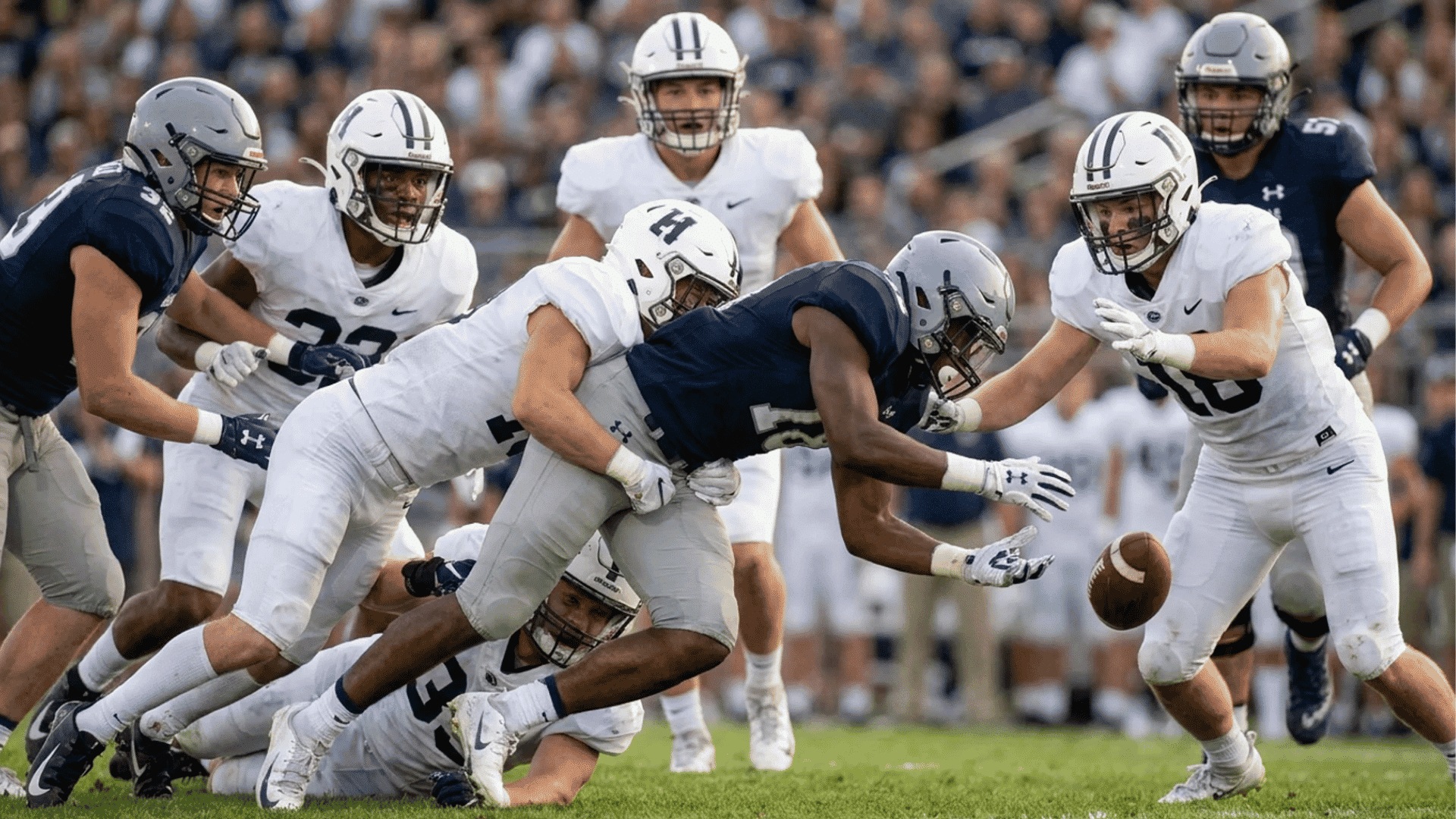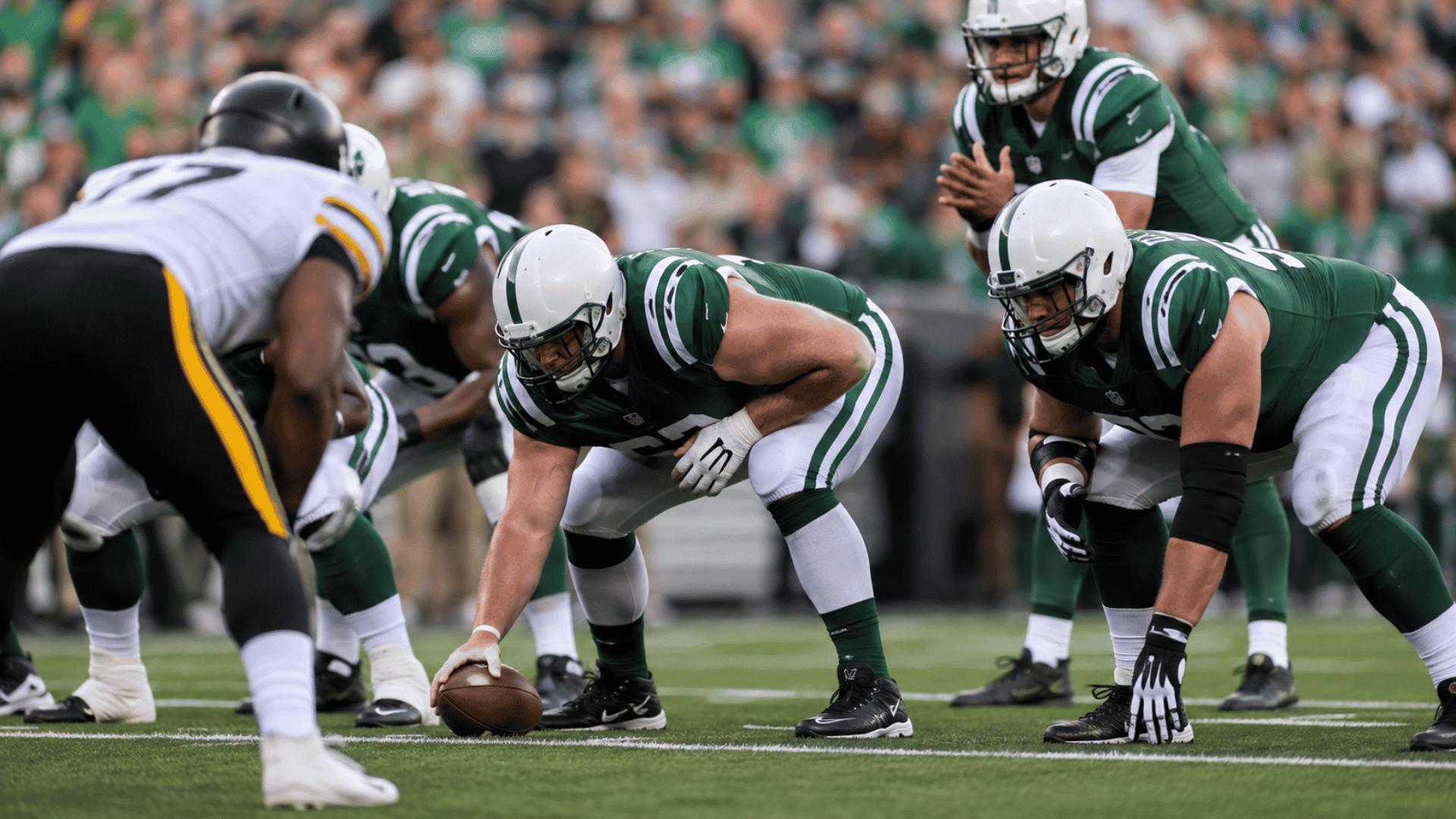

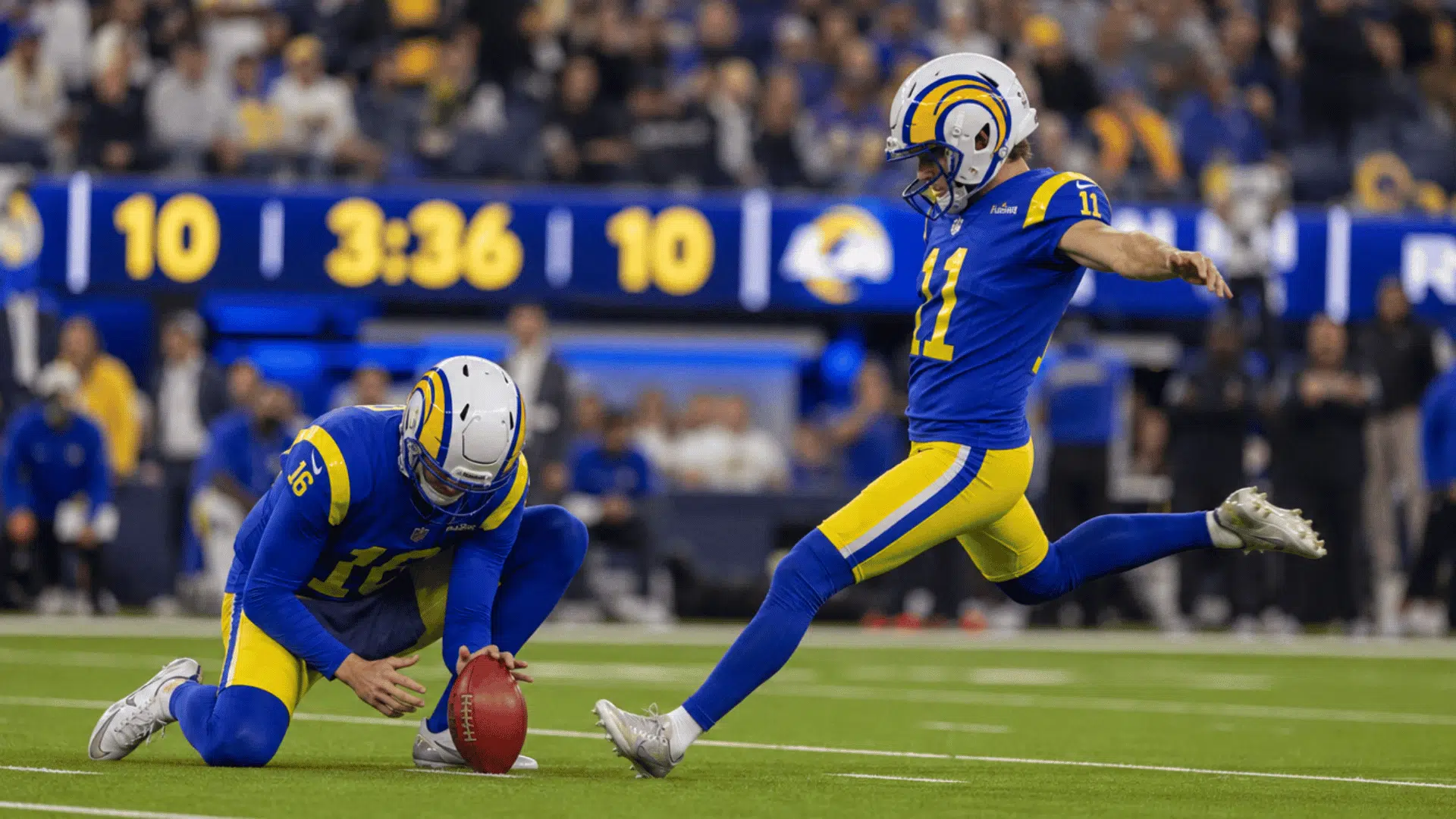

PAT stands for point after touchdown. It’s the bonus play a team gets right after it scores six points.
The scoring team snaps the ball near the goal line and tries for one or two more points. The game clock stays frozen during the attempt, so the play costs no time.
You might or might not have seen/heard this term used differently.
Broadcasters say “extra point.”
The official NFL rulebook (NFL Rule 11, Section 3) does not lead with ‘PAT’ but “Try”.
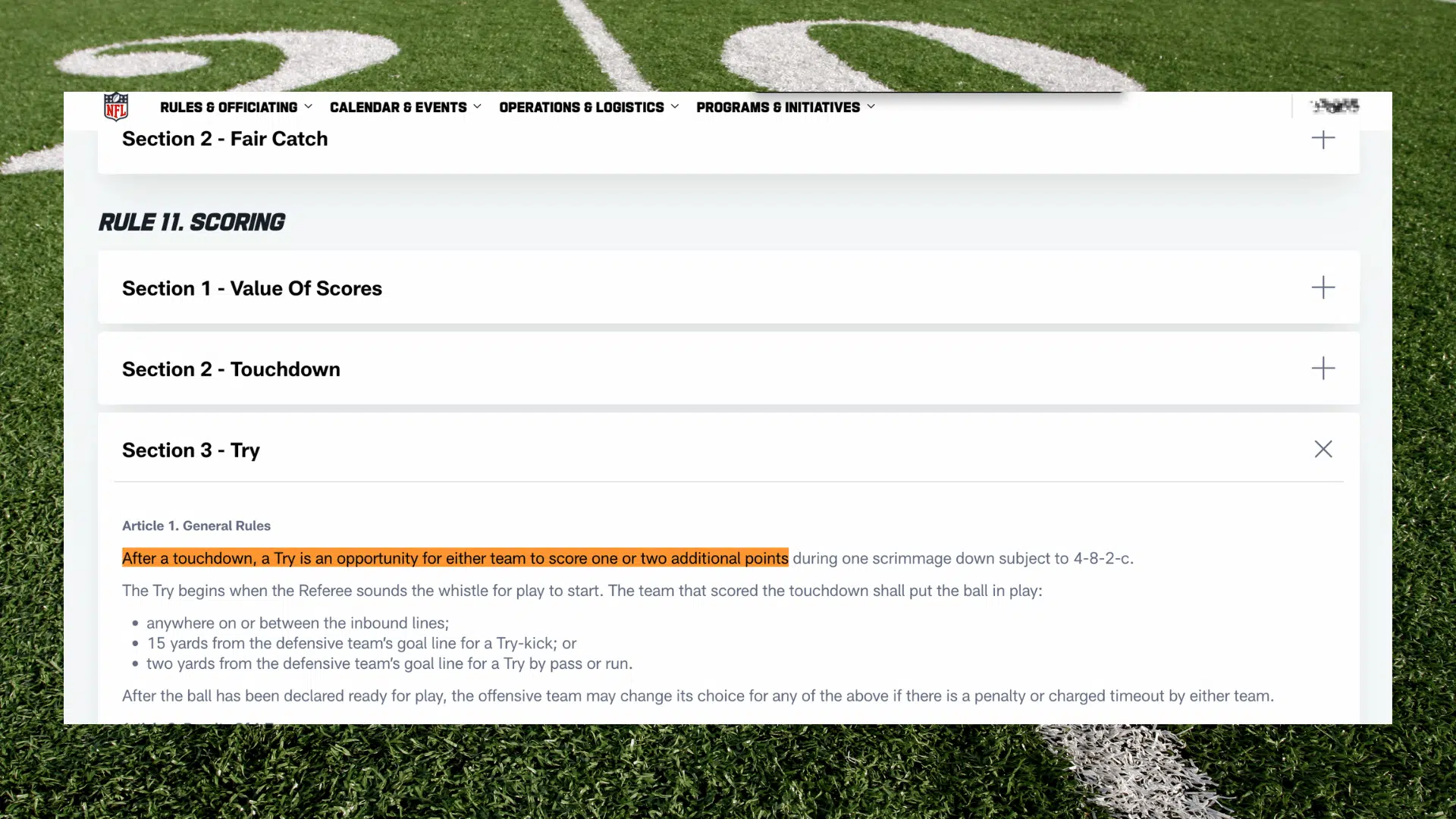
Fantasy football treats the PAT mostly as a kicker stat. Your kicker earns credit for each made kick, while players who score on two-point plays collect their own bonus.
As far as college football is concerned, it uses the same word in the NCAA football rules.
All the labels describe the same single down. The meaning stays the same across levels of the game, but a few details shift depending on where you watch.
When is a PAT Attempted?
A try follows nearly every touchdown. The NFL skips it when a touchdown ends the fourth quarter, and the try can’t change the result.
That rule arrived in 2018, after the Vikings won a playoff game on a last-second touchdown, as CBS Sports explains.
NFL overtime follows similar logic. Once play reaches sudden death, the game ends on the touchdown with no try. College also skips it at the end of regulation unless the points matter.
Where is the PAT attempted?
The PAT in football starts from a fixed yard line, but teams choose the sideways spot anywhere between the hash marks. Kickers often slide the ball toward the hash that gives them their favorite angle.
The actual kick is longer than the yard line suggests. You add 10 yards for the end zone and about seven more for the holder’s spot behind the line.
That’s why the number you hear on a broadcast rarely matches the yard line printed on the field.
The NFL and college set their spots very differently, and the history behind each choice explains the gap.
Feature | NFL | College Football |
|---|---|---|
PAT starting yard line | 15-yard line | 3-yard line (in some leagues) |
Two-point conversion starting yard line | 2-yard line | 3-yard line (in some leagues) |
Approximate PAT kick distance | 33 yards | 20 yards |
When the current PAT spot was introduced | 2015 | 1958 |
Rule reference | NFL Rule 11, Section 3 | NCAA Rule 8-3-2 |
Two Ways to Score on a PAT
A team earns PAT points in one of two ways. Each method has its own mechanics, and each one can fail in its own way.
Have a look!
1. Kicking the Ball Earns
Point awarded: 1
The kick takes three players working together. One player snaps the ball back, another holds it on the ground, and the kicker boots it.
The ball has to sail over the crossbar and between the two tall posts. If it does, the team gets one point.
This is by far the most common choice in both the NFL and college. It is quick, it is safe, and good kickers make it nearly every time.
2. Running or Passing Into the End Zone
Points awarded: 2
The second option is called a two-point conversion. Instead of kicking, the team runs one normal play close to the end zone.
If a player runs the ball in or catches a pass in the end zone, the team gets two points. If the play gets stopped, the team gets nothing.
The NFL added this option in 1994.
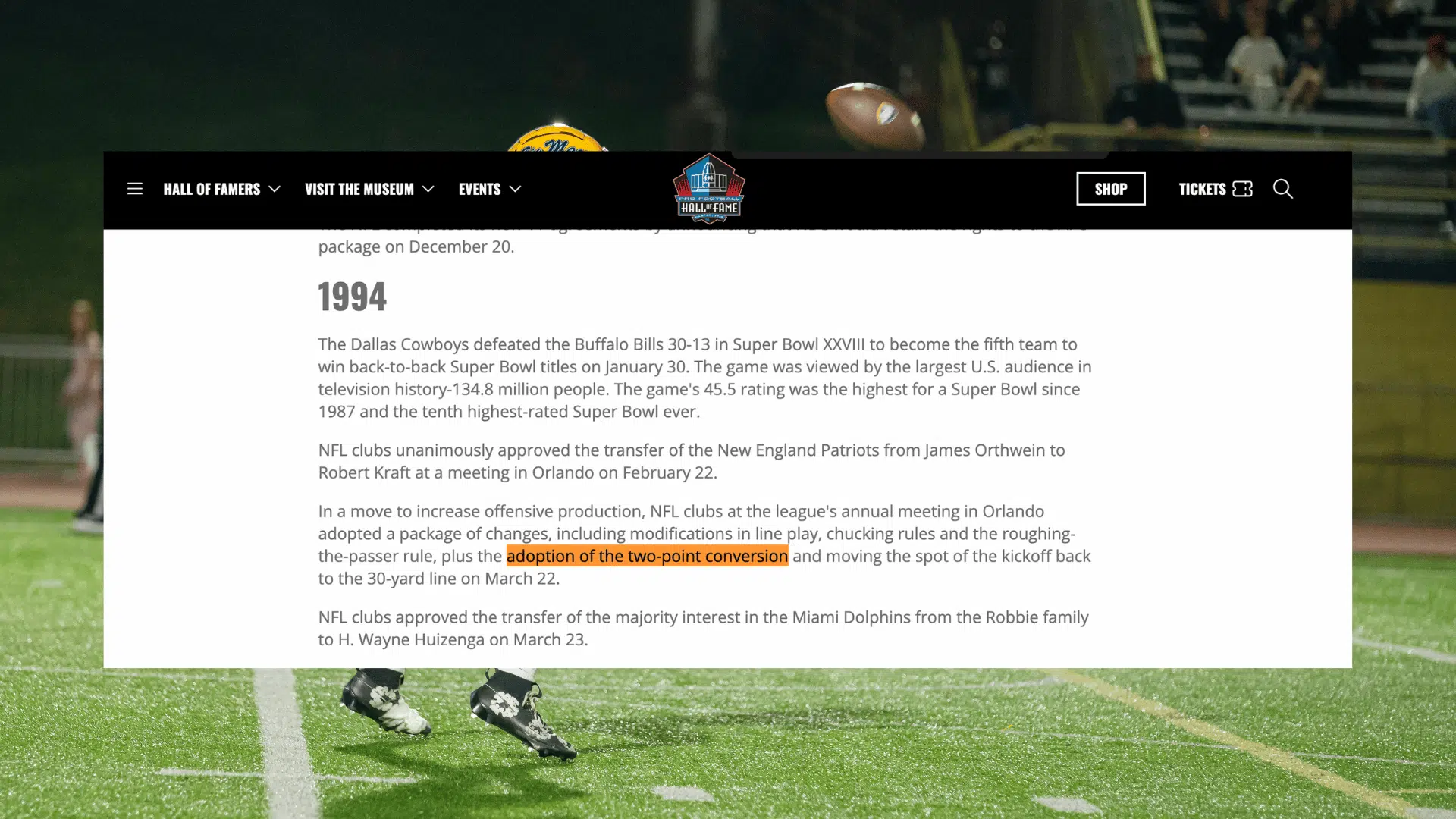
College football had it long before, and that history shows up in where the ball gets placed.
Today, the two-point conversion draws some of the most creative designs in any playbook. One short-yardage call can decide everything, so coaches often save their favorite play for it.
Should a team ‘Kick’ or ‘Run/Pass’? Coaches face this choice after every touchdown. A kick that almost always works and a play that works about half the time end up worth about the same. So the score and the situation usually decide.
A Missed PAT Can Change a Game
A missed PAT gives the team zero extra points. The team keeps its six points and kicks off like normal.
That lost point does not seem like much at first. But football scores often come in groups of three and seven. So one missed kick can turn a tie into a loss. It can also force a team to go for two later just to catch up.
This game is a perfect example of how much that one extra point can matter!
In the January 2016 AFC title game, Patriots kicker Stephen Gostkowski missed a PAT early in the game. Before that, he had made 523 in a row.
Late in the game, New England scored a touchdown with 12 seconds left. Because of the early miss, they needed a two-point conversion to tie.
The two-point try failed, and they lost 20-18 to the Broncos.
Penalties During a PAT
Defensive fouls usually hand the offense a choice. In the NFL, a team that makes its kick can keep the point and push the penalty to the kickoff.
It can also accept half the distance and retry from closer. That means a kick from the 7½ or a two-point play from the 1.
More rules apply!
1. A PAT Follows Almost Every Touchdown
Teams try a PAT after nearly every touchdown. They skip it a few times.
In the NFL, if a touchdown happens on the last play and the PAT cannot change who wins, teams skip it. That rule started in 2018, according to CBS Sports.
Teams also skip it in NFL overtime when a touchdown ends the game. In that case, the game is over. College follows a similar idea at the end of a game.
2. The Choice Is Final Once the Ball Is Ready
Before the snap, the offense picks one option: kick for one or go for two. Once the referee marks the ball ready, the team cannot simply change its mind.
3. A Penalty Can Give a Team a Second Chance
If the defense commits a foul, the kicking team often gets a choice. It can keep the point and use the penalty yards on the next kickoff.
It can also move the ball closer and try again. In the NFL, that means kicking from the 7½-yard line or going for two from the 1.
4. A Rare One-Point Safety Can Happen
Sometimes the defense gets the ball but ends up tackled in its own end zone. When that happens, the offense gets one point instead of two.
It usually takes a strange chain of events, like a blocked kick that gets fumbled backward.
Can the Defense Score on a PAT?
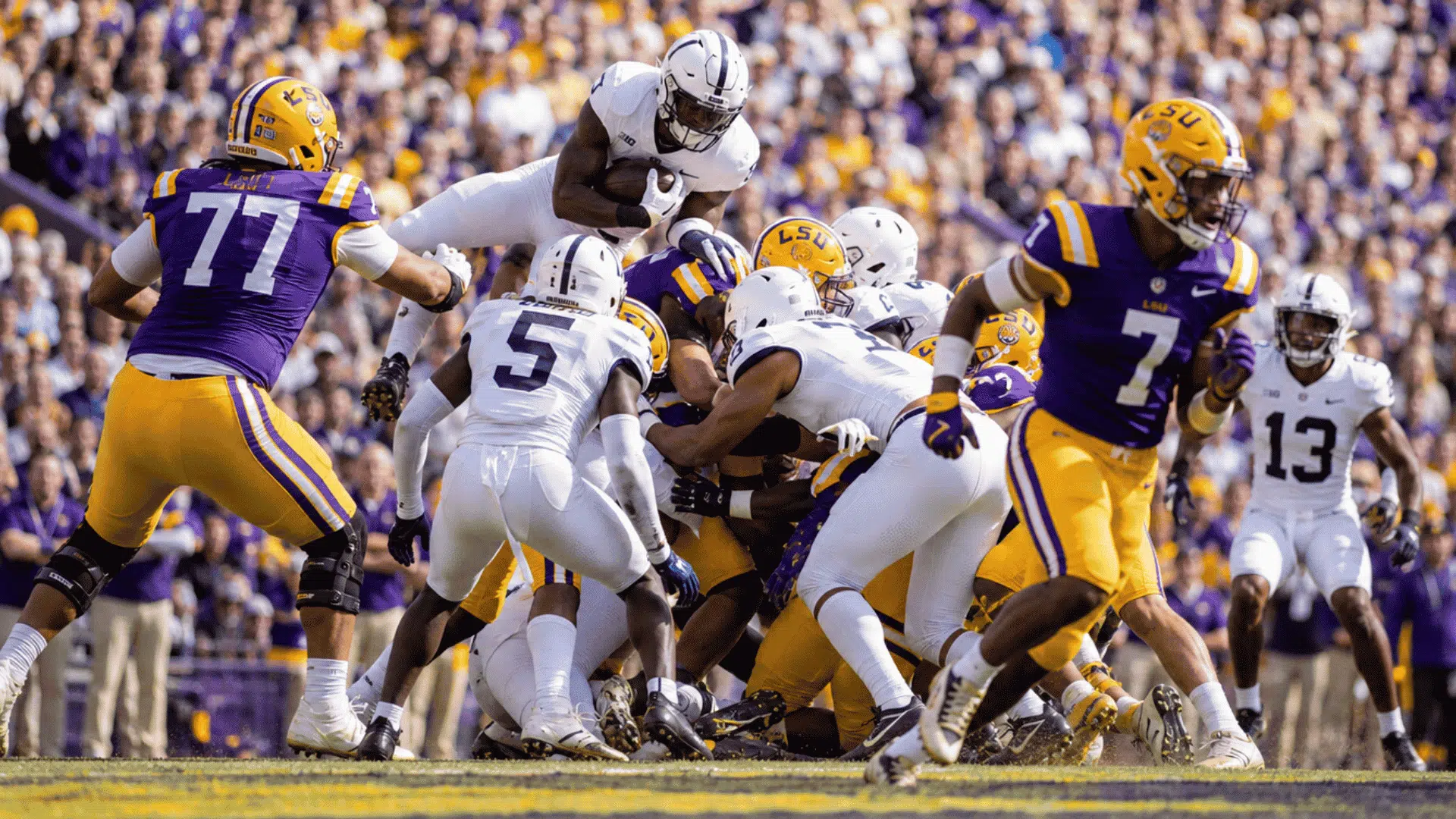
Yes. A defense that recovers a fumble, intercepts a pass, or scoops a blocked kick can return it to the opposite end zone for two points. Two chances, though:
College football has allowed this since 1988, while the NFL made the same change in 2015, when it made the play live for defenses.
1. A two-point pass can be intercepted. When that happens, the defender can keep running instead of just falling down.
If he reaches the far end zone, his team gets two points. If he gets tackled before he reaches the end zone, the play ends and nobody scores. Either way, the team that scored the touchdown still kicks off next.
2. A blocked kick is still a live ball. That means anyone can pick it up and run with it.
If a defender scoops it up and reaches the other end zone, his team scores two points.
College football has one rare twist. If the defense picks up the blocked kick but ends up downed in its own end zone, the kicking team gets one point. It rarely happens, but it is in the NCAA rulebook PDF.
Rare plays like this are fun, yet the common miss is what really hurts teams.
Important! High school games work differently. There, the play stops the moment the defense gets the ball, so it cannot score.
Football Terms Beyond PAT
Box scores, broadcasts, and fantasy apps rely on a handful of scoring-related abbreviations. These might confuse you:
Extra Point (XP): The one-point kick attempted after a touchdown. XP% measures a kicker’s PAT accuracy.
Try: The official rulebook term for the play after a touchdown, used when explaining PAT rules and penalties.
Touchdown (TD): Worth six points when a player carries or catches the ball in the end zone. It gives the team a chance to earn one or two extra points.
Field Goal (FG): A kick through the uprights during normal play, worth three points. A successful PAT kick uses the same uprights but earns one point.
Point Differential: The difference between points scored and points allowed. It can help determine NFL playoff tiebreakers, making every point count.
Frequently Asked Questions
How Many Points Is A PAT Worth?
A made kick is worth one point. A successful run or pass is worth 2 points, and a defensive return is also worth 2 points.
How Do Missed PATs Affect Fantasy Football?
A made PAT typically earns one fantasy point, while a miss earns zero. Some leagues deduct points for misses. A defensive return of a PAT attempt can also earn fantasy points.
Can A Game End On A PAT Attempt?
Yes. If a touchdown happens as time runs out and the PAT could change the result, teams still try it. That becomes the last play.