
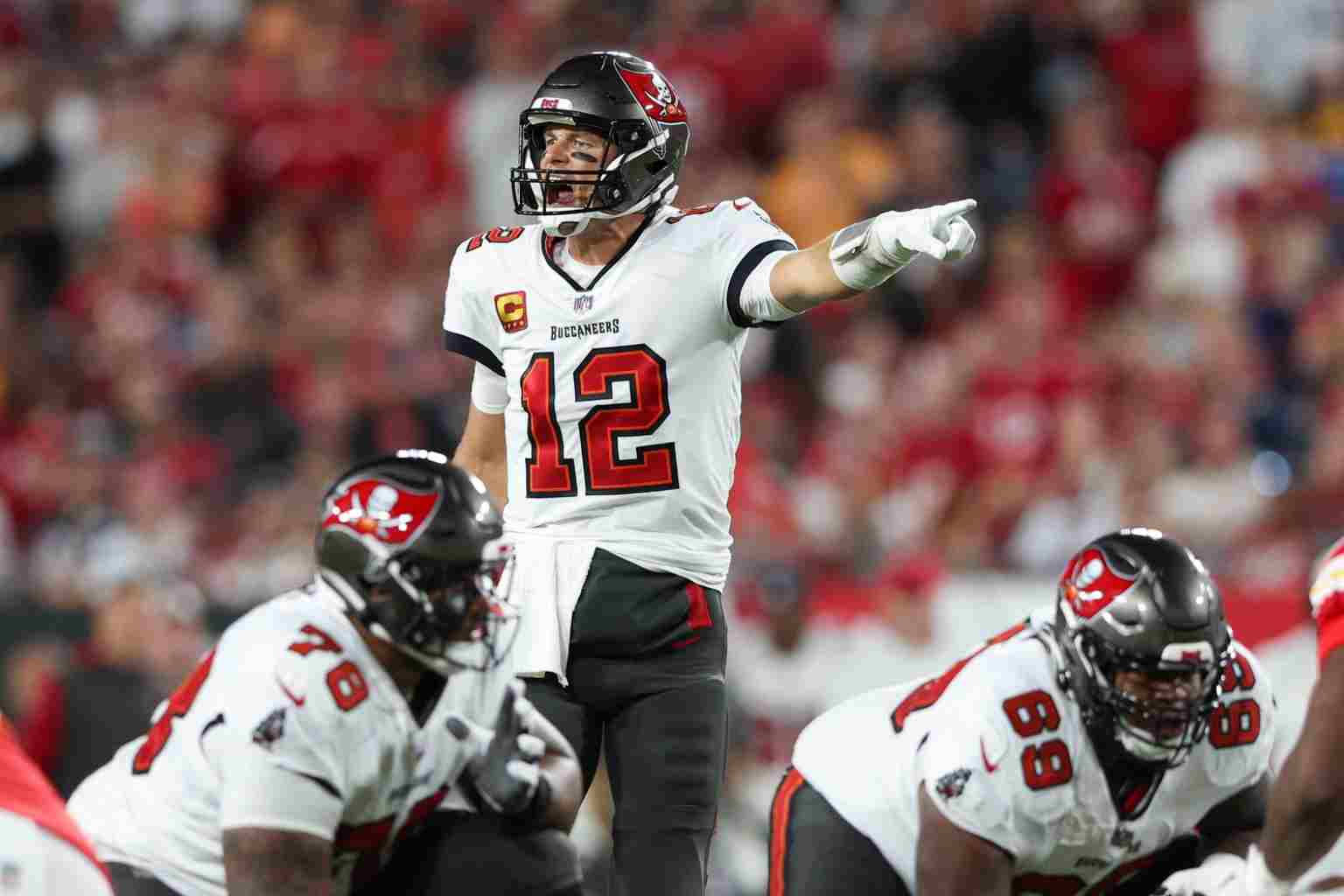

Every time a QB walks to the line, you hear it. He points at a defender and shouts, “Fifty-three is the Mike!” That one call sets the entire blocking scheme for the play.
The Mike is the middle linebacker, the quarterback of the Defense.
He lines up 5–7 yards behind the defensive line. He reads formations before the snap, calls adjustments for the whole unit, stops the run, and drops into pass coverage.
That call also tells the offensive line exactly how to block. Every lineman’s assignment is set relative to where the Mike stands. Move the Mike, and the entire protection shifts with him.
Ray Lewis, the greatest Mike in NFL history, recorded 2,059 career combined tackles. That number alone shows how central this position is to every defensive play.
This guide covers what the Mike does, why the QB shouts his name, and who the greatest Mike linebackers in NFL history were.
What the Mike Linebacker does on Defense
The Mike lines up 5–7 yards behind the defensive line, directly over the center or strong-side guard.
His job has two sides:
Run plays
- Fills gaps between blockers
- Takes on blocks from centers and guards
- Makes the tackle
Pass plays
- Reads the QB’s eyes
- Drops into zone coverage
- Covers running backs or tight ends man-to-man
The average NFL Mike stands over 6’2” and 230 lbs, big enough to take on linemen, fast enough to chase backs sideline to sideline.
To put his workload in perspective: Ray Lewis recorded 2,059 career combined tackles, an NFL record per the Pro Football Hall of Fame.
Mike is not a position that only watches from a distance.
1. How the Mike Calls the Defense
The Mike is the on-field defensive captain.
Before each snap, he relays the play call to linebackers and linemen, reads the offense’s formation, communicates adjustments in real time, and moves the entire defense with him when the offense shifts.
2. How the Mike Stops the Run
Run defense is the Mike’s bread and butter. He watches the offensive linemen’s first move after the snap.
- Linemen fire out hard? It’s a run. He fills the gap and hits the ball carrier.
- Do linemen stand up fast? It’s a pass. He drops into coverage.
That read happens in under a second, every single play.
3. How the Mike Covers in the Pass Game
The modern Mike can’t just be a run-stopper.
Today’s NFL constantly puts running backs and tight ends in routes. The Mike reads the QB’s eyes in zone coverage and breaks on the football, not the receiver.
He has to cover skill players who are faster than him, which is why football IQ matters as much as athleticism at this position.
Why the Quarterback Yells “Mike!” Before Every Snap

When the QB calls out the Mike, he’s not speaking to the defender but setting the blocking count for the line.
The line blocks outward from the Mike: the center takes the Mike, guards take adjacent defenders, and tackles cover farther out, with five blockers instantly aligned.
Why does it keep changing play to play?
Because defenses shift and disguise themselves constantly, the “real” middle linebacker on the roster might not be lined up in the middle on a given play.
So the QB identifies whoever is acting as the middle defender on that specific snap, even if it’s a safety or a blitzing corner who shifted late.
If a blitzer moves at the last second, the QB can reassign the Mike mid-cadence, and the whole line adjusts.
Peyton Manning and Tom Brady were legends at this. Brady could recall the Mike two or three times before a single snap, moving his line’s protection around like chess pieces.
The funny moment you have to know about: In a Cowboys vs. Giants game, the Cowboys QB pointed at a Giants linebacker and shouted “He’s the Mike!” and the Giants linebacker shouted back, “I’m NOT the Mike!” It went viral. For once, the defense talked back.
The Mike, Sam, and Will: How the Linebacker Names Work

In a standard 4-3 defense (four linemen, three linebackers), each linebacker has a name:
| Name | Position | Side |
| Mike | Middle Linebacker | Center of the defense |
| Sam | Strong-Side Linebacker | Tight end side |
| Will | Weak-Side Linebacker | Open side |
This naming system goes back to the 1950s, when coach Tom Landry used women’s names- Sarah, Meg, and Wanda to tell his linebackers apart. Over time, those evolved into Mike, Sam, and Will.
The logic is simple:
- M for Middle: Mike
- S for Strong: Sam
- W for Weak: Will
The bigger, more run-focused inside linebacker keeps the Mike name, while the smaller, coverage-first linebacker is called Will.
What it Takes to Play the Mike Linebacker Position
The Mike Linebacker is not a specialist role. The Mike has to do everything.
- Size: Usually 6’1”–6’3”, 230–250 lbs, with enough strength to take on interior linemen.
- Lateral Speed: Needs sideline-to-sideline range to chase runs, screens, and quick passes.
- Football IQ: Reads formations, understands offensive tendencies, and calls pre-snap adjustments.
- Tackling Reliability: Plays near the ball often, so missed tackles can quickly become big gains.
- Communication: Directs the front and helps teammates get aligned before the snap.
- Coverage Ability: Must cover running backs, tight ends, and short-area passing routes.
- Mental Processing: Like a quarterback, the Mike has to know everyone’s assignment, not just his own.
- Run Recognition: Reading guard pulls early can give the Mike a half-second advantage.
- First-Step Advantage: That half-second can be the difference between a tackle for loss and a ten-yard gain.
One underrated skill: reading guard pulls before the snap. If a guard moves left before the ball moves, the Mike already knows the run is going right.
That half-second head start is the difference between a tackle for loss and a ten-yard gain.
The Greatest Mike Linebackers in NFL History

The Mike linebacker position has produced some of the smartest, toughest, and most influential defenders in NFL history, with legends like Ray Lewis, Dick Butkus, and Mike Singletary setting the standard for generations to come.
| Player | Team | Era | What Made Him Special |
| Ray Lewis | Baltimore Ravens | 1996–2012 | 2,059 career tackles (NFL record); 2× DPOY; Super Bowl MVP |
| Dick Butkus | Chicago Bears | 1965–1973 | Most physically feared defender in NFL history |
| Mike Singletary | Chicago Bears | 1981–1992 | Led the legendary 1985 Bears D, known as “Heart of the Defense” |
| Jack Lambert | Pittsburgh Steelers | 1974–1984 | Anchored the Steel Curtain’s four Super Bowl runs |
| Ray Nitschke | Green Bay Packers | 1958–1972 | Cornerstone of Vince Lombardi’s five championship defenses |
| Brian Urlacher | Chicago Bears | 2000–2012 | Redefined the position for the modern era |
| Luke Kuechly | Carolina Panthers | 2012–2019 | Exceptional IQ; one of the cleanest tacklers the game has seen |
Ray Lewis is the statistical benchmark.
Per the Pro Football Hall of Fame, Lewis is the only player in NFL history with at least 40 career sacks AND 30 career interceptions.
In 2000, he led a Ravens defense that set the NFL record for fewest points allowed in a 16-game season, just 165 points total.
An ESPN survey of 50 analysts named him the greatest linebacker of all time, per Sports Illustrated. His single-season best of 225 tackles in 2003 is still a Baltimore franchise record.
The Role of Mike Linebacker in Today’s NFL

The role of the Mike Linebacker hasn’t shrunk. It’s gotten harder.
Modern offenses run more spread formations, more motion, and more backs in pass routes than any era before. A Mike who can only stop the run is now a liability.
A 2026 position breakdown listed the top Mike linebackers for the 2025 season: Roquan Smith (Baltimore Ravens), Fred Warner (San Francisco 49ers), and Josey Jewell (Carolina Panthers), known for run-stopping and coverage.
Today’s Mike is asked to:
- Blitz like a pass rusher
- Cover like a safety
- Direct traffic like a coordinator
All of it. Every play. In real time.
The Mike Sets the Whole Defense in Motion
The Mike linebacker doesn’t score touchdowns.
He doesn’t get the highlight plays. But every single snap, he is the reason the Defense is lined up right, the gaps are covered, and the offense can’t just run wherever it wants.
From Ray Lewis diagnosing plays early to Luke Kuechly making seemingly GPS-guided tackles, the top Mikes in history shared one trait: they always knew more than the offense.
Next time you hear a QB point and shout a number at the line, that’s the Mike being identified. That one word is the whole Defense being aimed at.
Frequently Asked Questions
What does “Mike” Stand for in Football?
Mike stands for middle. It identifies the middle linebacker so the offense and Defense can communicate fast during a game.
Why does the Quarterback Call Out the Mike Before the Snap?
To set the offensive line’s blocking count. Every lineman’s assignment is determined by where the Mike is lined up on that specific play.
Is the Mike the Same in a 4-3 and 3-4 Defense?
The name stays, but the role shifts. In a 3-4, the Mike is one of two inside linebackers and carries more pass coverage duties.
Who is the Greatest Mike Linebacker in NFL History?
According to an ESPN survey of 50 analysts, Ray Lewis. He holds the NFL career tackles record (2,059) and won two Super Bowls with the Baltimore Ravens.
Can the QB Change Who the Mike is Mid-Play?
Yes. If the defense shifts before the snap, the QB can reassign the Mike designation on the fly, and the entire offensive line adjusts their blocking instantly.