



I remember staring at my fantasy football league settings, completely stuck on one abbreviation. PF showed up right next to my team name, and I had no clue what it meant.
So, PF stands for Points For, and it’s one of the simplest stats to track in fantasy football. It just adds up all the points your team has scored across the season.
Sounds basic, right? But knowing this number can change how you plan your lineup, trades, and even your playoff strategy.
In this article, I’ll break down what PF means, how it’s calculated, and why it matters more than you might think. I’ll also show you how it compares to other stats like PA, so you can read your league standings like a pro.
PF in Fantasy Football
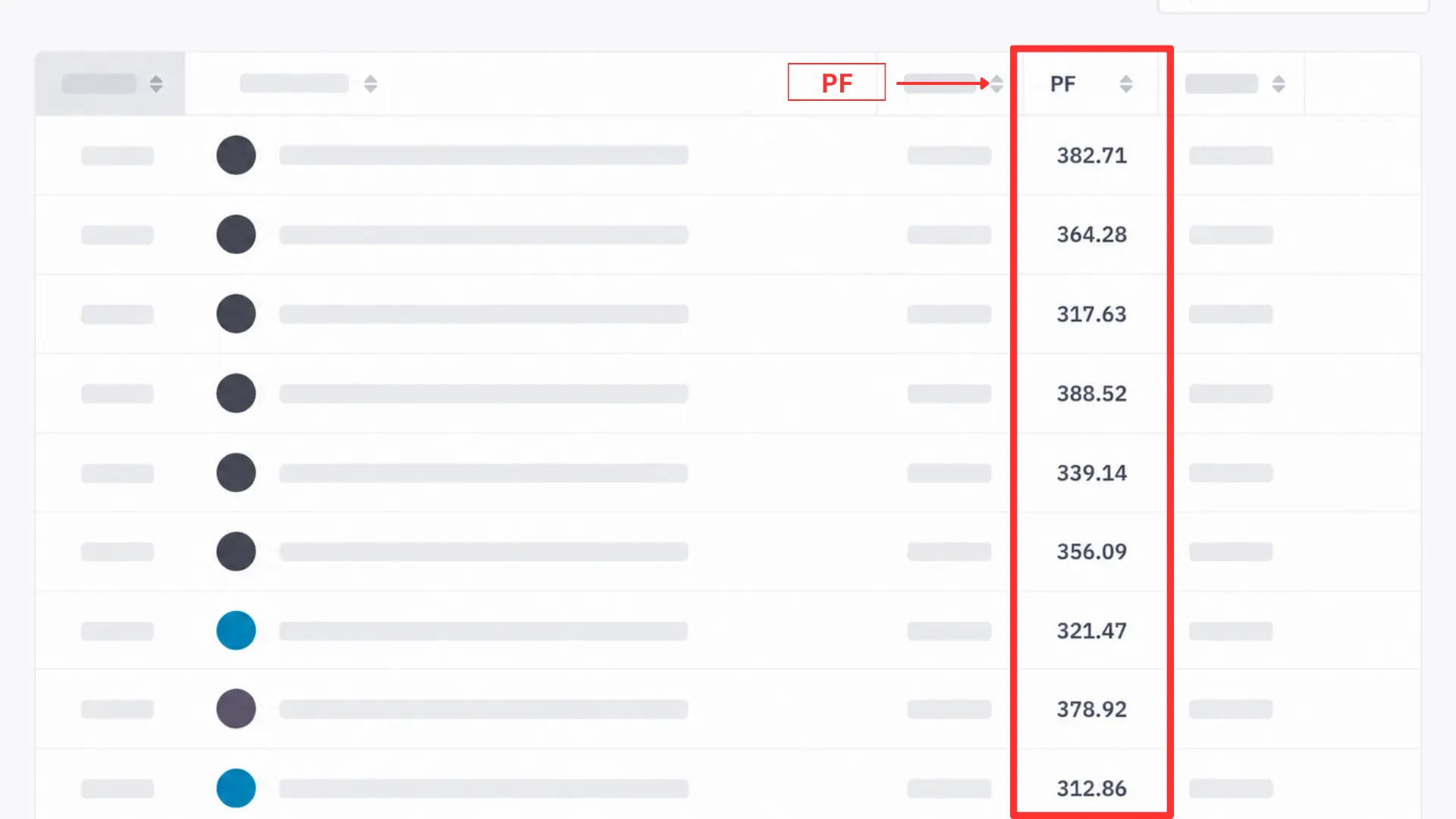
PF stands for Points For, and it shows the total number of fantasy points a team has scored all season. This number updates after every game and reflects how well a roster performs week to week.
Fantasy platforms like ESPN and Yahoo display PF on the league standings page, usually next to wins and losses. A high PF total often means a team has strong scoring players, even if the win-loss record does not show it.
Sometimes a team loses games but still ranks near the top in PF, which can point to bad luck or tough matchups. PF matters because it reveals true team strength, separate from the schedule.
Managers use it to judge trades, decide on lineup changes, and spot which teams might be dangerous in the playoffs.
Why Points For Matter More Than Your Record
Win-loss records don’t always tell the full story in fantasy football. Looking at points for gives a clearer understanding of which teams are actually built to win.
- Reveals Hidden Strength: A team with a low record but high PF often has strong players and just faced tough matchups. This makes points for a better measure of true roster power.
- Predicts Playoff Danger: Teams with a high PF total late in the season tend to be the toughest playoff opponents, even if their record looks average. Smart managers track this before setting their playoff strategy.
- Helps With Trade Decisions: Checking a team’s PF before making a trade shows whether their scoring is consistent or just a lucky streak. This helps managers avoid bad trades.
- Shows Weekly Consistency: A steady rise in PF each week points to a reliable lineup, while sudden jumps can mean one big scoring game carried the total.
- Guides Waiver Wire Moves: Managers can use PF to spot which teams need scoring help and target the waiver wire accordingly.
What is PA in Fantasy Football?
PA stands for Points Against and shows the total number of points opponents scored against a team all season. This stat reflects the strength of the schedule a team has played, not the team’s own scoring.
- High PA: Means a team has faced strong opponents week after week. This can explain a losing record even when the team itself is scoring well.
- Low PA: Indicates an easier schedule, in which opponents have not scored much. This can make a team’s record look better than its actual strength.
Checking PA alongside PF gives a fuller understanding of how tough a season has really been for any fantasy team.
PF vs PA: Which One Actually Matters?
If you only have time to check one number besides your record, check PF. PA is largely a luck meter: you have almost no control over how the twelve other managers’ lineups happened to score on the weeks they drew you.
PF is the truer signal because it measures your own production. The clean way to say it: PF tells you how good you are; PA tells you how lucky (or unlucky) your schedule has been.
Point Differential: The Number Analysts Actually Watch
Subtract PA from PF, and you get point differential (often shown as DIFF). A positive differential means you’ve outscored the sum of your opponents; a negative one means the opposite.
It’s the single fastest read on whether a team is better or worse than its record suggests; the same reason differential is a go-to metric in real NFL and NBA standings.
A 6-4 team with a big positive differential is usually more dangerous than a 7-3 team sitting near zero.
Reading PF and PA Together: The 4-Quadrant Cheat Sheet
Instead of reading PF and PA in isolation, cross them. This is the read most experienced managers make at a glance, and it tells you what kind of team you (or a trade target) really are:
| Combination | What it usually means | What to do about it |
|---|---|---|
| High PF + High PA | Good, but unlucky you’re scoring well but keep running into hot opponents. | Stay the course; the wins tend to even out. |
| High PF + Low PA | The dream. Dominant roster, soft-ish schedule. | You’re a title contender protect the roster. |
| Low PF + High PA | Rough season on both ends. | Shake up the roster via waivers/trades. |
| Low PF + Low PA | Winning on schedule luck, not talent. | Be honest, regression is probably coming. |
How PF and PA Affect Playoff Chances

Playoff spots often come down to more than just wins and losses. Points for and points against can decide who makes the cut and who gets left out.
1. How Points For Signals Playoff Strength
A team with a rising PF total late in the season is usually peaking at the right time. This matters because playoff seeding often rewards consistent scoring, not just wins.
Managers who track weekly points can spot trends before they show up in the standings. A team scoring big every week, even during a loss, often becomes the most feared playoff opponent.
Analysts widely treat PF as an early warning sign for postseason danger, since scoring power rarely disappears overnight once it builds.
2. How Points Against Reveal Schedule Difficulty
Points against tell a different story entirely. It measures how much opposing teams scored, not how a team performed itself. A team with high points against likely faced tough matchups all season long.
This context matters when league standings feel unfair or confusing near playoff time. Some teams look weak on paper but have simply run into hot streaks from opponents.
Understanding points against helps explain why certain records do not match true team quality heading into the postseason stretch.
3. Why Tiebreakers Often Come Down To PF
Ever wonder why two teams with the same record end up in different playoff spots? PF is usually the answer. Most fantasy platforms use points as the first tiebreaker when records match exactly.
This makes every single point scored during the regular season count toward playoff positioning. A few extra points in Week 3 could decide a full playoff seed months later.
That is why smart managers never treat blowout wins or close losses as meaningless once PF enters the frame.
4. What League Rules Say About PF And PA
League settings determine exactly how PF and PA influence playoff seeding. Always check the rulebook before assuming standings work a certain way.
- Some leagues reward the highest PF team with a bonus playoff spot
- A few formats use points against to break ties instead
- Always confirm settings early, since rules vary widely between platforms
Many leagues rank playoff seeds by record first, then by points for as a tiebreaker.
How Fantasy Platforms Calculate PF Each Week
Behind every PF number on the standings page, there’s a scoring system working quietly in the background. Understanding it helps explain why some teams jump ahead each week.
- It starts with real NFL stats: once NFL games end, platforms pull stats such as passing yards, touchdowns, catches, and field goals for every player. These numbers feed directly into each fantasy team’s scoring.
- League settings shape the math: not every league scores the same way. A PPR league adds a point for each catch, while standard scoring skips that. This is why the same player can score differently across two leagues.
- Only starters count toward PF: bench players never affect the weekly total, no matter how well they perform. Only your active starting spots, typically around nine, though the exact number varies by league, contribute points toward PF.
- The platform does the math instantly: once games finish on Sunday and Monday, it automatically totals each starter’s points and updates the season-long PF column within minutes.
A quick worked example (what the tally actually looks like):
Say your nine starters post these in a half-PPR week: QB 22.4, RB 18.1, RB 6.7, WR 14.9, WR 9.2, TE 11.0, FLEX 13.5, D/ST 8.0, K 7.0.
Add them up, and your team scored 110.8 that week. That single number gets added to your season PF total; your bench points, however gaudy, are ignored. Do that ten times, and you have your PF column.
Note: Always check league settings first, since the scoring format affects how quickly PF grows each week.
Fantasy Football Shorthand
Fantasy football shorthand goes far beyond PF and PA. Breaking it into categories makes the entire system much easier to understand.
1. Scoring Format Shorthand
Scoring formats decide how many points a player earns for catches, yards, and touchdowns each week. Two leagues can score the exact same game in completely different ways.
PPR leagues reward every reception with a full point, while 0.5 PPR leagues cut that reward in half. Standard leagues skip reception points entirely, focusing only on yardage and touchdowns.
Knowing the format before drafting changes which players hold more value, especially pass-catching running backs and possession receivers who benefit heavily from reception-based scoring systems.
Scoring Format Abbreviations:
- PPR: Points Per Reception
- 0.5 PPR: Half Point Per Reception
- PF: Points For
- PA: Points Against
2. Roster Spots, Told Like A Locker Room Tour
Think of a fantasy roster like a locker room with assigned seats. Every position has its own designated spot, and knowing them prevents lineup mistakes.
FLEX spots allow flexibility between running backs, receivers, and tight ends, while OP spots sometimes include quarterbacks too. Bench players sit outside the action until called upon.
IDP leagues take things further, requiring individual defensive players instead of a single team defense. Understanding these roster codes helps managers build stronger lineups and avoid confusion on draft day.
Roster Spot Abbreviations:
- BN: Bench
- FLEX: Flex (RB/WR/TE)
- OP: Offensive Player
- IDP: Individual Defensive Player
- DST: Defense/Special Teams
- QB: Quarterback
- RB: Running Back
- WR: Wide Receiver
- TE: Tight End
- K: Kicker
- W/R: Wide Receiver/Running Back
- W/T: Wide Receiver/Tight End
- R/W/T: Running Back/Wide Receiver/Tight End
3. Injury Codes
Red letters next to a player’s name work like warning lights on a dashboard. Each code signals a different level of risk before kickoff.
A P means a player is expected to play despite a minor issue, while Q carries closer to a coin-flip chance. D and O both signal that a player should stay on the bench, with O confirming they are completely ruled out.
IR and PUP point to longer-term absences. Reading these codes early each week prevents a costly zero from ruining a lineup.
Never start a player marked D, O, IR, PUP, or SUSP unless no healthy alternative exists.
Injury Designation Abbreviations:
- P: Probable
- Q: Questionable
- D: Doubtful
- O: Out
- IR: Injured Reserve
- PUP: Physically Unable to Perform
- SUSP: Suspended
- DNP: Did Not Practice
- BYE: Bye Week
4. Performance Stats That Reveal Hidden Value
Some stats never show up in the win-loss column but still shape fantasy outcomes. aDOT reveals how far downfield a receiver typically gets targeted, hinting at big-play potential.
YAC shows extra yards gained after the catch through pure effort. YPC and YPA measure efficiency for running backs and quarterbacks.
DVOA compares performance against league averages based on matchup difficulty. Together, these stats explain why certain players consistently outperform their draft position throughout an entire fantasy season.
Performance Stat Abbreviations:
- aDOT: Average Depth of Target
- YAC: Yards After Catch
- Y/R: Yards Per Reception
- YPC: Yards Per Carry
- YPA: Yards Per Attempt
- DVOA: Defense-adjusted Value Over Average
5. Standings Shorthand, Broken Down Like A Scoreboard
Standings pages pack a lot of information into a few short letters. Reading them correctly shows exactly where a team stands beyond just wins and losses.
W and L track basic results, while T accounts for rare tied games. GB shows how far a team trails first place, and STRK reveals whether a team is heating up or cooling down.
MOV tracks waiver activity, hinting at how actively a manager is improving their roster each week.
Standings Shorthand Abbreviations:
- W: Wins
- L: Losses
- T: Ties
- GB: Games Back
- STRK: Streak
- MOV: Waiver Moves
Mistakes to Avoid With PF and PA
Small misreadings of these stats can lead to poor trades and bad lineup calls. A quick comparison makes each mistake easy to spot and avoid.
| Mistake | What Happens | Better Approach |
|---|---|---|
| Ignoring PA When Judging a Team | Record looks strong due to weak opponents | Check PA alongside PF for a clear understanding |
| Assuming Record Always Matches Skill | High PF and high PA get mistaken for poor play | Recognize bad luck versus true roster weakness |
| Overreacting To One Big Week | A single spike inflates perceived team strength | Track PF trends across multiple weeks |
| Skipping League Settings Before Comparing | PPR and standard PF totals get compared unfairly | Confirm the scoring format before comparing teams |
| Forgetting Tiebreaker Rules | Surprises appear during close playoff races | Check standings early for tiebreaker impact |
Avoiding these mistakes helps managers use PF and PA more accurately when making trades, waiver moves, and playoff decisions.
Final Thoughts
PF might have seemed confusing at first, but it’s really just a simple way to track scoring strength all season. Once you know what it means, reading league standings gets a lot easier.
Keeping an eye on both PF and PA helps you make smarter trades, better waiver moves, and stronger playoff decisions.
It’s a small habit that can make a big difference in how a season plays out. Records tell part of the story, but these two stats fill in the rest.
Now that you know how PF works, take a look at your own league standings and see what your numbers say about your team. Share your experience in the comments below.
Frequently Asked Questions
Where to Find PF in Fantasy Football Standings?
PF (Points For) is shown as a column in your league’s standings page on sites like ESPN, Yahoo, and Sleeper, usually alongside W–L and PA.
How to Use PF Before Making Trades or Waiver Moves?
Use PF to judge how strong your lineup really is, target underperforming high-PF teams in trades, and grab waiver players from low-PF rosters that are winning mostly on luck.
Can defensive scoring rules make PF misleading?
Yes, heavy defensive scoring (sacks, turnovers, TDs) can inflate or swing weekly totals, so PF alone can be misleading unless you factor in your league’s specific scoring rules.