



IR in fantasy football means Injured Reserve. It is a separate roster spot for eligible injured players.
For example, if your starting running back receives an IR tag, you can move him there and add a waiver player without dropping him.
That makes IR useful beyond the injury itself. It protects a valuable player while creating room for a bye-week starter, replacement, or playoff stash.
The Fantasy Sports & Gaming Association represents 85 million fantasy sports players across the United States and Canada. Small roster rules can affect millions of decisions each week.
IR rules also vary across fantasy platforms, so check your league settings before making a move.
Strategy Note:
Move eligible players to IR before waivers run, so you can add help without cutting useful depth.
What does IR Mean in Fantasy Football for Your Roster?
It means you can hold an eligible injured player outside your normal bench.
That player stays on your team, but he does not help your active lineup. You still need a healthy starter in his place.
ESPN updates fantasy injury tags using the NFL’s official injury and inactive lists. Players marked Out or Injured/Reserve can usually be moved into an IR slot.
That makes IR useful after a Sunday injury. A player can gain the right tag, then become movable before waivers run.
The next two parts explain what IR changes in your lineup and what it does not promise.
Fun fact: IR creates value before the injured player returns. The open roster spot can help you win waivers that same week.
How IR Affects Fantasy Football Lineups
IR in fantasy football affects roster space, not scoring.
A player in your IR slot does not score fantasy points. You must start another active player.
Example: your WR2 moves to IR after a hamstring injury.
You can keep him, but your lineup still needs another receiver, flex, or waiver pickup.
What IR Does Not Mean in Fantasy Football
IR in fantasy football does not always mean a season-ending injury.
The NFL’s official 2025–2026 dates document says players placed on Reserve/Injured during the regular season or postseason may be designated for return later.
That matters in fantasy.
Some IR players are long-term holds. Others may return during your playoff push.
Which Players Qualify for IR in Fantasy Football?
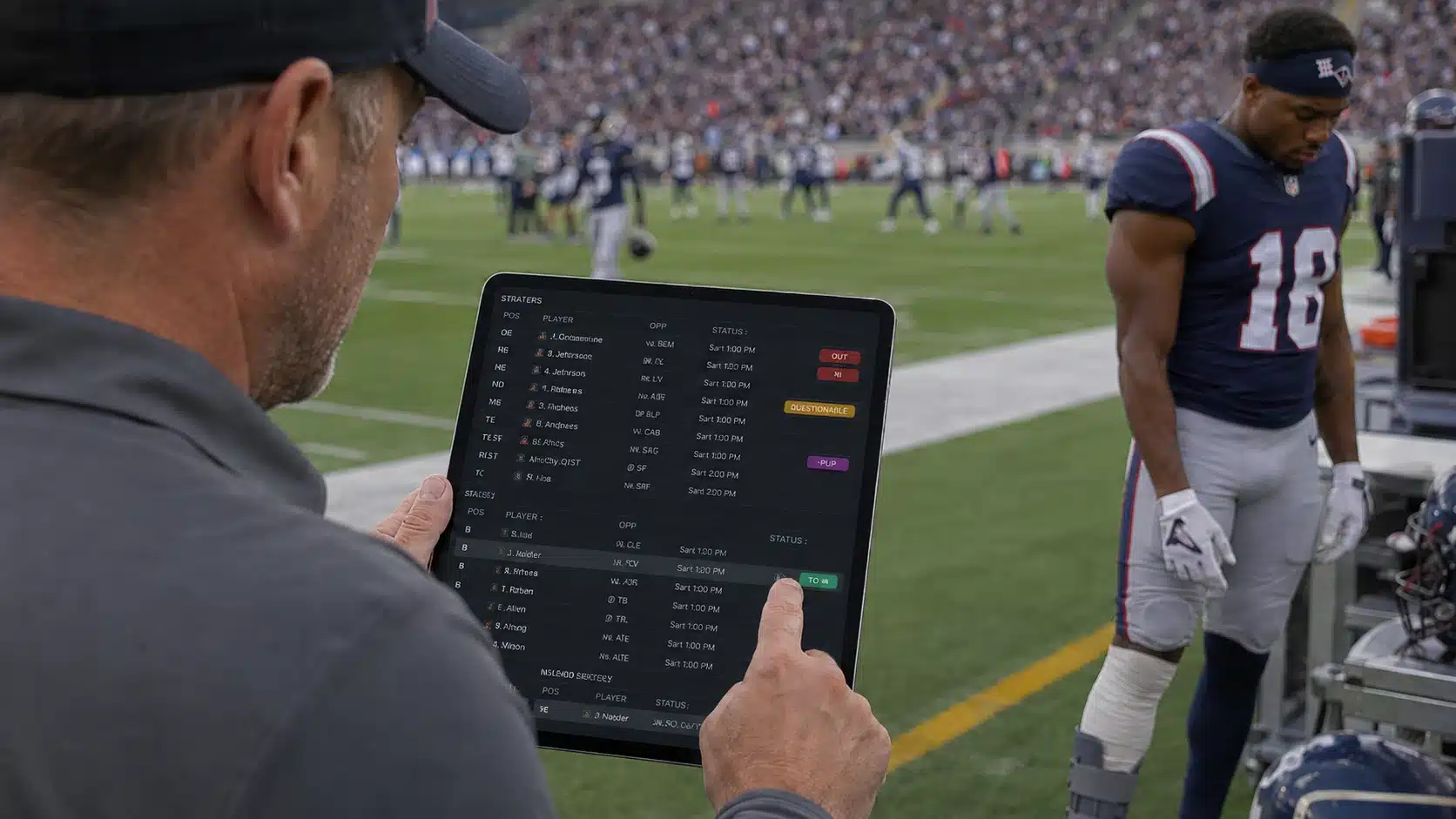
Players qualify for IR in fantasy football only when your platform gives them an eligible tag.
Common fantasy tags include IR, O, IL, IR+, or NA, depending on the app.
The exact list comes from platform rules and league settings.
Only players with IR, IL, or O tags can be placed in IR or IL slots.
Yahoo says managers can use inactive roster spots such as IL, IR, IR+, or NA once eligibility rules are met.
This is where managers often make mistakes.
A player can be hurt in real life but still not fit your fantasy IR slot.
| Platform | Common Eligible Tags | Strategy Impact |
| ESPN | Out or Injured/Reserve | Short-term Out players may qualify for an IR slot. |
| Yahoo | IR, NFI-R, NFI-A, Out, or PUP | NA and Questionable players do not qualify. |
| Sleeper | Controlled by commissioner settings | Changing player tags may block roster moves. |
ESPN Fantasy Football IR Eligibility
ESPN uses specific injury tags to decide who can move into an IR slot, so check the player label before making roster changes.
- Out Players: ESPN fantasy football IR usually works for players marked Out or Injured/Reserve.
- Suspended Players: ESPN notes that suspended players are not eligible for IR.
- Simple Check: Always check the actual player tag, not just the injury news headline.
Yahoo and Sleeper Fantasy Football IR Eligibility
Yahoo and Sleeper give managers more setting-based flexibility, which makes league rules just as important as the player’s injury status.
- Yahoo IR Rules: Yahoo Fantasy Football allows players marked IR, NFI-R, NFI-A, Out, or PUP in its IR slot.
- Sleeper IR Rules: Sleeper says IR slots are extra roster spots for players unable to play due to injury.
- League Settings: Sleeper also lets leagues set the number of IR slots.
When Should You Put a Player on IR in Fantasy Football?

Put a player on IR when he is eligible and will still have value upon return.
Strong stashes include starting running backs, high-target receivers, top tight ends, and reliable flex players. Avoid holding injured kickers, backup tight ends, or low-volume receivers.
When I compare an injured player with waiver options, I check his role, weekly volume, and return timeline before name recognition.
It usually comes down to a shifting injury tag and whether it still qualifies before a waiver deadline.
A 2018 NFL injury study tracked 701 game-loss injuries in 2007 and 804 in 2016. That volume shows why IR decisions matter across a full fantasy season.
| IR Decision | When It Makes Sense | Example | Better Move |
| Smart Stash | The injured player has starter-caliber upside and a clear role when healthy. | A goal-line running back or a receiver getting steady targets. | Move him to IR and use the open bench spot for a waiver pickup. |
| Bad Stash | The injured player would not start for your team after returning. | A backup tight end, low-volume receiver, or replaceable bench player. | Drop him and add a healthy player who can help now. |
| Close Call | The player has upside, but his role or return timeline is unclear. | A rookie receiver, handcuff RB, or player returning to a crowded depth chart. | Compare him with the best waiver option before using the IR slot. |
How Does IR Give Fantasy Football Managers a Waiver Edge?

IR gives fantasy football managers a waiver edge by opening a roster spot before the claims process. That timing is the whole trick. Move the injured player to IR first, then use the open spot on waivers.
For example, your WR2 is ruled Out on Tuesday. You move him to IR before waivers run. Now you can claim a running back handcuff and still keep your injured receiver.
In reviewing the platform rules, this is where active managers gain the most. IR is not only about patience. It is about timing.
How IR Helps Fantasy Football Waivers
Before waivers run, create roster space first so you can claim help without cutting useful depth.
- Check Monday or Tuesday: Look for new injury tags before the waiver process.
- Move First: If the player qualifies, move him to IR before adding anyone.
- Claim Second: Use the open spot to make your waiver claim.
- Protect Your Bench: This keeps you from cutting a player you may need later.
How IR Helps Fantasy Football Bye Weeks
During bye weeks, an open IR spot can help you cover a missing starter without weakening your bench.
- Spot The Bye Problem: Your tight end, quarterback, defense, or flex option may be off this week.
- Check Your IR Slot: See if an injured player already qualifies.
- Open A Temporary Spot: Move the injured player to IR and add a one-week starter.
- Avoid A Bad Drop: You can cover the bye without cutting a useful bench player.
What are the Most Common IR Mistakes in Fantasy Football?

Common IR mistakes include holding on to weak players, missing status changes, ignoring league settings, and waiting too long before using waivers.
Sleeper Support notes that an ineligible IR player may block roster moves until you create space.
For example, a player marked Out may later shift to Questionable and lose IR eligibility.
Use the table below as a quick check before waivers and lineup lock.
| Mistake | Why It Hurts | Better Move |
|---|---|---|
| Holding weak, injured players | Wastes roster value | Stash only real contributors |
| Missing tag changes | Blocks moves | Check before waivers |
| Ignoring league settings | Causes bad assumptions | Review rules before Week 1 |
| Waiting too long | Misses waiver value | Move eligible players early |
How Can You Get More Value From Your Fantasy Football IR Slot?
Across ESPN, Yahoo, and Sleeper, eligibility tags vary, but the strategy remains the same. Knowing what IR means in fantasy football is just the start.
The real edge comes from acting on it weekly, not only when injury prompts action. Stash starters with genuine target share, not just familiar names.
Skip the fringe players who would not start for you even at full health. Move eligible players to IR before waivers close, not after, so the open spot actually works for you.
That single habit turns a definition into a waiver-day advantage.
The mistakes that cost managers the most are rarely complicated: a missed tag change, a forgotten activation, or an incorrect assumption about settings.
IR eligibility varies by platform and league settings. Player designations can also change during the week, so check your roster rules before making moves.
Frequently Asked Questions
What does IR Mean in Fantasy Football?
IR means Injured Reserve. It is a special roster spot for eligible injured players who are not currently available to play.
Can a Player on IR Score Fantasy Points?
No. A player in the IR slot does not score fantasy points. You must move him back before starting him.
Who Can Go on IR in Fantasy Football?
Players with eligible injury tags can go on IR. The exact tags depend on your platform and league settings.
Should I Use IR for Every Injured Player?
No. Use IR for injured players who still have starter value or strong upside when they return.
Why is My IR Player Blocking Roster Moves?
Your player may no longer qualify for IR. Move him to your bench or drop someone to fix the roster.