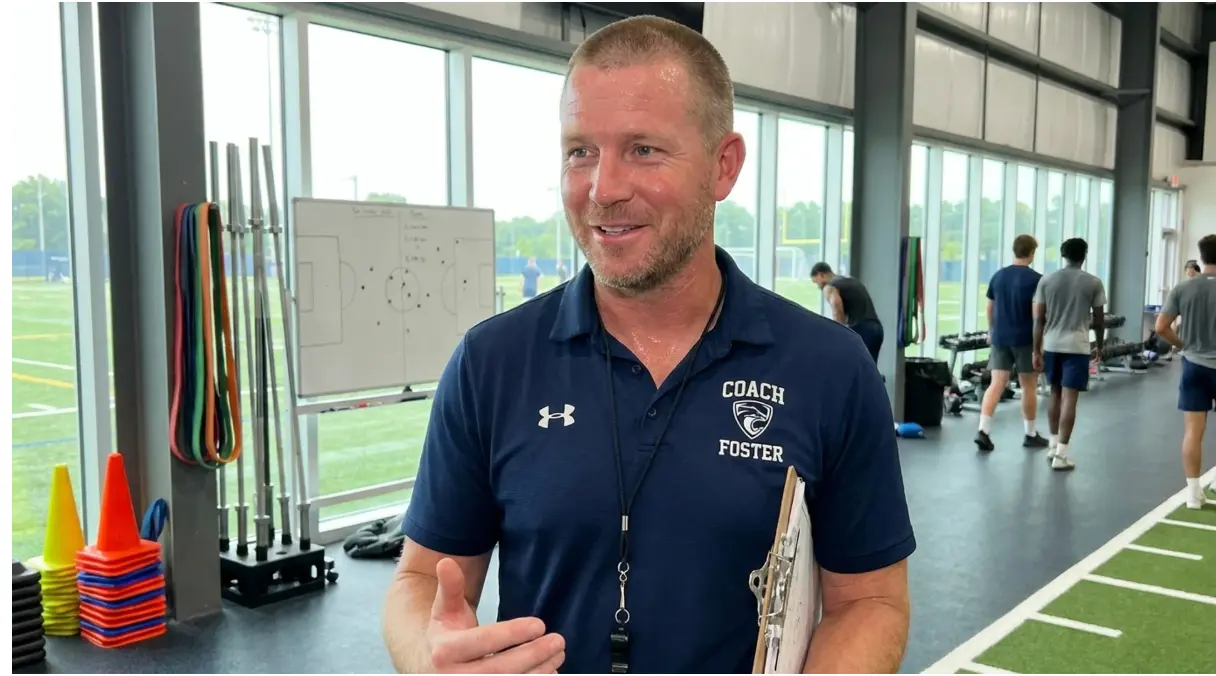



Fumble the ball twice in practice, and the bench starts looking real comfortable. That pressure is exactly why skill never shows up overnight or by accident.
Learning how to get better at football takes patience, repetition, and a willingness to fix small mistakes. It means training your body, sharpening your mind, and building habits that hold up under pressure.
Some players focus only on flashy plays and skip the boring work that builds real skill. Others put in quiet effort week after week and slowly turn into players coaches trust.
That steady effort beats shortcuts every time. Strap in, because your next level starts with the basics.
What Does It Really Mean to Get Better at Football?
Getting better at football means growing in several ways at once, each one building on the last. Better technique lays the foundation, since raw talent alone breaks down under pressure.
That technique only pays off when speed and strength consistently support it. From there, sharper decision-making keeps you calm and quick when games get tense.
Strong conditioning carries that sharpness from the first snap through the final whistle. None of it holds up without discipline, which steadies your effort during repetitive practices.
Over time, that steady effort turns into real confidence and skills that feel automatic. Many players chase big plays, but coaches notice reliable fundamentals week after week.
A better player knows their assignment, plays fast, stays physical, and improves weekly.
Ways to Sharpen Your Game on the Field
Real progress on the field takes more than just showing up to practice. Here’s how to get better at football, one skill at a time:
1. Master Your Stance First
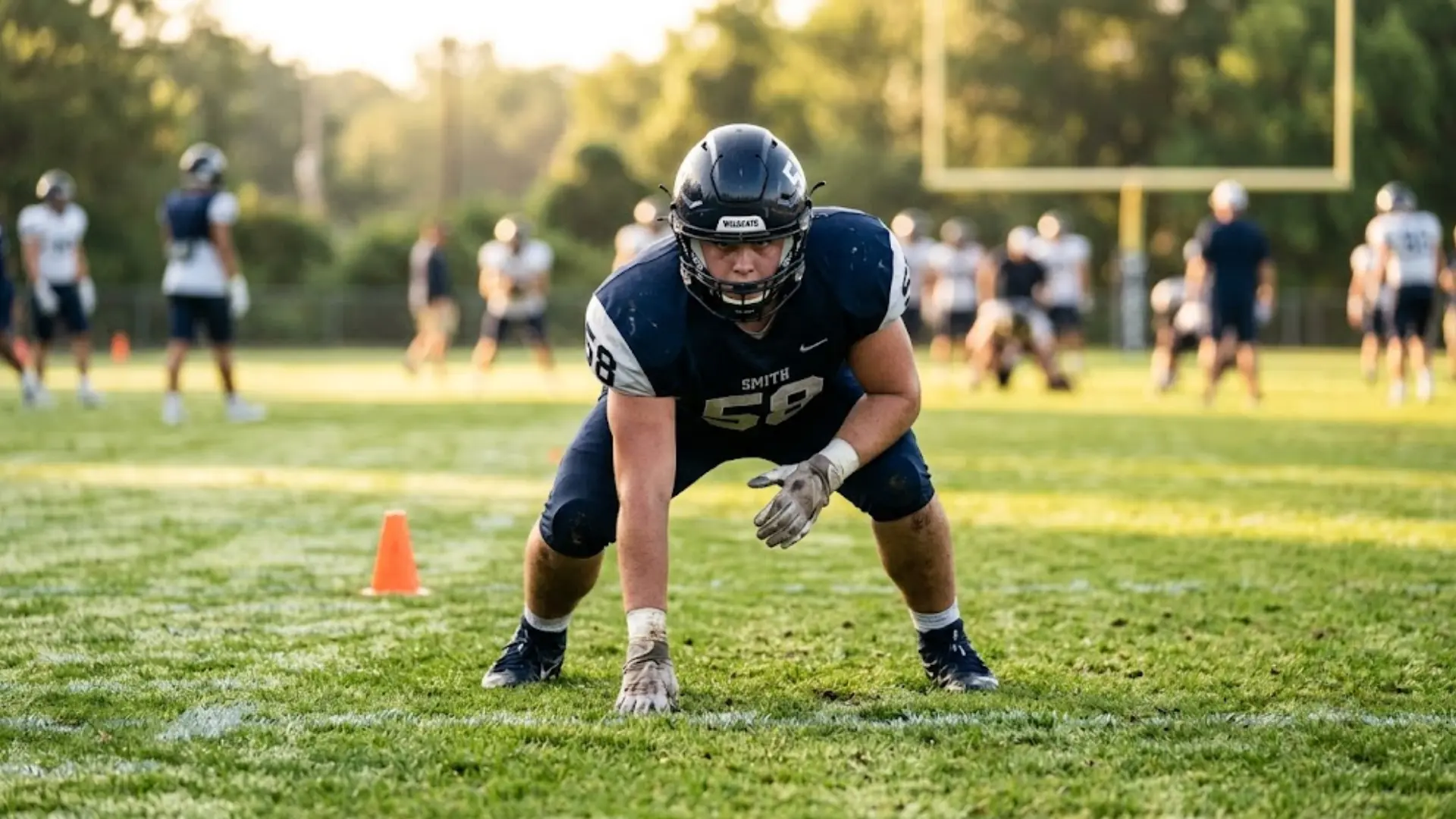
Your stance sets up everything that happens next on the field. A poor stance throws off your balance before the play even starts. Keep your knees bent and your weight spread evenly between both feet.
Your eyes should stay up, not down at the ground. Your body needs to stay ready to move the second the ball snaps. A strong stance gives you better reaction speed and more power right away.
2. Improve Your First Step

Your first step decides how well most plays turn out. A slow reaction to the snap puts you behind before you even move. Avoid false steps, since they waste time and kill your momentum.
Push off the ground hard instead of standing up too soon. Staying low through that first movement keeps your balance steady. Clean, fast first steps make every other skill on the field work better.
3. Train Your Hands
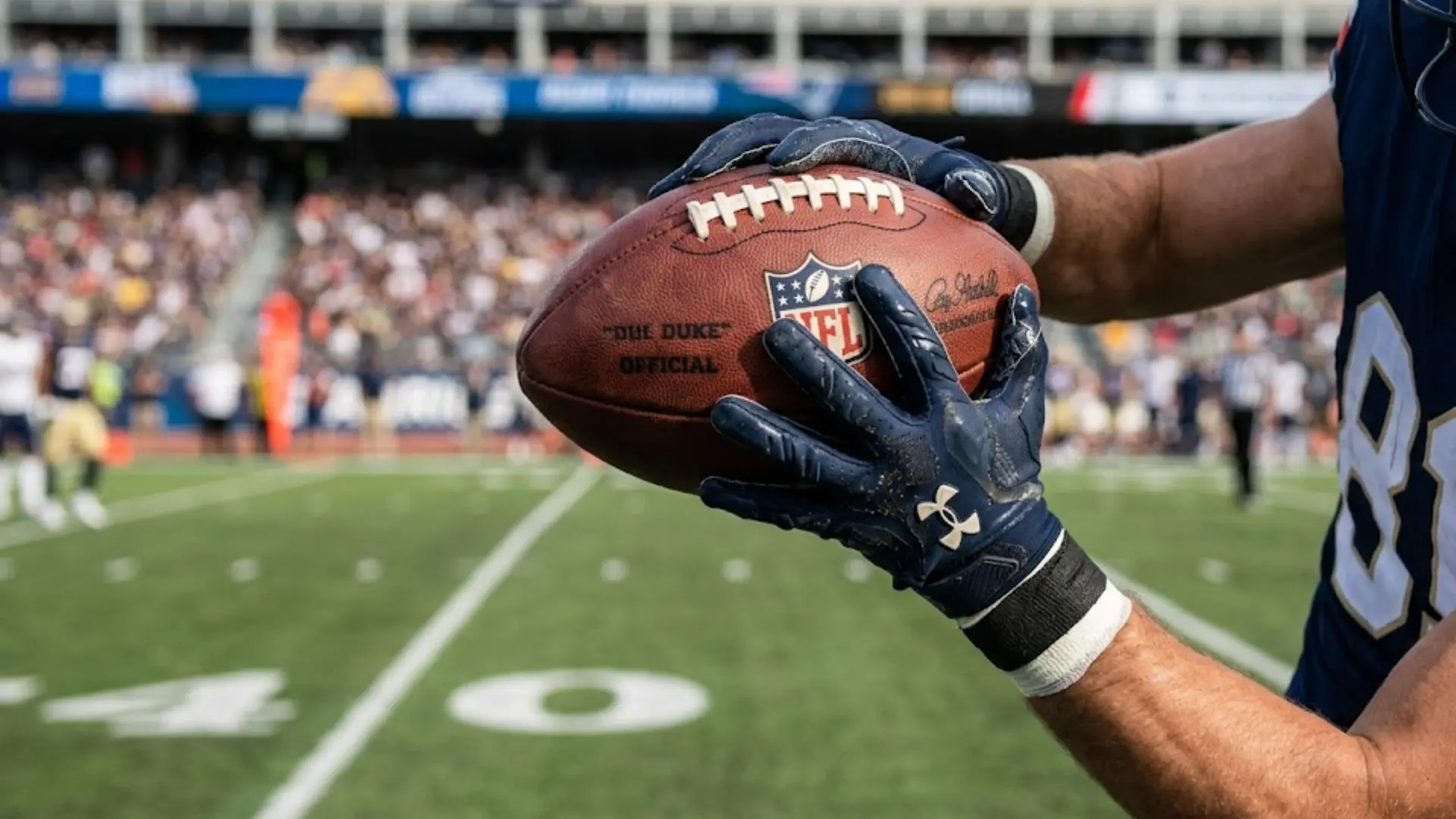
Strong hands matter for catching, blocking, and shedding blocks during plays. Grip strength helps you control the ball and fight off defenders. Quick hand placement gives blockers and pass rushers an early advantage.
Catch the ball away from your body instead of trapping it against your chest. Practice striking pads with control to build power without losing technique. Trained hands separate solid players from players who struggle in contact.
4. Get Faster With Short Sprints

Football speed comes from short, explosive bursts, not long-distance running. Five-yard sprints build quick acceleration off the line. Ten-yard sprints train the speed you need through most plays.
Twenty-yard sprints stretch that speed a bit further down the field. Rest between each rep so your form stays sharp and controlled. Good sprint form means driving your arms and staying low through each rep.
5. Build Better Footwork

Footwork drills train your body to move quickly in tight spaces. Cone drills sharpen your ability to change direction without losing balance. Ladder drills improve foot speed and coordination in small steps.
Shuffles and backpedals help you move sideways and backward with control. Cuts train your body to shift direction fast during real plays.
Strong footwork helps you block, cover, tackle, and create separation on the field.
6. Work on Strength the Right Way
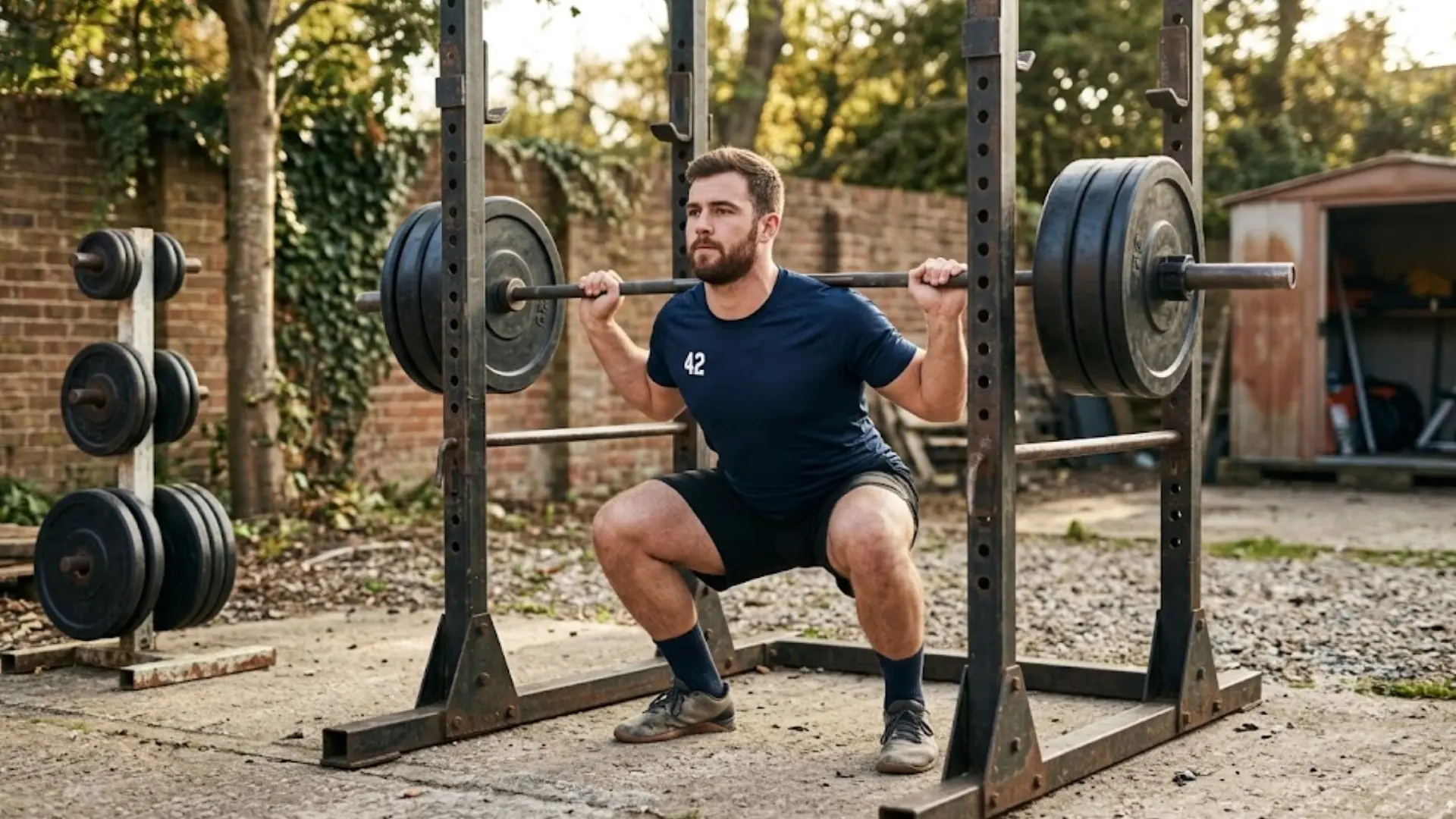
Strength training supports every movement you make on the field. Lower-body work like squats and lunges builds power through your legs.
Core strength keeps your body stable during contact and quick turns. Upper-body moves like push-ups and rows build control, not just size. Carries build grip strength and total-body stability at once.
Always master safe form before adding heavy weight, since bad form causes injuries fast.
7. Improve Conditioning for Game Speed

Football conditioning looks nothing like long-distance running. The sport demands repeated bursts of speed with quick recovery in between plays.
Sprint intervals train your body to reset fast after each effort. Long, steady runs do not match how football actually feels during games.
Real conditioning shows up late in games, when tired players start making mistakes. Strong conditioning keeps your effort high when everyone else slows down.
8. Learn Your Playbook
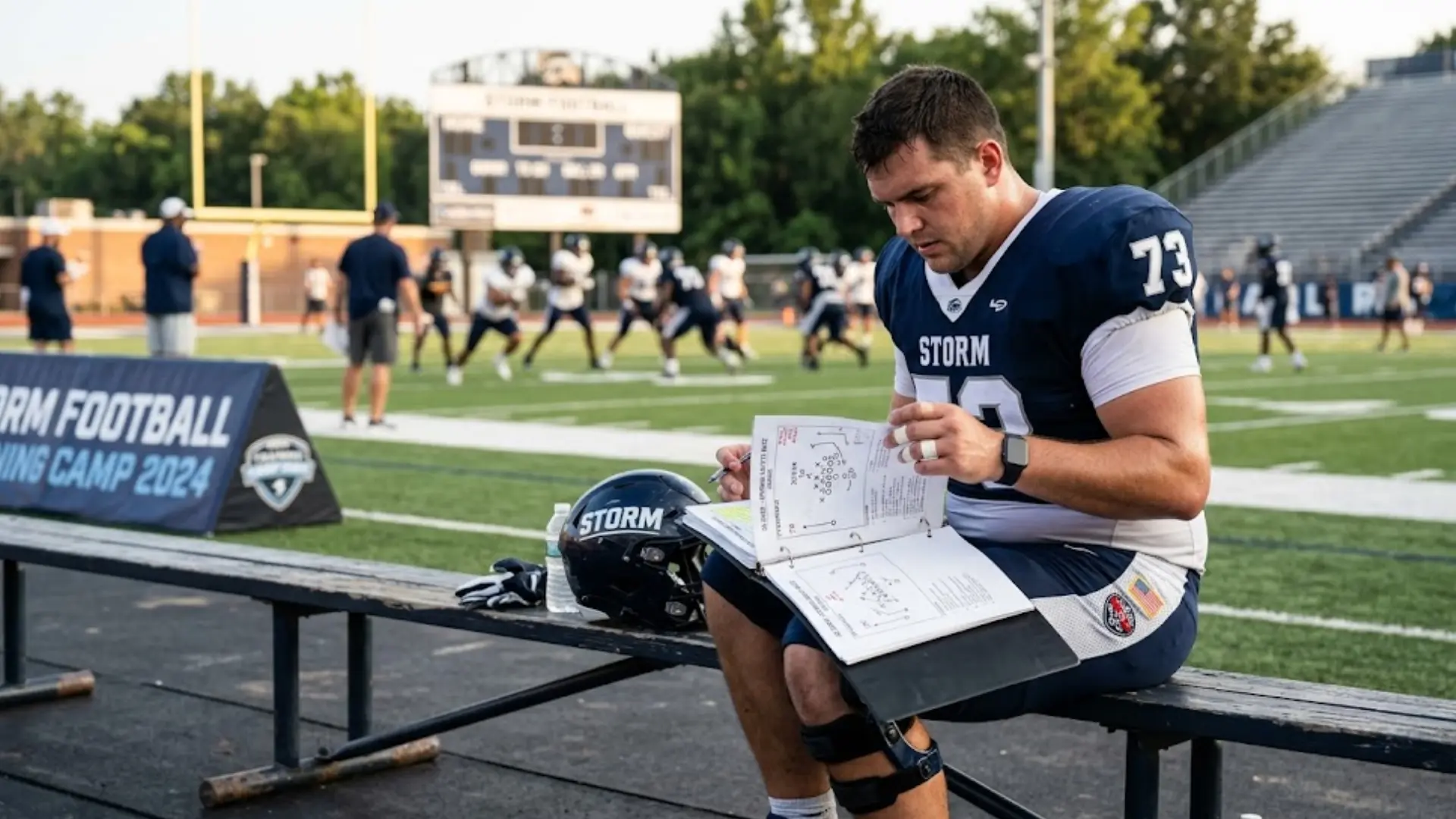
Knowing your playbook lets you play faster without hesitation. Players who understand their assignments react instead of thinking during the play.
Study your formations closely, since each one changes your job slightly. Learn your routes, blocking rules, and coverage responsibilities in detail.
Pay attention to what your nearby teammates are doing on each play. Strong playbook knowledge turns confusion into confident, quick decisions during games.
9. Watch a Film With a Purpose
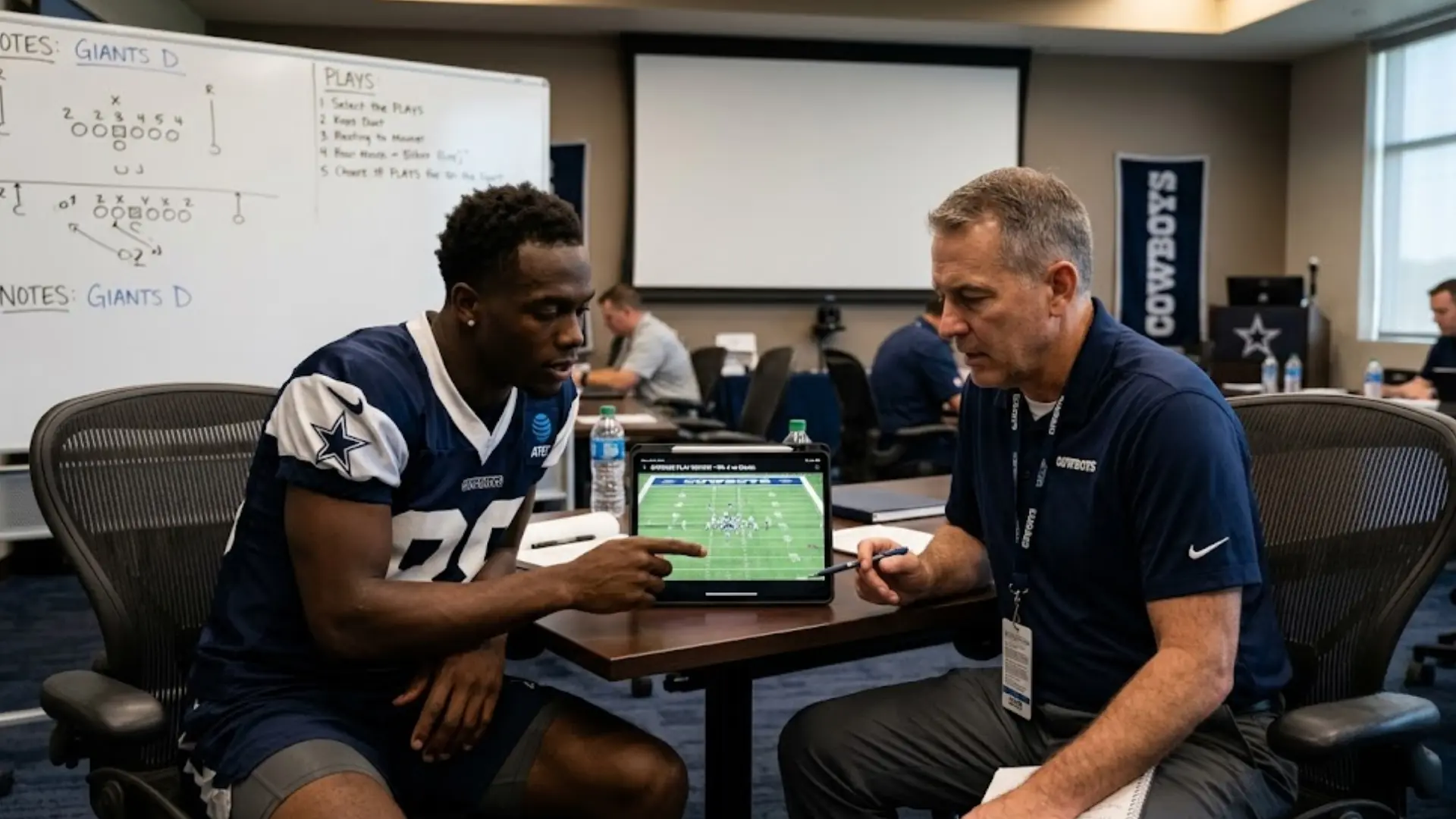
Film study helps you spot habits you cannot see during live reps. Watch your own clips first, focusing on stance and first step. Check your alignment and effort on every single play you review.
Then study better players at your position for comparison and ideas. Look for repeated mistakes that show up across multiple games or practices.
Purposeful film study turns small errors into lessons you can actually fix.
10. Practice Ball Security

Ball security starts with holding the ball high and tight against your body. Pressure drills teach you to protect the ball while defenders grab at it. Stay aware of contact coming from any direction during every single play.
Switch the ball to your outside hand near the sideline for protection. In traffic, tuck the ball tightly and expect contact from multiple angles. Strong ball security builds trust with coaches and keeps drives alive.
Best Football Drills to Improve Overall Skill
Skill improvement comes from drills that train your body and mind together. These seven drills build footwork, hands, ball security, and tackling all at once:
11. Cone Change-of-Direction Drill
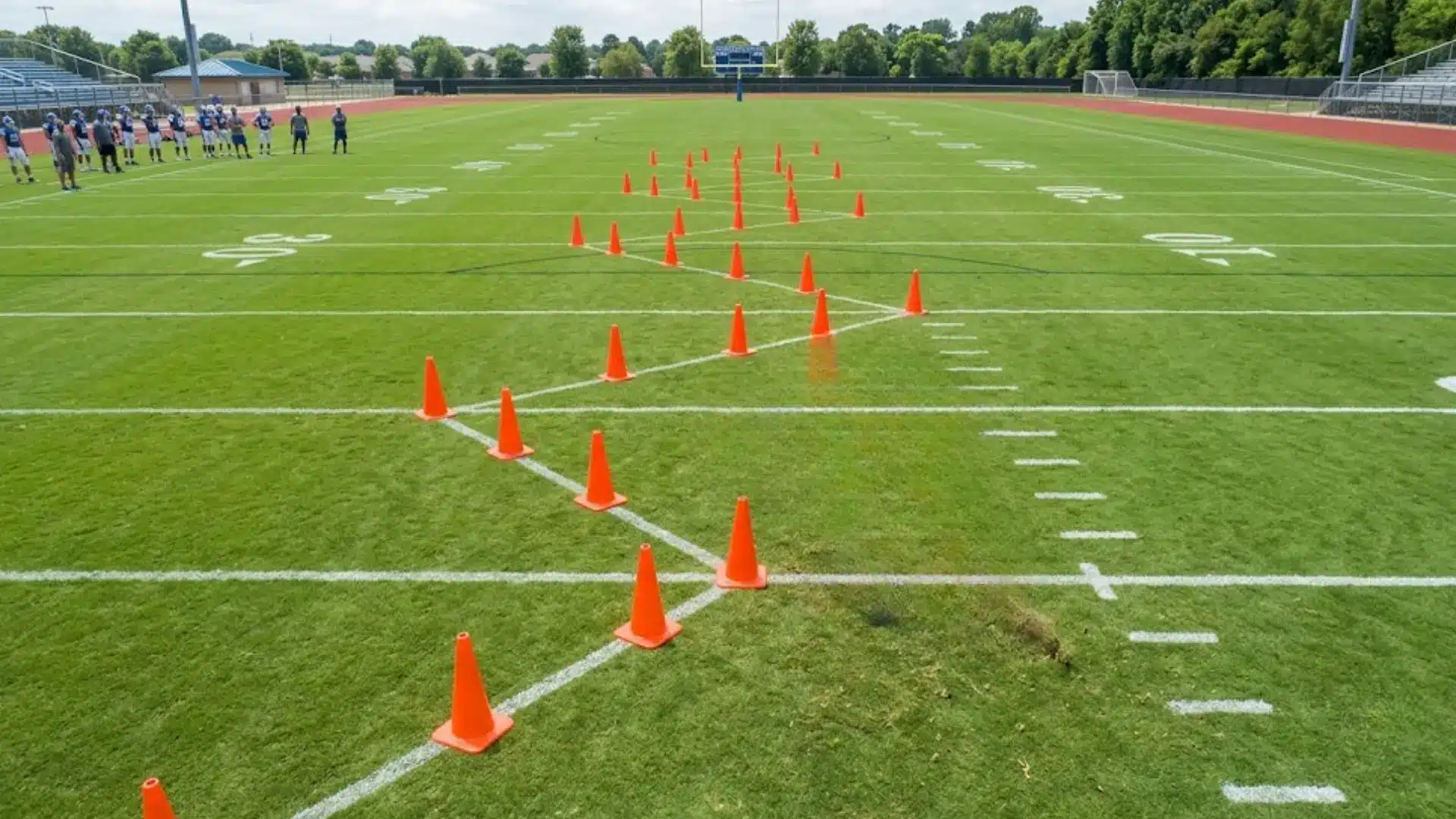
Set a few cones in a short zigzag pattern on open ground. Sprint toward the first cone, then cut sharply and stay low through each turn. Focus on control instead of just running fast between cones.
Your body should stay balanced through every change in direction. This drill trains the quick cuts you need during real plays. Repeat it often, since clean footwork under control beats sloppy speed every time.
12. Backpedal and Break Drill
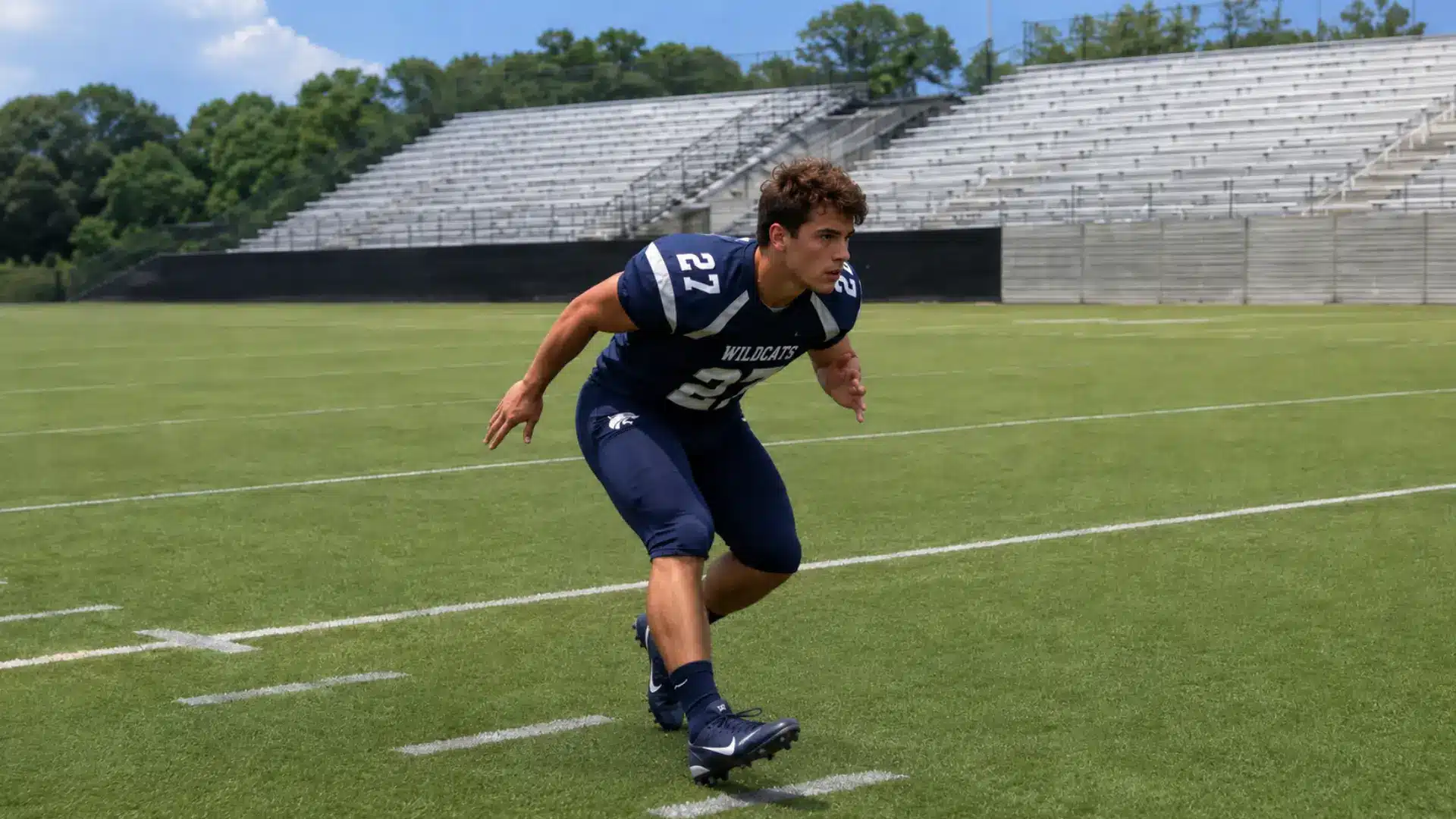
This drill works well for defensive backs, linebackers, and receivers. Backpedal a few steps, then plant your foot and drive forward at an angle. Keep your weight balanced so you can react without losing speed.
This movement mirrors what happens during real coverage and route situations. It sharpens your reaction time and foot control under pressure.
Practicing this regularly helps you break on the ball faster during games.
13. Catching Repetition Drill

Catch balls thrown from different angles to build reliable hands. Practice high catches, low catches, and catches made over your shoulder. Each angle trains your hands and eyes to adjust quickly.
Always secure the ball fully before turning upfield to run. Rushing this step often leads to drops or fumbles later. Repeating these catches builds the confidence you need during real game situations.
Build a Simple Weekly Football Practice Routine
A weekly routine works best when it covers every part of the game, not just one skill. This breakdown covers skill work, speed, strength, recovery, and film study:
How to Build a Weekly Routine
Building a routine takes more than picking random drills for random days. A few simple steps help you create a schedule that actually works:
- List your priorities first: write down the skills, positions, and weaknesses that need the most attention.
- Assign focus areas to specific days: spread skill work, speed, strength, recovery, and film study across the week.
- Keep sessions short and focused: train one or two main goals per day instead of cramming everything together.
- Add recovery on purpose: schedule rest and light movement days instead of leaving them out.
- Review and adjust weekly: track what worked, then tweak the schedule based on progress and fatigue.
Following these steps turns a random week of practice into a plan with real direction. A routine like this stays flexible enough to adjust as your skills and season change.
Sample Weekly Practice Routine
A sample routine makes it easier to see how these five areas fit together. This simple weekly plan spreads out skill work, speed, strength, recovery, and film study:
| Day | Focus Area | Main Activities |
|---|---|---|
| Monday | Skill Work | Position drills, one or two key skills |
| Tuesday | Speed and Agility | Sprint starts, cutting, short burst training |
| Wednesday | Strength Training | Lower-body power, core work, upper-body control |
| Thursday | Film or Study | Game clips, position videos, notes on assignments |
| Friday | Skill Work | Light position drills, timing, and communication |
| Saturday | Recovery | Stretching, mobility work, light movement |
| Sunday | Recovery | Rest, sleep, and full recovery |
This layout keeps every training area covered without overloading any single day. Adjust the order to fit your schedule, but keep all five areas in the mix each week.
Frequently Asked Questions
How Long Does It Take to Get Better at Football?
Most players notice small improvements in 2 to 4 weeks, but real football progress usually takes 3 to 6 months of consistent practice.
What Equipment Do I Need to Practice Football at Home?
You can start with a football, cones, a ladder, a water bottle, gloves, and an open space. Full pads are only needed for contact practice.
How Do I Know Which Football Position Fits Me?
Your best position depends on size, speed, strength, hands, vision, toughness, and football IQ. Coaches can help you match your skills.
Final Thoughts
Getting stronger on the field never happens through luck or talent alone. Learning how to get better at football means showing up, training with purpose, and staying patient as progress is slow.
Small habits, repeated often, build the kind of player coaches notice and trust. Skip the shortcuts, since lasting improvement always comes from steady, focused effort over time.
Stay coachable, track your progress, and keep pushing even when results feel slow. Every drill, sprint, and rep adds up to real change on the field.
Your next step forward starts the moment you commit to showing up fully. Drop a comment below and share which tip you plan to try first.