



Catching a football gets easier when you stop guessing and start training the same few habits every time. Most drops are not random. They usually come from looking away early, using stiff hands, waiting on the ball, or trying to run before the catch is secure.
I have seen this often with youth and amateur players.
The fix is not shouting “catch it” louder. It is clean reps, simple hand cues, and drills that build trust in your hands.
This article breaks down the right way to catch, the hand positions that matter, and quick drills that help you stop drops.
How do You Catch a Football the Right Way?
Catching a football the right way means meeting the ball with your hands, tracking it into your fingers, and securing it before you run.
I teach players to think in three steps: attack it, catch it, tuck it.
The catch changes by situation, but the habit stays the same. Use the right hand shape, keep your eyes on the ball, and finish every rep with control.
1. Catching On the Run
On the run, keep your stride steady and catch the football out front without stopping your feet. Set your hands before the ball arrives, keep your eyes on the point, and tuck it before turning upfield.
I tell players not to gather their feet unless the throw is poor, because slowing down costs space after the catch. Use the same rhythm in every rep.
2. Over-the-Shoulder Passes
On deep balls, track the football over one shoulder while staying on your line. Keep your hands quiet until the last moment, so a defender cannot time the swat.
Catch it high and slightly outside your body, then pull it in.
Do not let it fall toward your waist unless the throw forces that adjustment. High tracking keeps the ball easier to judge.
3. Back-Shoulder Throws
Back-shoulder throws are meant to land behind you, away from the defender.
Slow your momentum, turn back to the football, and attack it before the defender can recover. Keep your hands strong and catch with your hands away from your chest.
This is not a lazy catch. It needs quick feet, steady balance, and a fast tuck, so the ball stays protected.
4. Traffic Catches
In traffic, assume contact is coming, but do not look for the hit first.
Your eyes stay on the football until it reaches your hands.
Attack the ball at its highest safe point, catch with your fingertips, and clamp it quickly. The catch only counts if you maintain control after contact, not before.
5. Low Football Catches
Low catches need your whole body, not just your arms.
Bend your knees, lower your chest with control, and bring your pinkies together under the football.
Cup your hands like a basket and catch from below. If you have to dive, get both hands under the ball before it reaches the ground. This keeps the catch legal and clean, too.
6. Jump Balls
On a jump ball, your timing matters as much as your hands.
Track the flight, jump at the right moment, and extend fully rather than wait under the ball.
For passes above your chest, use a strong diamond shape. Catch at your highest point, pull the football in, and land with control. Do not drift under it late or reach behind your head.
7. Sideline Catches
Sideline catches are normal catches with a footwork job added. Catch the football first, but know where the boundary is before it arrives.
Keep your shoulders calm, secure the ball, and tap or drag your feet in bounds.
Rushing the feet often causes the hands to tighten, so stay balanced through the catch and finish the play under control.
8. Wet Or Cold Weather Catches
Rain and cold make the football slick, so the catch has to be simpler. Use softer hands, let the ball come in a little deeper, and secure it earlier. Two hands matter more in poor weather.
If you wear gloves, still train bare-hand reps too, because grip gear cannot fix bad eyes or stiff hands. Keep every rep clean first.
No gloves in the wet? I tell players to trust soft hands. Make a diamond for high balls, cup with pinkies together for low throws, and secure it early.
9. One-Handed Catches
One-handed catches should be a last choice, not your normal plan.
Use one hand only when the throw is too far for both hands. Extend, meet the football with your fingertips, and clamp it against your forearm.
For daily practice, build two-hand catches first, because they give better control and fewer drops.
What is the Correct Hand Position for Catching a Football?
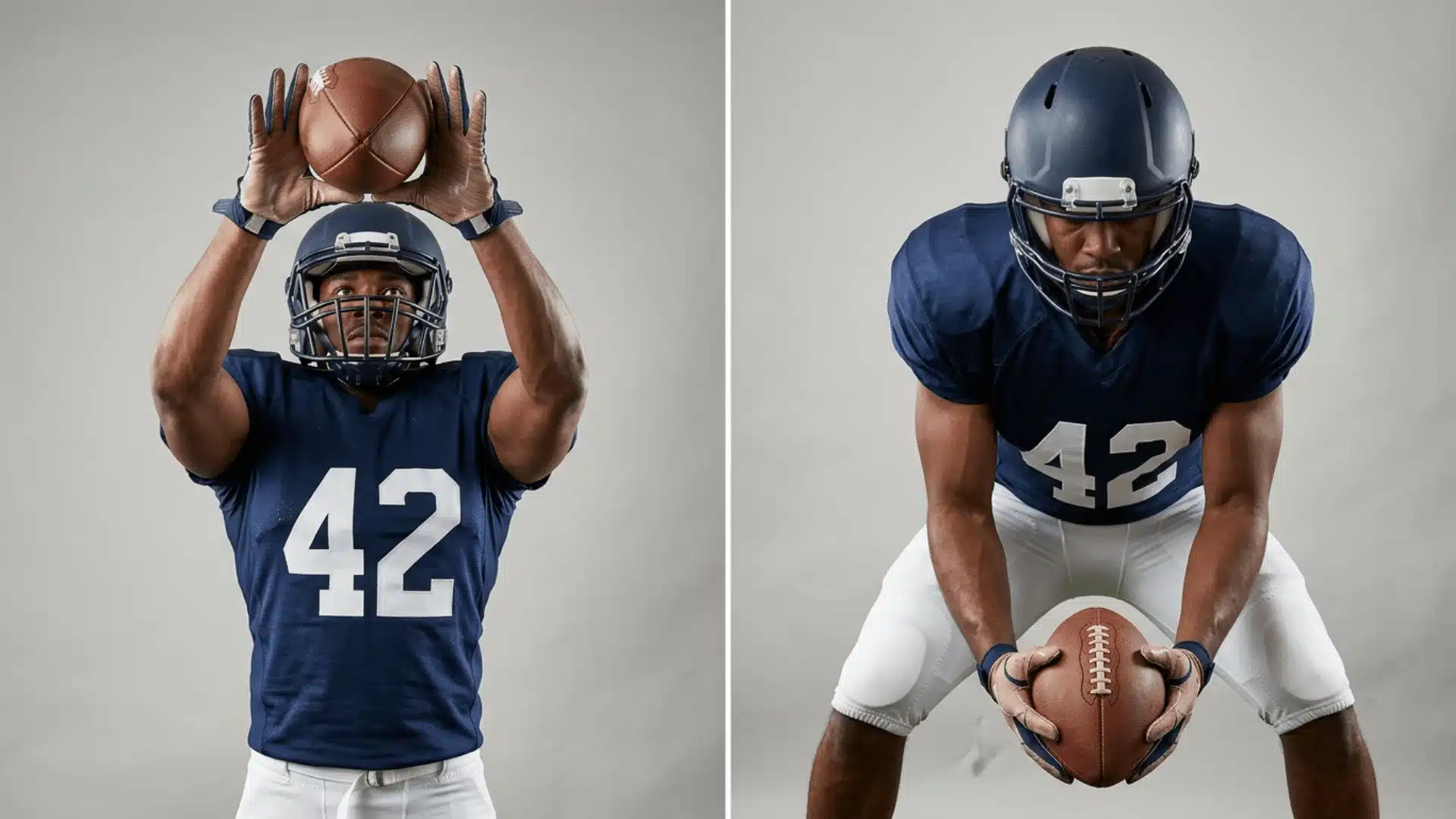
The correct hand position depends on where the football arrives, but your hands should always stay relaxed and ready.
For chest and high passes, make a diamond with your thumbs and index fingers. Keep your fingers spread so the point of the football can settle into your hands.
For low throws, bring your pinkies together and cup your hands under the ball. Bend your knees instead of folding at the waist, so your body stays balanced.
I coach players to avoid flat palms because the ball can bounce away.
Catch with your fingertips, give slightly with your elbows, then tuck the football tight.
| Pass type | Hand position | Do this | Avoid this |
|---|---|---|---|
| Chest or high pass | Diamond shape | Thumbs close, fingers wide | Letting it hit your chest |
| Low pass | Pinkies together | Cup under the ball | Reaching with stiff arms |
| Fast pass | Soft hands | Give slightly with elbows | Catching with flat palms |
| Wet football | Two hands | Secure it early | Trying fancy catches |
| After the catch | Tight tuck | Lock it to your body | Running before control |
Get More Comfortable Catching a Football With These Drills
Use these beginner-friendly drills to build better catching habits. Basic partner catch, high-low catch, tennis-ball reaction, wall toss, and catch-and-tuck.
The table below shows what each drill helps with and how to run it without overthinking the setup.
| Drill | Best for | How to run it |
|---|---|---|
| Basic partner catch drill | Hand shape | Stand close, make easy throws, and focus on catching with your fingers before tucking. |
| High-low catch drill | Adjusting to ball height | Mix chest-level and low throws so the player switches between diamond hands and pinkies together. |
| Tennis ball reaction drill | Hand-eye coordination | Toss a tennis ball from a short range to force quicker tracking and sharper hand reactions. |
| Wall toss drill | Solo practice | Throw the ball against a wall, react to the bounce, and catch with soft hands. |
| Catch and tuck drill | Ball security | Catch the football, tuck it tight, turn upfield, and finish every rep under control. |
This video from First Down Training shows several more football catching drills players can use for extra practice.
How Can 10 Minutes a Day Improve Your Football Catches?
Use the 10 minutes in this order: hands first, eyes next, then game catches. After a drop, pause for one second, fix the mistake, and take the next rep.
Simply put, you have to be doing this to improve your football catching.
- First 3 minutes: Grip and feel. Use ball taps and seated catches to wake up your fingers, wrists, and forearms.
- Next 3 minutes: Eyes and timing. Use wall-ball tracking and late hands to train better focus.
- Last 4 minutes: Game-style catches. Use diamond and basket catches, then finish with 5-yard hook-and-go reps.
Quick add-on tip: ‘Visualize Success’
Physical practice is one part of catching a football. Believing you can make the catch is the other.
Before the 10-minute routine, imagine a teammate throwing you the ball and see yourself catching it cleanly. Run through real situations in your head, like a high pass in the end zone or a low throw while moving.
I use this tip with players who lose confidence after drops.
What Football Catching Mistakes Cause Drops?
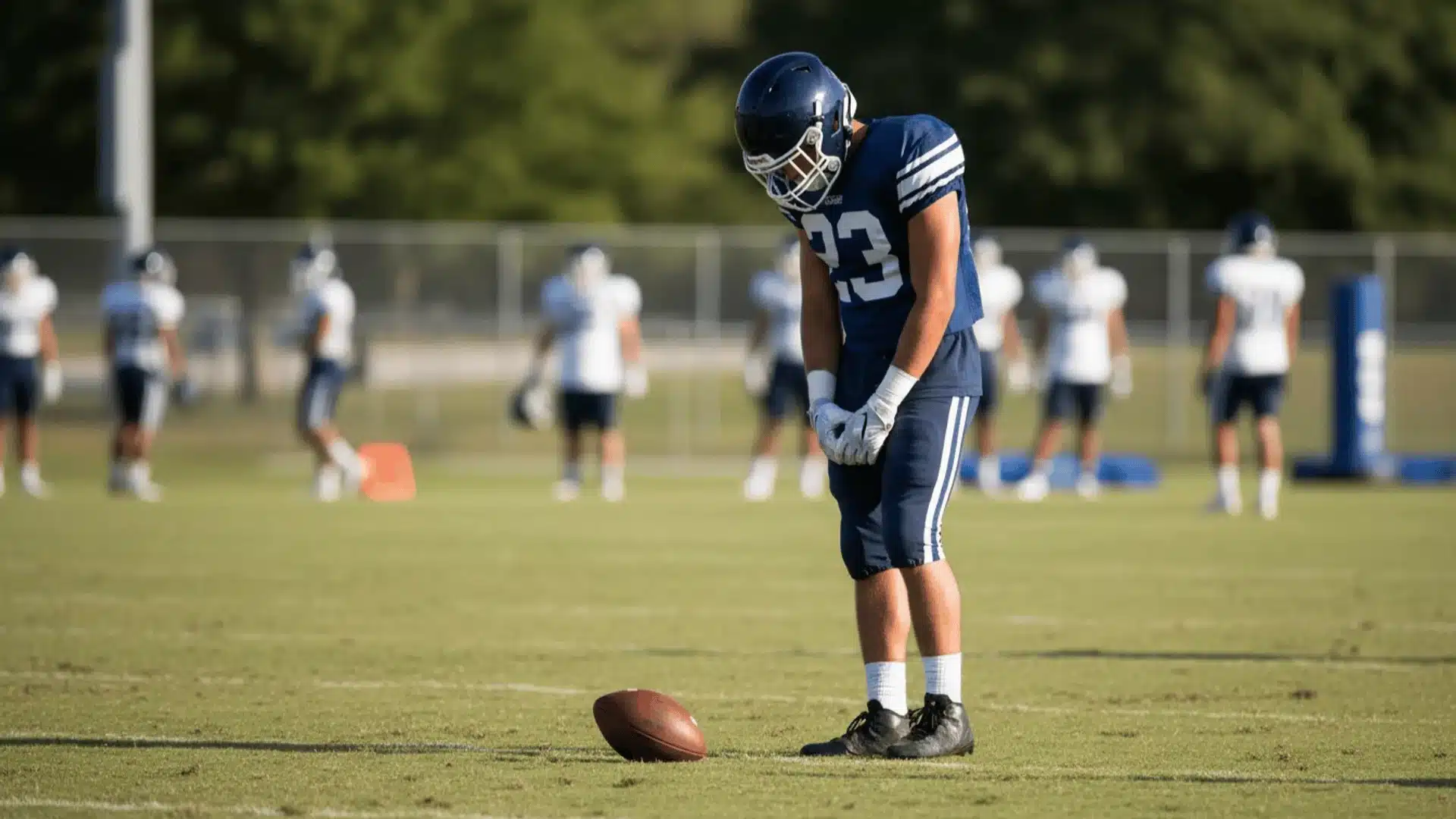
Most football drops come from eyes leaving early, stiff hands, rushed feet, body catches, or poor ball security after the catch.
When I diagnose drops in practice, I usually start with these habits:
- Looking upfield before the football reaches your hands makes the catch feel rushed.
- Catching with flat palms can cause the ball to bounce away rather than settle.
- Letting the chest take over turns a simple catch into a rebound.
- Turning to run before the tuck leaves the ball loose.
- Wet or cold footballs need softer hands and faster security.
Even NFL teams fight the same problem. The Jacksonville Jaguars were listed with 45 drops in the 2025 regular season, which is a good reminder that catching still comes back to the basics.
The Takeaway
Catching a football gets better when you stop treating every drop like a random mistake. Most players need the same few habits repeated well.
Track the ball longer, use the right hand shape, keep your hands soft, tuck the football before you run, and practice catches that match real game situations.
Start with easy partner throws, high-low catches, wall reps, and catch-and-tuck drills. Then use the 10-minute routine to turn those habits into something you can repeat without overthinking.
Comment down which catching drill has helped you the most so far? Additionally, check out our drills library for footwork, route running, and grip work.
Frequently Asked Questions
How Can You Practice Catching A Football Alone?
Use wall tosses, tennis ball catches, and catch-and-tuck reps. Focus on tracking the ball, catching with your fingers, and securing it.
How Do You Stop Flinching Before The Catch?
Start with slow, soft throws and build confidence. Keep your eyes on the ball and practice catching before adding speed or contact.
Should You Catch A Football With Your Chest?
No, your hands should make the catch first. Chest catches can work sometimes, but they often cause rebounds and drops.
How Do You Catch A Football While Running?
Keep your stride steady, show your hands early, catch the ball out front, then tuck it before turning upfield.
Do Gloves Help You Catch A Football?
Gloves can improve grip, especially in cold weather, but they do not fix poor tracking, stiff hands, or weak ball security.