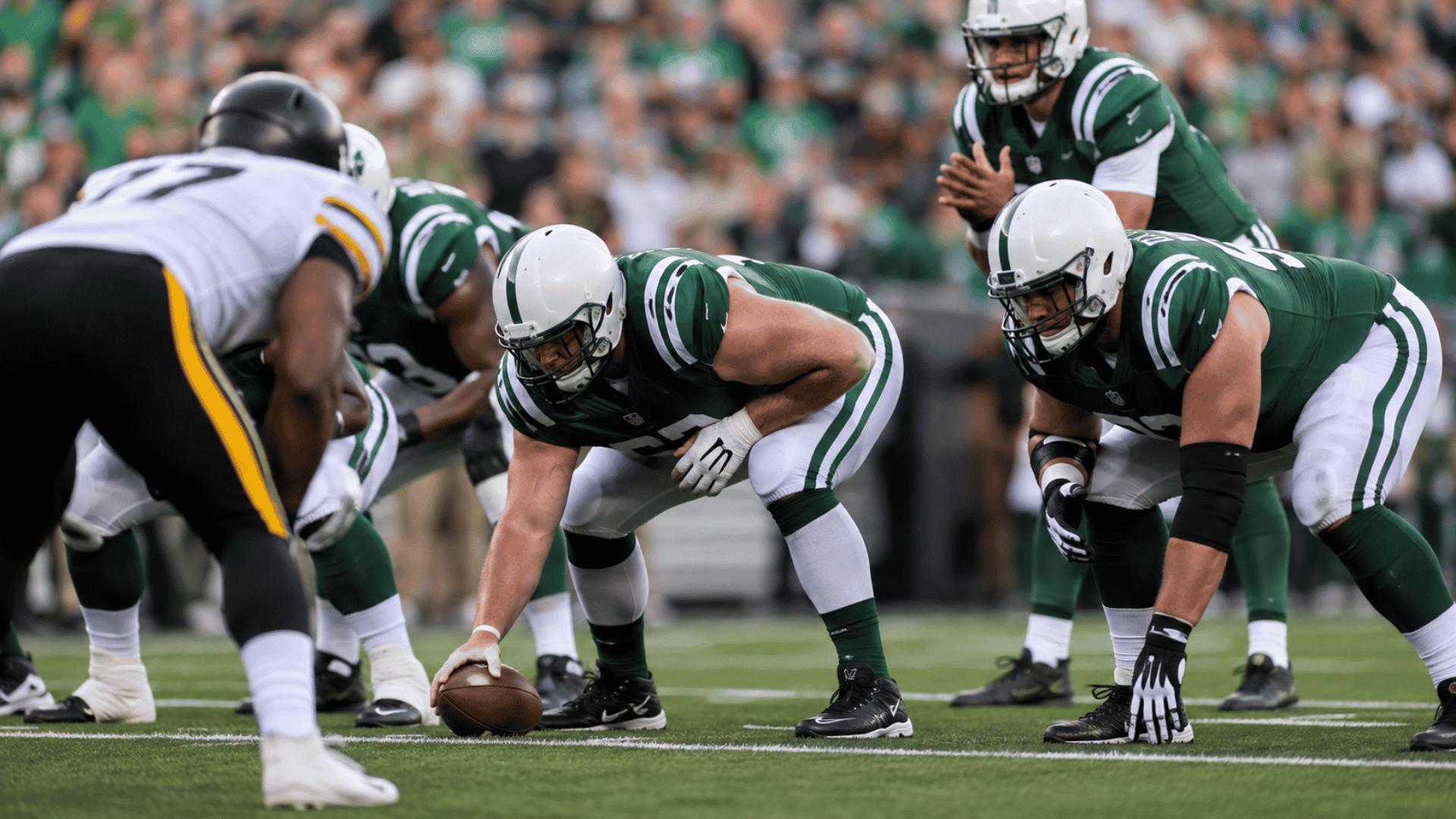

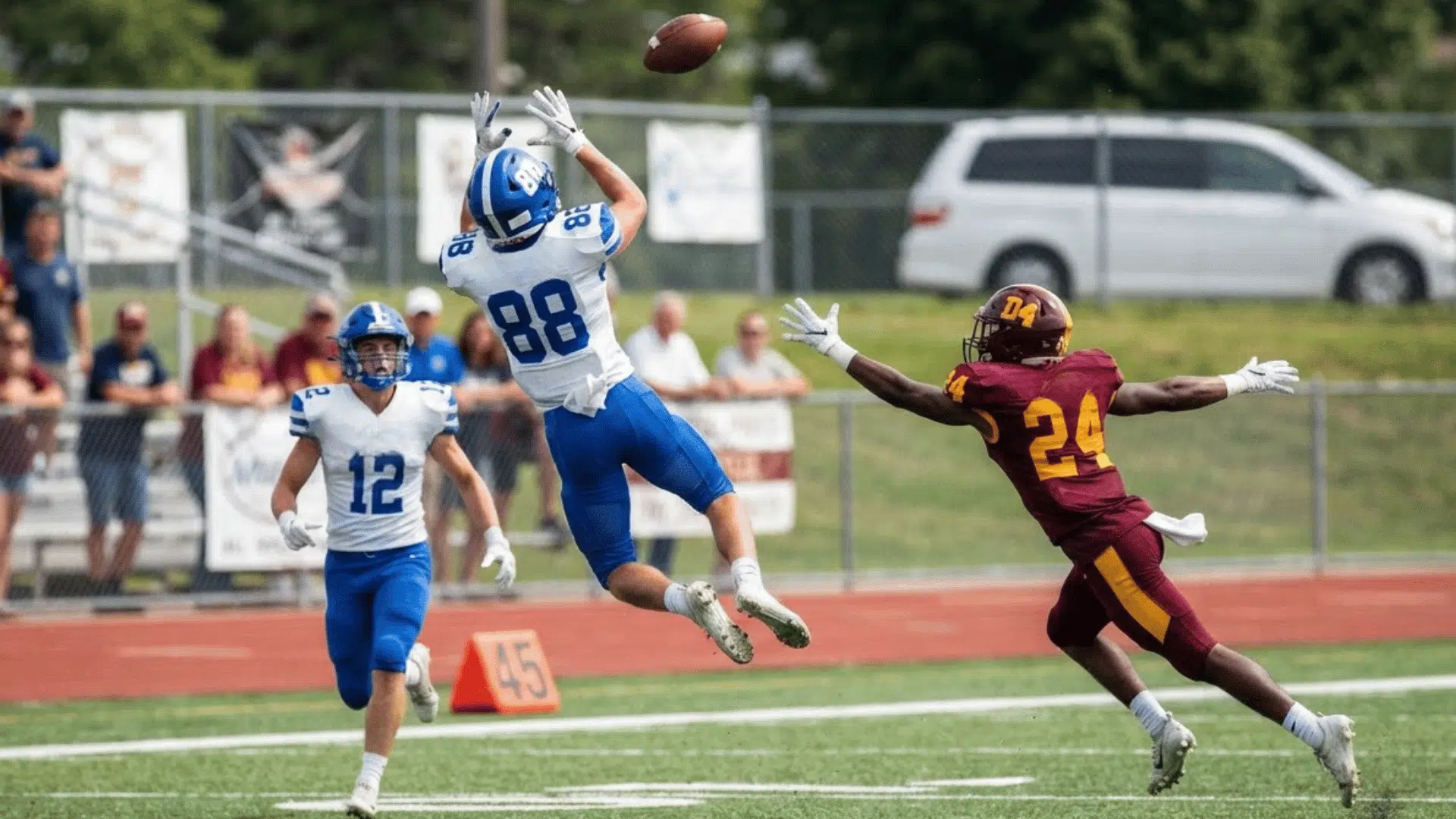

A quarterback throws the ball, the receiver looks open, and then a defender steps in front and catches it.
That is an interception: a defending player cuts out a pass meant for an opponent and wins the ball for their team.
In American football, it is a caught forward pass that counts as a turnover. In soccer, it is reading the pass so a player can step into its path and win the ball.
Both versions share one skill: reading the pass before it is played. The rules and the stats around that skill, however, differ by sport. Let me clear up the confusion for you guys!
What is An Interception In Football?
The dictionary answer to what an interception is in football is broad.
The Oxford Learner’s Dictionaries call it “the act of stopping the ball, etc. while it is being thrown, hit or kicked between players of the opposing team.”
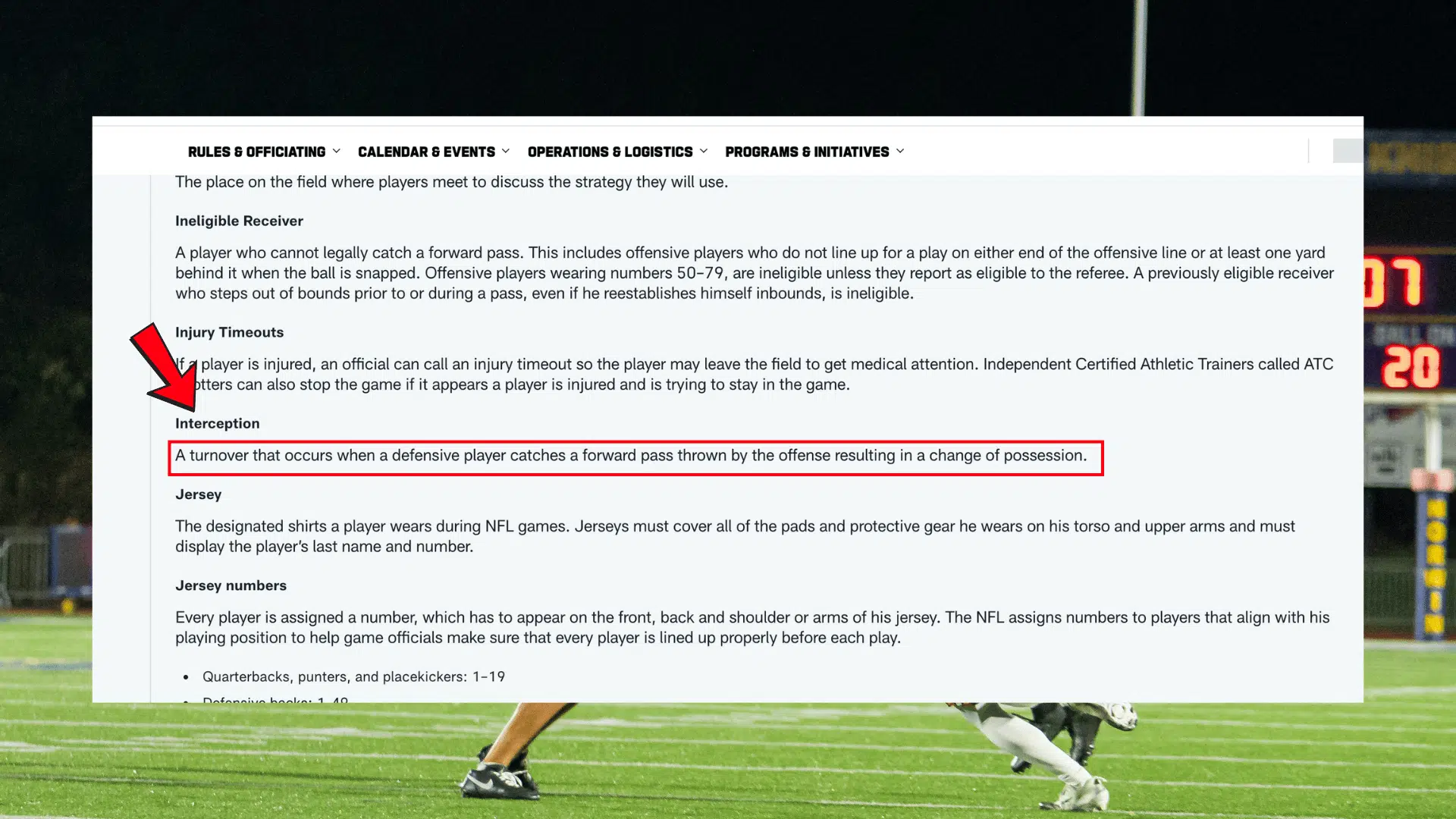
The NFL Football Operations glossary defines an interception as a turnover that happens when a defensive player catches a forward pass thrown by the offense.
Box scores shorten it to “INT,” and fans and even commentators call it a “pick.”
In soccer, an interception happens when a player cuts out or blocks a pass intended for an opponent, winning or regaining control of the ball.
In both sports, the defender wins the ball without challenging the player who has it.
Why does an Interception Matter?
An interception changes who controls the next play. The defending team can attack at once, often while the opponent is still spread out going forward.
In American football, it ends the offense’s drive, and the quarterback is charged with the interception in his passing stats.
In most fantasy football leagues, an interception adds points to a team’s D/ST and takes points away from the quarterback who threw it.
In soccer, it gives the intercepting team a chance to counterattack before the opponent regroups.
How Does an Interception Look in American Football?
A typical interception follows four steps, from the throw to the next snap.
Step 1: The quarterback throws the ball forward to an eligible receiver, such as a wide receiver or tight end.
Step 2: A defender, usually a cornerback, safety, or linebacker, reads the quarterback’s eyes and the receiver’s route, then moves into the passing path.
Step 3: The defender catches the ball before it touches the ground and completes the catch inbounds, so the defense now has the ball.
Step 4: The teams switch roles, and the defender runs the ball back toward the opponent’s end zone.
If he reaches it, the play is a touchdown called a “pick-six.” Returns usually end earlier, with a tackle or a run out of bounds.
The new offense then starts its drive with a first down from the spot where the return ended.
What Makes An Interception Legal In American Football?
An interception follows the same catch rule as any reception.
According to Rule 3, Section 2 of the official NFL Rulebook, an inbounds player must meet the following three requirements to complete a catch or interception:
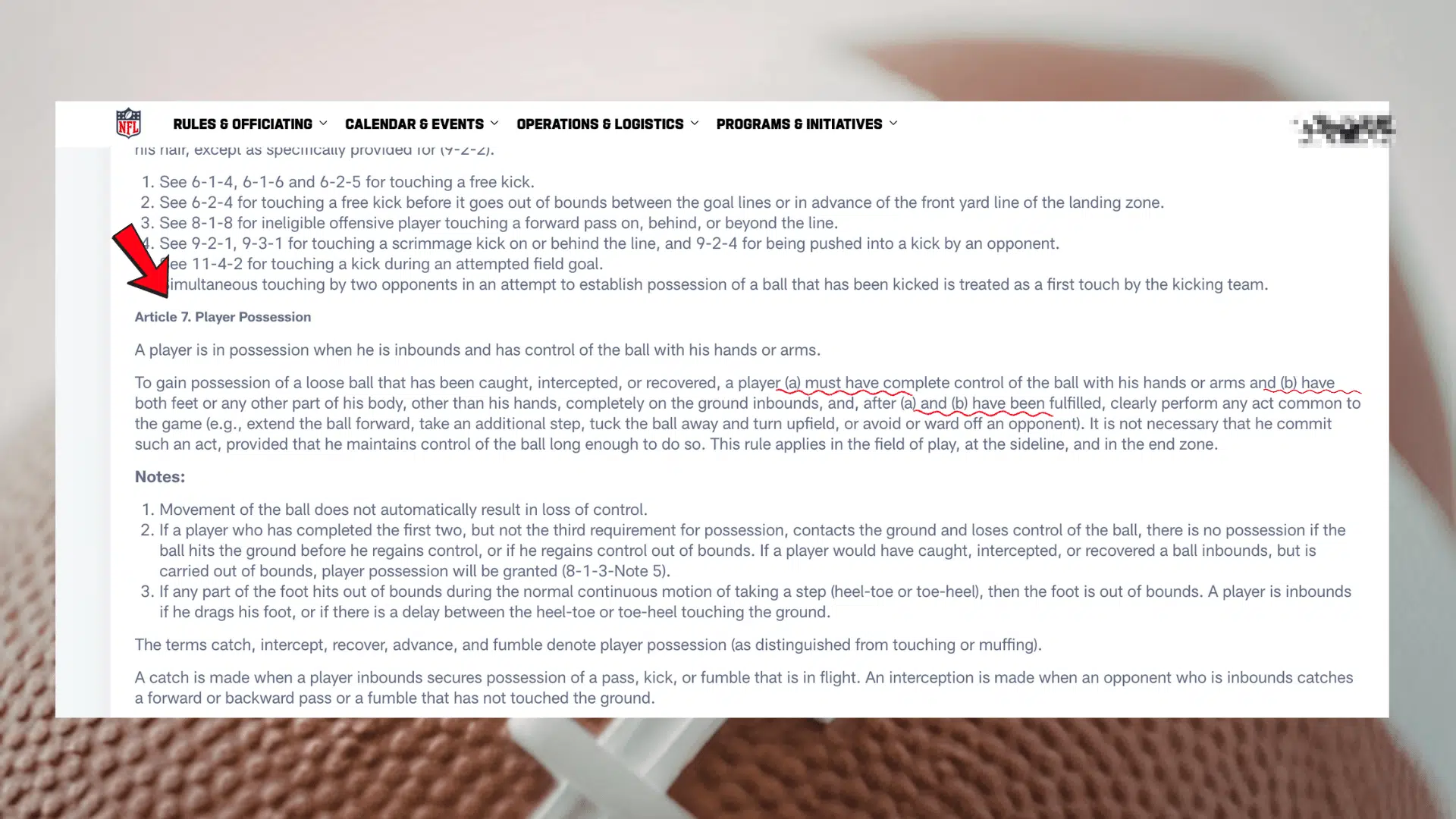
He secures control of the ball in his hands or arms before the ball touches the ground.
He touches the ground inbounds with both feet, or with any body part other than his hands.
He keeps control long enough to make a football move, such as extending it, taking an additional step, tucking the ball away, or turning upfield.
College football is more lenient on the sideline.
The NCAA football rules book requires only one foot inbounds, and high school football follows the same one-foot standard.
That is why a sideline pick that counts on Saturday can be ruled incomplete in an NFL game on Sunday.
When Does An Interception Not Count?
Some plays look like interceptions and end up as something else.
If the ball touches the ground before the defender secures it, the pass is incomplete.
Stat crews credit interceptions only on forward passes, so a defender who catches a backward pass or lateral is credited with a fumble recovery instead.
Penalties can also erase one.
If the defense commits a foul before it gains possession, such as roughing the passer, the offense can accept the penalty and keep the ball.
If a defender intercepts the ball in his own end zone and is downed there, the play is a touchback. His team then starts at its own 20-yard line.
Who Holds The NFL Interception Records?
Safety Paul Krause holds the NFL career record with 81 interceptions.
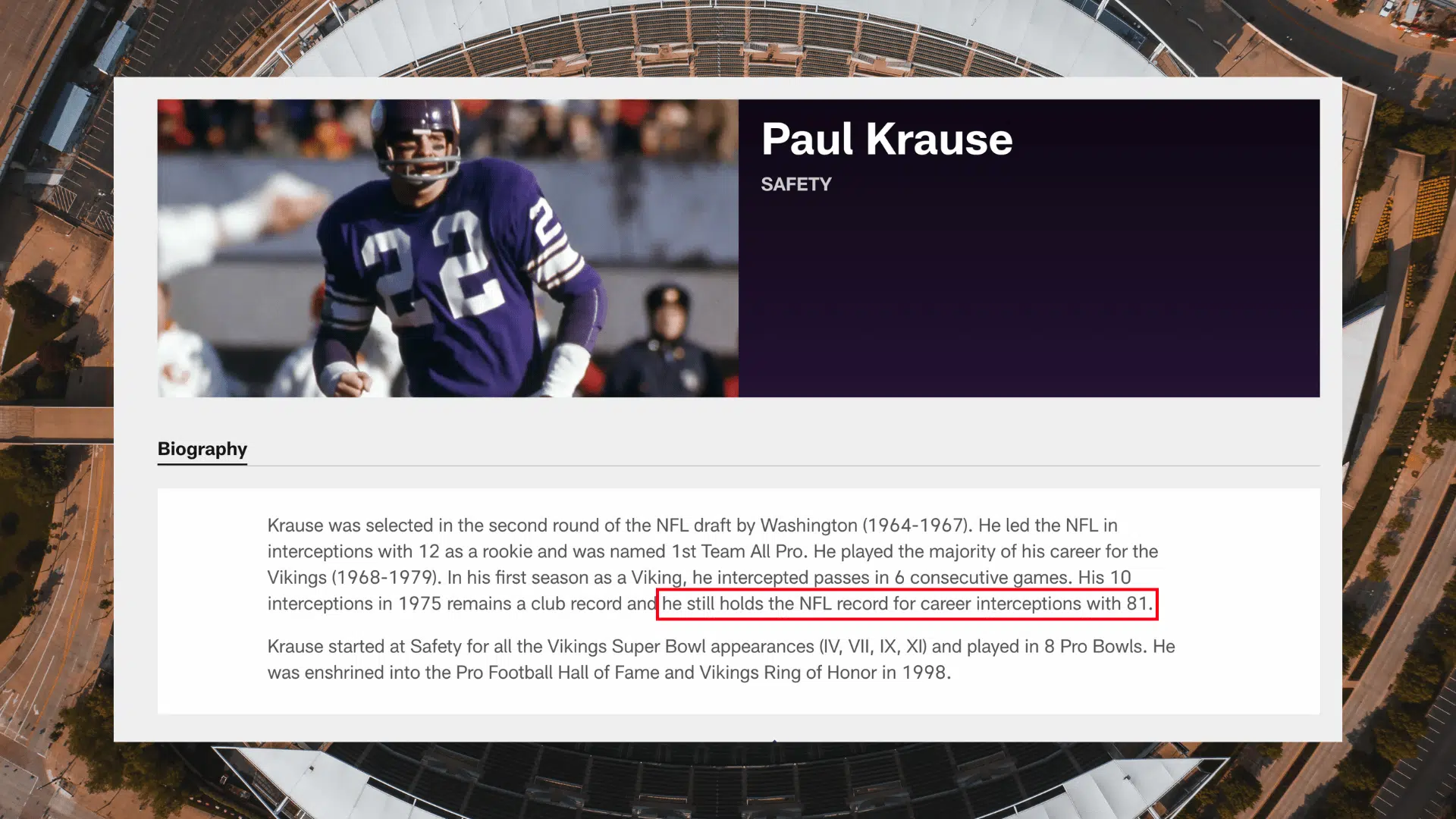
He played for Washington from 1964 to 1967 and the Minnesota Vikings from 1968 to 1979. He passed Emlen Tunnell’s mark of 79 on December 2, 1979.
The single-season record belongs to Dick “Night Train” Lane, who made 14 interceptions for the Los Angeles Rams as a rookie in 1952.
He did it in a 12-game season.
How does an Interception Work in Soccer?

In soccer, an interception happens when a player stops an opponent’s pass before it reaches the intended teammate. The player usually does it by reading the passer and stepping into the passing lane early.
Outfield players cannot use their hands, so they win the ball with their feet, legs, chest, or head. Goalkeepers can handle the ball inside their own penalty area.
In short, the aim is to stop the attack and keep the ball for your own team.
What Does an Interception Look Like In Soccer?
A common example happens in midfield.
A central midfielder tries to pass through the middle of the pitch.
An opposing midfielder reads the pass, steps across the lane, and controls the ball before it reaches the intended teammate. That player can then pass to a teammate, carry the ball forward, or start a counterattack.
Defenders also cut out crosses and balls played into the penalty area.
Coaches often use “intercepting” more loosely than stats providers do. In training, it can include getting in the way of a dribble or pouncing on an opponent’s poor touch.
An interception is credited only when a player reads an opponent’s pass and moves into the line of that pass.
Don’t get confused by these look-alike actions. Give a read!
A blocked pass is an attempt to cut out a pass with much less reading of it.
A tackle is a ground-level challenge that takes the ball from a player in controlled possession.
A clearance sends the ball away from a dangerous area with no intended teammate.
A block stops a shot at goal, so a blocked shot is never counted as an interception.
Different Types Of Interceptions in Football
Interceptions differ by how the pass travels and where it is headed. Some happen on the ground, some in the air, and some come off a deflection.
In American football, every interception is a caught forward pass, so the types describe how the defender got to the ball.
In soccer, the type usually depends on the pass itself: a ground pass, a lofted ball, a through ball, or a cross.
Center-backs deal with more aerial balls and through balls, while midfielders see more ground passes.
1. Ground Pass Interception
A ground pass interception happens when a player stops a pass along the ground before it reaches the intended teammate.
For example, a midfielder may try to play a short pass through the center.
An opposing player moves across the passing lane and controls the ball with their foot. This is common in soccer, especially in midfield, where teams string together short passes.
It requires good positioning and awareness of nearby opponents, because a step in the wrong direction opens the lane behind you.
2. Aerial Interception
An aerial interception happens when a player wins a pass in the air.
In American football, a defensive player intercepts a forward pass by catching it in the air.
In soccer, they may use their head, chest, or feet to control or redirect the ball. For example, a defender may read a long pass toward an opposing striker and move into position to reach the ball first.
3. Tipped Pass Interception
A tipped pass interception happens when the ball is deflected in the air, and a defender catches it before it lands.
In American football, a forward pass that bounces off a receiver’s hands or another player stays live until it hits the ground. That means any defender can still catch it.
Defensive linemen often get interceptions this way by batting a pass at the line and catching the rebound.
In soccer, a deflected pass that a defender then controls may be logged as a blocked pass or a ball recovery rather than an interception.
4. Intercepting A Through Ball
A through ball is a pass played into open space behind the defensive line for a teammate to run onto.
To intercept it, a defender has to reach the ball before the intended receiver does. This takes quick reactions and an understanding of where the opponent is likely to run.
A well-timed interception can stop a striker from getting a clear chance near the goal.
Center-backs and defensive midfielders do most of this work, often by reading the passer’s body shape a second early.
5. Intercepting A Cross
A cross is a pass played from a wide area toward teammates closer to the goal.
Defenders try to stop the ball before it reaches an attacker waiting inside the penalty area.
For example, a full-back may step across to cut out the cross, or a center-back may get between the ball and the forward to clear it.
Coaches often include blocking a cross when teaching interception.
Difference Between an Interception in American Football & Soccer
Although both sports use the same term, the action and its consequences are different. The major difference is how each sport defines a successful interception.
In American football, the defensive player must catch a forward pass to record one. In soccer, a player can use their feet or another legal body part to stop an opponent’s pass.
The following table will help you understand better!
Basis | American Football | Soccer |
|---|---|---|
Main action | Catching an opponent’s forward pass | Reading and cutting out an opponent’s pass |
Player involved | Any defensive player | Any outfield player |
How the ball is handled | Must be a legal catch | Feet, legs, chest, or head |
Hands allowed | Yes, the ball must be caught | No, except a goalkeeper inside their own penalty area |
Main outcome | Turnover and change of possession | Regaining or disrupting possession |
Scoring possibility | Can lead to a touchdown (pick–six) | Can lead to a goal on the counterattack |
Stat name | INT, nicknamed a “pick” | Interception |
In short, an interception in American football is a specific type of turnover, while in soccer it is a defensive action that wins the ball back.
Why Do Players Intercept the Ball?
Players intercept the ball for four main reasons:
To Stop an Opponent’s Attack: Prevent the opposition from creating a scoring opportunity by stopping a pass before it reaches its target.
To Regain Possession: Win the ball and give the defending team control of the game.
To Create a Counterattack: Take advantage of spaces left open when opponents move forward.
To Reduce Passing Options: Force opponents into making safer, less effective passes by cutting off their passing routes.
Interceptions also help defenders read the game, anticipate opponents’ moves, and disrupt their attacking plans.
How Can You Improve Your Interception Skills?
Good interception skills come from reading the game early and moving at the right moment, and both can be trained. Chasing every pass is a mistake, because leaving your position opens space for an opponent.
You need to know where the ball is likely to go and how your movement affects the rest of your team.
The four habits that follow work in both sports, with small changes for each set of rules.
1. Watch The Opponent’s Body Position
Look at the passer’s head, shoulders, hips, and feet before the pass. These cues often show which way the ball will go.
Defenders who read them early can start moving before the ball is struck.
In American football, defensive backs watch the quarterback’s eyes and shoulders, along with the receiver’s route, to judge the throw.
The cue I use most with young players is the standing foot, because it usually points where the pass is going. A simple drill helps: two passers, one defender between them, and the defender calls the direction before the ball is struck.
2. Stand Between The Passer And The Receiver
Avoid standing too close to the player who has the ball. Instead, position yourself where you can see both the passer and the intended receiver.
This gives you a better chance of stepping into the passing lane.
Zone defenders do the same thing when they sit in a passing window and read the quarterback.
3. Time Your Movement
Moving too early warns the passer and gives them time to change the pass, whereas moving too late lets the ball reach its target.
Try to move as the opponent begins the passing action. That way, you reach the ball without leaving too much space behind you.
In American football, jumping a route too early can leave the receiver open behind you for a big gain.
4. Control The Ball After Winning It
Stopping the pass is only the first part of the action. You also need to decide what to do with the ball once you have it.
In American football, a defender who catches a pass should secure the ball first and then look for room to advance.
Young players often focus so hard on winning the ball that they forget what comes next. Remember that practicing the first pass after an interception makes the defensive work count.
Long Story Short!
In American football, an interception is a legal catch of a forward pass, and it counts as a turnover. In soccer, it means reading a pass and stepping into its line to win the ball back.
The skill behind both is the same.
Players read the passer, stand where they can see the passer and the receiver, and move as the pass is played. Then they decide quickly what to do with the ball.
If you coach or play, pick one of the four habits above and build your next training session around it.
Frequently Asked Questions
Is An Interception Good In Football?
It is good for the defending team and bad for the passing team. It stops an attack, wins the ball back, and can lead to a score.
Is A Pick And An Interception The Same Thing?
Yes. “Pick” is the informal name for an interception in American football, from “pickedoff.” A pick returned for a touchdown is called a pick-six.
Is An Interception A Touchdown?
No. An interception only changes possession. It becomes a touchdown, called a pick-six, when the defender returns the ball into the opponent’s end zone.
Can A Defender Intercept The Ball In The End Zone?
Yes. If he intercepts in his own end zone and is downed there, it is a touchback, and his team starts at its own 20-yard line.
Which Football Positions Make The Most Interceptions?
In American football, defensive backs, particularly cornerbacks and safeties, make the most interceptions because they cover receivers, read the quarterback, and anticipate passing routes.