



I love a route that makes a defender wrong twice. First, the corner thinks he has read the slant. Then, just as he drives downhill to stop it, the receiver plants, turns vertical, and leaves him chasing. That is the beauty of the sluggo route.
A sluggo route is a slant-and-go double move. The receiver sells the slant, forces the defender to react, then breaks upfield for a deeper throw.
In this guide, I’ll walk you through how to run it, how to teach it, and when to call it. You’ll also learn receiver technique, quarterback timing, simple coaching cues, practice drills, coverage matchups, and how defenses try to stop it.
What is a Sluggo Route?
A sluggo route combines two familiar routes into one: the receiver sells a slant, then plants and turns upfield on a go route.
That is why coaches call it a slant-and-go, or simply “sluggo.” Because it asks a receiver to fake one route before running another, it is classified as a double move.
Most coaches introduce it only after players can consistently run the basic route tree, since the fake must look exactly like a real slant to fool defenders.
Coaching resources often teach it this way because clean-route mechanics come before combination routes.
Once those basics are in place, the sluggo becomes a reliable way to create separation and attack downfield without relying only on speed.
How to Run a Sluggo Route
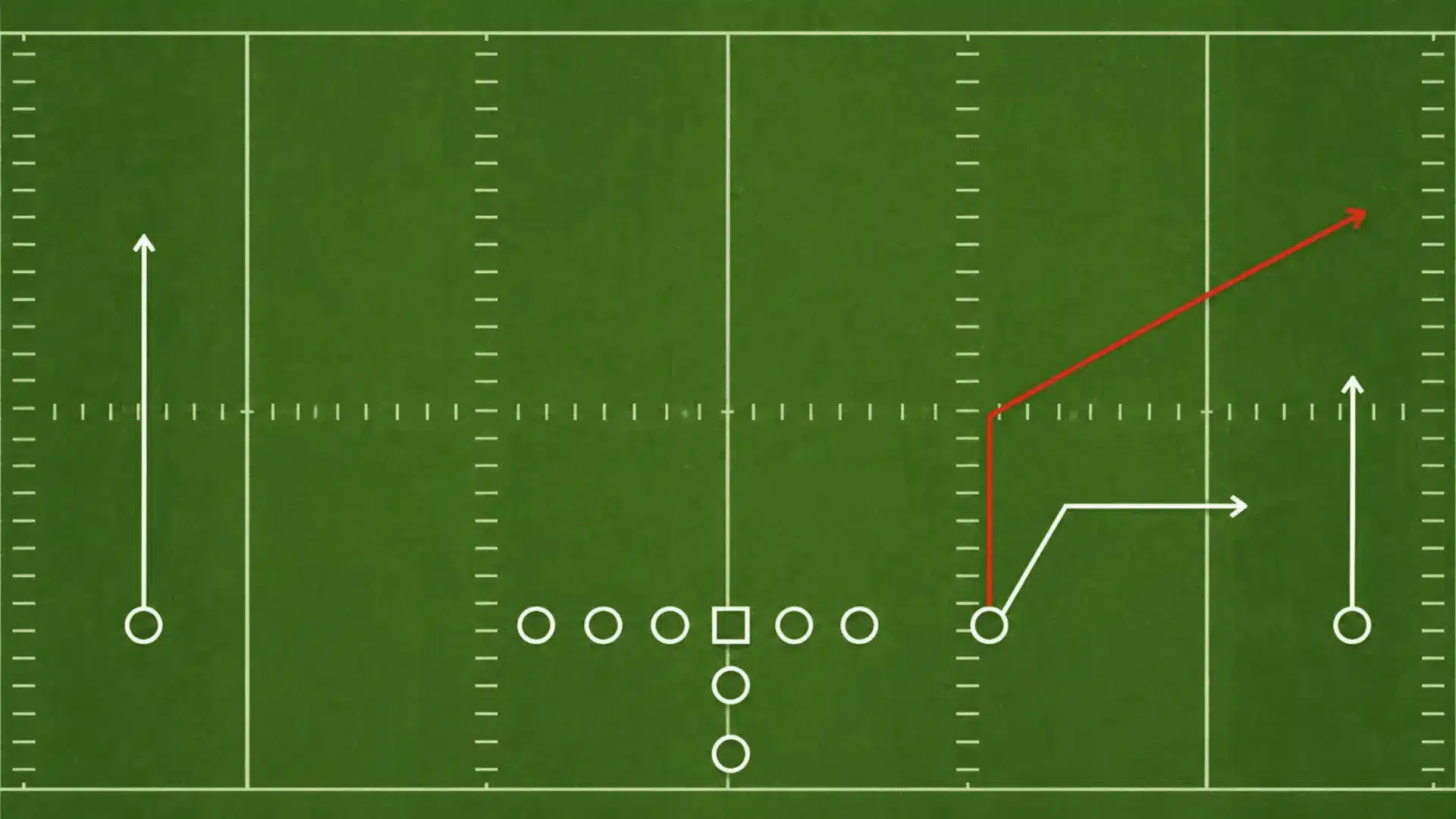
I like teaching the sluggo route as a simple five-step process. Each step has to look connected, or the defender will see the fake coming.
- Step 1: Line up Normally
Start from your usual wide receiver alignment. Do not cheat your split or stance, because smart defenders notice those small clues. - Step 2: Release Like it is a Real Slant
Come off the line with speed. Your first steps should look exactly like your normal slant release. - Step 3: Sell the Inside Break
Drive inside with your shoulders, eyes, and hips. Make the corner believe the ball is coming quickly. - Step 4: Plant and Break Vertical
Plant hard, snap your route upfield, and avoid drifting sideways. Try to stack the corner once you get even. - Step 5: Track and Finish
Find the ball late, keep your stride, and finish the catch through contact.
Every step matters, but the fake is what brings the whole route together. Let’s break down each phase and see what sets a convincing sluggo apart from one defenders spot right away.
Coaching Points for Teaching the Sluggo
Teach the sluggo only after receivers can run clean slants and verticals. If either route looks loose, the double move will not fool disciplined defenders.
| Coaching Cue | What it Means |
|---|---|
| Make it look like your best slant. | The first break should match your normal slant in speed, angle, eyes, and body lean. |
| Sell the route with speed, not acting. | Do not overdo the fake. A real slant is fast and direct, so the sluggo should start the same way. |
| Eyes and shoulders lie first. | The defender should see your upper body commit inside before your feet snap vertical. |
| Plant hard, then burst. | A strong plant creates the change of direction. The burst creates the separation. |
| Win the defender’s hips. | Your goal is to make the corner drive inside or turn the wrong way. |
| Stack after the break. | Once you get even, work back on top of the corner to protect the throwing lane. |
Fun fact: Double moves work best when defenders have already seen the first route earlier.
Sluggo Route Drill for Practice
I like this drill because it keeps the sluggo simple and easy to coach. Set up three cones: one for the release, one for the slant break, and one for the vertical finish.
The receiver releases hard, runs the slant stem at full speed, then plants and turns upfield. The coach should watch the eyes, shoulders, and plant foot closely.
If those details look lazy, the fake will not fool anyone. Have the quarterback throw after the receiver breaks vertical, not before. Start the drill with no defender so the footwork stays clean.
Then add a press corner. Once the receiver handles that, add a safety look so he learns how to adjust the finish.
Quarterback Timing on the Sluggo
The sluggo is not only a receiver route. The quarterback has to sell it, protect the timing, and throw with trust before the window closes.
| QB Coaching Point | Why it Matters |
|---|---|
| Do not stare at the sluggo early. | Looking at the route too soon can alert the corner or safety before the fake develops. |
| Use a pump fake only when the slant is believable. | The pump works best if the offense has already shown slants or quick inside throws. |
| Hitch after the fake. | The hitch helps the QB reset his feet as the receiver turns vertical. |
| Throw before he looks wide open. | If the QB waits too long, the safety may recover over the top. |
| Aim based on coverage. | Throw toward the seam, outside shoulder, or pylon depending on leverage and safety help. |
| Trust the protection. | A sluggo takes longer than a quick slant, so the line must hold up. |
Fun fact: The sluggo is one of the few routes where deception often matters more than raw speed.
When to Use a Sluggo Route and When to Stay Away from It
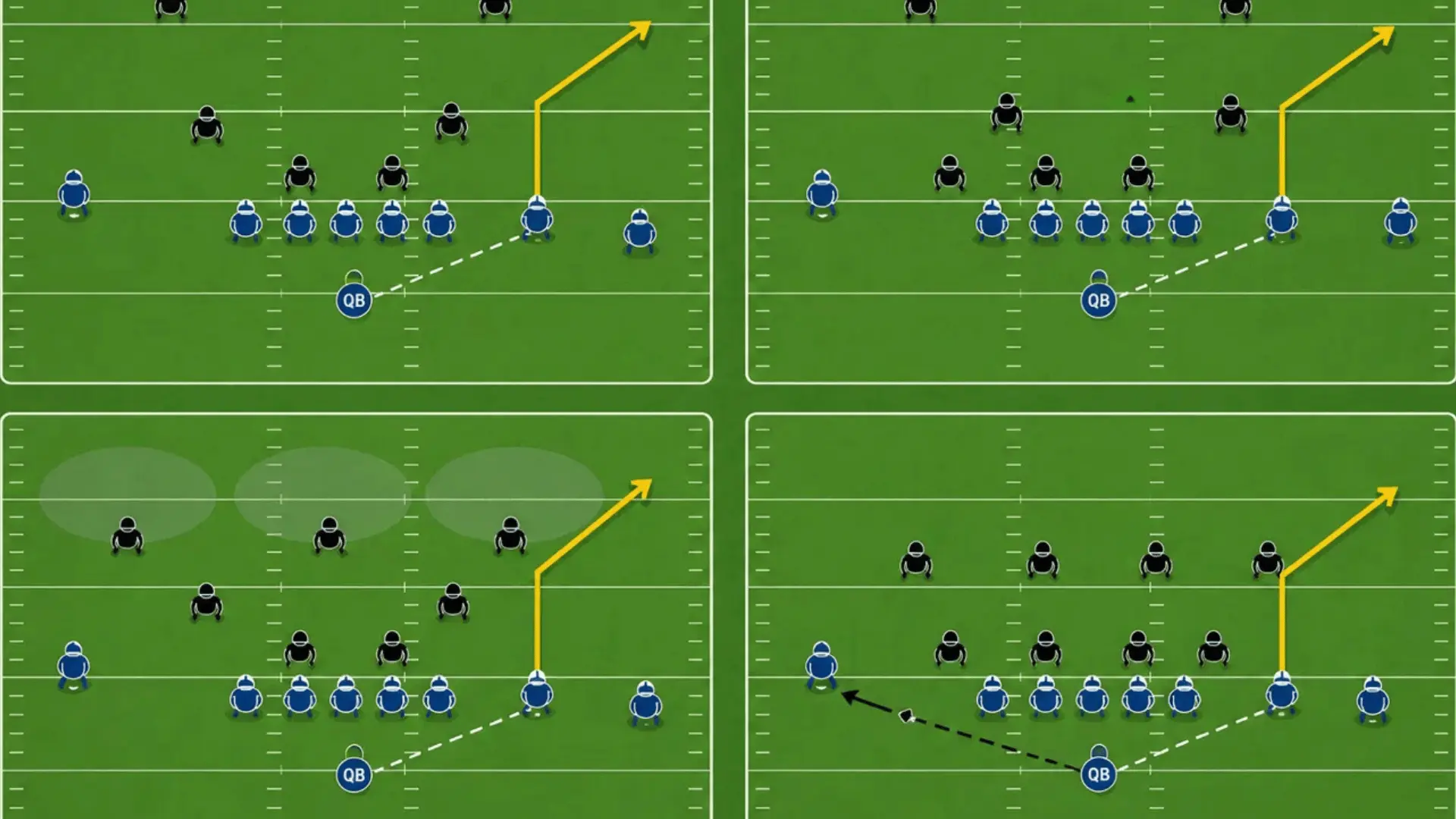
A sluggo route is not a play you call just because it looks exciting. It works when the defense has already been shown something believable, usually a real slant or quick inside throw.
I like to think of it as a setup route: the first part earns the defender’s trust, and the second part punishes him for reacting too fast.
Use the section below as a quick coaching check before calling it.
Best Times to Call a Sluggo
- After hitting slants earlier, the corner has a reason to jump inside.
- Against aggressive corners: Fast downhill reactions create the opening.
- Near midfield: There is enough space for a deep shot.
- Against man or match coverage: The defender must react quickly to the fake.
- When another route holds the safety, the QB gets a cleaner vertical window.
Times to Avoid a Sluggo
- When protection is weak, the route needs time to develop.
- Against soft corners: A deep corner will not bite hard on the slant.
- Against conservative Cover 4: The defense is already protecting vertical routes.
- When the receiver has not sold slants, the fake will not feel believable.
- When the QB cannot hold the safety, the deep help can erase the route.
What Coaches Often Get Wrong about the Call
Many coaches miss the setup behind the sluggo, so this quick breakdown explains the common mistakes and the smarter way to call it.
| Misunderstanding | Better Way to Think About it |
|---|---|
| A sluggo is a random trick play. | It works best as a setup route after the defense respects the slant. |
| Speed is all that matters. | Speed helps, but the fake, plant, and timing create the separation. |
| Man coverage always means sluggo. | Man helps, but safety help and pass protection still matter. |
| The fake should look dramatic. | The fake should look normal, like a real slant. |
| The QB should wait until the receiver is clearly open. | The throw often needs to come before the window looks obvious. |
Sluggo vs. Other Double Moves
A sluggo is part of the double-move family, but it does not attack the defense the same way every other double move does.
I like this comparison because it helps players understand the purpose behind each route, not just the route shape. The sluggo punishes corners who jump slants. A stutter-go attack attacks defenders sitting on quick stops.
An out-and-up works when a corner drives toward the sideline. A post-wheel can stress safeties and linebackers who lose leverage in space.
Not every double move attacks the same defender. This table shows how the sluggo compares with other common double-move routes.
| Route | Sell Phase | Break Point | Best Against |
|---|---|---|---|
| Sluggo | Slant | Inside break to vertical | Corners jumping slants |
| Stutter-Go | Hitch or hesitation | Stop-and-go release | Corners are sitting on short routes |
| Out-And-Up | Out route | Sideline break to vertical | Corners driving on outs |
| Post-Wheel | Post or inside stem | Wheel up sideline | Safeties or linebackers losing leverage |
What Coverage is the Sluggo Best Against?
A sluggo route does not beat every coverage the same way.
Before I call it, I look at the corner’s depth, the safety’s help, and how hard the defense reacts to slants. The route works best when defenders drive downhill too fast and leave space behind them.
- Cover 1: One of the best looks. If the corner bites and the QB holds the safety, the receiver can win vertically.
- Cover 2: Works if the throw attacks the sideline hole or pylon before the safety closes.
- Cover 3: Good only if the corner drives on the slant instead of protecting deep.
- Cover 4: Tougher because quarter defenders are usually trained to stay over the top.
Coaching Tip: The more patient the secondary is, the cleaner the route and QB timing must be.
How Defenses Can Stop the Sluggo Route
Defending the sluggo starts with patience. The route is designed to punish defenders who panic on the first inside move, so the corner, safety, and coverage rules must work together.
Use these coaching points to keep the fake from creating an easy vertical shot.
| Defensive Coaching Point | Why it Helps |
|---|---|
| Stay square at the line. | A square corner can react without opening his hips too early. |
| Do not overreact to the first inside step. | The first move is bait, so the defender must stay calm. |
| Read the receiver’s hips. | Eyes can lie, but hips usually show where the route is going. |
| Keep safety depth. | A deep safety can protect the top if the corner bites. |
| Use pattern-match rules. | Match coverage helps defenders pass off vertical routes with better spacing. |
| Study double-move situations. | Film can show when an offense likes to call sluggo off earlier slants. |
| Tackle the real slant early. | If the offense cannot win with slants first, the sluggo setup becomes weaker. |
The Sluggo-Win Concept
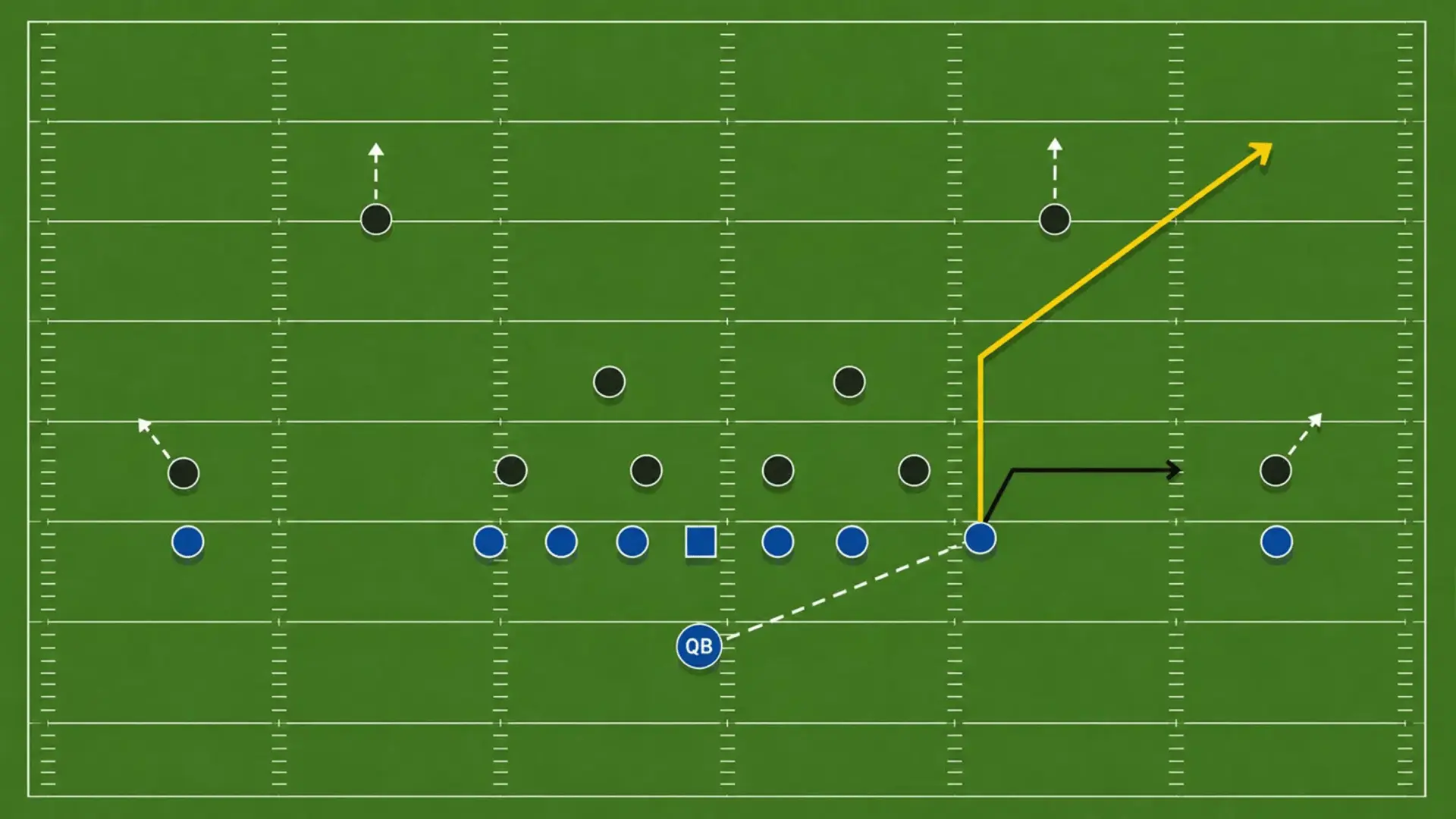
The sluggo-win concept gives the quarterback two answers on the same play.
One side runs the sluggo, where the receiver sells a slant and breaks vertical. The backside route attacks the seam or open window behind the defense.
A pump fake or quick slant look can pull linebackers, corners, or safeties toward the first fake. If the defense overplays the sluggo, the backside route may open.
If the defense stays inside or flat-footed, the sluggo can still become the deeper shot.
For beginners, think of it as a two-part stress play: one route creates the reaction, and the other route attacks the space created by that reaction.
Barkley and Kiffin referred to the concept by its full call name, “82 stay sluggo Z win,” and Barkley cited it, unprompted, during a fan Q&A as his single favorite play from his USC career
Which Receivers Benefit Most from the Sluggo Route?
The sluggo route rewards technique more than pure athletic ability. Receivers who already create separation on slants usually have the biggest advantage because defenders expect that inside break.
Good body control also matters, especially when planting and changing direction without losing speed. After the break, the receiver needs enough acceleration to get over the corner before the safety can recover.
Straight-line speed is helpful, but it is not the deciding factor. A well-sold fake often creates more separation than simply running faster.
If a receiver can run crisp routes, stay balanced through the plant, and burst vertically, the sluggo becomes a reliable way to generate explosive plays.
Coaching Checklist Before Running Sluggo
Before calling a sluggo, make sure the setup is actually there. This route works best when the defense has been given a reason to believe the slant is coming.
- Has the receiver sold real slants earlier in the game?
- Is the corner aggressive enough to jump the inside break?
- Can the quarterback hold or move the safety with his eyes?
- Is the pass protection strong enough for a double move?
- Is there enough field space for the receiver to win vertically?
- Does the sluggo pair with another route that stresses the defense?
Final Thoughts
The sluggo route is proof that great route running is about more than speed.
A believable slant, a sharp plant, and good timing can create the separation needed for a big play. Once those basics become consistent, the sluggo turns into a reliable option against aggressive defenses.
Just remember that success depends on everyone doing their part, from the receiver selling the fake to the quarterback delivering the ball on time.
The next time you watch or coach this route, pay close attention to the small details. They are often what separates an incomplete pass from an explosive gain.
Have you seen a sluggo route work perfectly in a game or practice?
Share your favorite example or coaching tip in the comments. I’d love to hear what has worked for you.
Frequently Asked Questions
Can a Sluggo Route Beat Press Coverage?
Yes, but only with a clean release. If the receiver gets stuck at the line, the timing breaks down before the double move develops.
How Long does a Sluggo Route Take?
A sluggo takes longer than a quick slant because of the fake. Good pass protection gives the quarterback enough time for the route to develop.
Can Tight Ends Run a Sluggo Route?
Yes. Athletic tight ends can run sluggos, especially against linebackers or safeties who expect shorter inside routes and react aggressively.
Why does a Sluggo Need Good Timing?
The receiver, quarterback, and pass protection must stay in sync. If one part is late, the throwing window can close before the receiver opens.