


To tackle safely in football, think of the skill as five controlled moves: get balanced, track the runner, strike with the shoulder, wrap both arms, and drive the feet through contact.
The head should stay to the side, never in front of the tackle.
From the stands, tackling can look like a big hit. On film, it is easier to see the truth. Good tacklers control their feet before contact, keep their eyes up, aim near the hip, and finish with balance.
Poor tackling usually looks rushed. The defender lunges, drops the head, misses the wrap, or stops moving after contact.
That is why beginners should learn to tackle slowly, with structured coaching and safe progression before adding live contact.
What is a Tackle in Football?
A tackle in football occurs when a defensive player stops the ball carrier from advancing.
That usually means bringing the runner to the ground, holding them until the play is stopped, or forcing them out of bounds before they gain more yards.
A tackle can happen almost anywhere on the field. You might see one near the line of scrimmage, in open space, on a kickoff return, or right along the sideline. Tackling is different from blocking.
A blocker tries to stop a defender from reaching the ball carrier, while a tackler tries to stop the player with the ball. A tackle can also be credited to a single defender as a solo tackle or shared among multiple players as an assisted tackle.
For a defense, tackling matters because every missed tackle can turn a short gain into a big play.
When watching a film, missed tackles are among the first things analysts chart because they correlate directly with yards after contact allowed.
Why Proper Tackling Form Matters
Proper tackling form matters because it helps a defender finish the play with control instead of reckless contact.
- It improves balance and body control.
- It keeps the head out of contact.
- It helps the tackler use the shoulder correctly.
- It creates a stronger wrap around the ball carrier.
- It reduces missed tackles caused by lunging or arm tackling.
- It can help avoid penalties from high or dangerous contact.
- It lowers the chance of leading with the helmet.
The NFHS offers a football tackling course for coaches that focuses on teaching and evaluating safer tackling skills.
How to Tackle in Football Step by Step
Before contact happens, a good tackle starts with body position, controlled movement, and safe technique. These steps break the skill down in a simple order that beginners can follow.
Step 1: Get into a Good Football Stance
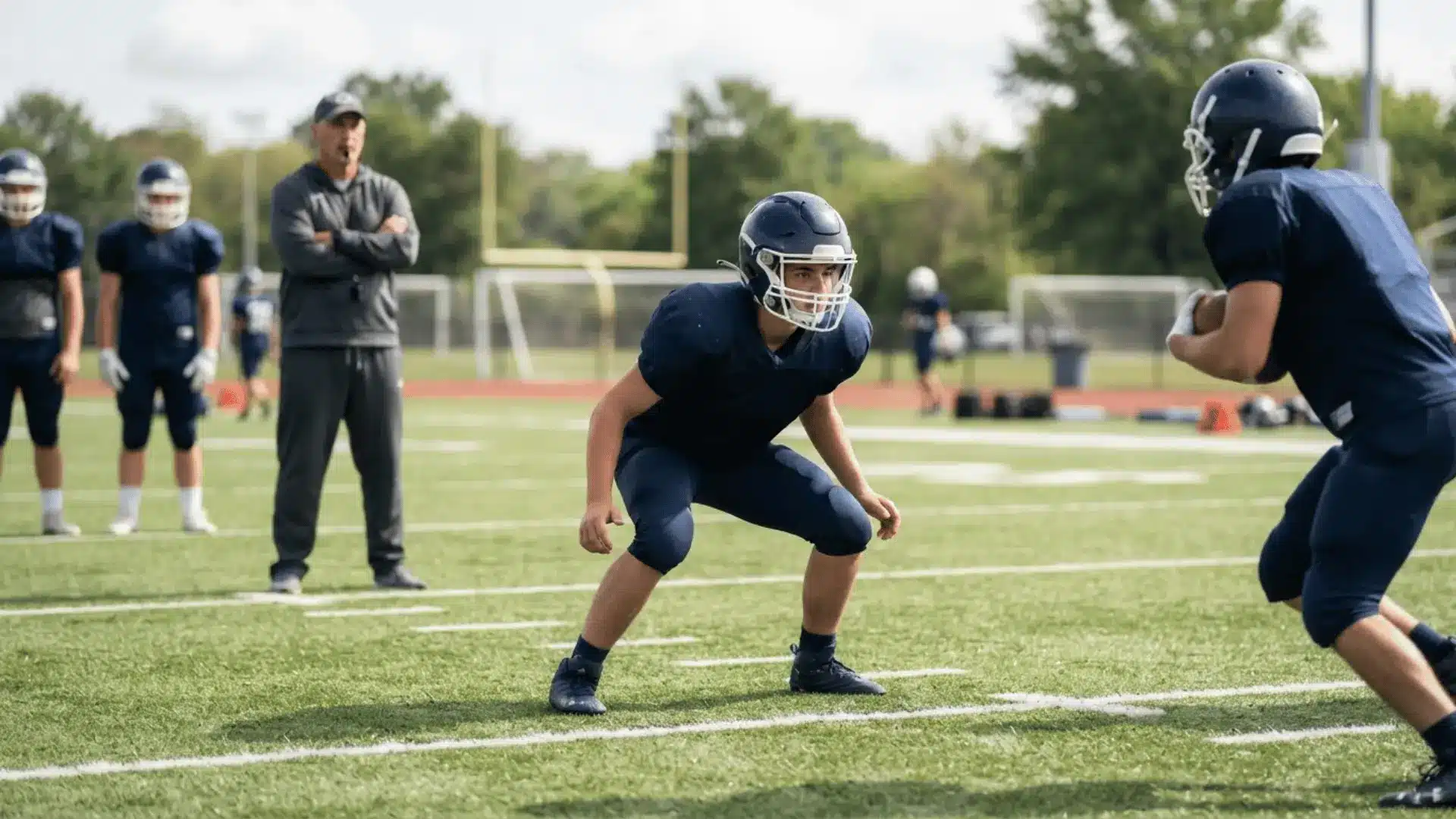
Start with your knees bent, chest up, and feet under your hips, roughly shoulder-width apart. Keep your weight balanced so you can move in any direction without stumbling.
Analysts often describe the ideal starting posture as a slight 45-degree lean from head to hips with a straight back, enough forward lean for power, without the head dropping. Your eyes should stay on the ball carrier, but your head should never drop.
If your base is too narrow or your chest falls forward, you lose power, vision, and the ability to adjust when the runner changes direction during and after contact.
Step 2: Track the Ball Carrier
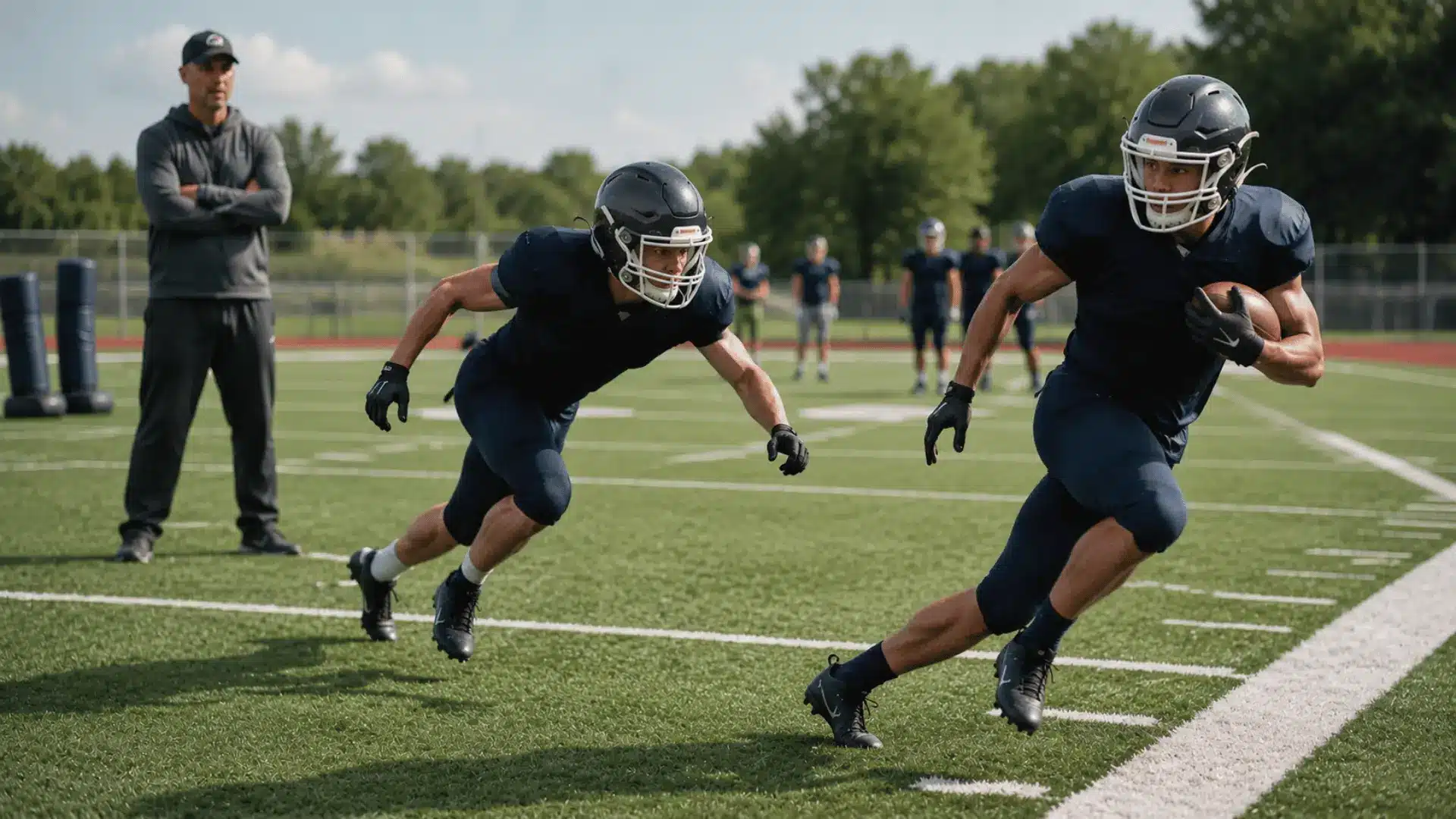
Close the space under control instead of sprinting wildly at the ball carrier. If you arrive too fast, the runner can cut, spin, or make you miss. Take a smart pursuit angle that removes the easiest escape path.
When the play moves toward the sideline, stay inside-out so the runner cannot cut back across the field.
Tracking is about patience, footwork, and leverage. You want to be close enough to tackle, but balanced enough to react to the next move.
Step 3: Keep Your Head out of the Tackle
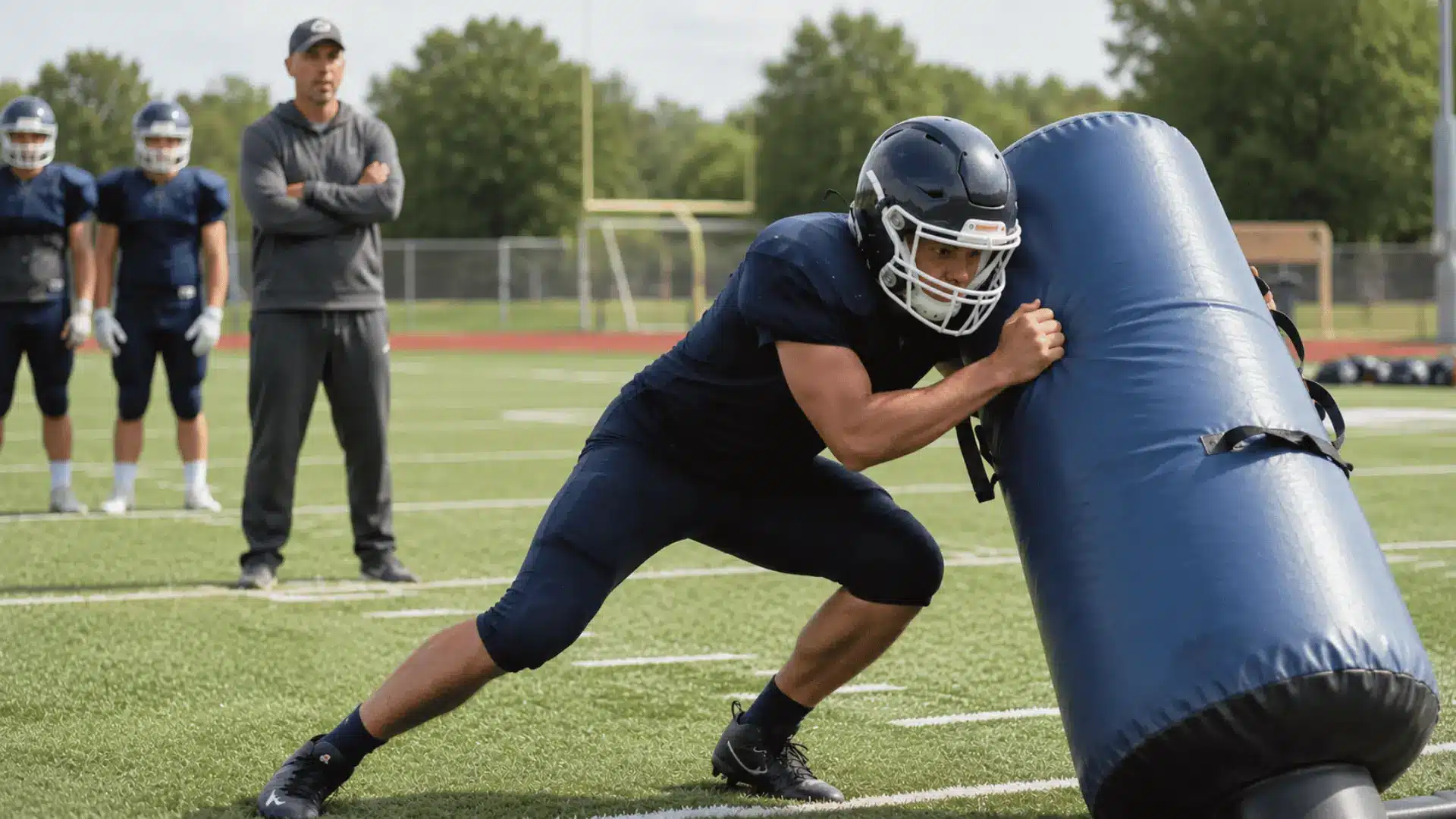
Keep your eyes up and your head out of the tackle. Your helmet should never be the first point of contact. The shoulder should make contact while your head stays to the side, away from the main collision.
This helps you see what you are hitting and lowers avoidable risk. Beginners often lower their heads when they feel pressure, which is dangerous.
Good tackling starts with vision, posture, and safe shoulder placement before impact on every single football tackle.
Step 4: Aim for the Near Hip or Thigh Area
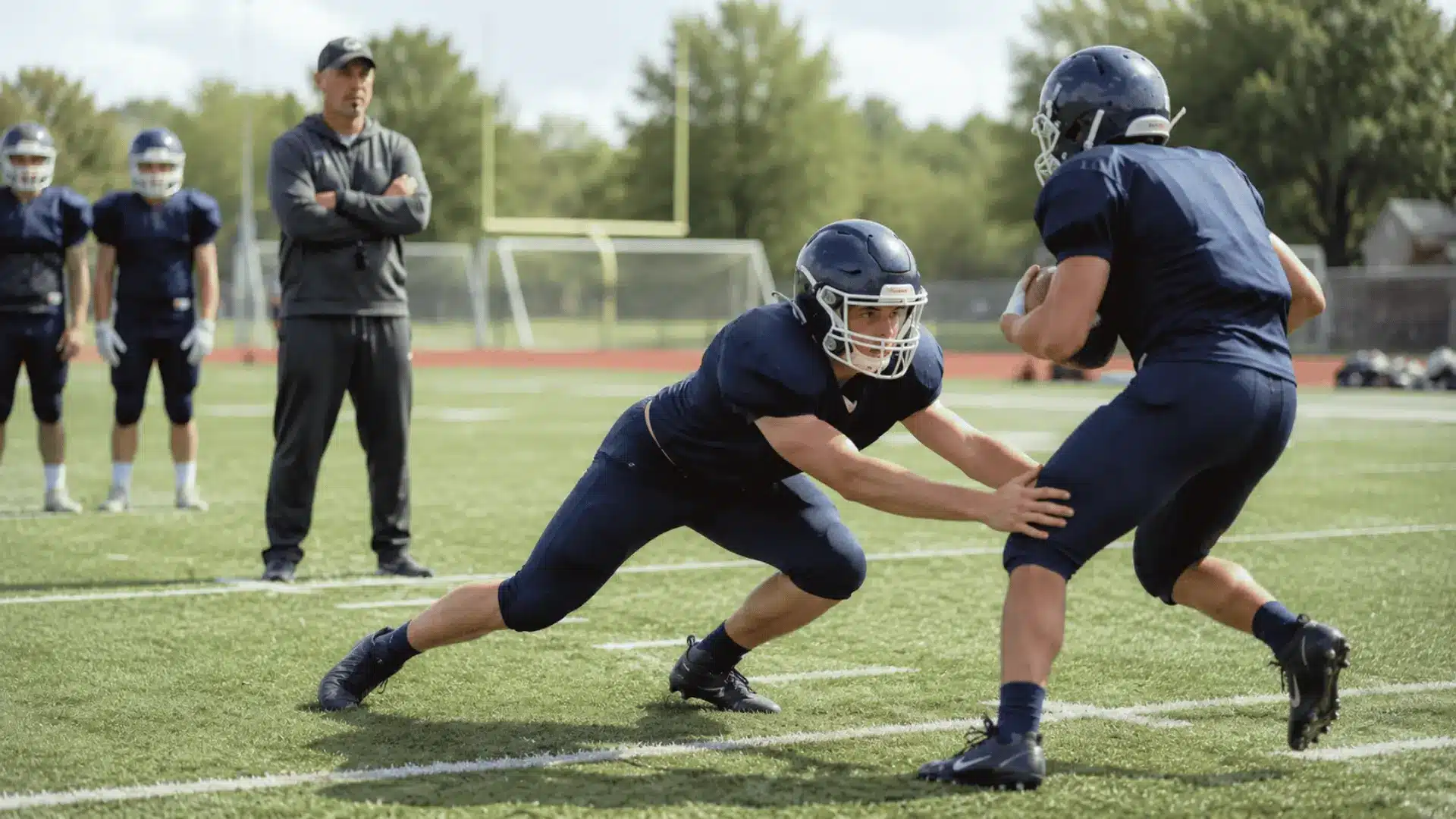
Aim near the ball carrier’s hip or thigh rather than reaching high around the shoulders. The hips are a better target because they show where the runner is actually moving.
A ball carrier can fake with the feet, shoulders, or eyes, but the hips are harder to hide. This target also keeps you lower and closer to the runner’s center of gravity.
From there, it becomes easier to wrap, drive, and finish without pulling yourself out of position early.
Step 5: Strike With the Shoulder
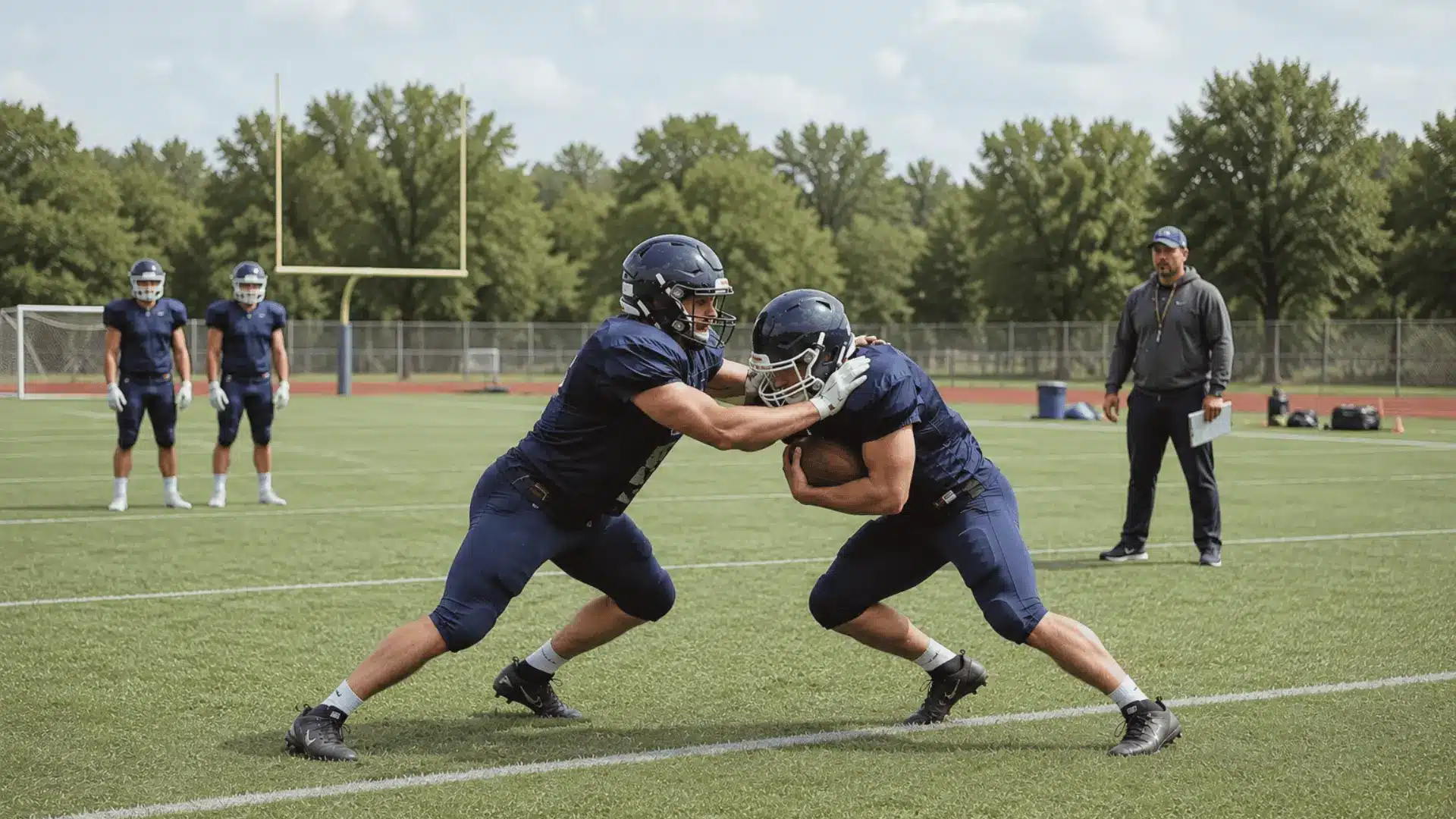
Use your shoulder as the primary point of contact, not the crown of your helmet. As you close in, keep your chest up, eyes up, and head to the side of the runner.
The shoulder should strike through the target while your arms prepare to wrap. Do not think of this as a wild hit.
A shoulder tackle works best when your feet, hips, and upper body arrive together with control and balance at safely through the runner.
Step 6: Wrap the Arms
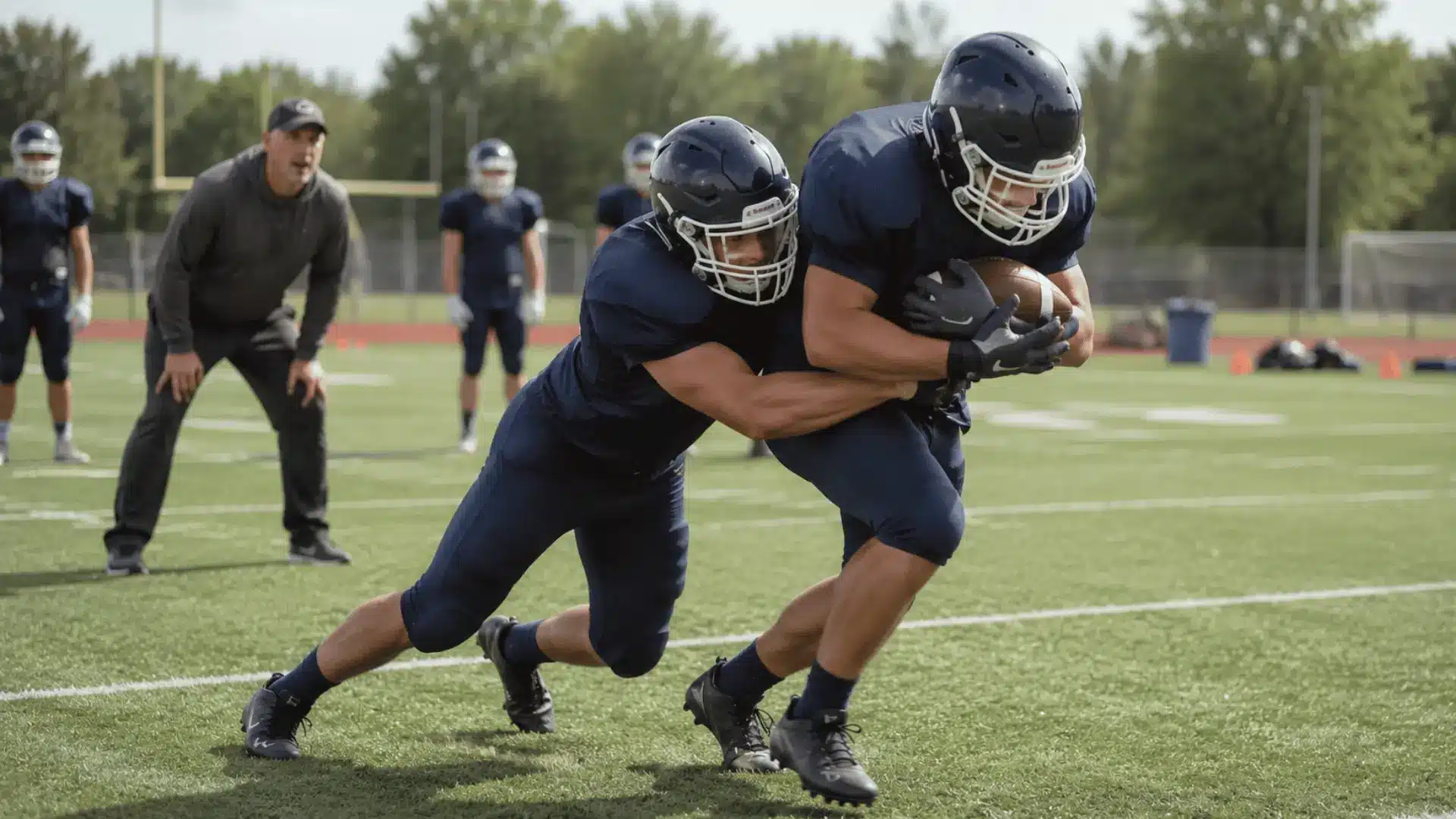
After shoulder contact, bring both arms around the ball carrier and wrap tightly. Do not just bump, shove, or throw your body into the runner.
Many beginners miss tackles because they hit without securing the player. Your arms should close around the target while your chest stays up and your feet keep moving.
A strong wrap takes away the runner’s escape space and gives you control before the finish of the tackle, especially in open space against faster runners too.
Step 7: Drive the Feet

Do not stop your feet when contact happens. A good tackle continues through the ball carrier with short, powerful steps. This leg drive helps you finish the play rather than being dragged forward or shaken off.
Keep your pads low, your chest up, and your arms locked around the runner. The goal is not to fall into the tackle.
The goal is to move through contact with balance, strength, and control until the whistle ends the play completely each time.
Step 8: Finish Safely
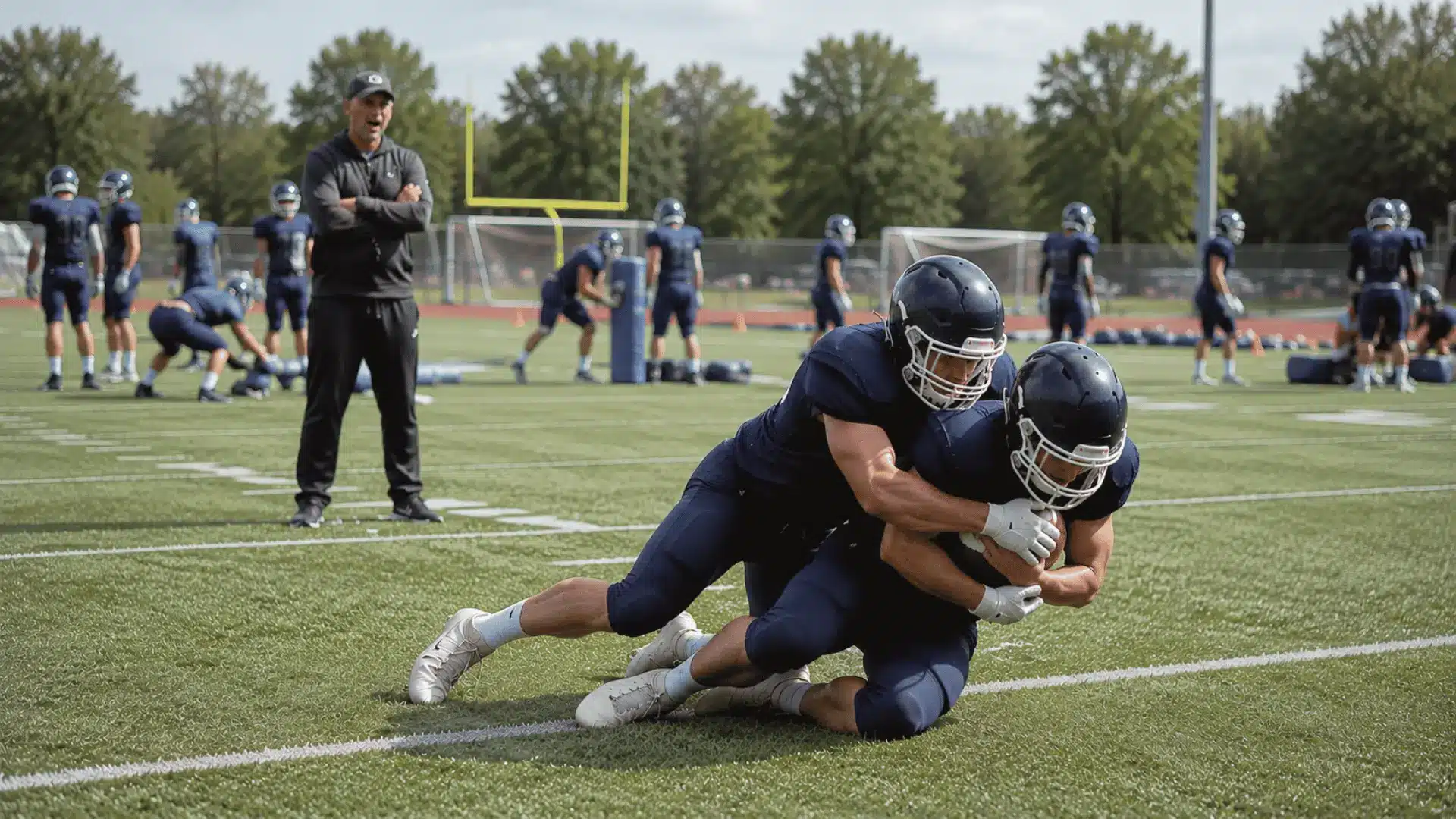
Finish the tackle with control, not extra force after the play is already stopped. Once the ball carrier is secured, bring them down safely and legally.
Do not twist the runner, grab the helmet, spear, horse-collar, or throw them dangerously. A safe finish is about stopping forward progress, not making a highlight hit.
Watching film, the flashy highlight hit is often the riskiest and least reliable tackle on the field; the boring wrap-and-drive brings runners down far more consistently.
Stay aware of the whistle, your body position, and the player’s safety as the play ends, especially during practice reps and live game situations, every time.
Types of Tackling in Football
Football tackles can look different depending on where the defender is, how the ball carrier is moving, and how many players are near the play. These common tackle types help beginners understand when to use each technique.
| Type of Tackle | What it Means | Best Used When |
|---|---|---|
| Shoulder Tackle | Tackler uses the shoulder as the contact point while keeping the head to the side | Teaching safer tackling form to beginners |
| Form Tackle | Basic shoulder contact, wrap, and drive tackle | Beginner practice and controlled contact |
| Angle Tackle | Defender tackles from the side or at an angle | Pursuit plays and outside runs |
| Open-Field Tackle | One-on-one tackle in space | Against receivers, backs, and returners |
| Thigh And Drive Tackle | Shoulder contact near the thigh with strong leg drive | Stopping strong runners |
| Sideline Tackle | The defender stops or forces the runner out safely | Near the boundary plays |
| Gang Tackle | Multiple defenders finish the tackle together | Team pursuit situations |
Why Shoulder Tackling is Safer
Shoulder tackling is safer because it teaches players to keep the head out of the main contact area. The shoulder becomes the point of impact, while the eyes stay up and the head stays to the side.
It also teaches defenders to wrap and drive rather than throw their bodies at the runner. For beginners, this makes it easier to coach, repeat, and correct during practice.
How to Practice Tackling Without Full Contact
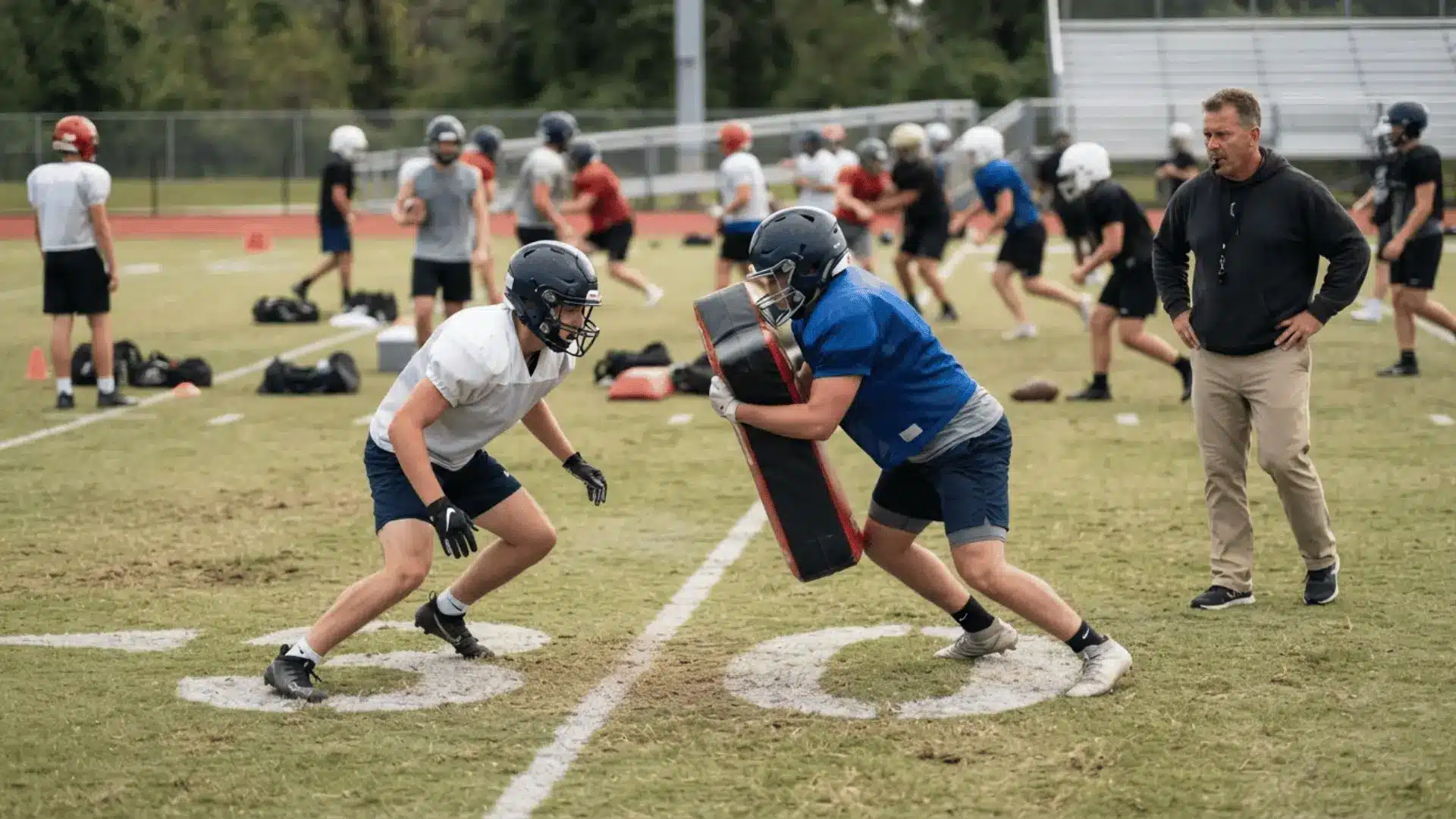
Beginners do not need full-speed collisions to learn tackling. The skill can start with stance work, footwork, pursuit angles, shoulder placement, and wrapping before live contact is added.
A staged approach helps players learn the movement first, then build toward controlled contact when they are ready.
Coaches can use shadow tackling, tracking angles, breakdown position work, bag drills, wrap-and-fit reps, walk-through pursuit, and supervised partner drills.
One useful starter drill is the kneeling shoulder-and-wrap. The tackler starts on their knees about a body-length from a bag, drives the near shoulder in, wraps both arms, keeps the head out, and rolls the bag down.
Starting low keeps speed down while players learn control before moving into standing contact drills later on.
How to Spot Good and Bad Tackling While Watching a Game
You do not have to be on the field to understand tackling form. When you watch a game, focus on the small details that show whether a defender used a safe, controlled technique.
- Check the head position: On a clean tackle, the defender’s head stays to the side of the runner. If the helmet is buried into the front of the ball carrier, that is poor form.
- Watch the feet: Good tacklers keep their feet moving through contact. A defender who stops, lunges, or reaches often gets dragged for extra yards.
- Look for the wrap: A strong tackle uses both arms around the runner. A big shoulder bump without a wrap may look strong, but it often leads to a missed tackle.
- Notice the angle: On outside runs, good defenders stay inside-out and use the sideline to limit the runner’s space.
Once you start watching these four things, clean tackles become easier to spot. The safest tackles are often not the loudest hits. They are the controlled wraps that stop the play.
Tackling Safety Rules Every Player Should Know
Tackling should always be taught with safety in mind. The goal is to stop the ball carrier legally, not to create dangerous contact. Players should understand these rules before live tackling starts.
- Never lead with the helmet.
- Do not target the head or neck.
- Do not spear with the crown of the helmet.
- Do not grab the facemask.
- Do not horse-collar tackle.
- Stop if a player appears injured.
- Report concussion symptoms right away.
- Keep the eyes up before contact.
- Use the shoulder as the point of contact.
- Wrap and drive instead of throwing a reckless hit.
CDC HEADS UP training focuses on recognizing and responding to possible concussions in youth sports. That makes it a helpful safety resource for coaches, parents, and players.
How Coaches Teach Tackling to Beginners
Coaches teach tackling in stages instead of moving beginners straight into full-speed contact. They start with body control first because players need to understand balance, footwork, and safe positioning before they try to bring down a ball carrier.
Most coaches begin with stance, movement, shoulder position, head placement, wrapping, and leg drive. They use tackling bags first, then move into slower partner reps before adding faster, game-like drills.
This helps beginners learn the movement without rushing into unsafe contact. Coaches usually repeat a few simple habits until the form becomes natural.
- They start with stance, balance, footwork, and body control.
- They keep the player’s eyes up, head out, and shoulders in position.
- They use tackling bags before live player contact.
- They teach wrapping and leg drive before full-speed tackling.
- They build from slow reps to game-like reps while correcting one mistake at a time.
Quick Form Check Before Every Tackle
Use this quick checklist to review your tackling form before, during, and after contact.
A good tackle has three parts: how you approach, how you make contact, and how you finish. Checking each stage helps players stay controlled instead of relying on rushed or unsafe contact.
1. Before Contact
Before the tackle starts, the defender needs to stay balanced, controlled, and ready to react. This stage determines whether the tackle begins safely or results in a missed play.
- Balanced stance: Keep your knees bent, chest up, and weight centered so you can move without falling out of position.
- Eyes up: Watch the ball carrier clearly while keeping your head up to avoid dropping into contact.
- Short steps: Use quick, controlled steps instead of lunging from too far away.
- Good angle: Take a smart pursuit angle that cuts off the runner’s easiest escape path.
2. At Contact
At contact, the tackler needs to stay controlled and use a safe body position. This is where shoulder placement, head position, and wrapping make the biggest difference.
- Shoulder first: Use the shoulder as the primary point of contact rather than leading with the helmet.
- Head out: Keep your head to the side and away from the main collision area.
- Arms wrap: Bring both arms around the ball carrier to prevent them from bouncing away.
- Chest up: Keep your chest lifted to maintain posture, vision, and control through contact.
3. After Contact
After contact, the tackle is not finished until the ball carrier’s forward progress is stopped. The goal is to complete the play safely without using illegal or reckless force.
- Drive feet: Keep your feet moving with short, strong steps after making contact.
- Finish under control: Bring the ball carrier down or stop forward progress without throwing your body wildly.
- Avoid twisting or illegal contact: Do not twist, spear, grab the helmet, horse-collar, or continue contact after the whistle.
Common Tackling Mistakes Beginners Make
Beginners often miss tackles because they rush the contact instead of staying balanced, wrapping properly, and finishing with control. These mistakes are common, but they can be fixed with better form and slower practice reps.
| Mistake | Why is it a Problem | Better Technique |
|---|---|---|
| Dropping the Head | Increases injury risk and limits vision | Keep eyes up and head out |
| Lunging | Makes it easier for the ball carrier to cut away | Close the space with short, controlled steps |
| Arm Tackling | Let the ball carrier break free | Wrap both arms and drive the feet |
| Stopping Feet at Contact | Creates a weak finish | Keep the feet moving through contact |
| Tackling too High | Let the runner spin, stiff-arm, or power forward | Aim near the hip or thigh |
| Leading With Helmet | Unsafe and often illegal | Strike with the shoulder instead |
Bottom Line
Tackling well is not about being reckless or trying to make the biggest hit. It is about staying balanced, tracking the ball carrier, keeping your eyes up, and using the shoulder instead of the helmet.
A strong tackle also needs a tight wrap, steady leg drive, and a safe finish after contact. For beginners, the best progress usually comes from slow reps first.
Stance work, footwork, angle drills, and bag practice help players build confidence before live contact is added. Good tackling starts slowly, then improves with reps, coaching, and safer habits.
Try the checklist during your next practice and see which part of your form needs the most work.
Frequently Asked Questions
Is Tackling Hard to Learn?
Tackling takes practice, but beginners can learn it step by step. The hardest part is staying calm, balanced, and controlled before contact.
What Gear do Players Need for Tackling Practice?
Players usually need a properly fitted helmet, shoulder pads, a mouthguard, and practice clothing. Coaches may also use bags, shields, or dummies.
Why do Beginners Miss Open-Field Tackles?
Beginners often miss open-field tackles because they rush in too fast. Slowing down before contact gives them more control and better timing.
Should Tackling be Practiced Every Day?
Full-contact tackling should not be practiced every day. Players can work on stance, angles, footwork, and bag drills more often.
What is the Safest Way to Start Tackling Drills?
The safest way is to begin with no-contact footwork and tracking drills. Contact should be added slowly under the coach’s supervision.