

Did you know the NFL once had a team called the Steagles, a Super Bowl MVP played for the losing team, and a championship game ended 73–0? These sound almost unbelievable, but they are all part of football history.
American football is full of surprising facts, from unusual NFL rules and record-breaking performances to unexpected moments that changed the game.
Even if you watch football every Sunday, there is always something new to learn.
I find the strangest football facts even more interesting when you understand the stories behind them. And some of these 31 fun football facts might make you question how much you really know about your favorite sport.
Interesting Facts About American Football History
American football has changed significantly since the nineteenth century. Early games followed different rules, protective equipment was limited, and passing was not always permitted.
These historical facts explain how the sport developed into the game you recognize today.
1. The First College Football Game Was Played in 1869
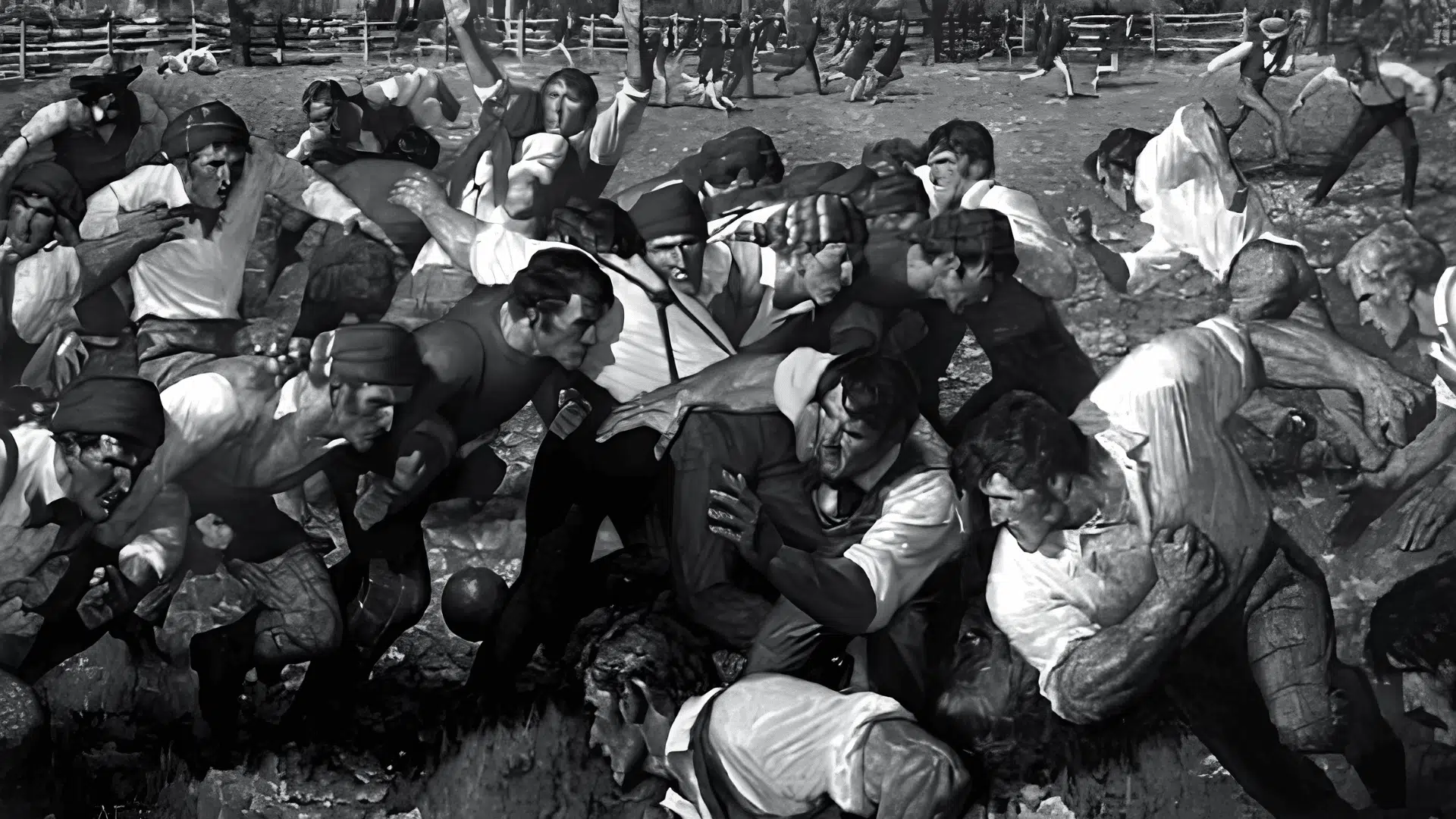
Image Source: NCAA
Rutgers and Princeton played what is widely recognized as the first college football game on November 6, 1869, in New Brunswick.
Rutgers won 6–4, but the competition followed rules closer to soccer than modern American football. Players mainly kicked the ball, and many current football rules did not exist.
2. Forward Passes Were Once Illegal in Football
Before 1906, American football rules prohibited forward passes. Offensive teams mainly relied on running plays, which placed greater importance on physical contact and controlling possession.
The legalization of forward passing in 1906 gave offenses another way to advance the ball. Teams could attack downfield instead of relying almost entirely on running plays.
3. Football Touchdowns Were Originally Worth Two Points
Touchdowns have not always been worth six points. In 1883, they were worth two points before increasing to four points in 1897.
In 1912, football officials increased the value of a touchdown to six points. This change made reaching the end zone more valuable under the scoring system used today.
4. The NFL Was Originally Called the APFA
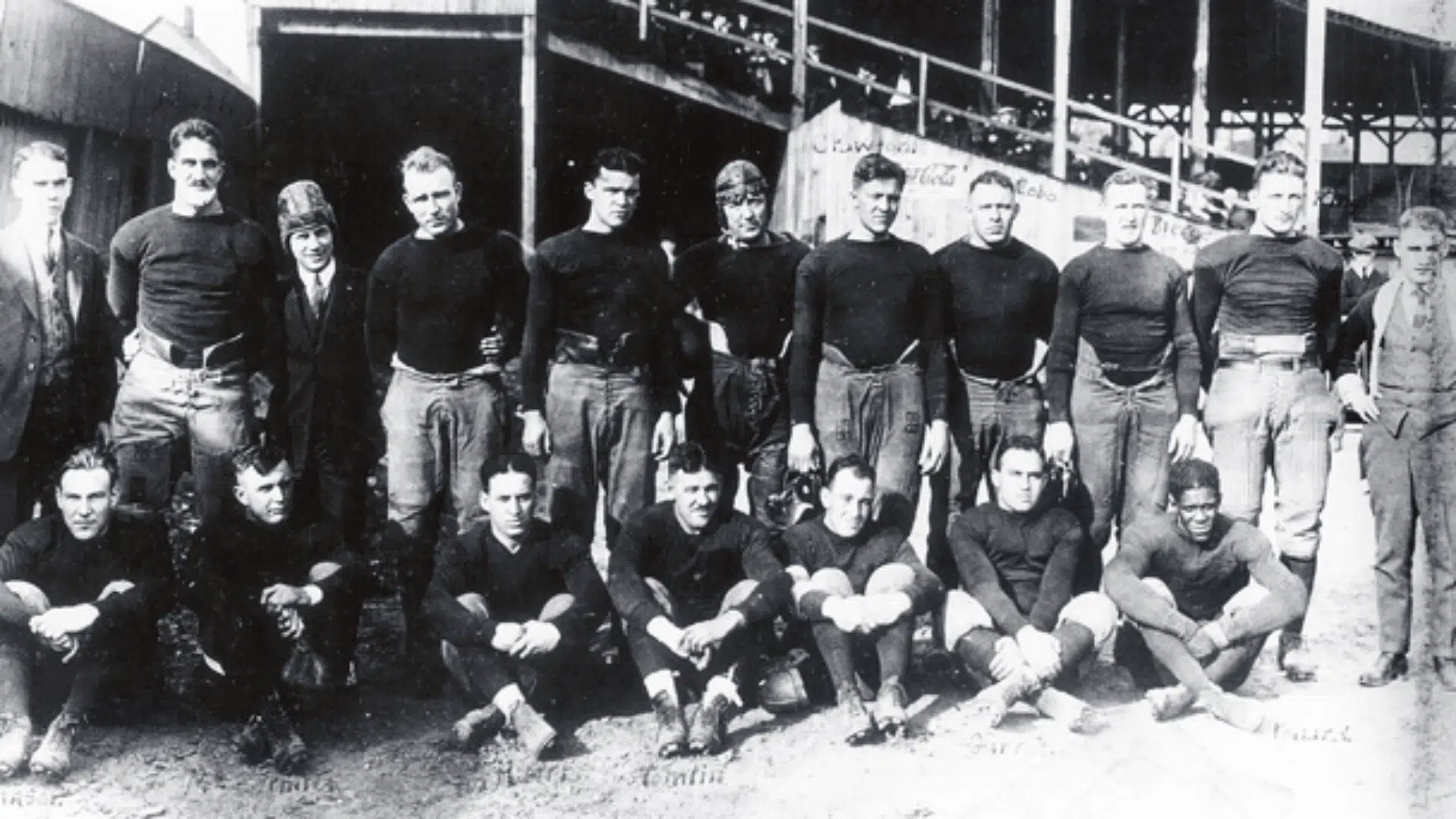
Photo Credit: NFL Gallery
The National Football League began in 1920 as the American Professional Football Association (APFA), an organization formed to bring greater structure to professional football.
The organization officially adopted the National Football League name in 1922. Canton, Ohio, where the league was founded, now houses the Pro Football Hall of Fame.
Pro football is older than the league. William “Pudge” Heffelfinger was paid $500 to play one game for the Allegheny Athletic Association on November 12, 1892, which makes him the first known pro football player.
5. NFL Players Once Played Without Helmets
During football’s early years, some players competed without helmets. Others used basic leather headgear that provided considerably less protection than modern football equipment.
The NFL made helmets mandatory in 1943. Later improvements introduced hard outer shells, face masks, and better padding, although no helmet can completely prevent head injuries.
6. The Eagles and Steelers Formed One Team in 1943
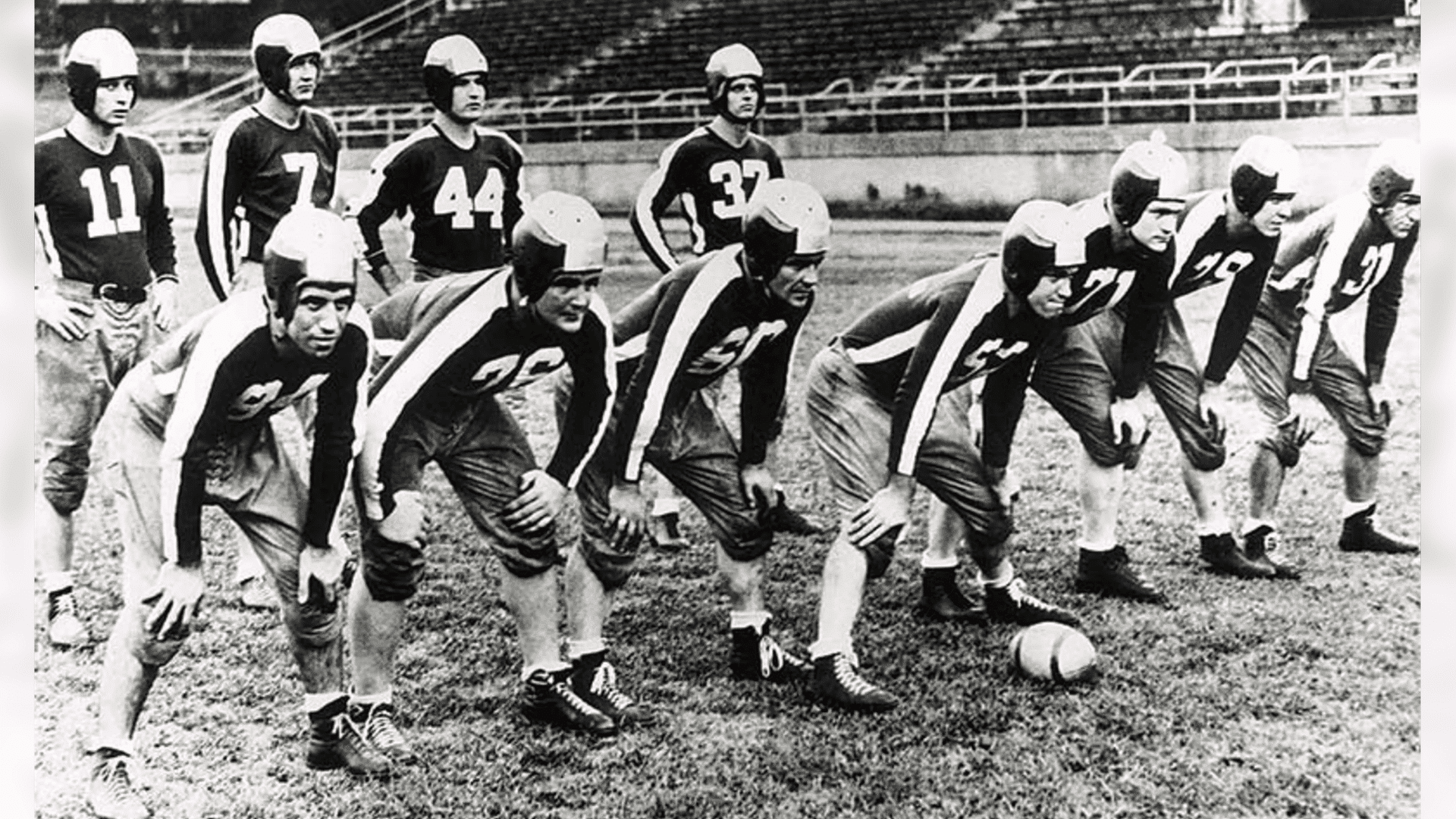
Image Credit: Philadelphia Eagles historical photo gallery
During World War II, the Philadelphia Eagles and Pittsburgh Steelers experienced player shortages because several professional athletes were serving in the military.
The franchises temporarily combined their rosters under the official name Phil-Pitt. Commonly known as the Steagles, the team finished the 1943 season with a 5–4–1 record.
Hidden Facts About NFL Rules and Scoring
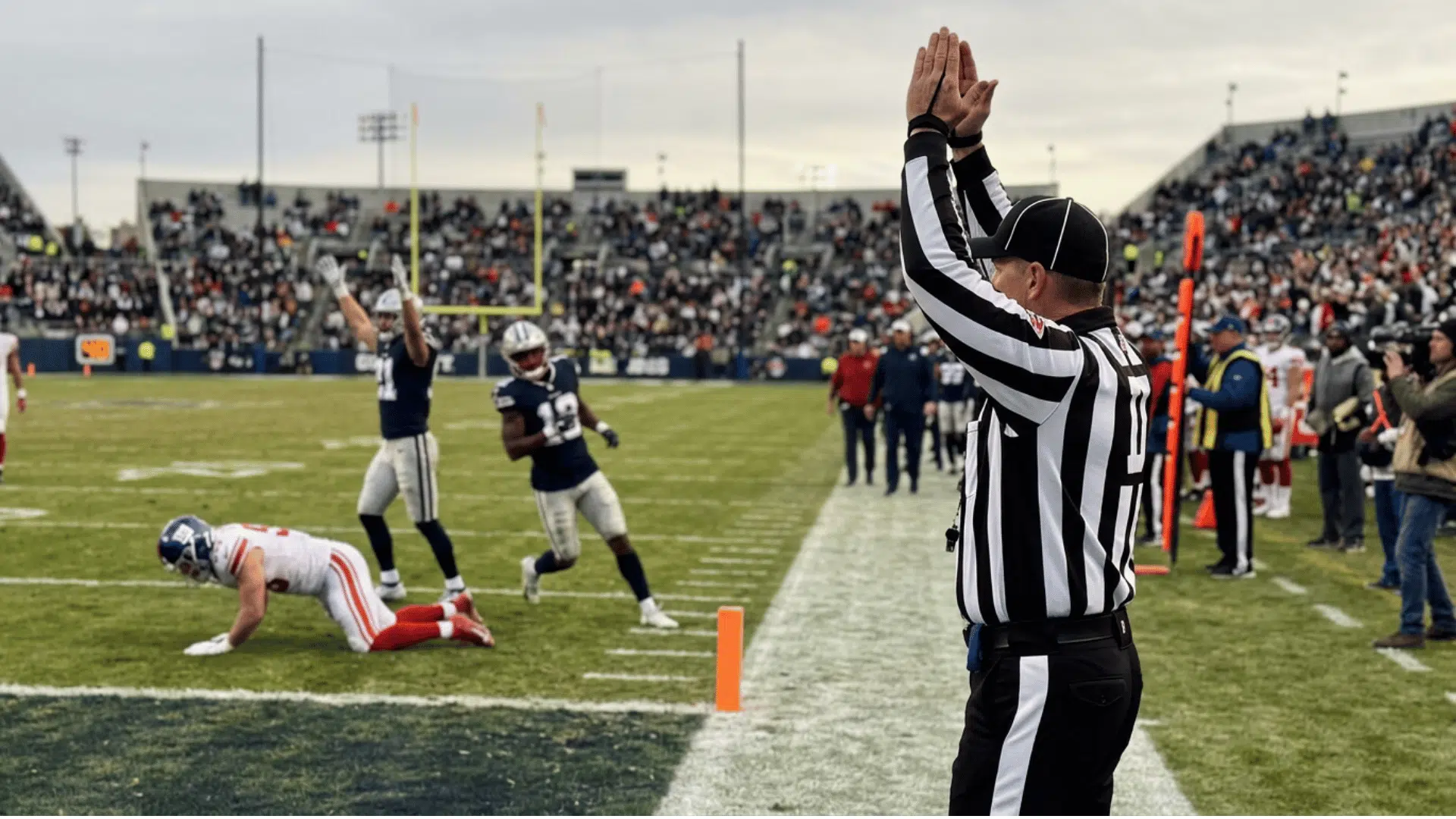
The NFL has several rules that many football viewers may not know about. Some create rare scoring opportunities, while others allow plays that seldom happen during games.
7. A Defense Can Score Without Possessing the Football
A defensive team can earn two points through a safety without recovering the football. This can happen when the offense is responsible for the ball becoming dead in its own end zone.
For example: A quarterback gets tackled while holding the ball in their own end zone.
What matters: Officials also consider how the ball entered the end zone before awarding a safety.
8. Drop Kicks Are Still Legal in the NFL
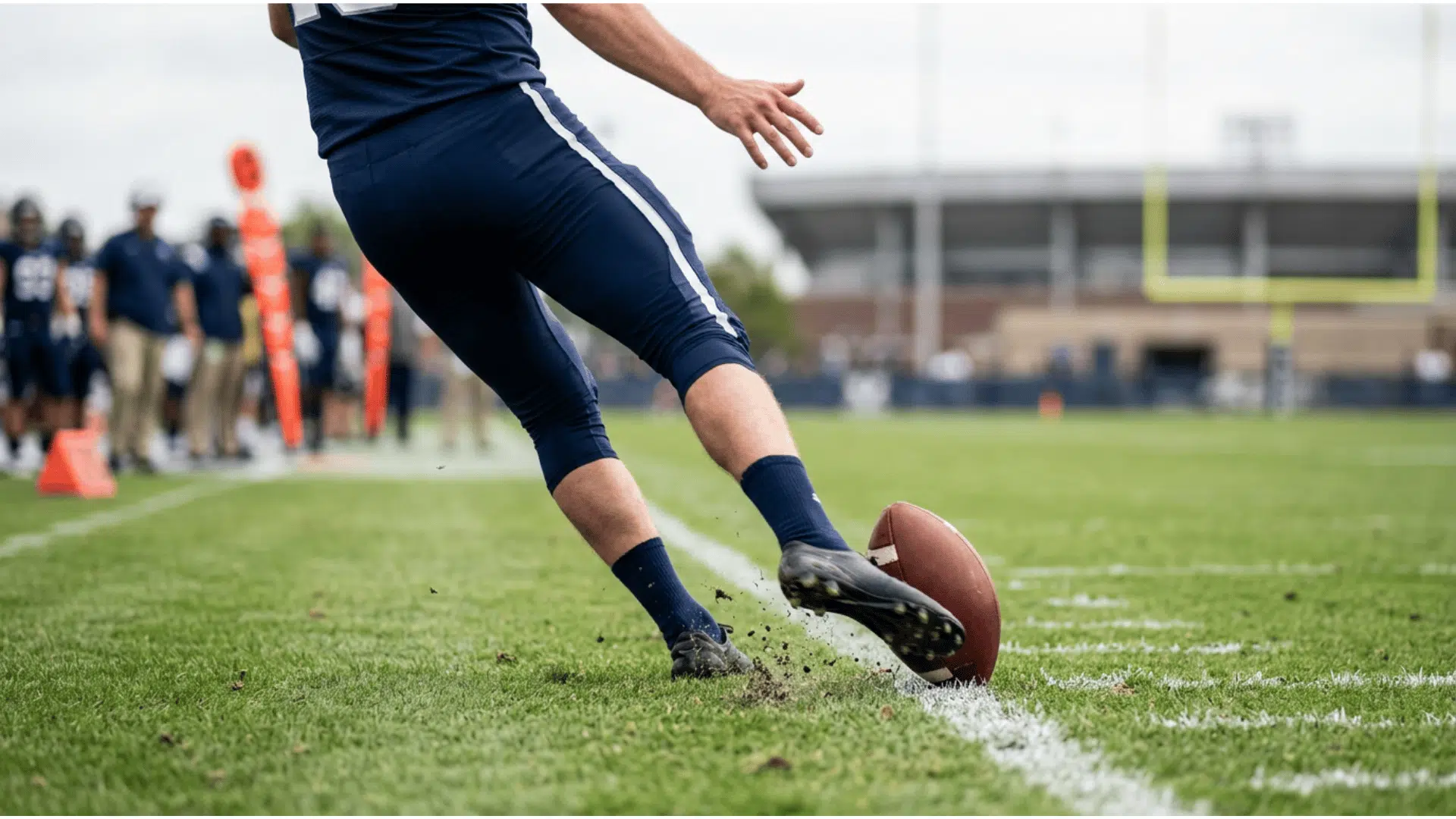
Drop kicks are rarely seen in modern football, but they’re still legal. A player performs one by dropping the ball and kicking it just as it touches the ground.
Points scored: Three for a successful field goal or one for an extra point.
Memorable moment: Doug Flutie made a drop-kicked extra point for the New England Patriots in 2006.
9. NFL Teams Can Attempt a Free Kick After a Fair Catch
After certain fair catches, an NFL team can attempt a special field goal called a fair-catch kick. Unlike a normal field goal, the kicker doesn’t face the usual defensive rush.
The Advantage: Opposing players must remain at least 10 yards away during the kick.
Real Example: Chargers kicker Cameron Dicker made a 57-yard fair-catch kick against Denver in December 2024, the first successful NFL attempt since 1976.
10. Quarterbacks Can Catch Their Own Forward Passes
A quarterback can legally catch their own forward pass if another player touches the football first. This usually happens when a defender deflects the ball back toward the quarterback.
Famous Example: Marcus Mariota caught his own deflected pass against Kansas City in January 2018.
The Result: He ran into the end zone for a touchdown during the playoff game.
11. Defenses Can Score Two Points on Conversion Attempts
After a touchdown, the scoring team gets a chance to earn extra points. However, if the defense takes possession during the conversion attempt, it can score instead.
Possible Plays: An interception, a recovered fumble, or a blocked kick returned to the opposite end zone.
Points Awarded: The defense receives two points instead of the usual six for a touchdown.
12. NFL Regular-Season Games Can End in a Tie
Not every NFL game ends with a winner. During the regular season, a game can officially finish as a tie if neither team wins before overtime expires.
Time Limit: Regular-season overtime lasts up to 10 minutes.
Playoff Difference: Postseason games continue until a winner is decided, while regular-season games can end in a tie.
Unlike NFL regular-season games, college football games continue under overtime rules until a winner is decided.
Incredible NFL Records and Achievements
Professional football has produced exceptional performances involving kicking distance, game duration, scoring margins, and undefeated seasons.
These records represent significant achievements in NFL history. Understanding the type of record also matters because preseason, regular-season, and postseason statistics are not always counted together.
13. The Longest NFL Field Goal is 68 Yards
Jacksonville Jaguars kicker Cam Little established an NFL record on November 2, 2025, by converting a 68-yard field goal against the Las Vegas Raiders.
The successful attempt surpassed Justin Tucker’s previous 66-yard record from 2021. Unlike Little’s 70-yard preseason kick in August 2025, the 68-yard attempt counts toward official regular-season records.
14. The Longest NFL Game Lasted 82 Minutes and 40 Seconds
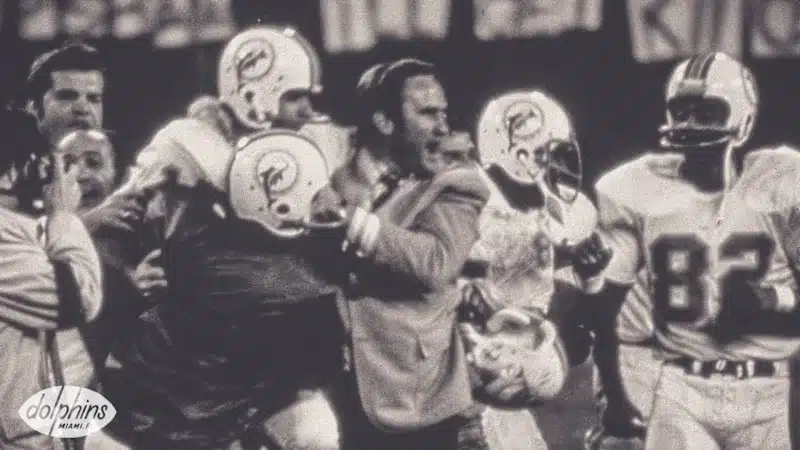
Photo Credit: Miami Dolphins
On December 25, 1971, the Miami Dolphins faced the Kansas City Chiefs in a playoff game that required two overtime periods to determine a winner.
Miami eventually won 27–24 after 82 minutes and 40 seconds of playing time. The contest remains the longest game in NFL history!
15. The Biggest NFL Blowout Ended 73–0
The Chicago Bears defeated Washington 73–0 in the 1940 NFL Championship Game. Chicago scored 11 touchdowns while preventing its opponent from scoring.
The Bears scored on offense and through an interception return. Washington could not respond, allowing Chicago to establish the largest winning margin in NFL history.
16. The Longest NFL Play Covered 109 Yards
In 2007, San Diego Chargers player Antonio Cromartie returned a missed field goal 109 yards for a touchdown against the Minnesota Vikings, establishing an NFL record.
Cordarrelle Patterson matched the distance with a kickoff return in 2013. Jamal Agnew also recorded a 109-yard missed field goal return in 2021.
17. The Longest Punt in NFL History Was 98 Yards
A punt in football can pin the opposing team deep in its own territory.
New York Jets punter Steve O’Neal recorded a 98-yard punt against the Denver Broncos on September 21, 1969, establishing the NFL’s longest recorded punt.
The football traveled approximately 75 yards through the air before bouncing and rolling farther downfield. Its full distance was measured from the line of scrimmage to where the play ended.
18. The Miami Dolphins Finished the 1972 Season Undefeated
The Miami Dolphins completed the 1972 NFL season with a perfect 17–0 record, including postseason games, under head coach Don Shula.
Miami secured the achievement by defeating Washington 14–7 in Super Bowl VII. The Dolphins remain the only NFL team to complete an entire season undefeated and untied.
19. The Lions and Browns Both Had 0–16 Seasons
The Detroit Lions became the first NFL team to finish a 16-game regular season without a victory in 2008, losing every scheduled game.
The Cleveland Browns recorded the same 0–16 result in 2017. Both teams went winless across the entire regular season, finishing at the opposite end of the record books from Miami’s perfect 1972 campaign.
When comparing NFL records, I first check the season format and competition type. A preseason achievement may be impressive but doesn’t qualify as an official regular-season record.
Surprising Facts About Super Bowl History
The Super Bowl has become an important event in American sports, but its history includes unusual broadcasting arrangements, championship records, and unexpected interruptions.
The following facts highlight significant developments and memorable events from Super Bowl history.
20. The First Super Bowl Did Not Sell Out
The first Super Bowl took place on January 15, 1967, at the Los Angeles Memorial Coliseum. The Green Bay Packers defeated the Kansas City Chiefs 35–10.
Attendance: Approximately 61,946 spectators attended, leaving thousands of seats unoccupied.
Historical Significance: Super Bowl I remains the only championship in the series that did not sell out.
21. Two Networks Broadcast the First Super Bowl
CBS and NBC both televised the first Super Bowl in 1967. Separate broadcasting agreements allowed the networks to provide independent coverage of the championship.
CBS Broadcasting Rights: National Football League games.
NBC Broadcasting Rights: American Football League games.
22. A Super Bowl MVP Once Played for the Losing Team
Dallas Cowboys linebacker Chuck Howley received the MVP award after Super Bowl V in January 1971, despite his team losing 16–13 to the Baltimore Colts.
Defensive Performance: Howley intercepted two passes and recovered a fumble.
Historical Significance: He remains the only Super Bowl MVP selected from the losing team.
23. The Super Bowl Trophy is Named After Vince Lombardi
The NFL renamed its championship trophy in 1970 to honor former Green Bay Packers head coach Vince Lombardi after his death.
Coaching Achievement: Lombardi led Green Bay to victories in Super Bowls I and II.
Trophy Design: The silver trophy features a football positioned on a kicking tee.
24. Super Bowl LI Featured a 25-Point Comeback
The New England Patriots trailed the Atlanta Falcons 28–3 during Super Bowl LI on February 5, 2017, before scoring 25 consecutive points to force overtime.
Final Score: New England defeated Atlanta 34–28.
Historical Significance: The game featured the largest comeback in Super Bowl history and became the first Super Bowl decided in overtime.
25. A Power Outage Interrupted Super Bowl XLVII
A partial power outage interrupted Super Bowl XLVII between the Baltimore Ravens and San Francisco 49ers on February 3, 2013, at the Superdome in New Orleans.
Interruption: The game was delayed for approximately 34 minutes.
Final result: Baltimore defeated San Francisco 34–31.
Strange and Lesser-Known Moments in NFL History
Not every memorable NFL event involves a major record or championship victory. Some games became important because of unusual playing conditions, unexpected decisions, or circumstances outside the players’ control.
The following incidents show how unpredictable professional football has been throughout its history.
26. The NFL Played a Championship Game on a Smaller Indoor Field
In 1932, the Chicago Bears faced the Portsmouth Spartans in a championship playoff. Severe winter weather required organizers to move the game into Chicago Stadium.
The indoor arena could not accommodate a regulation football field. Officials shortened the playing area to 80 yards and reduced its width by 30 feet.
Chicago defeated Portsmouth 9–0 in the NFL’s first playoff game. The unusual conditions also encouraged rule changes, including allowing forward passes from anywhere behind the line of scrimmage.
27. The First Heisman Trophy Winner Never Played in the NFL
Jay Berwanger received the award now known as the Heisman Trophy in 1935. His college achievements made him a leading professional prospect.
The Philadelphia Eagles selected Berwanger with the first overall pick in the 1936 NFL Draft. However, he did not reach an agreement to begin his professional career.
Berwanger never appeared in an NFL game despite being the first player selected in league draft history. He pursued business opportunities instead of professional football.
28. The 1948 NFL Championship Was Played in Heavy Snow
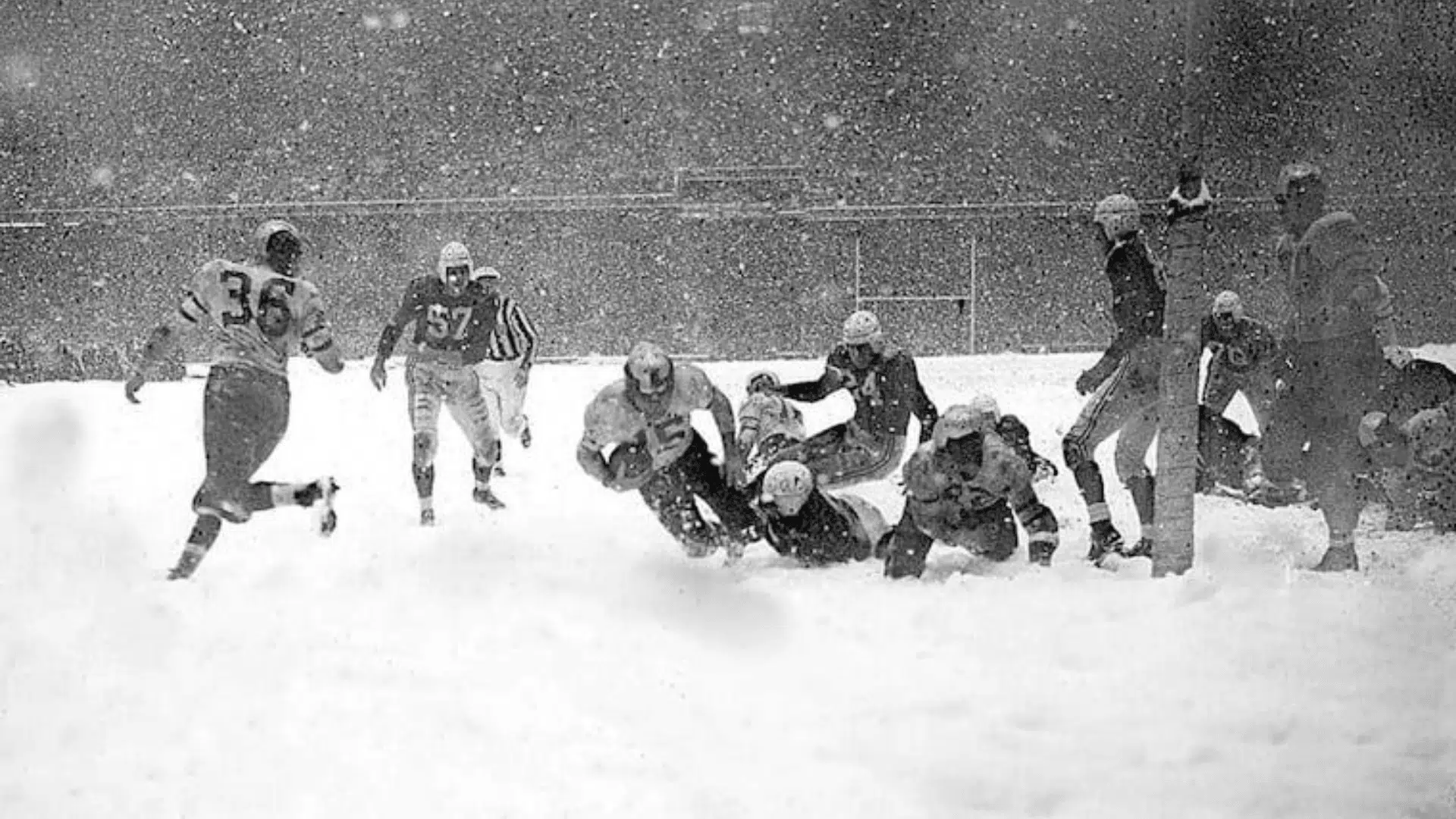
Photo Credit: NFL’s Best of Braving the Weather gallery
The Philadelphia Eagles faced the Chicago Cardinals in the 1948 NFL Championship Game during a major snowstorm that created difficult conditions throughout the contest.
Heavy snow covered the field and affected player movement, passing accuracy, and ball handling. Teams had to adjust their approaches because maintaining possession became more difficult.
Philadelphia defeated Chicago 7–0 to secure its first NFL championship. Steve Van Buren scored the game’s only touchdown on a five-yard run in the fourth quarter.
29. The Rams Introduced Hand-Painted Helmet Logos in 1948

Photo Credit: The Rams
In 1948, Los Angeles Rams player Fred Gehrke designed a helmet logo featuring ram horns and painted the design directly onto the team’s helmets.
The Rams became the first NFL team to display a team logo on their helmets. Other franchises gradually introduced their own helmet designs.
Gehrke’s original design featured painted horns rather than a separate logo attached to the helmet. His work started a tradition that later spread throughout professional football.
30. The NFL Played Its First Game Outside North America in 1976
On August 16, 1976, the St. Louis Cardinals faced the San Diego Chargers in a preseason exhibition game held in Tokyo, Japan.
The Cardinals defeated the Chargers 20–10. The matchup introduced Japanese spectators to NFL football through a live professional game rather than a television broadcast.
It was the first NFL game played outside North America. Unlike later international regular-season games, this contest was an exhibition and did not count toward either team’s standings.
31. The Last Scoreless NFL Game Ended 0–0 in 1943
On November 7, 1943, the Detroit Lions and New York Giants played an NFL regular-season game that ended in a scoreless 0–0 tie.
Neither team recorded a touchdown, field goal, or safety throughout the contest. Neither offense produced a successful scoring play.
The matchup remains the most recent scoreless tie in NFL history. Although tied games still occur, a contest without a single point has become extremely rare.
Frequently Asked Questions
Why Is an American Football Called a Pigskin?
Early footballs sometimes used inflated pig bladders. Modern NFL footballs have leather outer covers made from cowhide, but the nickname pigskin remains popular.
What do the Laces on a Football Do?
Football laces help players grip the ball while throwing. Quarterbacks use them to control their release and produce a stable spiral during passes.
Why do NFL Referees Throw Yellow Flags?
NFL officials throw yellow flags to signal possible rule violations. The flags alert players and spectators that officials have identified a potential penalty during play.