
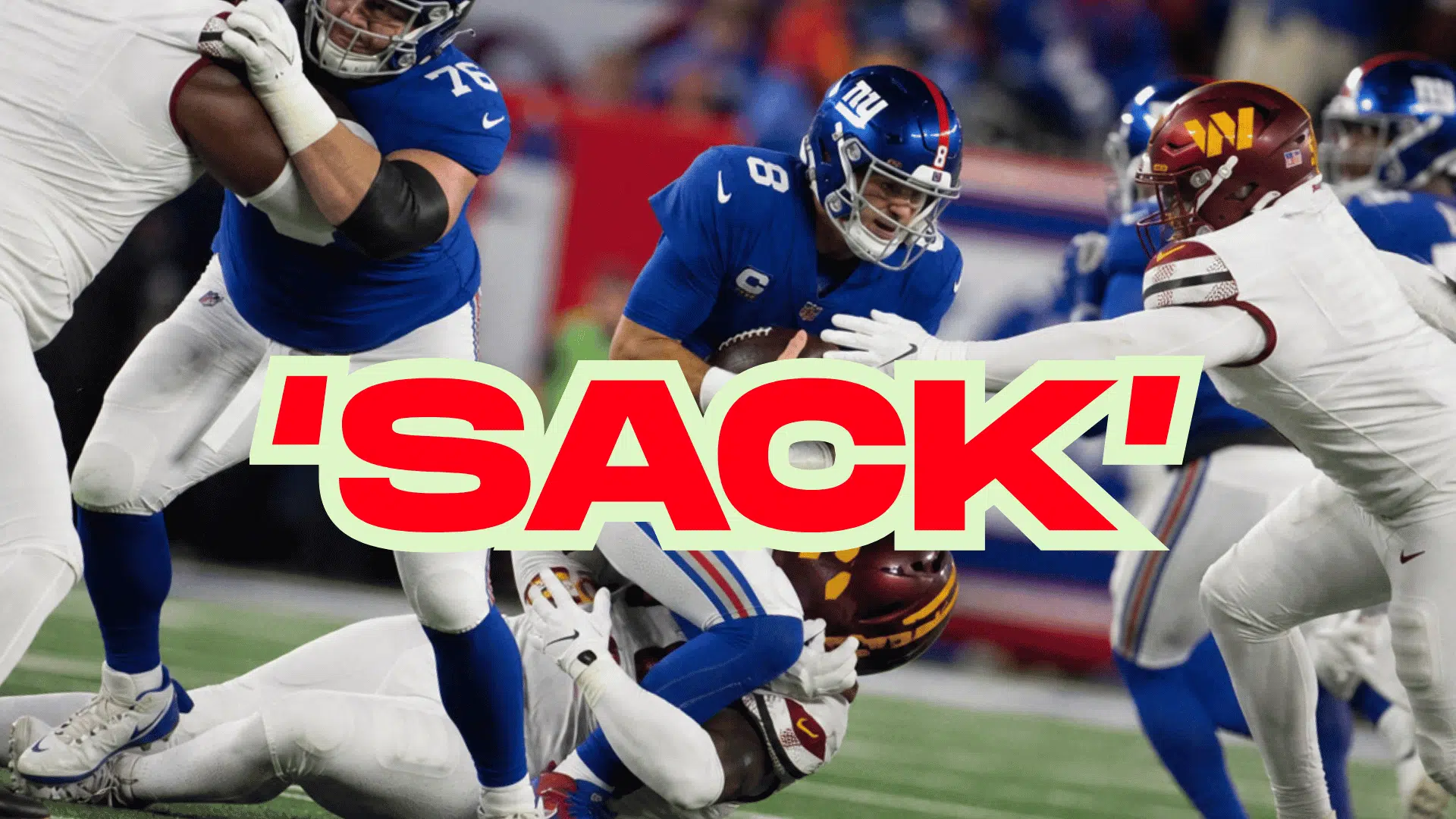

A sack in football is a play in which the quarterback (or any player trying to throw a forward pass) is tackled, forced out of bounds, or forced to fumble at or behind the line of scrimmage before the pass gets away.
The offense loses the yards, burns the down, and the defender who made the play gets credited with a sack.
That’s the American football meaning. Soccer and rugby (not American football) don’t have sacks. Rugby in particular because it has no forward pass to protect.
Continue reading because plenty of plays that look like sacks aren’t, and a few that don’t look like sacks are.
Where the Word “Sack” Came From?
Deacon Jones, the Los Angeles Rams defensive end, popularized “sack” in the 1960s.
He compared dropping a quarterback to sacking a city. Before that, broadcasters just said a passer was “tackled behind the line.”
The NFL didn’t track sacks as an official stat until 1982, eight years after Jones retired. So the man who named the play has zero official sacks.
Researchers John Turney and Nick Webster went back through game books and film to fill the gap, and their count gives Jones 173.5 unofficial sacks, third all time.
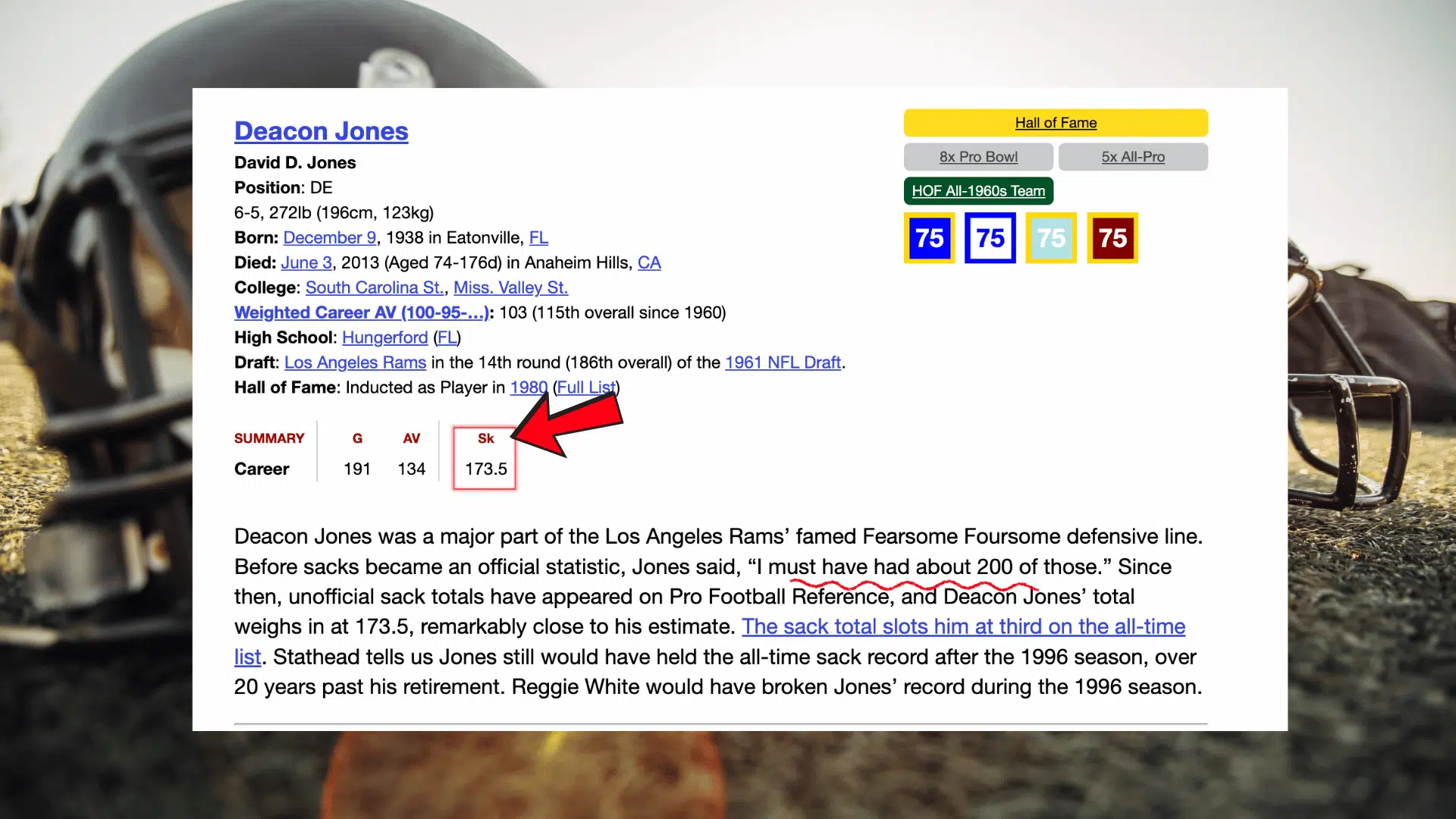
Source: Pro Football Reference
Jones once guessed his own total at “about 200,” and the film study came back 26.5 short.
The same research credits Al “Bubba” Baker with 23 sacks as a Detroit Lions rookie in 1978. That’s the unofficial single-season high, and the NFL doesn’t recognize it.
What Counts As a Sack (and What Doesn’t)
The test is intent. The NFL’s Guide for Statisticians runs every possible sack through the same four checks:
Did the player make an apparent attempt to pass? A designed run never becomes a sack.
Did he stay behind the line? Once he carries the ball past the line of scrimmage, the play is a run, even if he retreats and gets dropped behind it later.
How did the play end? A tackle, a step out of bounds, or a fumble at or behind the line all count.
Who caused it? The defender who brought him down, forced the fumble, or forced him out of bounds gets the credit.
Play | Sack? | Why |
|---|---|---|
QB drops back and is tackled 6 yards behind the line | Yes | – |
Designed QB run stopped behind the line | No | It’s a run, so the defender gets a tackle for loss |
Running back tackled behind the line on a handoff | No | Same reason: no pass was intended |
QB kneels down to run out the clock | No | Scored as a rush |
QB throws the ball away before he’s hit | No | It’s an incomplete pass, as long as the throw is legal |
Sack wiped out by an accepted defensive penalty | No | Previous-spot penalties erase the sack from the books |
Two things might surprise you.
A running back can be sacked if he was clearly setting up to throw, like on a halfback pass.
And a QB on a rollout counts as a passer once he has the ball in his throwing hand and is looking at a receiver. If he tucks it and runs without looking downfield, it’s scored as a rush.
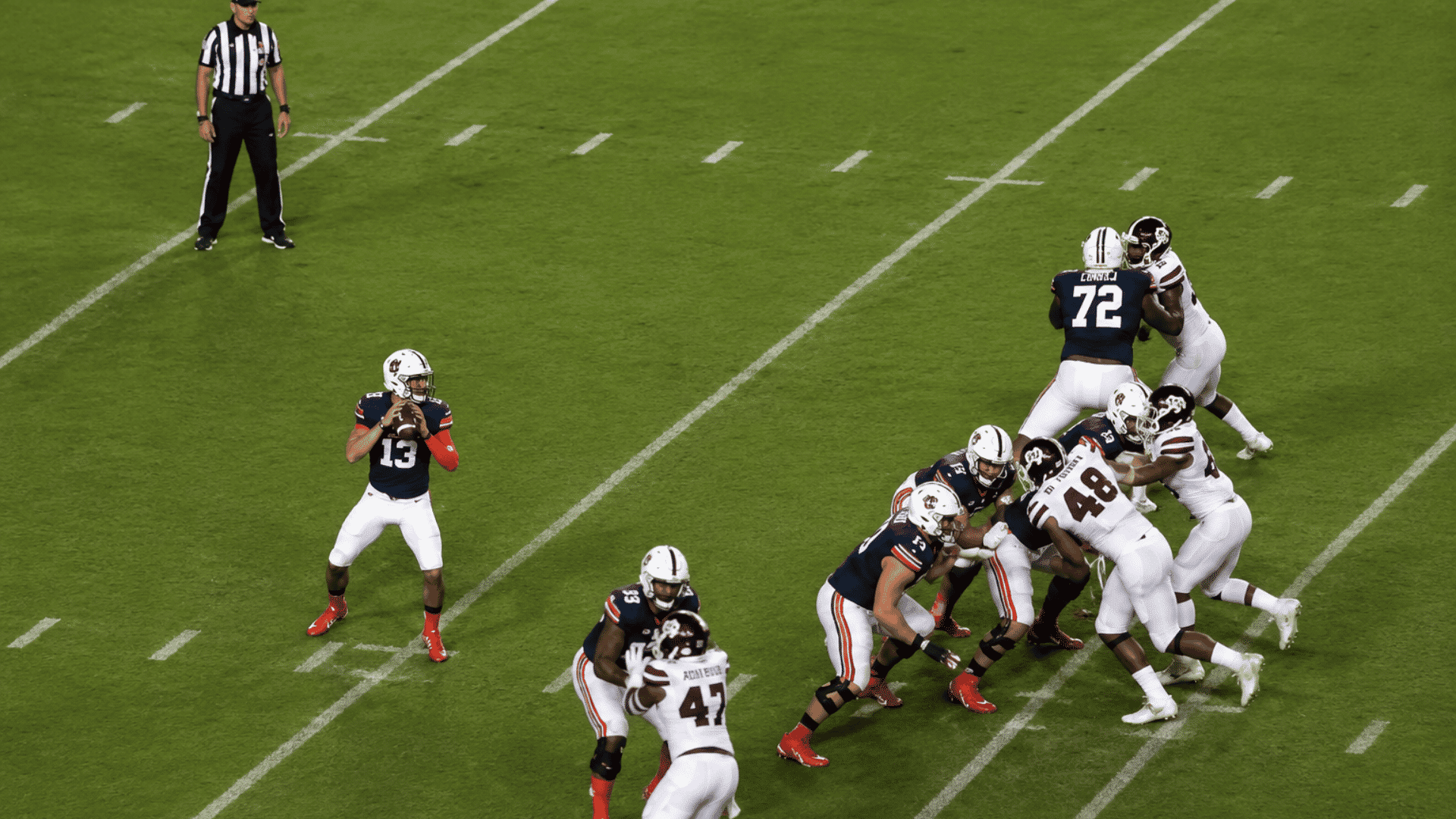
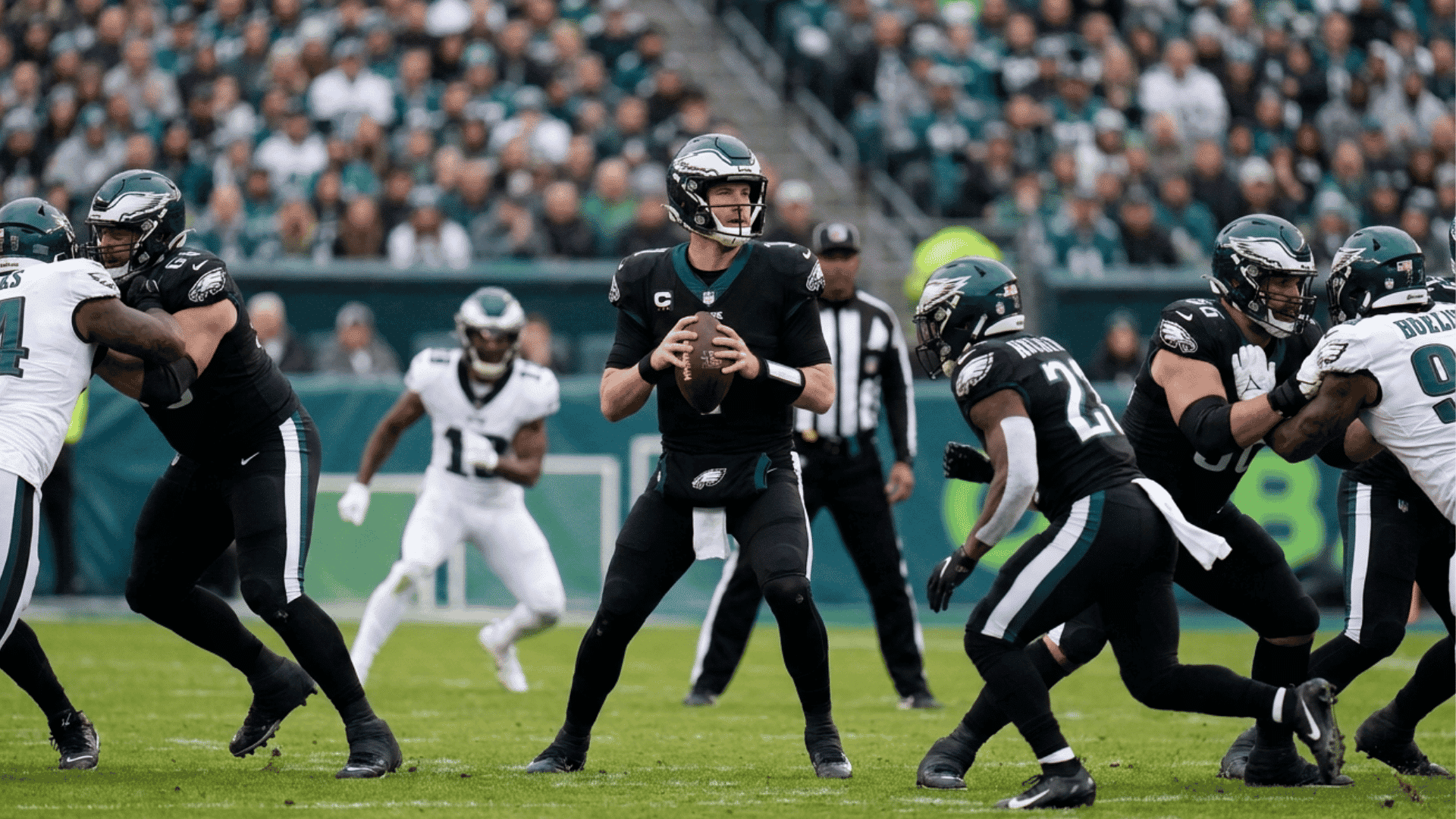
Most sacks start in the pocket, the protected area the offensive line builds around the quarterback. When that pocket collapses, the play usually ends with the QB on the ground.
Different Types of Sacks
1. Half sack
When two defenders are equally responsible for bringing the quarterback down, the official scorer splits the credit and each gets 0.5. That’s why career totals end in .5 so often.
Michael Strahan’s old record of 22.5 came down to one of those halves.
2. Strip sack
A strip sack is a sack where the defender knocks the ball loose.
It’s the best outcome for a defense because the ball is live and can be recovered or returned for a touchdown. The sack goes to the player who caused the fumble, not necessarily the one who fell on the ball.
The recovery rules from there are the same as any other fumble ball.
3. Zero-yard sack
In the NFL, a quarterback tackled exactly at the line of scrimmage is still sacked for zero yards. He has to get past the line to turn the play into a run.
College football does not count this play as a sack, which leads into the next section.
More Types! Solo, Out-of-bounds, Team, Safety, Blocker-Driven Sack
How Sacks are Scored in the NFL vs. College Football
The NFL and NCAA use different stat books, so the same play can be a sack on Sunday and a run on Saturday. The table below lines them up with the NFL’s own guide.
Situation | NFL | NCAA (college) |
|---|---|---|
QB tackled at the line for 0 yards | Sack | Not a sack (scored as a rush for 0 yards) |
Where the lost yards go | Taken off the team’s passing yards, not the QB’s own passing total | Taken off the QB’s own rushing yards |
Intentional grounding | No sack; counted as a pass attempt plus penalty yards | Sack credited to the defender who forced the throw |
QB stripped, ball recovered by a teammate who advances it | Sack | No sack (the defender gets a forced fumble only) |
The gaps aren’t tiny. I’ve taught my younger ones not to compare their college sack count with a pro’s.
A college quarterback who runs for 40 yards but gets sacked four times for 30 can finish with 10 rushing yards in the box score. Same game in the NFL, he keeps all 40.
What a Sack Does to the Offense?
A sack costs the offense a down and moves the ball backward, so second-and-10 becomes third-and-17.
That payoff is why defensive coordinators blitz even though it leaves fewer players in coverage. The down-and-distance math gets ugly fast.
Where the sack happens matters too.
A sack in the quarterback’s own end zone is a safety, worth 2 points to the defense, and the offense then has to kick the ball away. A sack on fourth down hands the ball to the defense at the spot of the sack.
Allow me to clear this one MYTH! Sacks do not lower an NFL quarterback’s passer rating.
The formula only uses completions, attempts, passing yards, touchdowns, and interceptions. Sacks show up instead in team net passing yards and in stats like ANY/A (adjusted net yards per attempt), which is why analysts lean on those when they argue about how good a quarterback really is.
How Quarterbacks and Offensive Lines Avoid Sacks
Sacks are a timing problem before they’re a blocking problem. Offenses buy that time in three ways:
Protection. The line slides toward the best rusher, and a tight end or running back chips the edge before running his route.
Getting the ball out early. When a blitz shows, a receiver runs a hot route into the space the blitzer left, and the quarterback throws before the extra rusher arrives.
The throwaway. Under NFL Rule 8, Section 2, a quarterback outside the tackle box can throw the ball away as long as it reaches the line of scrimmage. Inside the pocket, a throw with no receiver nearby is intentional grounding, which costs a loss of a down plus yards.
How Sacks Work in Flag Football?
In flag football, a sack happens when a defender pulls the quarterback’s flag behind the line of scrimmage. Nobody gets tackled.
Under the NFL FLAG rule book, only a defender lined up 7 yards off the line can rush; the quarterback can’t run unless he first hands off, and he has 7 seconds to throw.
I’ve already let my rushers know this: “Run at the quarterback’s back hip, not his chest, and reach for the flag with the near hand. Do not aim at the chest. I repeat.”
That 7-second clock creates its own kind of sack.
Many recreation leagues rule the play dead with a loss of down when the clock runs out, and players call it a “coverage sack” because the secondary, not the rusher, made it happen.
The same idea shows up in 7-on-7 football, where the clock is often just 4 seconds. Local rules vary, so check your league’s sheet before you argue with the ref.
NFL Sack Records Plus the BEST Sackers Ever
Myles Garrett owns the official single-season record with 23 sacks, set in 2025. Bruce Smith owns the career record with 200. Both marks count only sacks since 1982.
Record | Holder | Number | When |
|---|---|---|---|
Sacks, one season | Myles Garrett, Browns | 23 | 2025 |
Previous season record (tied) | Michael Strahan, Giants; T.J. Watt, Steelers | 22.5 | 2001; 2021 |
First official season record | Mark Gastineau, Jets | 22 | 1984 |
Sacks, career | Bruce Smith, Bills/Washington | 200 | 1985 to 2003 |
Second on career list | Reggie White, Eagles/Packers/Panthers | 198 | 1985 to 2000 |
Sacks, one game | Derrick Thomas, Chiefs | 7 | 1990, vs. Seattle |
Times sacked, career (QB) | 557 | 2000 to 2022 |
Garrett broke the record on January 4, 2026, sacking Joe Burrow with 5:09 left in the Browns’ finale in Cincinnati.
Line crossed a literal 0.23 seconds after the snap, the fastest get-off on any sack that season. He did it on a 5-12 team that rarely led, so opponents protecting a lead often ran the ball late instead of dropping back.
Fun Fact! Derrick Thomas’s seven-sack game was a loss. Seattle’s Dave Krieg slipped what would have been sack number eight and threw the winning touchdown on the final play.
Best Sacker of All Time (By Ranking Judgment)
By volume, it’s Bruce Smith, the only player ever to reach 200, with a record 13 seasons of 10 or more sacks.
My vote, however, goes to Reggie White. He finished two sacks behind Smith in four fewer seasons, and his first two pro years came in the USFL, where his sacks don’t count toward NFL totals.
For peak, nobody touches Garrett’s 2025.
If Interested! Best Linebackers of ALL TIME
This Year’s Season So Far
Garrett was traded to the Los Angeles Rams on June 1, 2026, then had knee surgery after Week 1 and went on injured reserve, so he won’t defend his crown from the top of the leaderboard this year.
Through Week 8, T.J. Watt and Houston’s Will Anderson Jr. share the NFL lead with 7.5 sacks each.
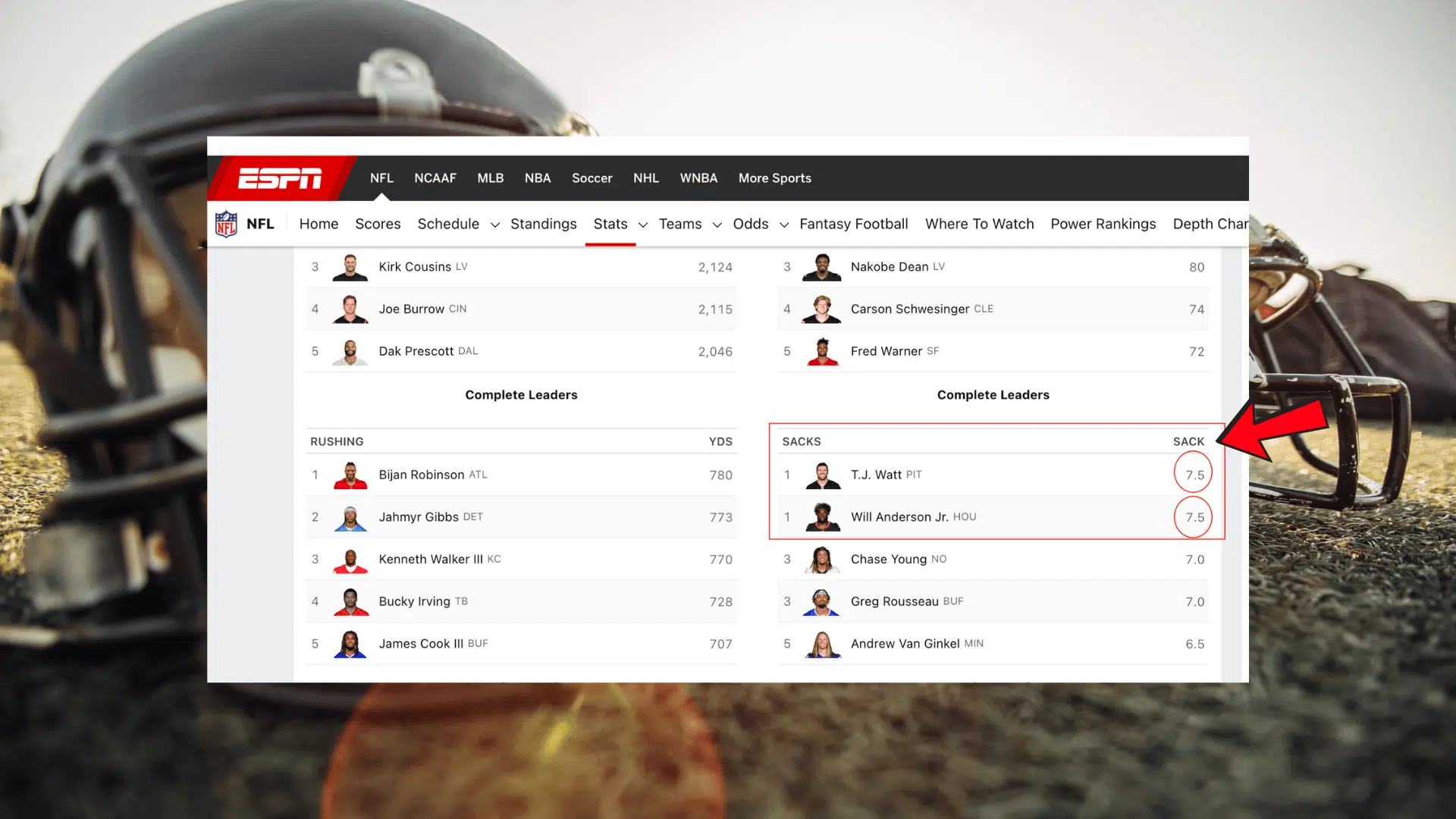
Source: ESPN Stat Leaders
Frequently Asked Questions
Is Sack A Penalty?
No. A sack is a legal tackle. It becomes a foul only when the hit itself is illegal, such as a late hit, a blow to the head or neck, or landing on the quarterback with full body weight.
Can A Defensive Back Get A Sack?
Yes. Any defender can be credited with a sack. Cornerbacks and safeties get them mostly on blitzes, though they rarely post big totals because their main job is coverage. Edge rushers and interior linemen collect most of them.
What’s The Difference Between A Sack, A QB Hit & A Pressure?
A pressure is any play where the rusher forces the quarterback to hurry, move, or go down. A QB hit is contact on the quarterback just as or after he throws. A sack is the only one of the three where the passer never gets the throw off. Every sack is a pressure, but most pressures aren’t sacks.
What Is Sack Rate?
Sack rate is sacks divided by dropbacks (pass attempts plus sacks). It’s a fairer way to compare quarterbacks or offensive lines than raw sack totals, because a team that throws 650 times will naturally take more sacks than one that throws 450.
How Many Fantasy Points Is A Sack Worth?
Most standard leagues give 1 point per sack, either to your team defense or to the individual defender. Check your scoring system (o (D/ST scoring, etc.) and league settings (IDP, etc.) for how pass rushers move up the board when sacks are weighted heavily.