



Sprint speed comes down to two things: how much force you put into the ground and how efficiently your body uses it.Speed and agility training builds both.
A 2012 study by Lockie et al. in the Journal of Strength and Conditioning Research found that field sport athletes who trained with resisted sprints and plyometrics increased their 0- to 10-meter sprint velocity by 9 to 10 percent in six weeks.
People who skip technique work plateau fast. People who train form, power, and change of direction together keep improving.
Below, I detail drills, form cues, and equipment that improve sprint speed without turning training into random footwork.
What is Speed and Agility Training?
Speed and agility training involves sprint mechanics, plyometrics, and directional-change drills to improve your speed and control. It does more than build leg strength.
It trains stride power, ground contact time, balance, braking, and reaction speed within a single system. For runners and field-sport athletes, those first steps often decide the play or race.
Better acceleration helps you start faster, change direction cleaner, and use each stride with more purpose.
What Speed and Agility Training Improves:
| Training Area | What It Means | Why It Matters |
| Sprint Mechanics | How your arms, legs, posture, and foot strike work during a sprint | Helps you move faster without wasting energy |
| Plyometrics | Jumping and explosive drills that train quick force production | Builds power for stronger starts and faster acceleration |
| Direction-Change Drills | Movements that teach cutting, stopping, and re-accelerating | Improves control during sports, races, and quick movements |
| Ground Contact Time | How long does your foot stay on the ground with each step | Shorter contact can make each stride quicker and more efficient |
| Reaction Speed | How quickly your body responds and moves | Helps you start faster and adjust quickly during play |
Quick Fact: A PubMed Central systematic review found that combining plyometric and strength training improved 10-meter sprint time by 3.1% and 30-meter time by 2.3%.
Which Speed and Agility Training Drills Build Faster Acceleration?
Acceleration drills teach the body to generate force at low speeds, which is where most sprint races and sport movements are decided.
These speed and agility training drills should come first in any session, before top-speed work.
When I started coaching, sprint mechanics was how much a simple wall drill changes a beginner’s first three steps out of a stance.
Below are the three acceleration drills I use most often with clients, numbered by training order.
1. Wall Drill Sprints
This drill teaches the body angle needed for a stronger first step. It works well for beginners because the wall keeps the movement controlled.
- Stand at a 45-degree lean against a wall.
- Place your hands at shoulder height.
- Drive one knee up explosively.
- Keep the support leg straight as you drive.
- Do 3 sets of 6 reps per leg.
Credits: Peak Athletics
2. Resisted Sled Sprints
This drill builds acceleration power by making each step feel heavier. Use it after the basic sprint form is already in place.
- Attach a sled loaded at roughly 10 to 20 percent of your body weight.
- Sprint 10-15 meters with strong forward drive.
- Keep your body angle low and controlled.
- Avoid loading the sled so heavily that your sprint form breaks.
- Keep it short with 4 to 6 reps.
- Take full recovery between sets.
Credits: Peak Strength
3. Falling Starts
This drill helps remove hesitation at the start of a sprint. It teaches your body to react quickly and drive forward naturally.
- Stand tall with your feet under your hips.
- Lean forward until you have to step to catch yourself.
- As soon as your foot lands, sprint forward for 10 meters.
- Stay low through the first few steps.
Pro Tip: If your first three steps out of a sprint look choppy, don’t fix your legs first. Fix your arm drive. Clean arm mechanics almost always clean up your leg turnover on their own.
Credits: Blake Brashear
How Can You Fix Running Form for Speed and Agility Training?
Running form errors waste energy and slow sprint times even when strength and conditioning are strong.
Speed and agility training fixes this by isolating arm drive, foot strike, and posture separately before combining them at speed.
According to physical therapist and running coach Jay Dicharry, author of Anatomy for Runners, inefficient arm swing alone can cost a runner measurable stride power over a 100-meter sprint.
The three techniques below target the most common form breakdowns I see in gym and home sessions.
1. Arm Drive Drills
Your arms help set the rhythm for your legs. Start here because poor arm movement can create wasted side-to-side motion during a sprint.
- Bend your elbows close to 90 degrees.
- Drive your arms straight back instead of across your body.
- Keep your shoulders relaxed while your hands move from hip to cheek.
- Practice in front of a mirror for 30 seconds per set.
Credits: Ken Clark
2. Forward Lean Posture
Posture controls how well your body moves into each stride. A clean forward lean helps you accelerate without folding at the waist.
- Lean slightly forward from your ankles, not your waist.
- Keep your chest tall and your hips moving forward.
- Avoid bending at the waist, because that can slow each stride.
- Start with short 10-meter runs before adding full-speed sprint work.
Credits: Onebody Health & Fitness
3. Foot Strike Cues
Foot strike affects how quickly you leave the ground after each step. The goal is to land under your body, not reach out in front.
- Land on the midfoot instead of reaching forward with your heel.
- Keep the foot landing under your hips, not far in front.
- Think about pushing the ground back instead of stepping out.
This helps shorten ground contact time during each stride. It may also reduce stress on the knees and shins.
Credit: Howcast
What Equipment Helps Speed and Agility Training?
The right tools speed up progress, but none of them replace correct movement patterns.
Speed and agility training equipment falls into three categories: resistance tools, reaction tools, and plyometric tools.
A comparison of common options, based on typical home and gym setups, is below.
| Equipment | Primary Use | Best For |
| Resistance bands | Hip drive, resisted starts | Home training, beginners |
| Agility ladder | Foot speed, coordination | All levels |
| Sled | Acceleration power | Gym settings |
| Plyo boxes | Explosive power | Intermediate to advanced |
1. Resistance Bands
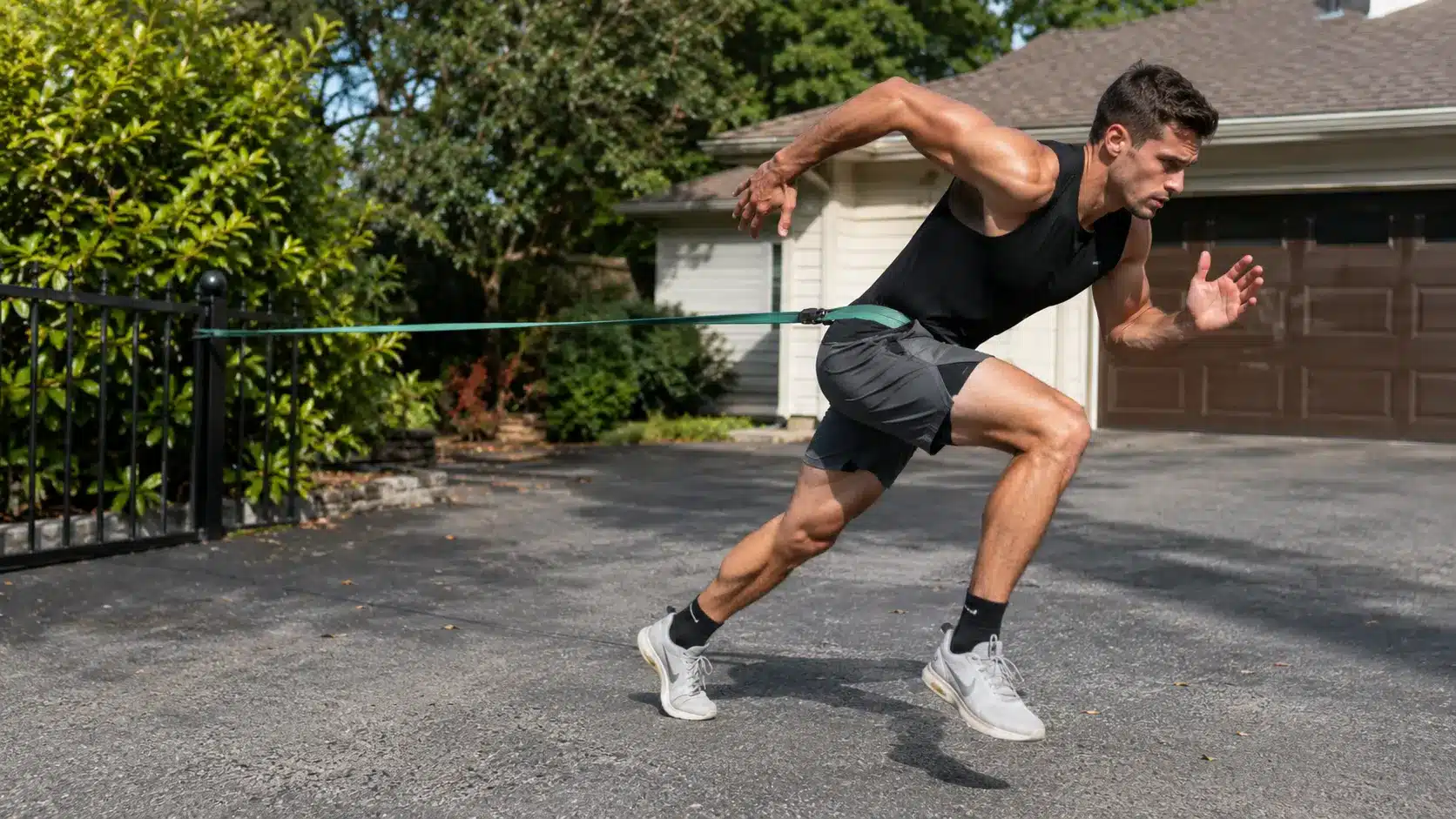
Loop a band around the hips and sprint against tension for 10 meters. This affordable speed and agility training tool builds hip drive strength without needing gym equipment.
This is what I hand to home clients first, since it costs far less than a sled and works well in a small living room or driveway.
2. Agility Ladders
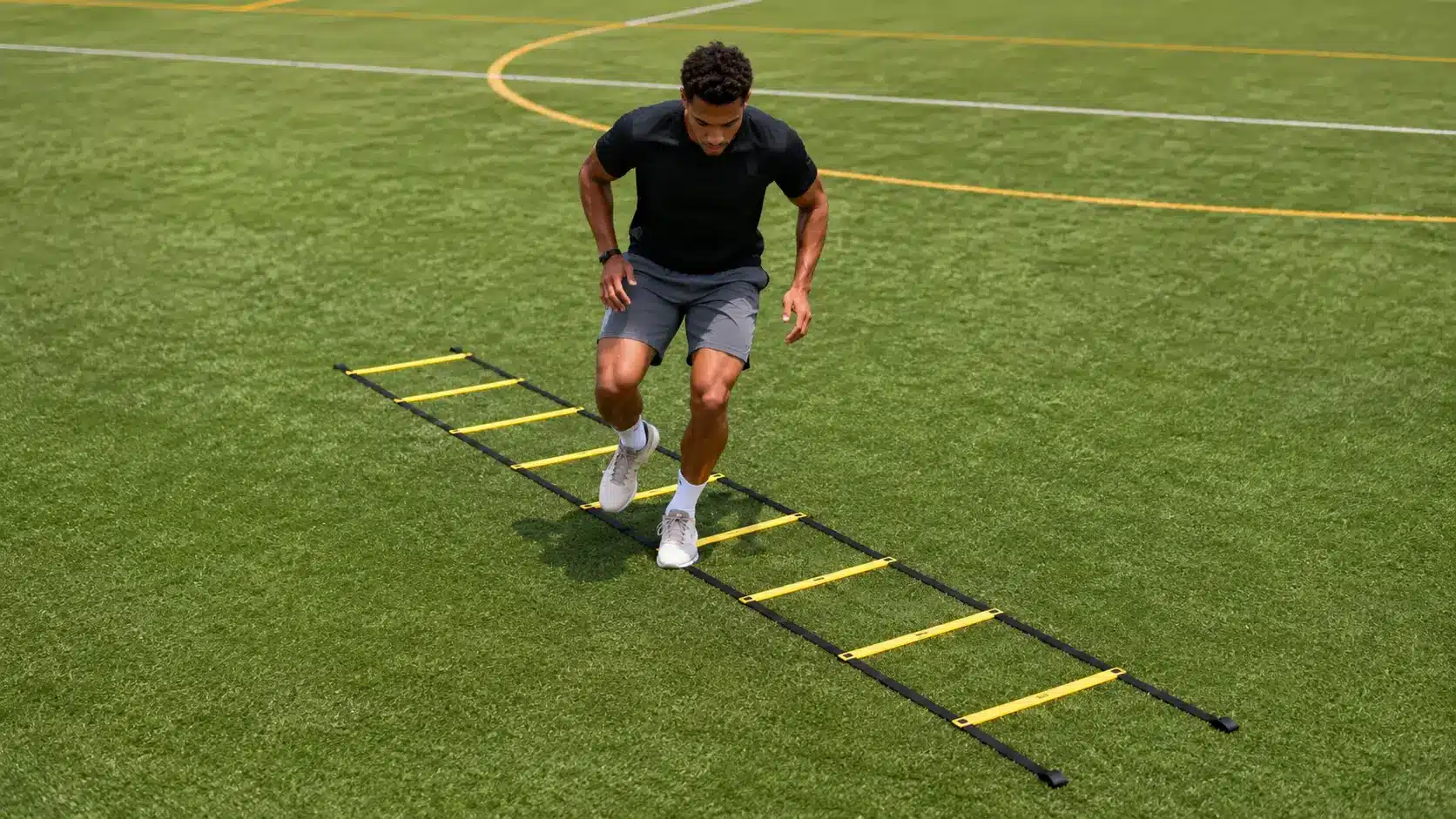
Ladders improve foot turnover and coordination with short, repeatable footwork, making them a key tool in speed and agility training. They isolate foot speed from strength demands.
Even seasoned athletes initially stumble on ladder patterns, indicating they are effective training. 5- to 10-minute sessions suffice for most clients.
3. Plyo Boxes
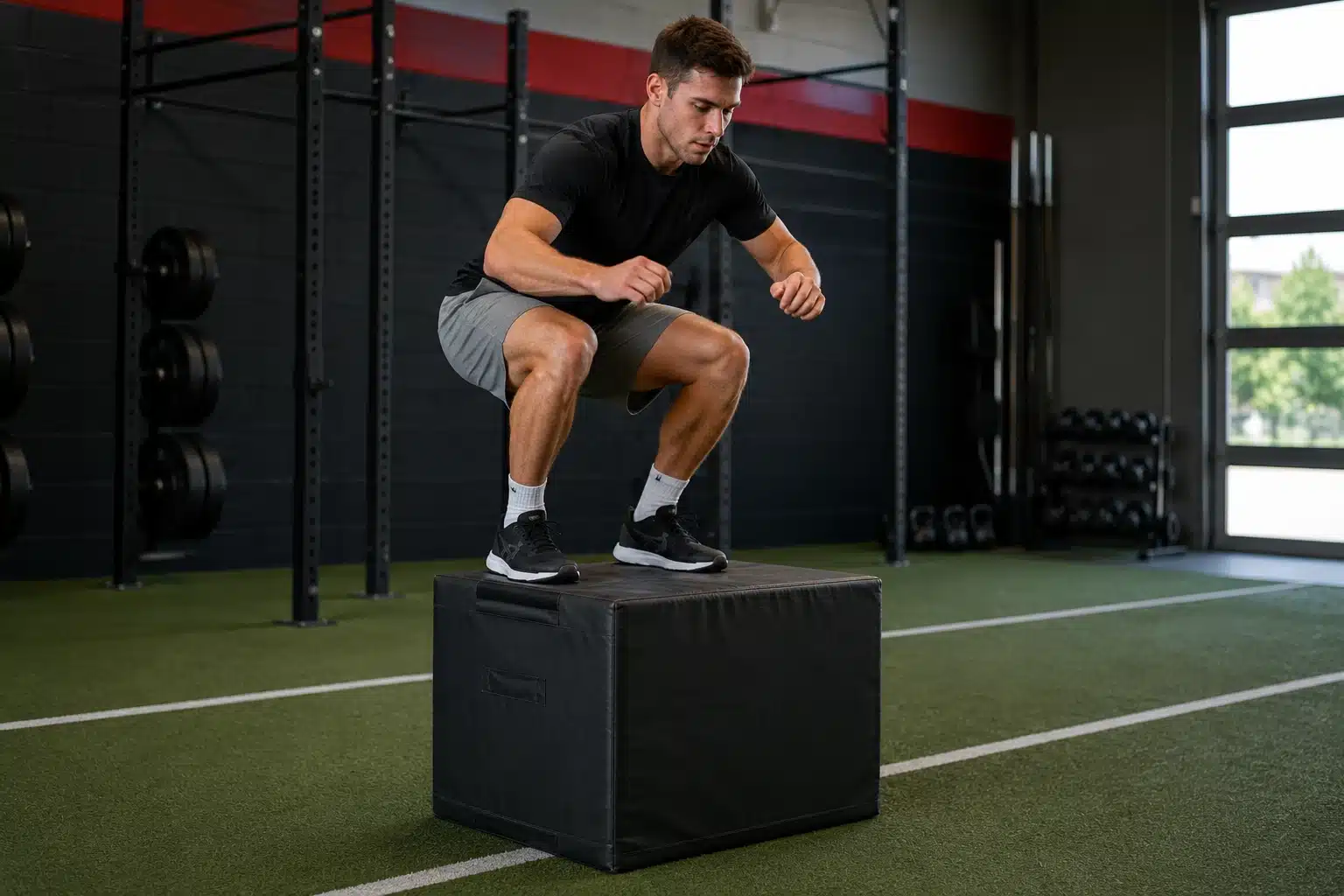
Box jumps and step-ups build the explosive power that transfers directly into stride push-off.
This speed and agility training tool should only be introduced once basic landing mechanics are solid, to avoid joint strain.
How Should You Progress Speed and Agility Training Safely?
Progression matters more than intensity for the safe development of sprint speed.
Speed and agility training should gradually shift from low-impact drills to intense sprints over weeks, not days.
The American College of Sports Medicine recommends increasing high-impact training loads by no more than 10% weekly to prevent injuries.
Use this progression to build speed without rushing your joints, muscles, or sprint mechanics.
| Training Phase | Main Focus | What to Add |
| Weeks 1 and 2 | Form drills and low-impact footwork | Arm drive, posture work, ladder drills, and light movement patterns |
| Weeks 3 and 4 | Controlled power and resistance | Resisted sprints and light plyometrics twice per week |
| Week 5 Onward | Full-speed sprint work | Full-speed sprints and direction-change drills once form holds under fatigue. |
The first phase may feel slow, but it builds the movement patterns that protect your joints later.
Weeks three and four usually feel more athletic because resistance training and plyometrics are incorporated into the plan.
From week five onward, sprint speed should become easier to measure because the body is ready for faster, harder reps.
Expert Note: Build force first with resisted sprints, then add braking and direction-change work so your body can produce speed and control it safely.
Common Mistakes in Speed and Agility Training
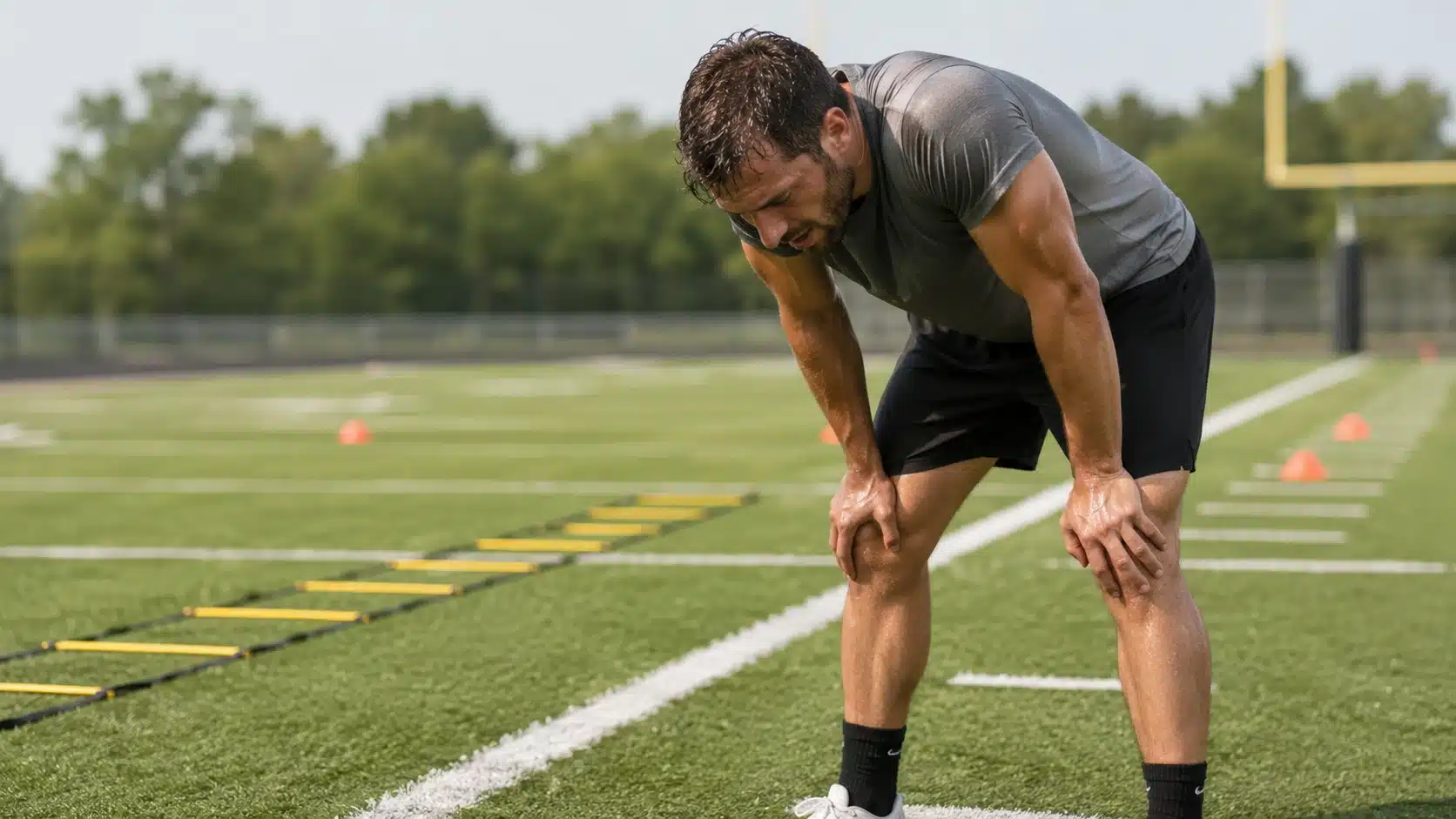
Most sprint plateaus stem from repeated mistakes, not from a lack of effort. Fix these early so bad habits do not carry into faster sprint work.
- Skipping the warm-up: Start with 8 to 10 minutes of active movement before sprinting. Cold muscles cannot produce safe, powerful speed.
- Doing too much volume: More sprints are not always better. Keep reps short, rest for 90 seconds to 2 minutes, and stop when form breaks down.
- Ignoring deceleration: Speed training should include braking and direction-change work. Runners who only train acceleration often struggle to stop safely.
Speed and Agility Training Weekly Plan for Home and Gym
After you build the right progression, use a weekly plan to organize your sessions. This keeps speed and agility training consistent without overloading your body.
Three sessions per week, spaced at least one day apart, work well for most recreational athletes.
In my coaching logs, clients who followed a fixed three-day structure improved faster than those who trained sprints daily without enough recovery.
| Day | Main Focus | What to Do | Why It Helps |
| Day One | Acceleration | Wall starts, falling starts, and short resisted sprints | Builds first-step speed when energy is highest |
| Day Two | Form and Footwork | Agility ladder, arm drive drills, posture cues, and foot strike work | Reinforces technique without adding too much fatigue |
| Day Three | Power and Direction Change | Plyo box work, lateral cone drills, and controlled change-of-direction work | Builds explosive push-off and safer movement control |
Leave at least one rest day between sessions. If your sprint form breaks down, reduce the volume before adding more speed or harder
Final Takeaway on Speed and Agility Training
Sprint speed improves fastest when acceleration drills, form correction, and safe progression are trained together, not separately.
Speed and agility training built around wall starts, resisted sprints, arm drive cues, and structured weekly recovery gives both home and gym athletes a clear path forward.
The biggest gains I have seen with clients come from fixing form errors early and respecting load progression, not from adding more sprints.
Start with two or three sessions per week, track your 10-meter and 40-yard times, and adjust intensity based on how your body responds.
Consistency with correct mechanics will move the needle more than any single drill on its own.
Frequently Asked Questions
How Often Should I do Speed and Agility Training Each Week?
Three sessions per week work well for most recreational athletes. Leave at least one rest day between sessions so your body can recover.
Can Speed and Agility Training be Done at Home?
Yes, you can do wall drills, falling starts, arm-drive drills, and bodyweight footwork at home with minimal equipment.
How Long Before Speed and Agility Training Improves Sprint Times?
Most people see measurable acceleration improvements within six to eight weeks if they train consistently and maintain clean sprint form.
What is the Biggest Mistake in Speed and Agility Training?
The biggest mistake is skipping deceleration work. Sprint training should include braking and directional change drills, not just forward acceleration.
Do I Need a Sled for Speed and Agility Training?
No, a sled helps, but it is not required. Resistance bands offer a lower-cost way to build hip drive and resisted starts.