



The correct way to hold a football is to spread your fingers naturally, place your thumb underneath, and keep the ball controlled without squeezing it into your palm.
Learning how to hold a football also depends on the play.
A throwing grip should feel relaxed, while a running grip must keep the ball firmly against your forearm, ribs, and chest.
Most fumbles I see during youth sessions begin with a rushed grip. The player squeezes too hard, drops the forearm, or allows the ball to move away from the body.
An official NFL football measures 11 to 11.25 inches long and weighs 14 to 15 ounces. Its pointed shape makes balanced hand placement important.
Quick Grip Test: Move the football gently from side to side. If it wobbles or slips into your palm, reset your fingers and thumb.
What is the Right Way to Hold a Football?
A good football grip begins with natural finger spacing, a thumb placed underneath, and light contact between the palm and ball.
When working with new players, I ask them to find the laces without looking to help them become comfortable with the ball before increasing throwing speed or defensive pressure.
The football should feel balanced without requiring a hard squeeze. Your fingertips guide the ball, while your thumb supports it from below.
Hand size affects the exact position, so do not force every finger onto one specific place. Start with the following three steps, then make small adjustments until the football feels steady and comfortable.
1. Spread Your Fingers Naturally
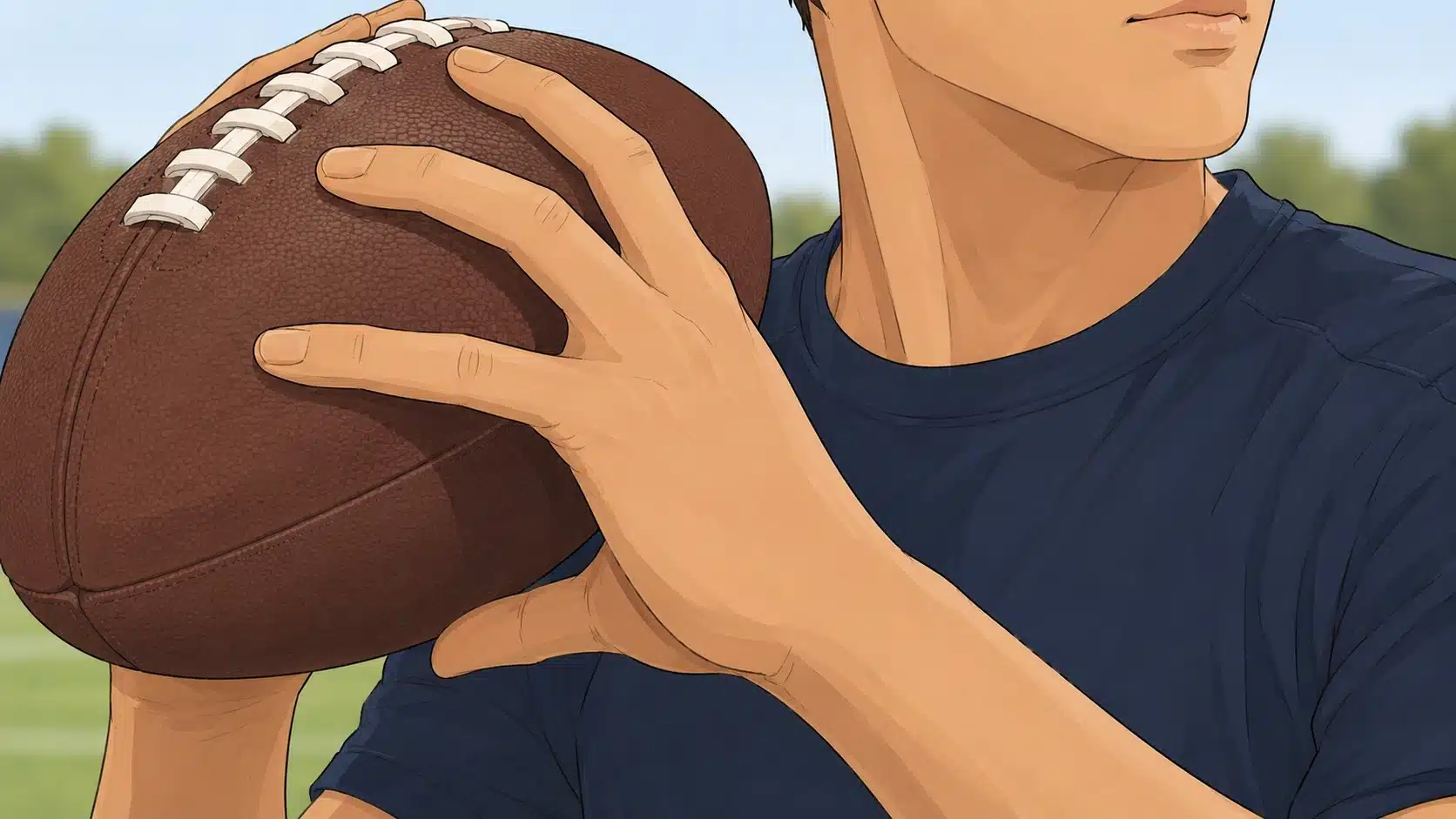
Spread your fingers across the football instead of bunching them near the center. Natural spacing creates more contact points and distributes pressure evenly across your hand.
Check these four areas:
- Index Finger: Rest it near the front of the ball.
- Middle and Ring Fingers: Place them naturally across the laces.
- Finger Spacing: Leave a small gap between each finger.
- Grip Pressure: Use your fingertips instead of pressing with your palm.
Players with smaller hands may try to squeeze harder. Adjusting the finger spread usually improves control more than adding pressure.
2. Where Should Your Thumb Sit?
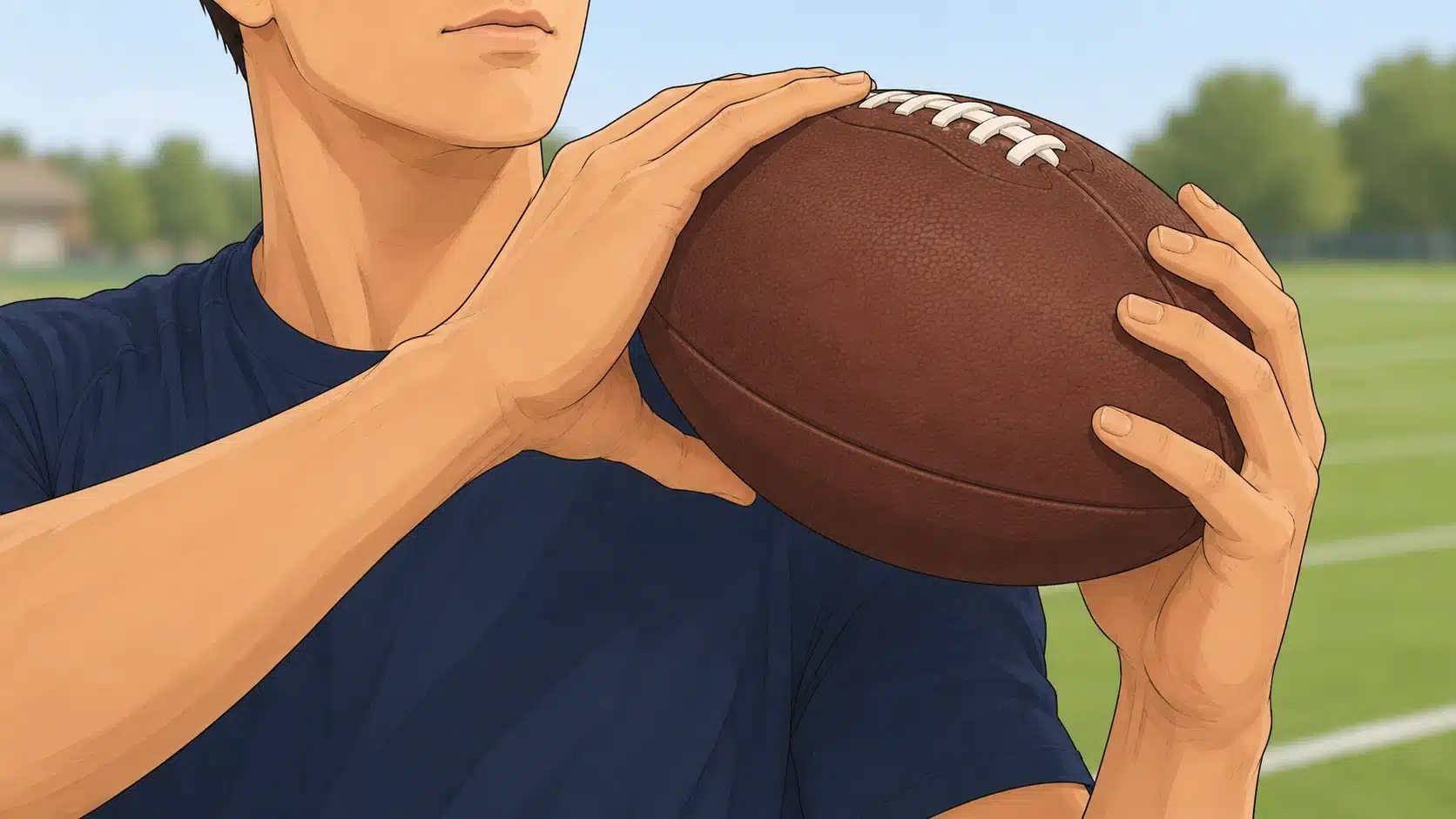
Position your thumb underneath the football and opposite your fingers. This creates a clamp-like hold that supports the ball as you move your arm.
Use these placement checks:
- Thumb Position: Keep it beneath the football.
- Hand Shape: Form a loose C between your thumb and fingers.
- Palm Gap: Leave a small space beneath the ball.
- Grip Reset: Check your thumb whenever you return to your stance.
Avoid forming a tight U shape. That position presses the ball into your palm and can make the hand feel stiff.
3. Position Your Fingers Near the Laces
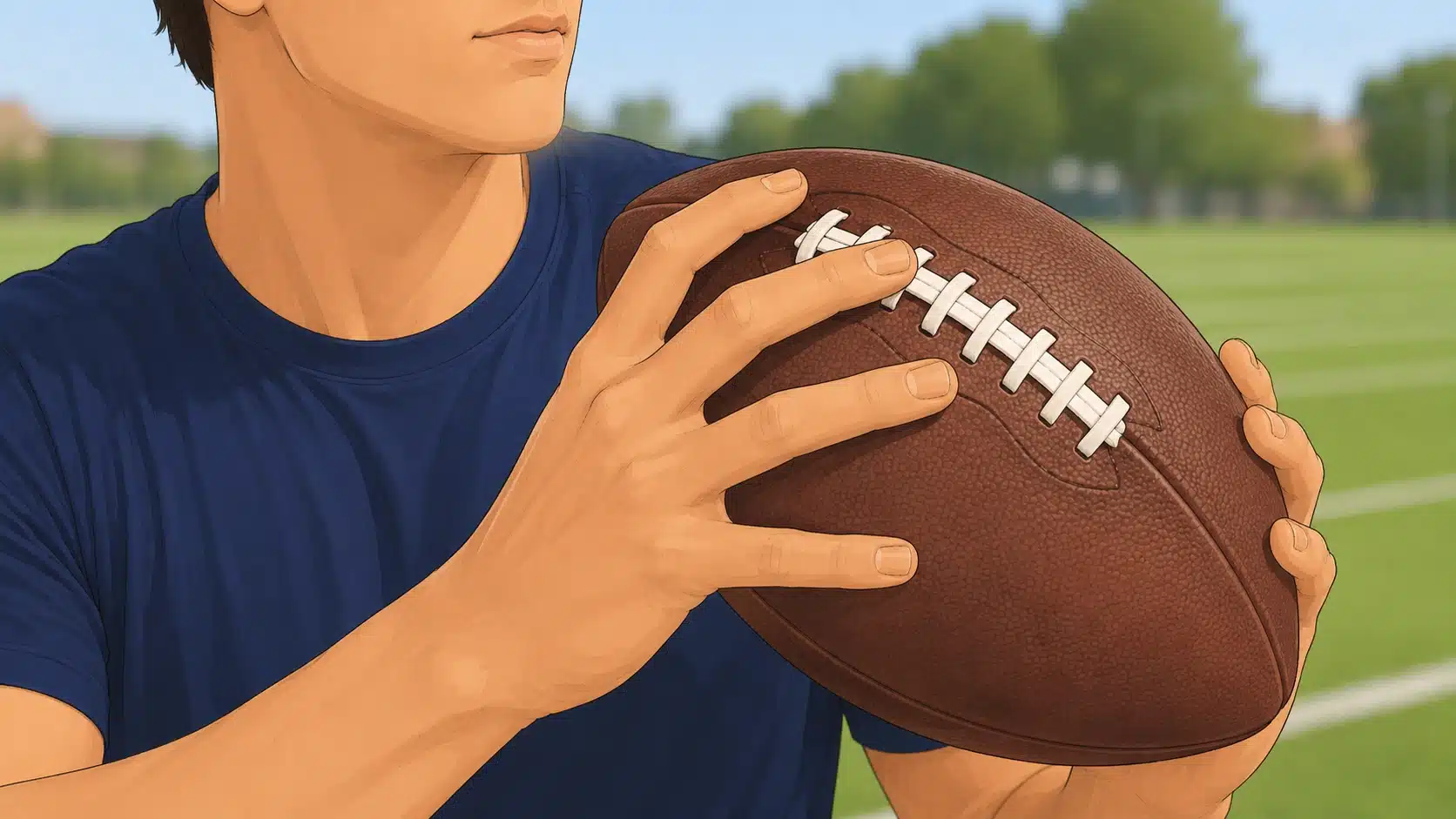
No required lace position works for every player. Finger length, hand size, and comfort affect where each finger rests.
Use this setup as a starting point:
- Ring Finger: Place it over or near the second lace.
- Pinky Finger: Rest it close to the fourth or fifth lace.
- Index Finger: Keep it away from the laces to guide the release.
- Comfort Check: Adjust until the football feels balanced.
Your fingers should sit naturally rather than stretch across the ball. A comfortable setup is easier to repeat on every throw.
Why does Ball Control Matter?
Ball control keeps possession secure while you run, turn, or absorb contact. A strong hand grip cannot protect a football that moves away from your body.
Coaches teach pressure via fingertips, palm, forearm, ribs, and chest. If one point separates, the defender gains space to reach the ball.
During youth sessions, I often see the forearm drop first. Once support disappears, the football moves even with the player’s hand still closed.
These drills train players to keep contact points while their feet and upper bodies move.
| Drill | How to Perform It | Main Benefit |
| Tuck-and-Hold Jog | Run three 20-yard sets while a partner applies light pressure | Improves control during contact |
| Strip Resistance | Hold the ball for 10 seconds while a partner pulls gently | Builds resistance to strip attempts |
| Cone turn Carry | Move through five cones while keeping the ball against your body | Maintains control while changing direction |
How Should You Hold a Football for Throwing?
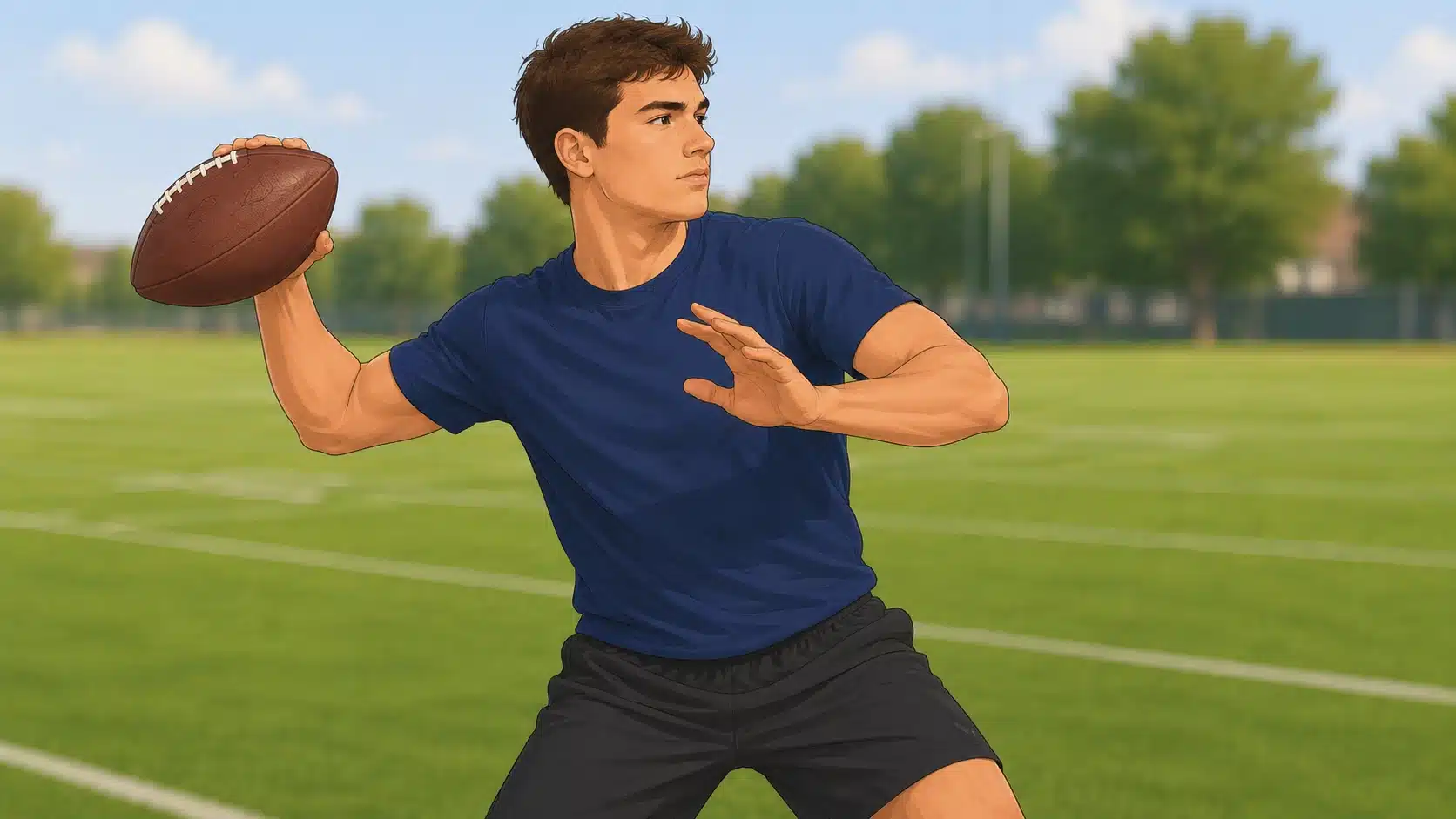
A throwing grip should feel relaxed but controlled, allowing the football to roll cleanly from your fingertips.
Follow these steps:
- Hold the Back Third: Position the ball away from the front tip so your fingers can control its movement.
- Find the Laces: Rest your fingers on or near the laces, depending on your hand size.
- Leave a Palm Gap: Keep a small space beneath the ball instead of pressing it flat into your hand.
- Use Light Pressure: Avoid squeezing, as a tight grip can restrict wrist movement and weaken the spiral.
- Keep Your Wrist Neutral: Hold it straight or slightly forward rather than bending it backward.
I check grip pressure and wrist position first whenever a beginner’s spiral becomes loose.
Passing Grip Versus Carrying Grip
Passing and carrying require different grips because each has a separate purpose. The comparison below shows how ball position, grip pressure, and contact points change depending on what you need to do.
| Grip Check | Passing Grip | Carrying Grip |
| Ball Position | Near the back third | Near the front and against the body |
| Pressure | Light and controlled | Firm and secure |
| Contact Points | Mainly the fingertips | Hand, forearm, ribs, and chest |
| Main Goal | Clean spiral | Ball security |
Practice each grip separately before switching between them during movement.
Holding a Football Securely While Running
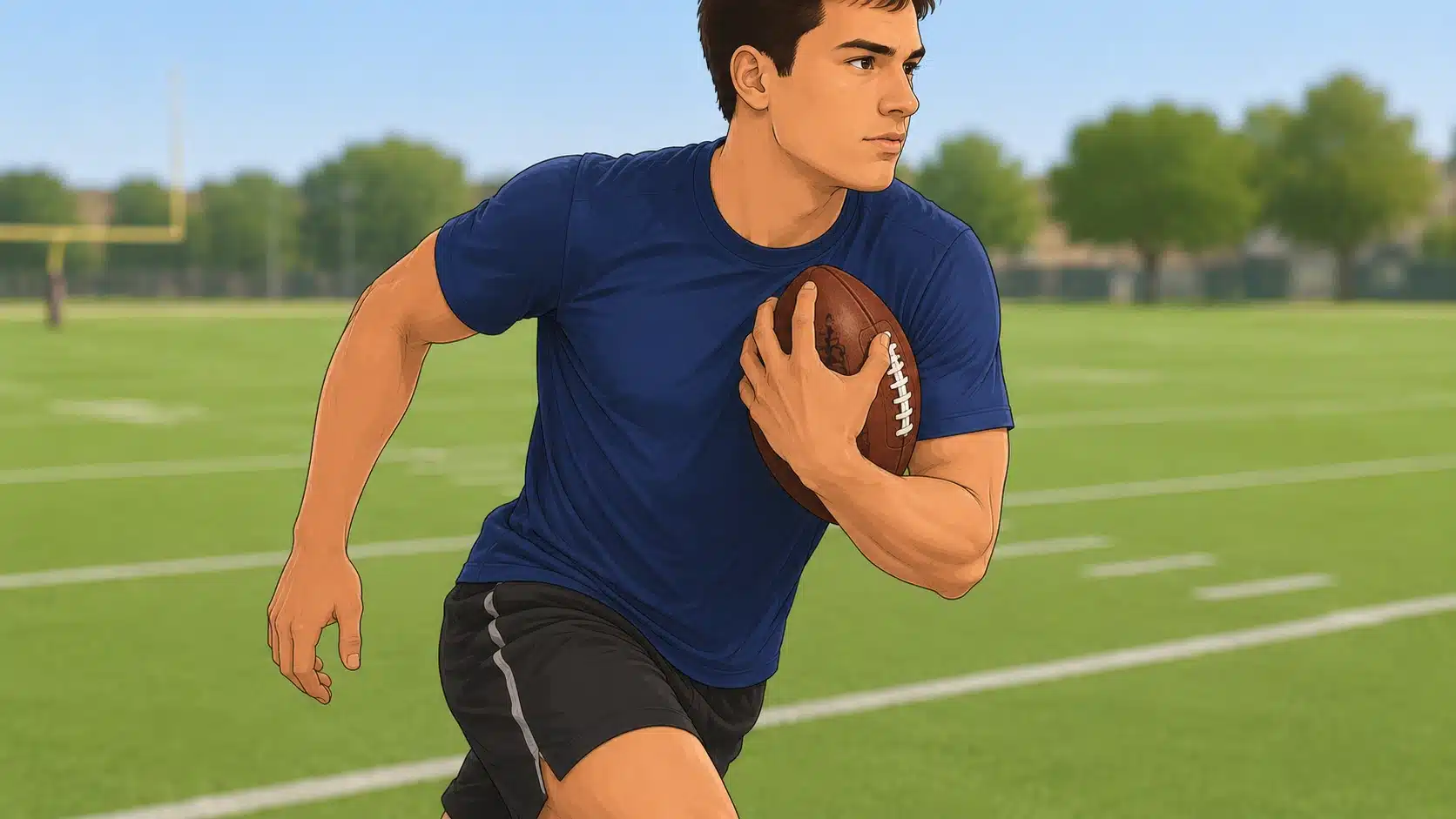
Learning how to hold a football while running means securing it against your body rather than relying only on hand strength.
Use the high-and-tight position: cover the front tip with fingers, press the side panel into your palm, and support the underside with your forearm.
Pin the football against your ribs and chest. Keep your wrist above your elbow so the ball remains close when you turn or change direction.
This position gives a defender less open space to reach during a strip attempt.
Use the Four-Point Pressure Method
Follow these four steps when carrying the football:
- Cover the Tip: Place your fingertips over the front point.
- Press with the Palm: Hold the side panel firmly.
- Support With the Forearm: Keep your forearm beneath the ball.
- Pin It to Your Ribs: Hold the football close to your chest.
I practice this method with light partner pressure. Players quickly notice when the forearm drops or the ball begins moving away from their body.
Four-Second Check: Can you identify all four contact points without looking? Say them aloud: tip, palm, forearm, and ribs.
Which Carrying Mistakes Should You Avoid?
The most common problems come from losing contact with the body, so each correction focuses on bringing the football back into a high-and-tight position.
| Mistake | Why It Causes Trouble | Correction |
| Ball Held Low | Gives defenders easier access | Raise it toward your chest |
| Palm Facing Upward | Allows the football to move | Turn your palm inward |
| Wrist Below the Elbow | Reduces forearm support | Raise your wrist |
| Arm Swinging Freely | Breaks contact with the body | Pin the ball to your ribs |
Check these positions near the end of drills, when technique is most likely to loosen.
How does Hand Size Affect Your Grip?
Hand size affects finger spacing, grip pressure, and the size of the football a player can control comfortably.
An oversized ball forces younger players to stretch their fingers or press the leather deeply into the palm. Both adjustments can interfere with control and throwing mechanics.
When I coach younger groups, I check the ball size before correcting their technique. A properly sized football allows the fingers and thumb to rest naturally.
Use the chart below as a general reference. League requirements may differ.
| Age Group | Common Ball Size | Approximate Weight |
| 6–9 Years | Youth or Size 6 | Around 9.7 ounces |
| 9–12 Years | Junior or Size 7 | Around 10.7 ounces |
| 12–14 Years | Intermediate or Size 8 | Near regulation weight |
| 14+ Years | Official or Size 9 | 14–15 ounces |
Coach’s Note: A child who struggles to grip the ball may not have poor technique. The football may simply be too large for the player’s hand.
Simple Ways to Improve Your Grip at Home
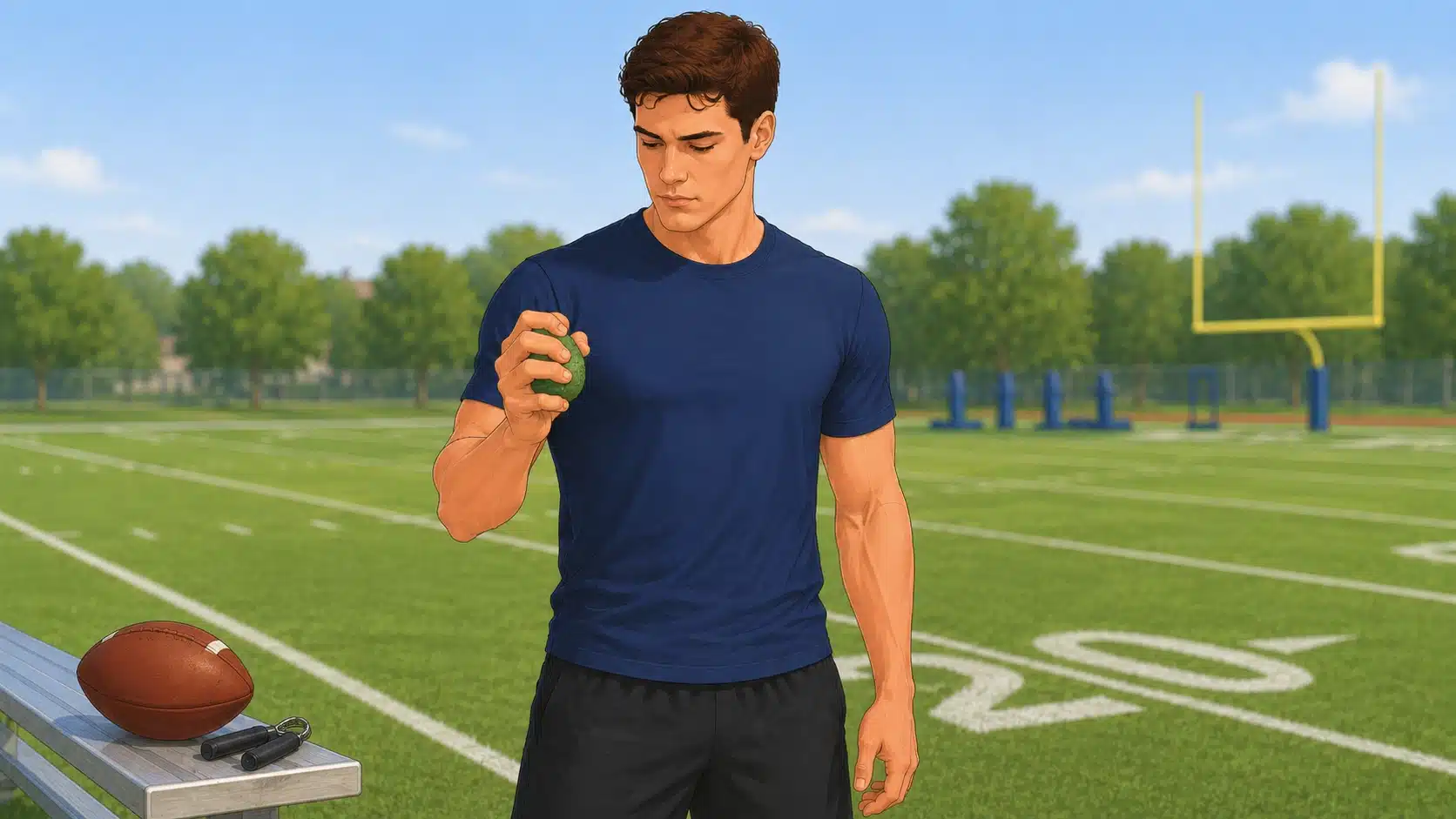
Practicing how to hold a football does not require a full field or a long training session.
Five to ten minutes of focused work can strengthen your fingers and make correct hand placement easier to repeat. I prefer keeping grip-strength work separate from throwing practice so tired hands do not affect technique.
Use a properly sized football and complete each movement slowly. Clean repetitions matter more than speed or a high rep count.
Try these exercises:
- Blind Lace Find: Locate the laces by touch before checking your hand.
- Slow-Motion Carry: Walk while maintaining all four contact points.
- Hand-to-Hand Toss: Toss the football gently from one hand to the other.
- Grip Squeezes: Complete 15-20 repetitions using a stress ball or hand gripper.
What Should You Remember About Your Football Grip?
Learning how to hold a football comes down to natural finger spacing, thumb support, controlled pressure, and steady body contact.
A throwing grip should remain relaxed near the back of the ball so the football can roll cleanly from your fingertips.
A running grip requires firmer contact through the hand, forearm, ribs, and chest. The ball should remain close even when you turn or absorb contact.
Hand size matters as well, especially for younger players using an oversized football.
Reliable control comes from repetition rather than natural hand strength. Choose one drill, practice it for five minutes, and keep every repetition clean.
Frequently Asked Questions
How Should Beginners Hold a Football?
Spread your fingers naturally, place your thumb underneath, leave a small gap in your palm, and apply enough pressure to keep the football balanced.
Where Should Your Fingers Sit When Throwing?
Place your fingers near the laces toward the back third of the ball, leaving your index finger free to guide the release.
What is the Correct Carrying Position?
Cover the tip, support the football with your palm and forearm, and pin it firmly against your ribs and chest.
Does Hand Size Affect How You Hold a Football?
Yes. Smaller hands may need a youth-sized football so the fingers can spread naturally without creating tension or poor technique.
Which Fingers Should Touch the Laces?
Most players place the ring finger near the second lace and the pinky near the fourth or fifth, adjusting slightly for comfort.
How Can You Practice Without a Field?
Practice blind lace finds, slow carries, hand-to-hand tosses, and short grip exercises for five to ten minutes at home.