



I used to think fantasy standings only had two numbers that mattered: wins and losses. Then one week I lost by two points, checked my PA, and realized my opponent’s bench player had basically been farming me all season.
Turns out PA, or points against, is the stat that quietly roasts your schedule luck while your record gets all the credit or blame.
In this blog, I’m breaking down what PA actually means, how it stacks up against PF, and why a team with a scary-high PA isn’t automatically a bad team; it might just have terrible luck in the matchup lottery.
I’ll also show you exactly where to find PA on ESPN, Yahoo, Sleeper, and NFL Fantasy, and how to read PA and PF side by side so you stop judging your team on record alone.
What Does PA Mean in Fantasy Football?
PA stands for points against. It’s the total number of points your opponents have scored against you in every matchup this season. Your own scoring has nothing to do with it. Only your opponent’s lineup counts toward this number.
Here’s how it works. Say your Week 3 opponent starts a lineup that scores 138 points. That entire 138 gets added to your PA, even if you dropped 160 that same week and won the matchup.
Do this for every week, and you get a running total that shows exactly how tough your schedule has been. I check my PA every week now because it tells me things my win-loss record hides.
PA vs PF in Fantasy Football: What’s the Difference?
PA tells you what your opponents scored against you, but PF tells the other half of the story. Once you put these two numbers side by side, your record starts to make a lot more sense.
What is PF (points for)?
PF stands for points for. It’s the total number of points your own lineup has scored all season, added up week by week. This number only counts your scoring, not your opponent’s.
If your team drops 130 points in Week 5, that full amount goes to your PF, no matter what your opponent scored that week or whether you won.
Now that you know what each stat tracks on its own, let’s see how PA is different from PF.
PA vs PF Comparison Table
Here’s a quick side-by-side look at what each stat actually tracks, with simple examples so it clicks right away.
| Stat | What It Measures | Whose Score It Reflects | Easy Example |
| PF (Points For) | Total points your team has scored all season | Your own lineup | Your team scores 130 points in Week 5. That 130 gets added to your PF. |
| PA (Points Against) | Total points your opponents have scored against you all season | Your opponents’ lineups | Your opponent scores 145 points against you in Week 5. That 145 gets added to your PA. |
I never judge a team using just one of these numbers. PF shows me if a team can actually score, and PA shows me how tough their matchups have been. Put together, they paint a much clearer view than the win-loss record alone.
Why Does PA Matter in Fantasy Football?
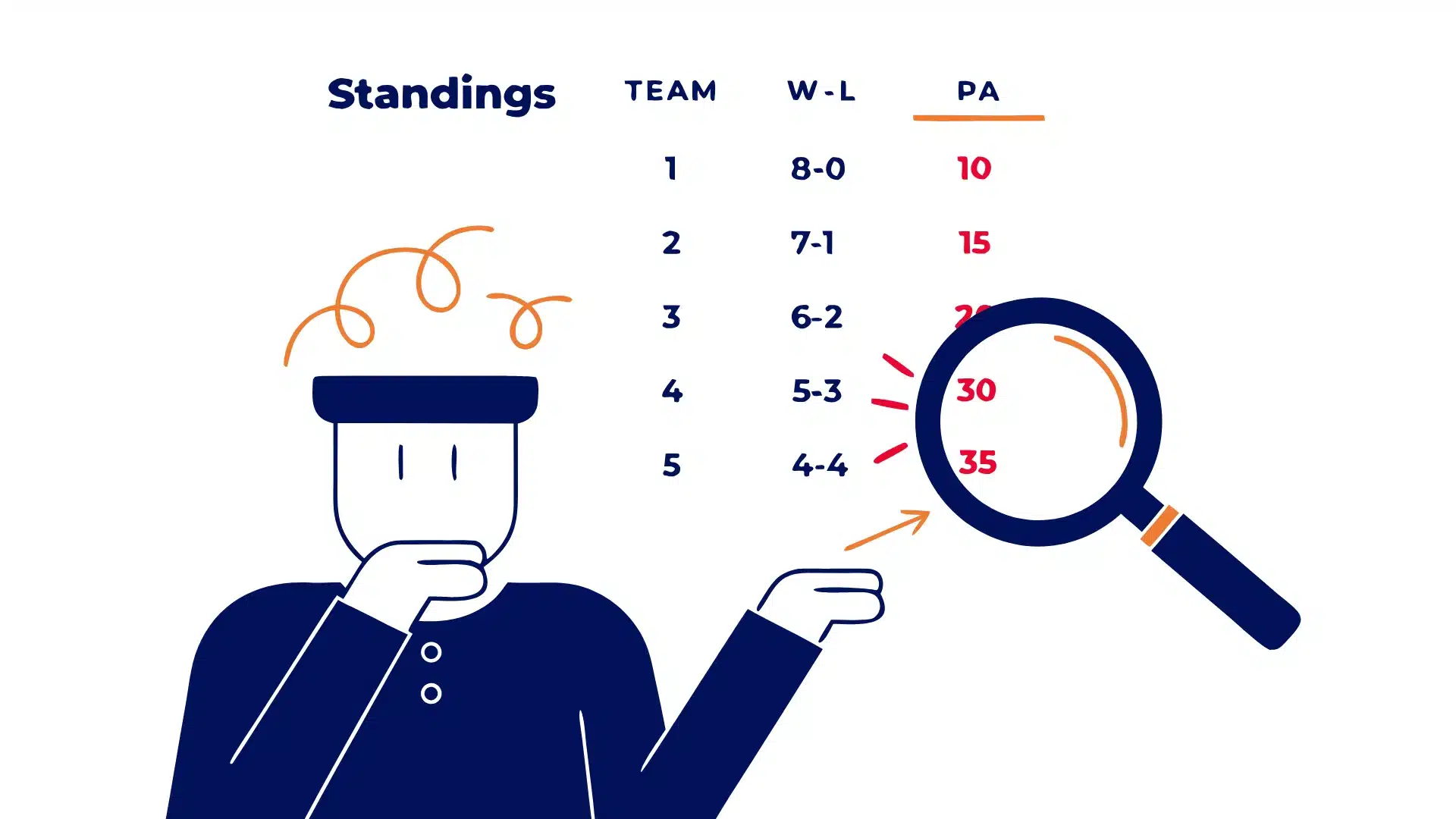
Once I started tracking PA every week, my losses stopped feeling random. This stat explains a lot about why some teams get stuck with bad records despite playing well, and why others sneak into the playoffs without doing much at all.
- How PA Explains Luck in Fantasy Football: Fantasy schedules create luck that skill alone cannot fix. Facing a mediocre team, the one week they explode for 170 points is just bad timing.
- Why Teams With High PF Can Still Have Losing Records: Teams can score more total points than almost everyone in the league and still miss the playoffs. This happens when their big scores land against opponents who scored even higher that same week.
How PA Affects League Standings
PA sits right next to your record on the standings page, but it doesn’t always work the way people assume. Here’s how it actually factors into where you land in the rankings.
Does PA Count Toward Wins and Losses?
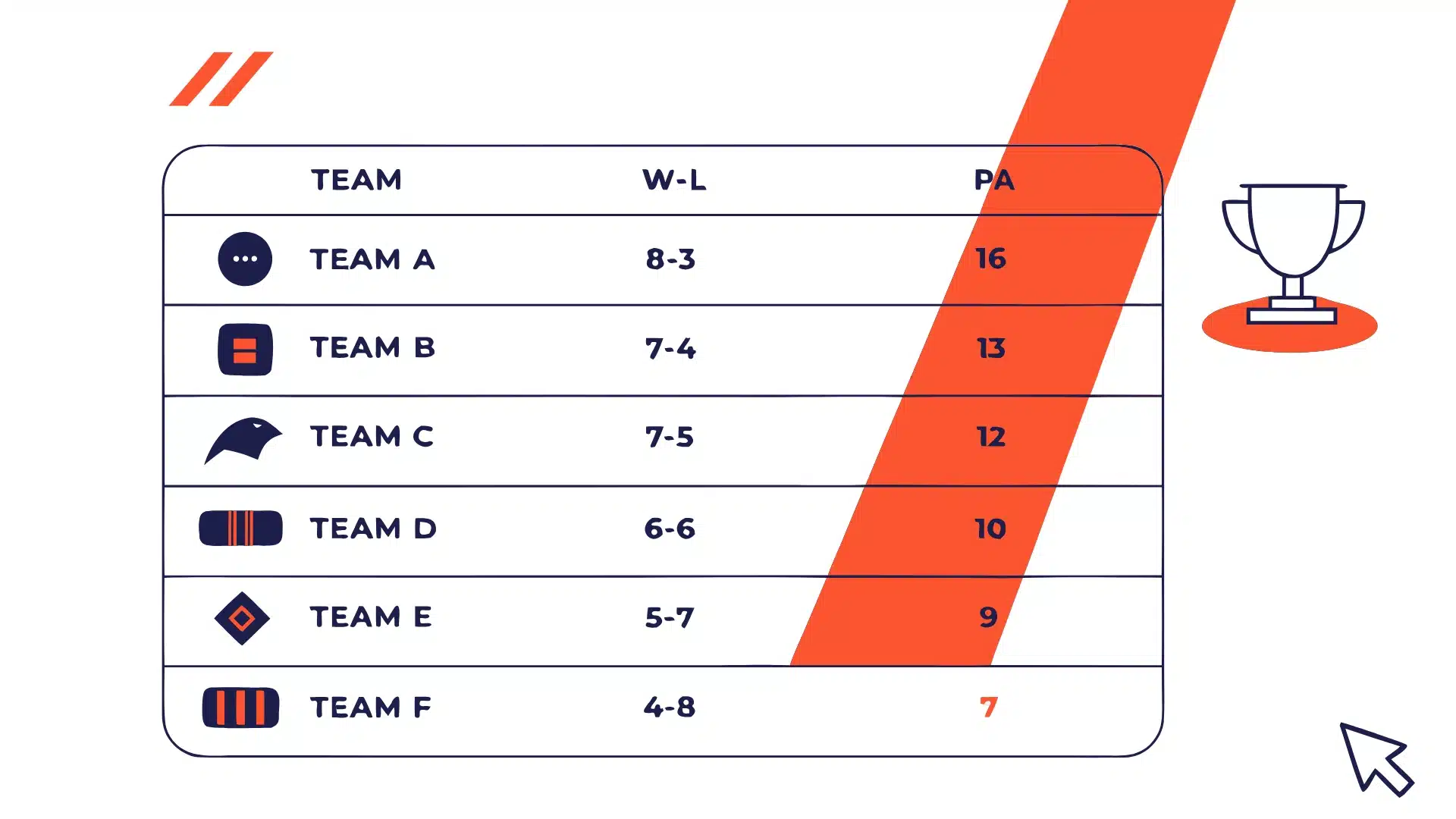
PA has no direct effect on your wins and losses in a standard head-to-head league. Your record is decided purely by whether you outscored your opponent that week.
PA runs in the background as a separate number, showing how tough your matchups have been overall, even though it doesn’t add or subtract a single win.
When PA Is Used as a Tiebreaker
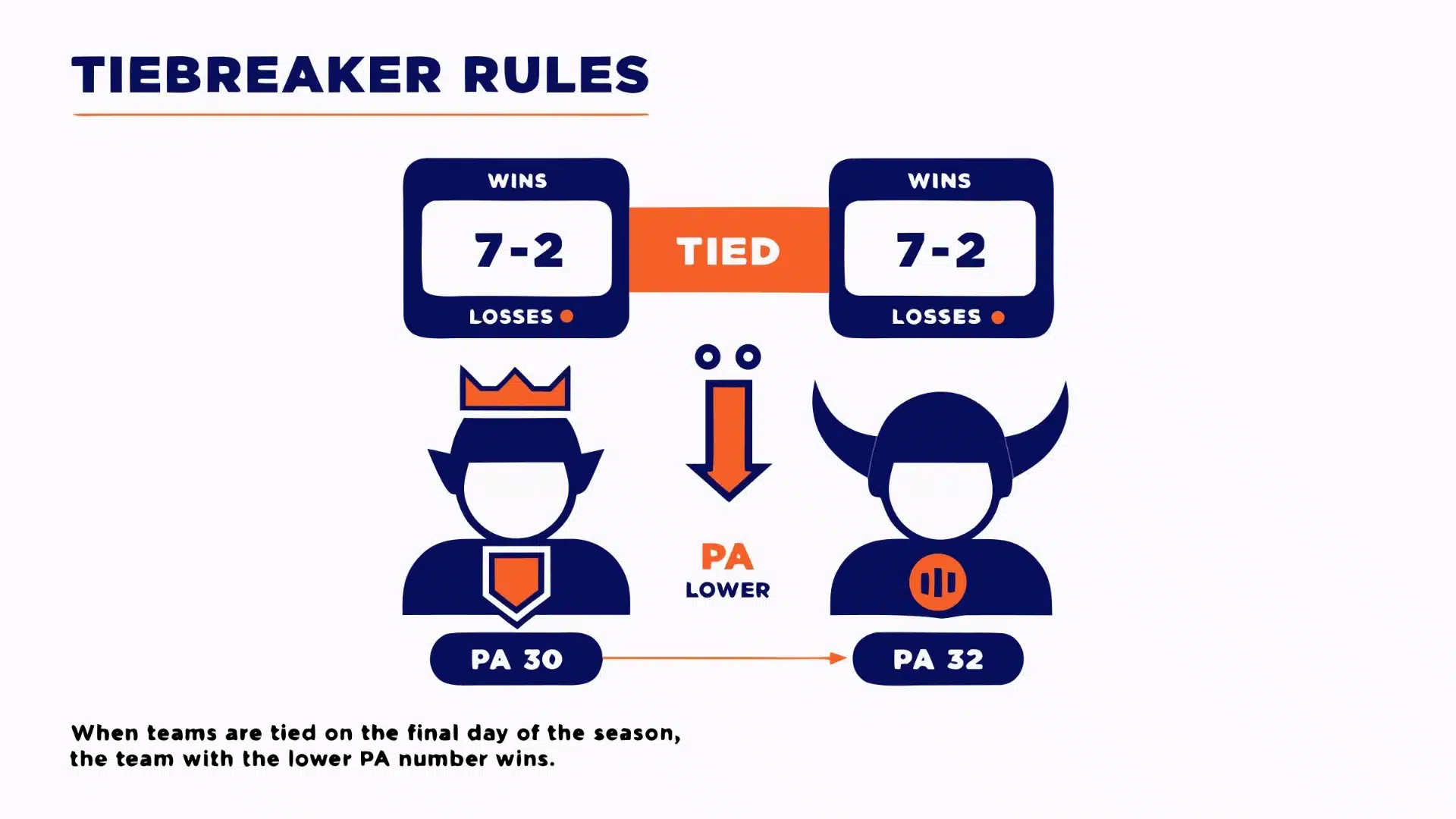
Some leagues use PA to break ties when two teams finish with the same record. A lower PA can push a team ahead in the standings or into a better playoff seed.
League rules vary a lot here depending on the platform and your commissioner’s settings, so I always check my league’s tiebreaker rules instead of assuming PA works the same way everywhere.
How to Find PA on Popular Fantasy Football Platforms
I play across a few different apps depending on the league, and PA hides in a slightly different spot on each one. Here’s where to look on the platforms most people actually use.
On ESPN Fantasy Football, PA shows up right in the standings tab alongside your record and PF. Just open your league, tap standings, and you’ll see it as its own column.
Yahoo Fantasy Football keeps it in a similar spot, listed on the standings page next to points for, though you may need to tap into the detailed view to see both stats side by side.
Sleeper shows PA in the league standings as well, usually visible without much digging once you open the standings tab.
NFL Fantasy lists it in the standings section too, alongside your win-loss record and total points scored. On every platform, the standings page is your fastest route to PA. If you don’t see it right away, check your team page, since some apps tuck the full stat breakdown there instead.
How To Interpret Your PA Like an Experienced Fantasy Manager
Here’s a trick I use every week. I treat PF and PA like a two-question quiz for my team: how much am I scoring, and how much am I getting scored on?
The four possible answers put every team into one of four buckets, and once you know your bucket, your record starts making a lot more sense.
| PF | PA | Bucket | What It Means |
|---|---|---|---|
| High | High | Unlucky Slugger | Your team is putting up big numbers every week, but you keep facing the one opponent who scores even bigger. Your record looks average or bad, but your roster is doing its job. |
| Low | Low | Quiet Cruiser | Nobody is putting up huge numbers in your matchups, including you, but you keep sneaking out wins in low-scoring weeks. Your record looks great, though it’s often built on an easy stretch of opponents. |
| High | Low | Dominant Team | You’re scoring big, and your opponents aren’t keeping pace. Your record should already reflect how strong your roster actually is. |
| Low | High | Struggling Team | You’re not scoring much, and your opponents are lighting you up on top of it. This is the one bucket where the record is telling the truth. |
The Best Way to Judge a Fantasy Team
I never trust a single stat to tell me which bucket a team is really in. Record, PF, and PA only make sense as a set, not on their own.
Running this three-stat check before a trade, a waiver claim, or my end-of-season review keeps me from overpaying for a team that looks strong on paper but has quietly been getting outscored every single week.
How to Use PA to Make Better Fantasy Decisions
Knowing what PA means is one thing, but using it actually to make smarter calls in your league is where the stat earns its spot on the standings page. Here’s how I put it to work during the season.
1. Look at PF and PA Together Before Making Trades

Before I offer or accept any trade, I check both numbers for the team I’m dealing with. A team with high PF and high PA is usually better than its record shows, so I expect to pay a bit more for its players.
A team with low PF and low PA might be riding an easy schedule, which means their players could be cheaper than their win total suggests.
2. Spot Teams That Are Better (or Worse) Than Their Record

Your league standings show wins and losses, but PA and PF reveal who’s actually playing well underneath those numbers.
I scan both stats every few weeks to find teams that look weak on paper but are scoring like a top squad, since these are the teams I want to avoid underestimating in the playoffs or in a trade negotiation later in the season.
3. Use a Fantasy Standings Calculator to See the Bigger View
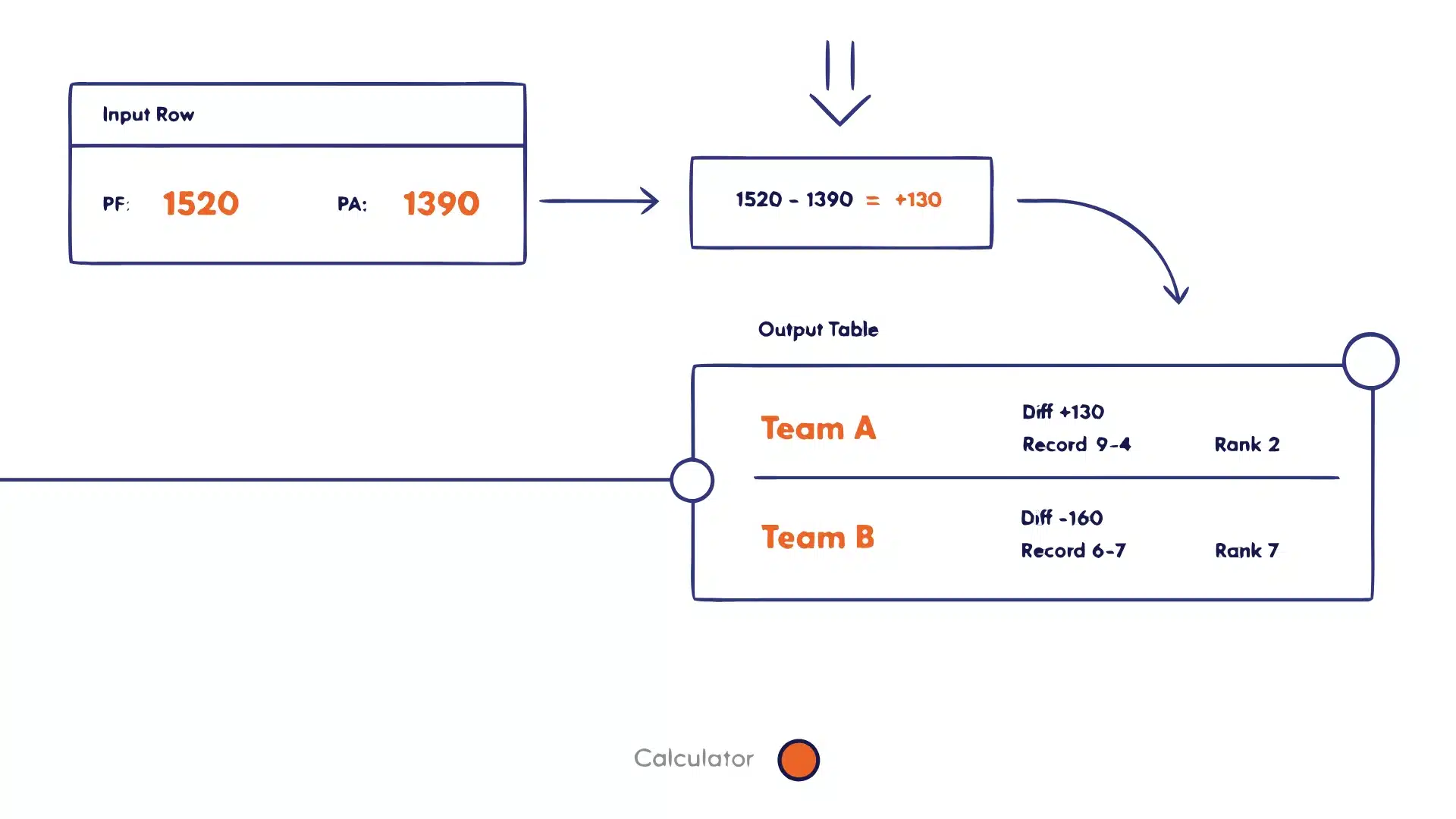
Toward the back half of the season, I run my league through a standings calculator to see how playoff scenarios could shift based on PF and PA trends.
These tools project outcomes using your scoring patterns, not just your current record, which gives me a clearer read on which teams are actually trending up or down before the games are even played.
Common Myths About PA
I believed some of these myths myself before I actually understood how PA works. Let’s clear them up so you stop reading your own stats the wrong way.
- “A high PA means I have a bad team.” Not true. A high PA means your opponents scored a lot against you. Your own team could still be one of the strongest in the league, just stuck with a rough schedule of matchups.
- “I can lower my PA by making better roster moves.” Your roster moves affect your PF, not your PA. PA is entirely about what your opponents score, and there’s nothing you can do on your own roster to change what the other team’s players put up that week.
- “PA is more important than PF.” Neither stat outranks the other. PF shows what your team can actually score, and PA shows how tough your schedule has been. You need both together to get a real read on any team, including your own.
Final Thoughts
PA is one of those stats that sits quietly on your standings page until you actually need it, and now you know exactly what it’s telling you. It’s not a measure of how good or bad your team is on its own.
It’s a window into your schedule, your luck, and sometimes the real story behind a record that doesn’t match your roster.
Next time you check your league standings, don’t just glance at your wins and losses. Pull up your PF and PA together, figure out which bucket your team actually falls into, and use that read before your next trade or waiver move. It might change how you see your whole season.
Try it out this week. Check your PA and PF side by side, and drop a comment letting me know which bucket your team landed in.
Frequently Asked Questions
What Does PA Stand for in Fantasy Football?
PA stands for points against. It’s the total points your opponents have scored against you across every matchup this season, shown right next to your record in the standings.
Is a High PA Good or Bad?
Neither on its own. A high PA usually means you’ve faced tough opponents, not that your team is weak. Always check it alongside your PF before judging your team.
Does PA Affect My Win-Loss Record?
No. PA has no direct effect on wins or losses. Your record depends only on whether you outscored your opponent that week, not on your season-long PA total.
Is PF or PA Used as The Playoff Tiebreaker?
Most leagues use PF, not PA, as the first tiebreaker for playoff seeding. Some leagues use PA too, so always confirm your league’s specific tiebreaker settings.