


You refresh your league page for the fifth time today. Your roster has an obvious hole at running back, and you know someone in your league is sitting on a player you want.
I know exactly how frustrating it feels to stare at a weak starting lineup while points sit untouched on someone else’s bench. Top trade targets include David Montgomery, DeVonta Smith, and Justin Herbert.
The good news is that I have a clear method for finding and landing the best players to trade for in fantasy football.
I will show you exact buy-low targets by position, how to build a trade offer that gets a fast “yes,” and where managers crowdsource reliable trade ideas.
Best Players to Trade for in Fantasy Football
I’ve grouped my top players to trade for fantasy football by position so you can quickly find a target who fills your roster hole.
Fact-Check Note: Every player, team, and cost below is time-sensitive and pulled from July 2026 reporting; re-verify names, teams, and ADP on publish day, and swap any who have changed situations. Kyler Murray’s team and A.J. Brown’s move to New England both surfaced this offseason and need a fresh check.
1. David Montgomery (RB, Texans)
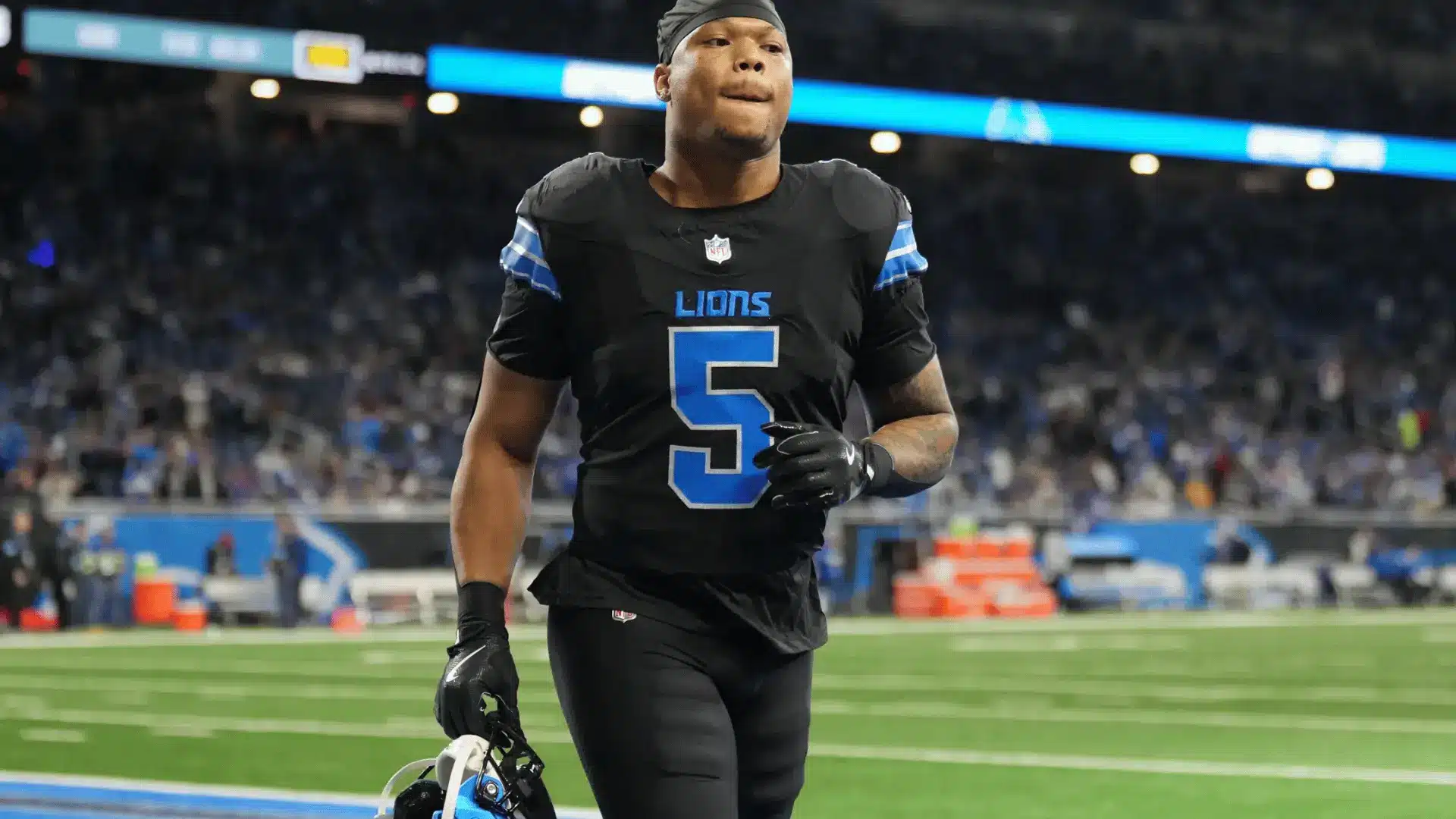
Montgomery is an undervalued running back who could handle a large workload in Houston. Last season, he proved his efficiency by scoring eight touchdowns on just 182 total touches.
He is a durable player who should control the Texans’ goal-line rushing attempts, making him a reliable scoring threat.
If your team is ready to win this season and you need a solid starting option, he is a fantastic addition to your roster.
2. Rachaad White (RB, Commanders)
White signed a short-term deal with Washington, which currently has a very weak running back room.
The younger players behind him lack receiving skills, which means White should handle most of the pass-catching work out of the backfield.
Because he is an established target-earner with a safe floor, he offers excellent weekly value in PPR scoring formats. You can usually acquire him for a fair price before the season truly ramps up.
3. Kenneth Gainwell (RB, Buccaneers)
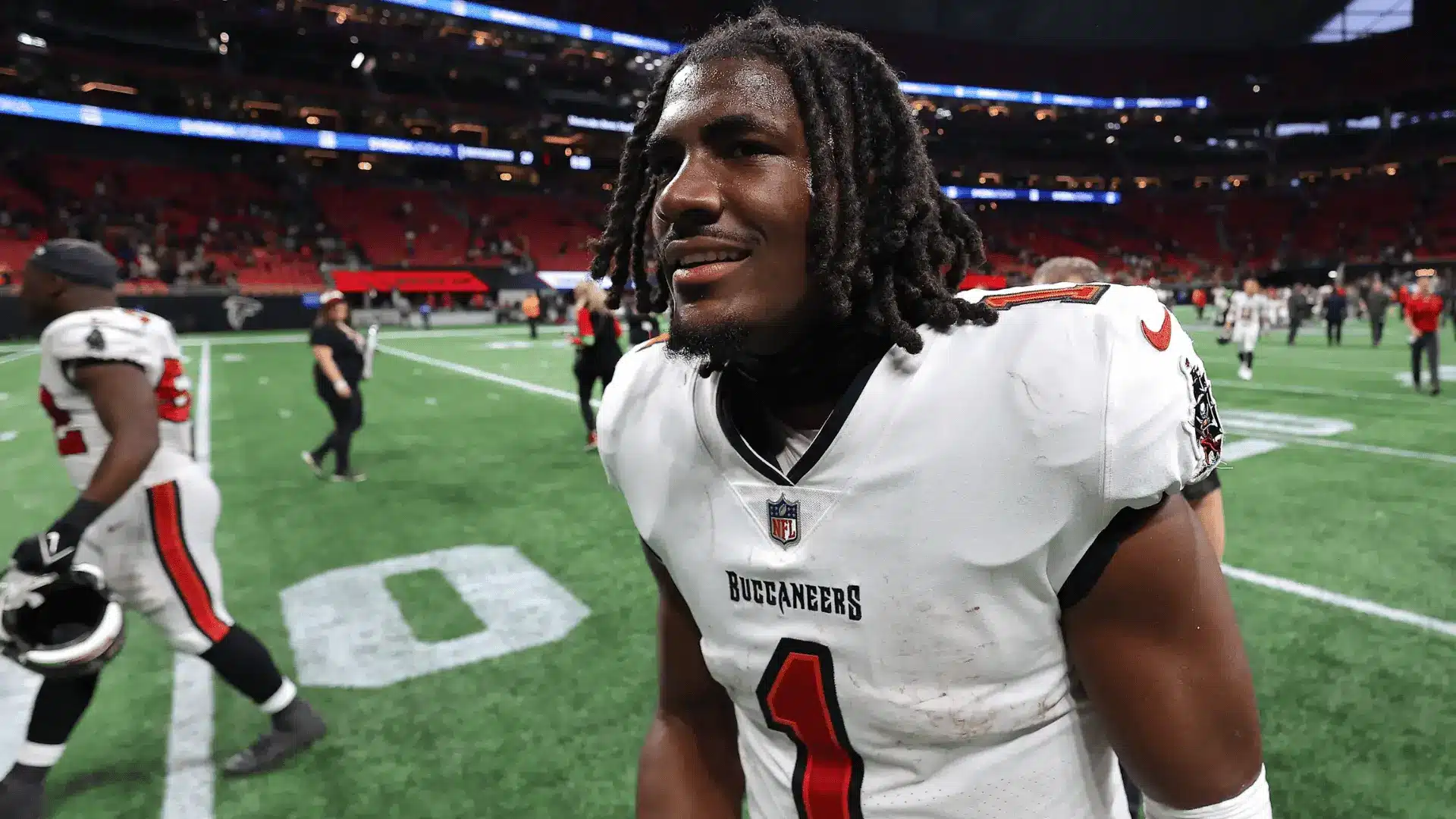
Gainwell set a career high last year, racking up 1,023 scrimmage yards and 8 touchdowns. Now playing in Tampa Bay, he steps into an offense that frequently targets running backs in the passing game.
Even if he shares rushing attempts with Bucky Irving, his high catch rate and ability to score inside the 10-yard line make him a very smart trade target. He provides a starting value at the cost of a depth piece.
4. DeVonta Smith (WR, Eagles)
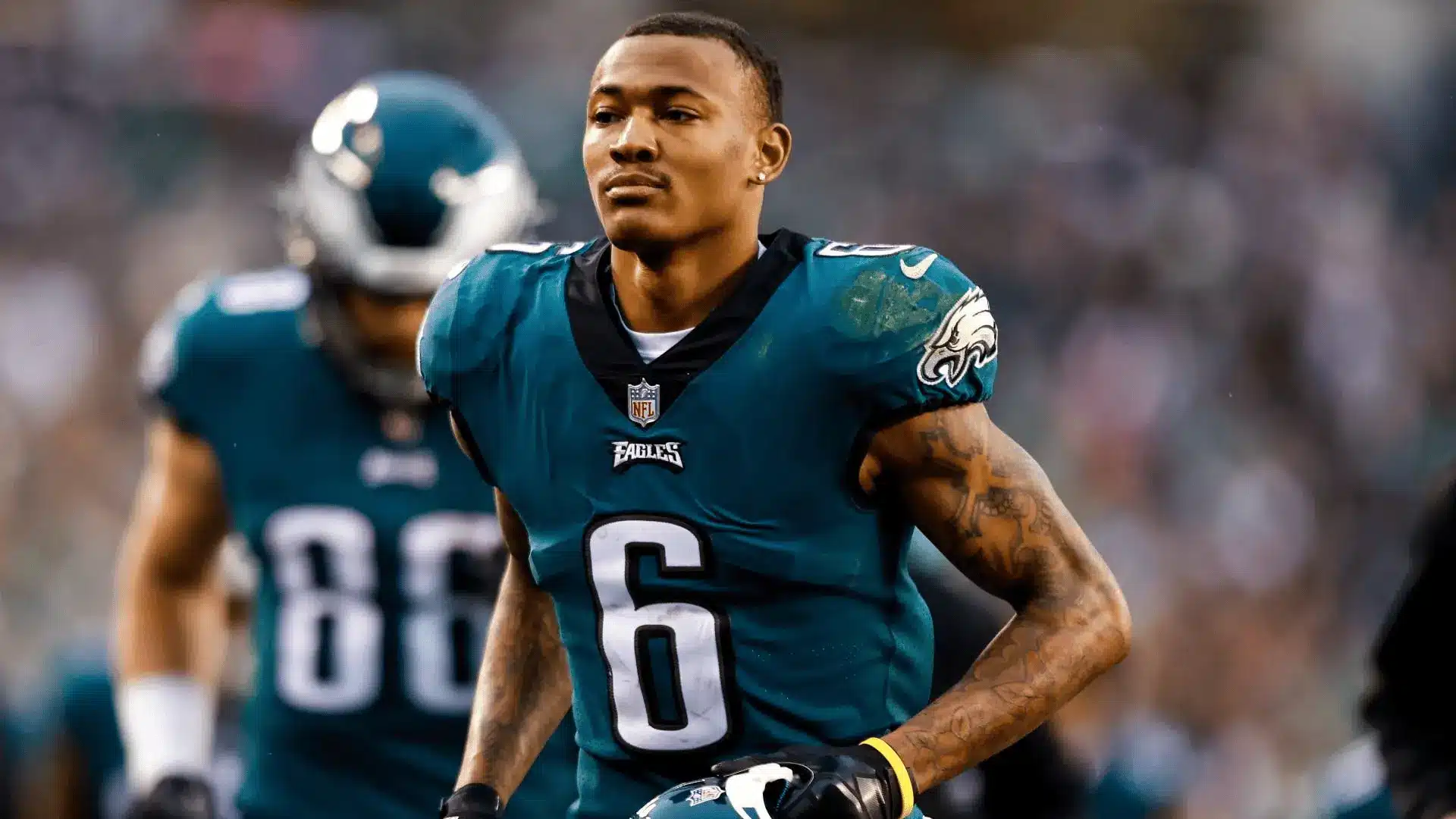
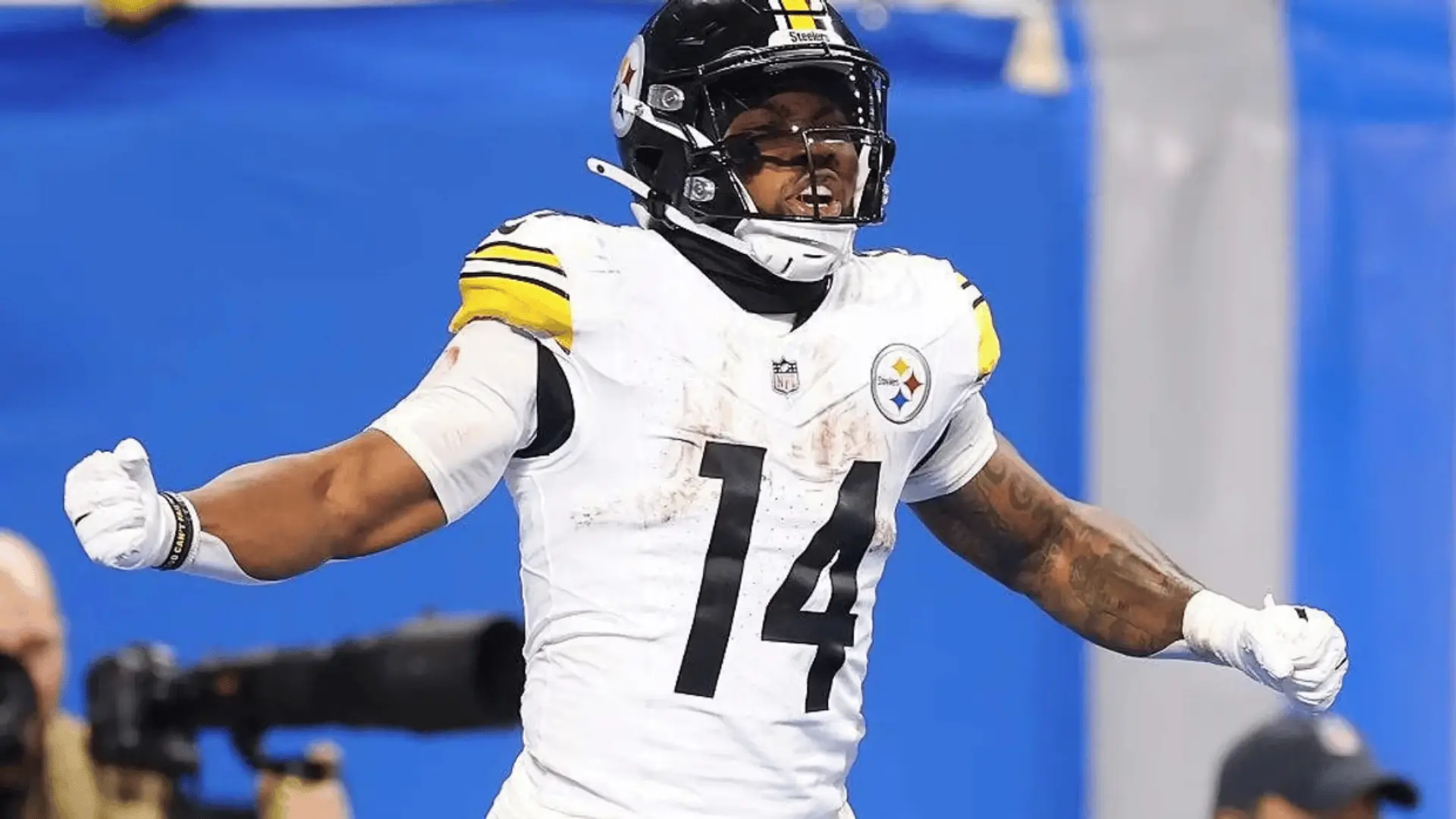
With A.J. Brown leaving Philadelphia for New England, Smith is in a great spot to become the clear top target.
In past games without Brown, Smith averaged nearly seven targets per game and consistently posted high receiving yardage.
Many fantasy managers still severely undervalue him in trade talks, but he can easily perform as a high-end wide receiver for your starting lineup this season.
5. Other Trade Targets to Consider
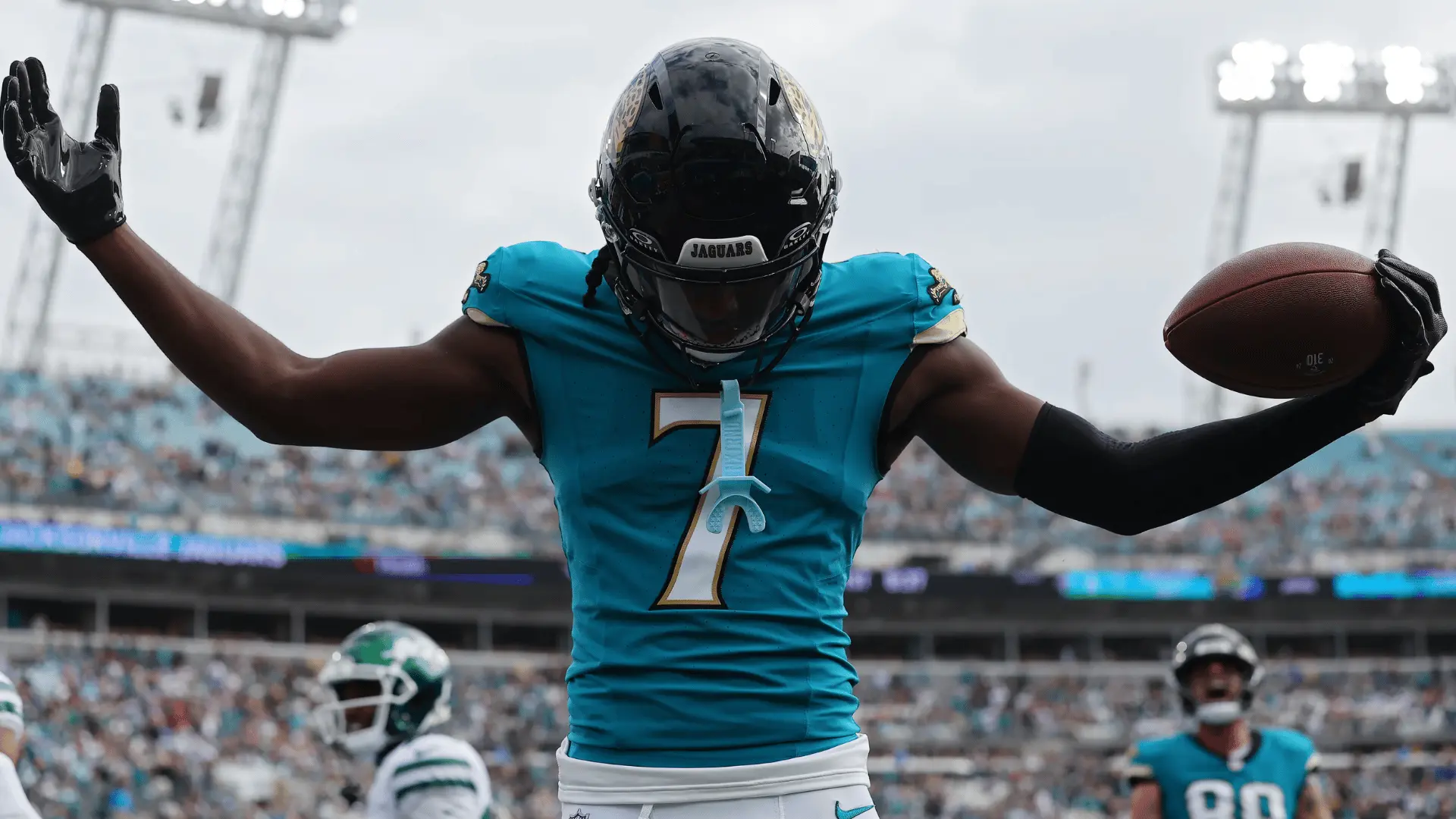
If you need more trade ideas for your roster, you should also look into these players:
- Brian Thomas Jr. (WR, Jaguars): A young receiver with the talent to easily break 1,000 receiving yards.
- Jameson Williams (WR, Lions): A fast playmaker who can post huge weekly point totals for your lineup.
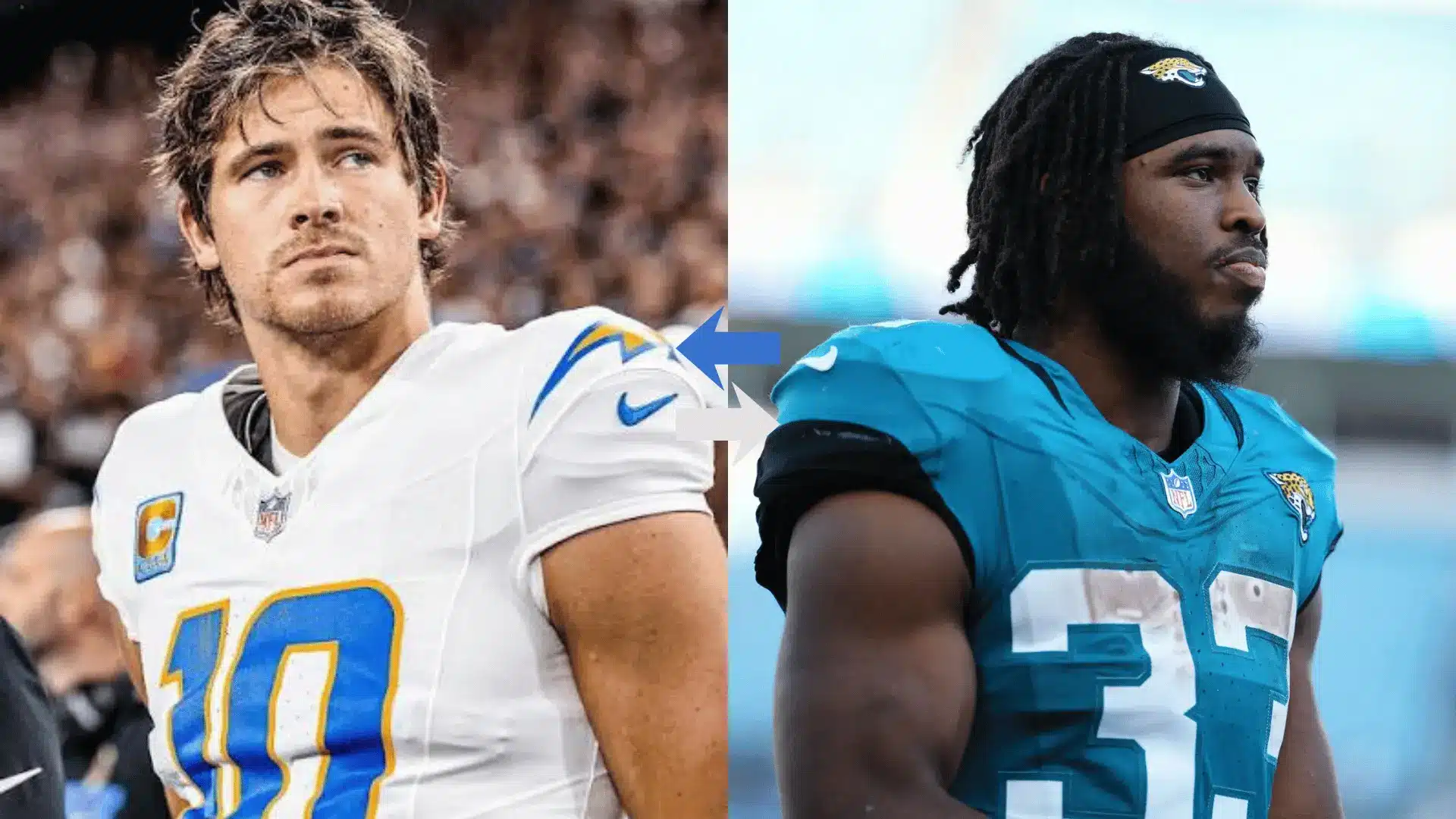
- Justin Herbert (QB, Chargers): A proven quarterback who is currently undervalued in many dynasty leagues.
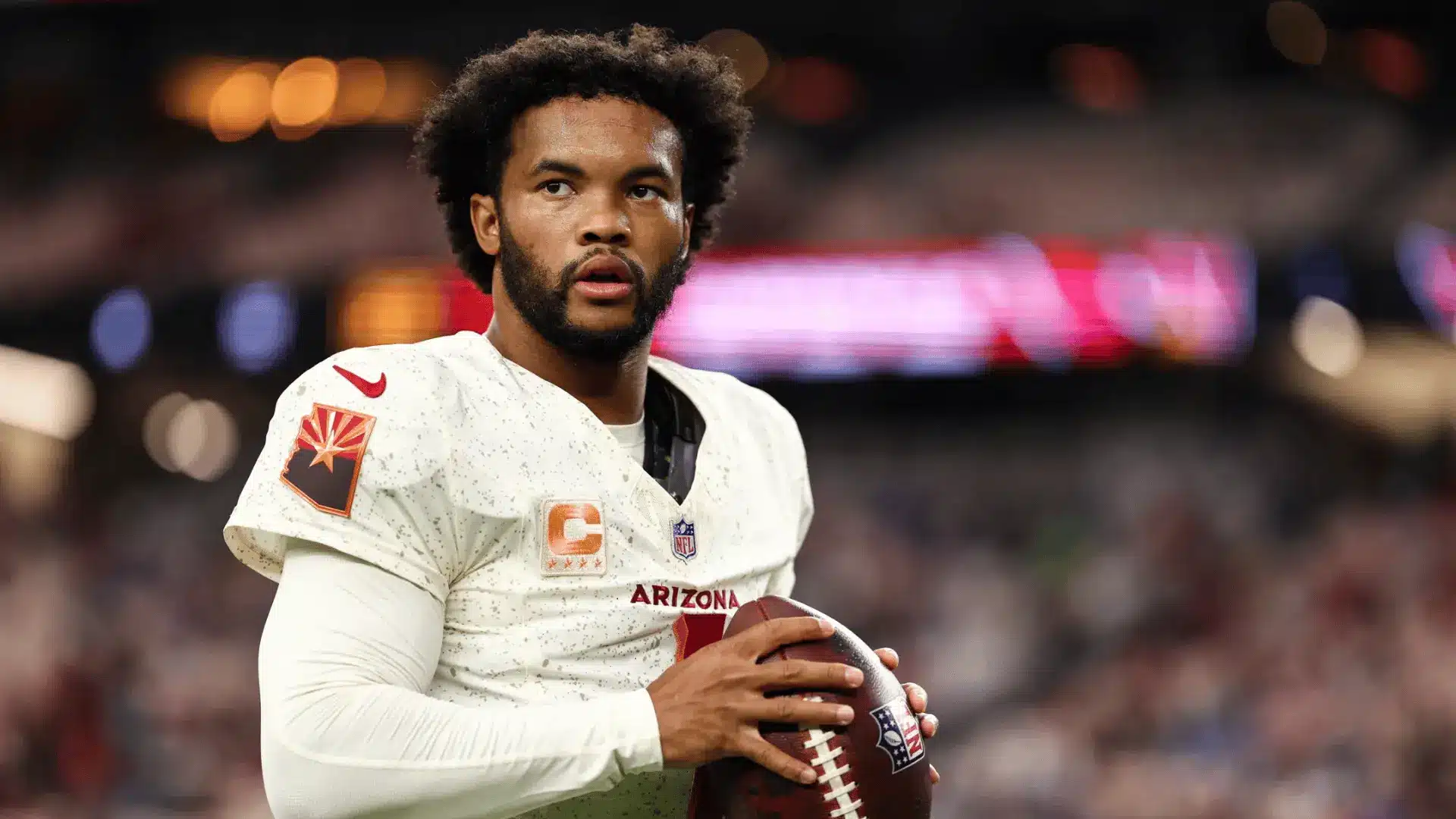
- Kyler Murray (QB, Vikings): He joined a new team and now has a much better offensive system around him.
- Bhayshul Tuten (RB, Jaguars): A young running back who steps into a starting role after Travis Etienne’s departure.
How to Pitch an Offer for Players to Trade for in Fantasy Football?
Finding the player is half the work: here’s how I actually get the deal done.
- Identify their clear roster need: Scan your rival’s starting lineup to see where they are hurting, such as a weak second wide receiver or a missing tight end.
- Offer from your position of surplus: Look at your bench strength to find a player you can afford to lose without hurting your own weekly lineup.
- Keep the total value close to even: Check current value charts to make sure you are not sending an insultingly lowball proposal that gets you ignored.
- Include a small sweetener if necessary: Add a secondary player or a minor asset to break a tie and convince the other manager to hit accept.
How you word your proposal matters just as much as the players inside the deal. Sending a short, friendly message that explains your reason-first logic helps start a real conversation.
How to Find Trade Targets in Fantasy Football?
Finding the right players to trade for fantasy football starts with understanding the basic logic of buying low and selling high.
This means you look for players whose current market value is down due to temporary factors such as a slow start, a crowded depth chart, or a recent return from injury.
At the same time, you look to move away from overvalued players on your roster before their production drops off.
Deciding who to chase comes down to finding the gap between a player’s actual talent and their current public perception.
1. Spotting Buy-Low Candidates
A true bargain offers a high ceiling and a tolerable weekly floor, combined with a clear, fixable reason for its lower price.
For instance, I look for a talented backup sitting behind an injury-prone starter, or a proven producer coming off a down season who now plays in a far better offensive system.
These situations create perfect windows to buy before the breakout happens.
2. Reading the Waiver and Trade Market
You can easily see what your league values by checking the weekly waiver wire trends and reviewing recently accepted deals.
I look at each team to see which managers are building for the future and which ones are fighting to win right now. Knowing their goals tells you exactly how to approach them, setting up a smooth negotiation when you crowdsource ideas later.
Where do Managers Find Players to Trade for in Fantasy Football?
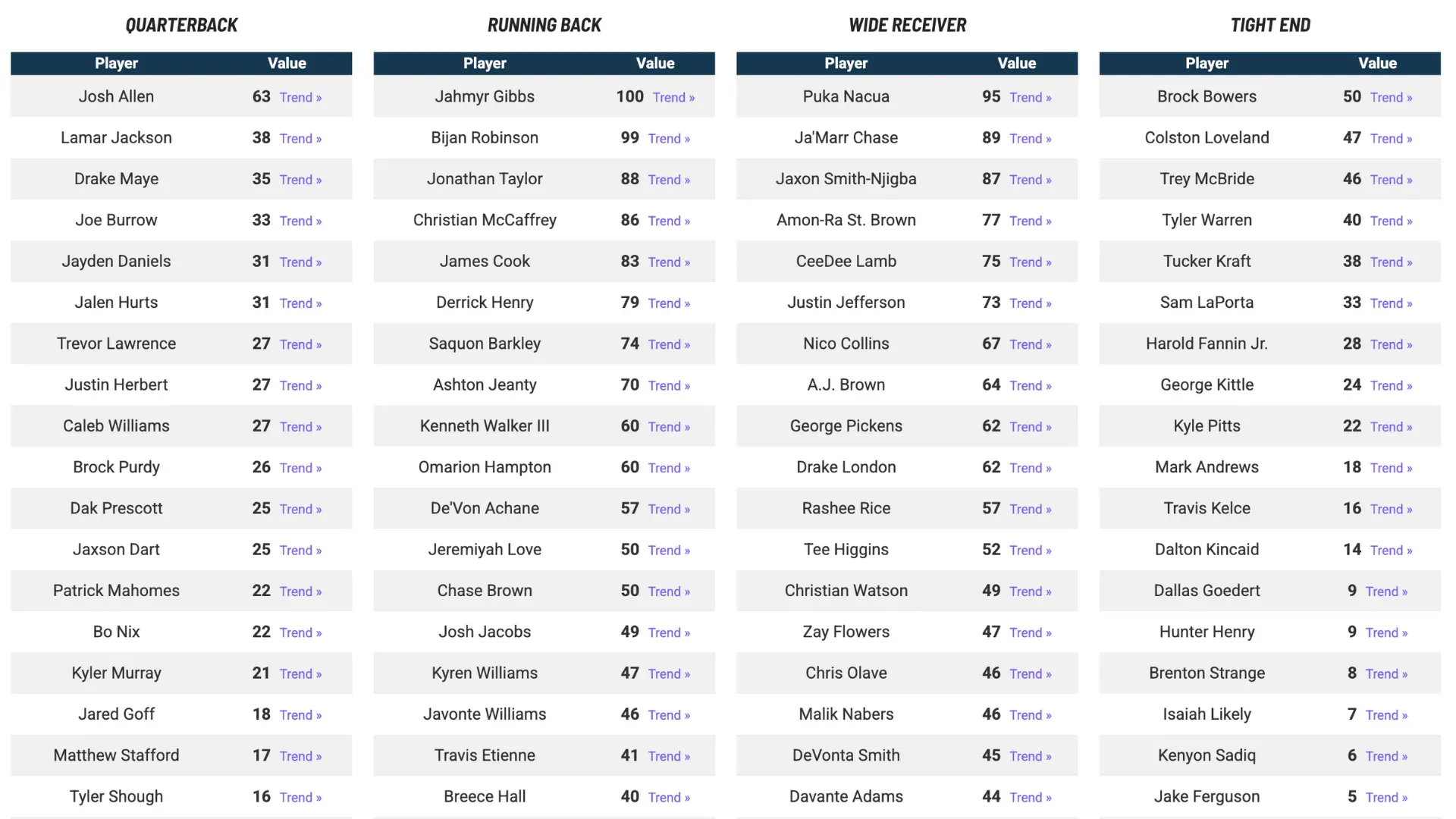
You do not have to evaluate every target on your own. Once I identify possible players to trade for fantasy football, I use value charts and community feedback to pressure-test each move.
When you build a trade offer, having the right tools makes your decisions much sharper. I always use these resources as a baseline to start negotiations, rather than treating them as absolute law.
| Tool Category | Instrument | How It Helps Your Decisions |
| Trade Calculators | KeepTradeCut | Crowdsourced rankings give you a live look at how the community currently values players. |
| Trade Calculators | FantasyCalc | Pulls real completed trades from thousands of active leagues to give you a mathematical baseline for deals. |
| Aggregators | FantasyPros Trade Analyzer | Combines expert consensus rankings to grade your trades and show how the swap impacts your starting lineup. |
| Expert Articles | Contextual Columns | Writers highlight situational factors, like incoming draft picks or recent coaching changes, that raw numbers miss. |
KeepTradeCut and FantasyCalc remain fully operational at their standard URLs for the 2026 season.
Getting Feedback From League Chats
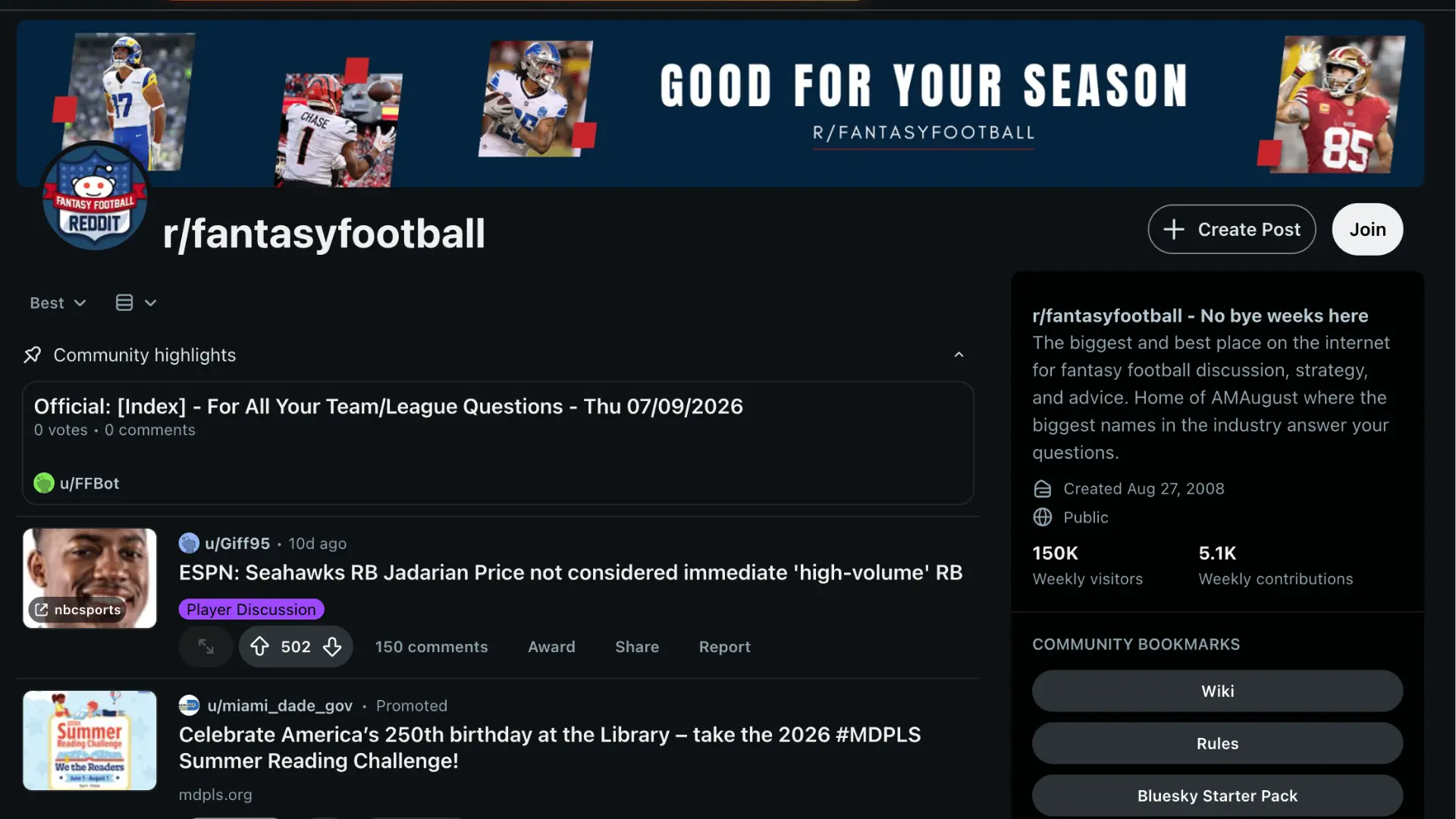
You do not have to make these roster calls alone. Online communities offer incredible feedback when you need to decide on a trade or evaluate your lineup.
- Reddit Threads: The r/fantasyfootball community is a massive resource for crowdsourcing decisions. Daily “should I trade?” threads give you fast, unbiased feedback from other managers. You will also find highly detailed forum discussions breaking down post-NFL draft top 300 rankings, intense debates on the top players managers are unexpectedly low on for 2026, and dedicated draft coach threads to help structure your entire roster strategy.
- Discord Servers: Active fantasy sports servers provide real-time trade grading. You can chat directly with experienced players who will tell you right away whether your proposed offer makes sense for both sides.
- League Chats: Your own league group chat is a great place to read the room. Casual messages and reactions reveal exactly how your specific rivals value certain players.
When you ask for advice, always use proper etiquette. Ask hypothetical questions to read reactions without tipping your hand about your actual target.
This keeps your strategy hidden while giving you the insights you need to win.
Common Trade Mistakes to Avoid
A few habits quietly sink good trades: here’s what I steer clear of.
- Overpaying: Chasing a big name and giving up two reliable starters for one player ruins your weekly roster depth.
- Lowballing: Sending insulting, one-sided offers gets you ignored and makes rivals refuse to negotiate with you later.
- Scheduling: Trading for a player who shares your other starter’s bye week creates a guaranteed loss on your calendar.
- Panicking: Dumping a slow-starting stud right before he heats up destroys your team value. Trust your original draft evaluations.
- Format: Forgetting that redraft versus dynasty rules change a player’s worth causes massive errors. Always value players based on your league type.
When to Make Your Move
Timing decides if you buy the dip or pay full price. To maximize my return, I target windows when rival managers feel desperate.
| Trading Window | Strategy | Rival Manager Mindset |
| Weeks 2–5 | Target proven stars who started slow and buy them cheap. | Overreacting to early game results. |
| Post-Injury | Acquire injured stars at a steep discount to store for later weeks. | Desperate for active players to secure immediate wins. |
| Pre-Deadline | Sell older veterans on your roster to teams pushing for a title. | Feeling intense urgency to overpay for win-now help. |
| When to Hold | Keep your current roster depth intact to handle late-season player absences. | Focused on securing lineup safety rather than making moves. |
Verify your specific league and platform trade deadline dates for the current season before publishing timing advice.
Finals Bets
Winning your league requires a clear, active strategy instead of just waiting for the waiver wire to save your season.
By hunting for true buy-low candidates and perfectly timing the market, you can turn a slow opening stretch or an injury discount into a major advantage for your roster.
Always remember to construct balanced proposals that solve a real problem for the other manager, and pressure-test your ideas in active online communities before you hit send.
Ultimately, the best players to trade for in fantasy football are the ones your league completely undervalues but you truly believe in.
Try one of these offers this week, and drop your trade in the comments so we can talk it through.
Frequently Asked Questions
Should I Trade for an Injured Player?
Sometimes, yes. If the injury is short-term and the price is low, an injured starter can return league-winning value. Just confirm the timeline and make sure your roster survives the weekshe’ss out.
Is One Star Better Than Two Starters?
It depends on your roster. Consolidating two decent players into one elite player helps if you’re thin at the top but deep overall. If you’re short on bodies, keep the depth instead.
Do Trade Deadlines Change Who I Target?
Yes. Near the deadline, contenders pay up for win-now help, and rebuilders sell veterans cheap. Target aging producers late ifyou’ree winning, and cash them in for youth if you’re not.
Should I Trade Picks for Players in Dynasty?
If you’re contending, trading future rookie picks for proven players is a smart move. If you’re rebuilding, do the opposite: collect picks and young talent while selling win-now veterans at their peak.