


A standard professional soccer field is about 115 × 74 yards (105 × 68 m). But if you are asking how big a soccer field is, the legal range is much wider: 100–130 yards long and 50–100 yards wide.
One more thing! Soccer does not use one fixed field size.
IFAB allows different dimensions within set limits, while international matches use a narrower range. FIFA also recommends 105 × 68 m as a common benchmark for top-level stadiums.
That means two legal fields can feel noticeably different in size even when both follow the rules.
The markings inside the field are more consistent, with fixed measurements for areas such as the penalty box and center circle.
Below, I’ll break down the legal dimensions, FIFA benchmark, field markings, total playing area, and youth soccer field sizes.
How Big is a Soccer Field?
A soccer field must stay within IFAB’s legal dimensions, and the touchline must always be longer than the goal line. That means a legal field cannot be square, even if both measurements fall within the permitted ranges.
General regulation fields allow more variation, while international matches use a narrower range. FIFA’s recommended 105 × 68 m field sits within those international limits and is widely used as a professional benchmark.
The key distinction is between a legal range and a recommended standard. A field can fully meet the Laws of the Game without measuring exactly 105 × 68 m.
Here is the quickest way to compare the main soccer field size standards:
| Field Type | Length | Width |
|---|---|---|
| General regulation | 90–120 m / 100–130 yd | 45–90 m / 50–100 yd |
| International match | 100–110 m / 110–120 yd | 64–75 m / 70–80 yd |
| FIFA recommended field | 105 m / about 115 yd | 68 m / about 74 yd |
The first two rows show IFAB’s permitted ranges, while the final row shows FIFA’s recommended stadium benchmark.
Is 105 × 68 m the Official FIFA Soccer Field Size?
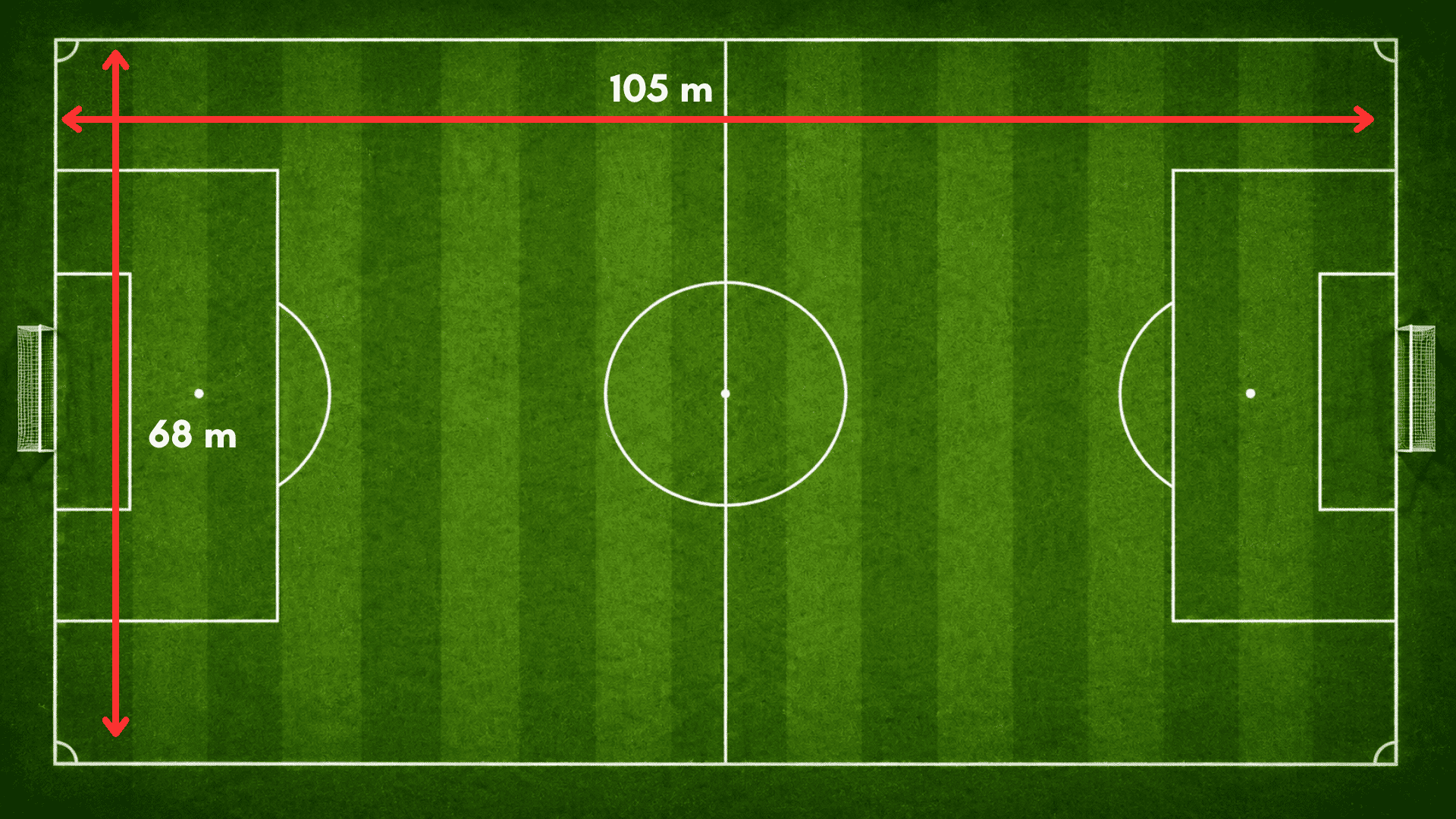
Yes, 105 × 68 m is FIFA’s recommended field size, but it is not the only legal dimension for a soccer field.
IFAB Law 1 sets the permitted field-size ranges, including a narrower range for international matches. FIFA uses 105 × 68 m as a preferred benchmark for many professional and top-level stadiums.
This means a field can fully comply with the Laws of the Game without measuring exactly 105 × 68 m. The size is best understood as a common professional standard, not a universal requirement.
So, when people refer to the “official FIFA size,” they usually mean FIFA’s recommended benchmark rather than the only legal field dimension.
Why Don’t All Soccer Fields Have the Same Dimensions?
Soccer fields can vary because IFAB allows competition organizers to choose the exact field dimensions within the legal limits. This gives leagues and venues enough flexibility to use different grounds without changing the basic rules of the game.
Several practical factors affect the final size:
- Competition regulations: A league or tournament may set its own approved dimensions, which is why field requirements can differ across competitions and levels within the English football pyramid.
- Stadium construction: Older venues may have less room around the playing surface.
- Available playing space: Local grounds must fit within the space they have.
- Age group: Youth soccer uses smaller fields.
- Playing format: 5v5, 7v7, and 9v9 games need less space than 11v11.
The outside dimensions may change, but many of the markings inside a full-size field use fixed measurements.
How Big are the Markings on a Soccer Field?
Soccer fields have several marked areas that help players and referees know where certain rules apply.
Some lines change with the overall field size, but the main boxes, circles, and corner areas use fixed measurements. You do not need to memorize every number.
The easiest way to understand them is to look at each marking separately. Below are the main field markings, their basic size, and what each area is used for during a match.
1. Penalty Area Dimensions
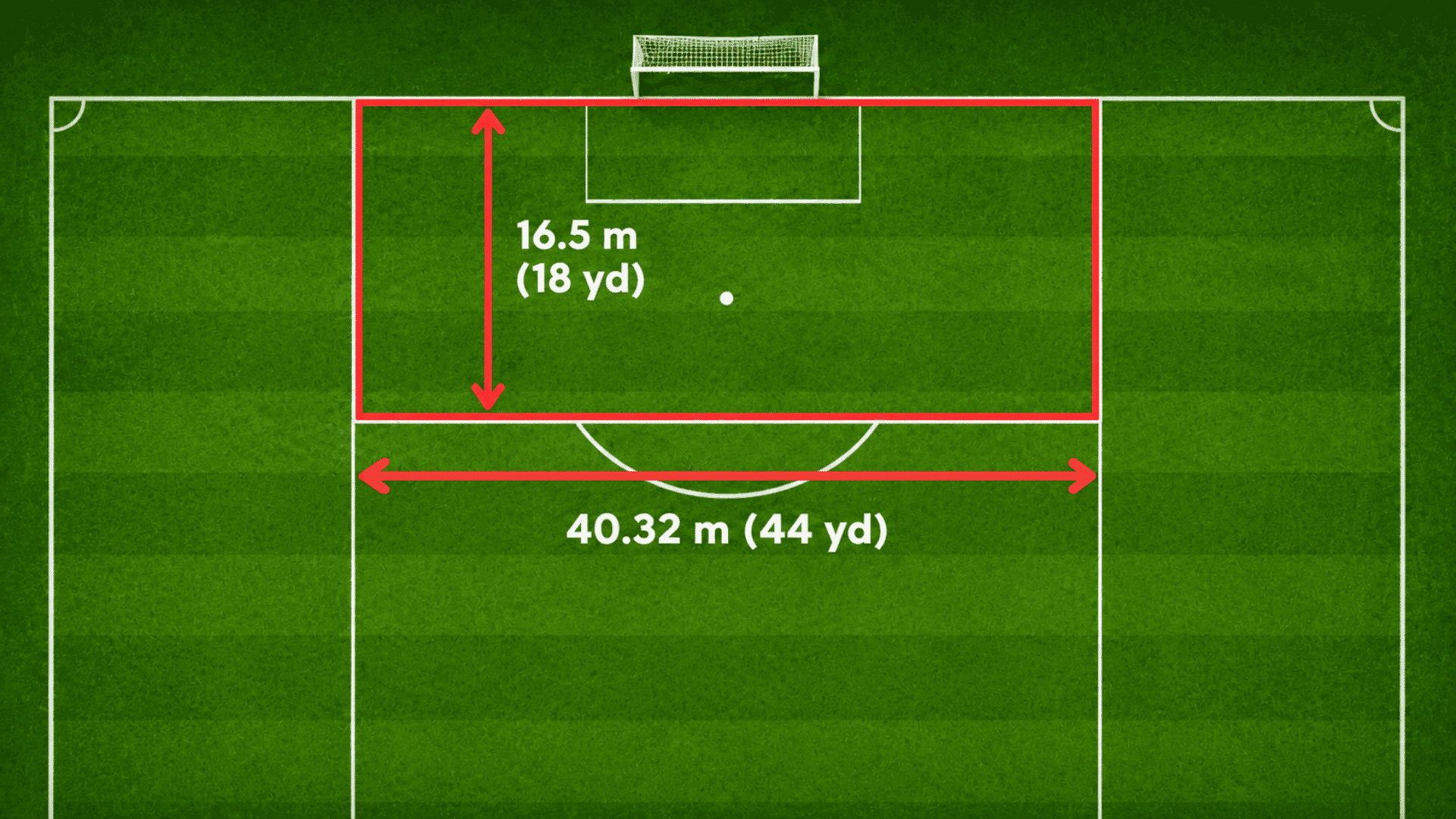
The penalty area is the large box in front of each goal. It extends 16.5 m, or 18 yards, into the field and is about 40.3 m, or 44 yards, wide.
This is the area where the goalkeeper can use their hands. Certain fouls by the defending team can result in a penalty kick, while misconduct may also lead to a yellow card.
2. Goal Area Dimensions
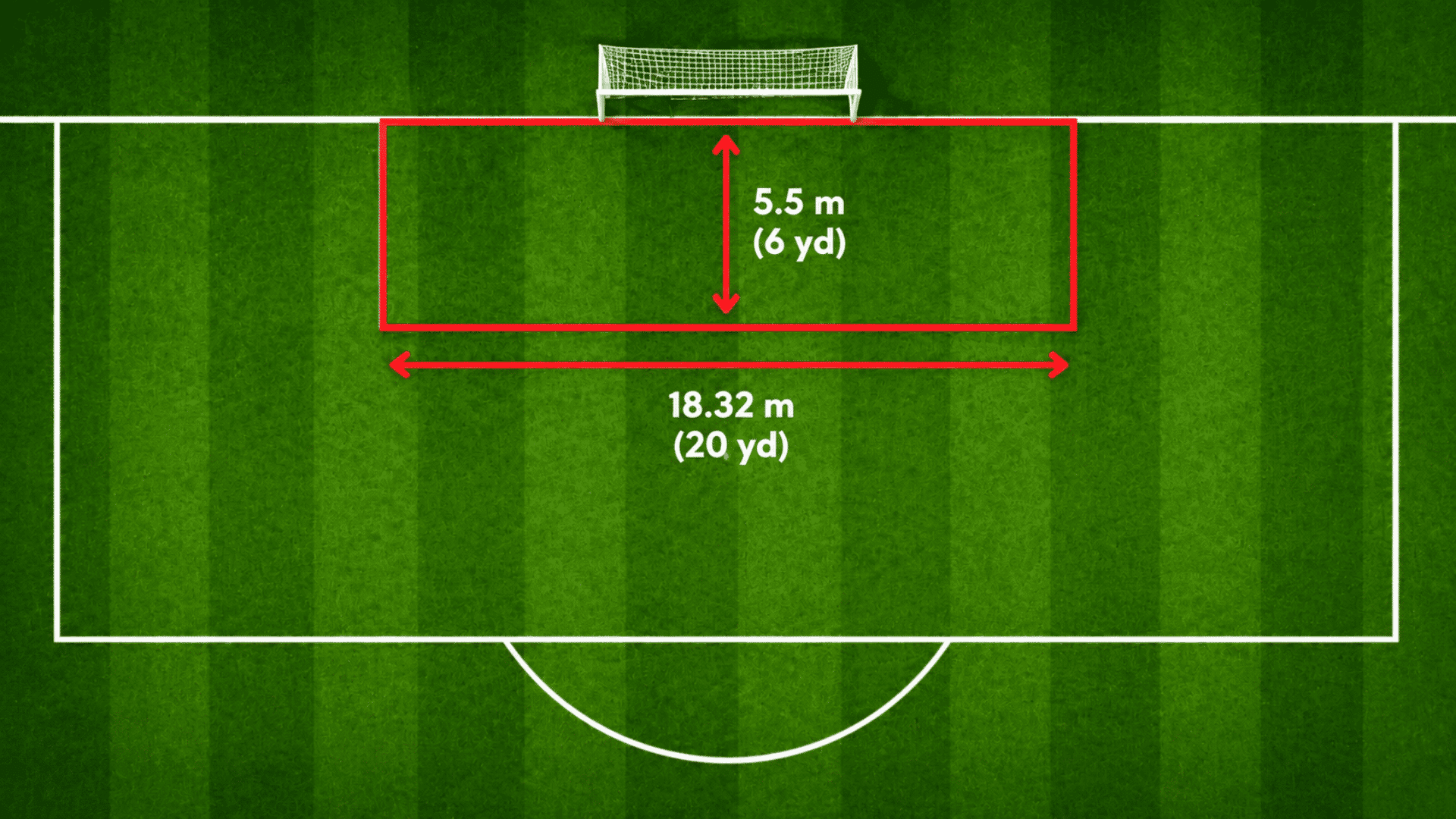
The goal area is the smaller box directly in front of the goal. It measures 5.5 m, or 6 yards, deep and about 18.3 m, or 20 yards, wide. It is often called the six-yard box.
This area is mainly used for goal kicks and for determining where certain free kicks near the goal must be taken.
3. Penalty Mark and Penalty Arc
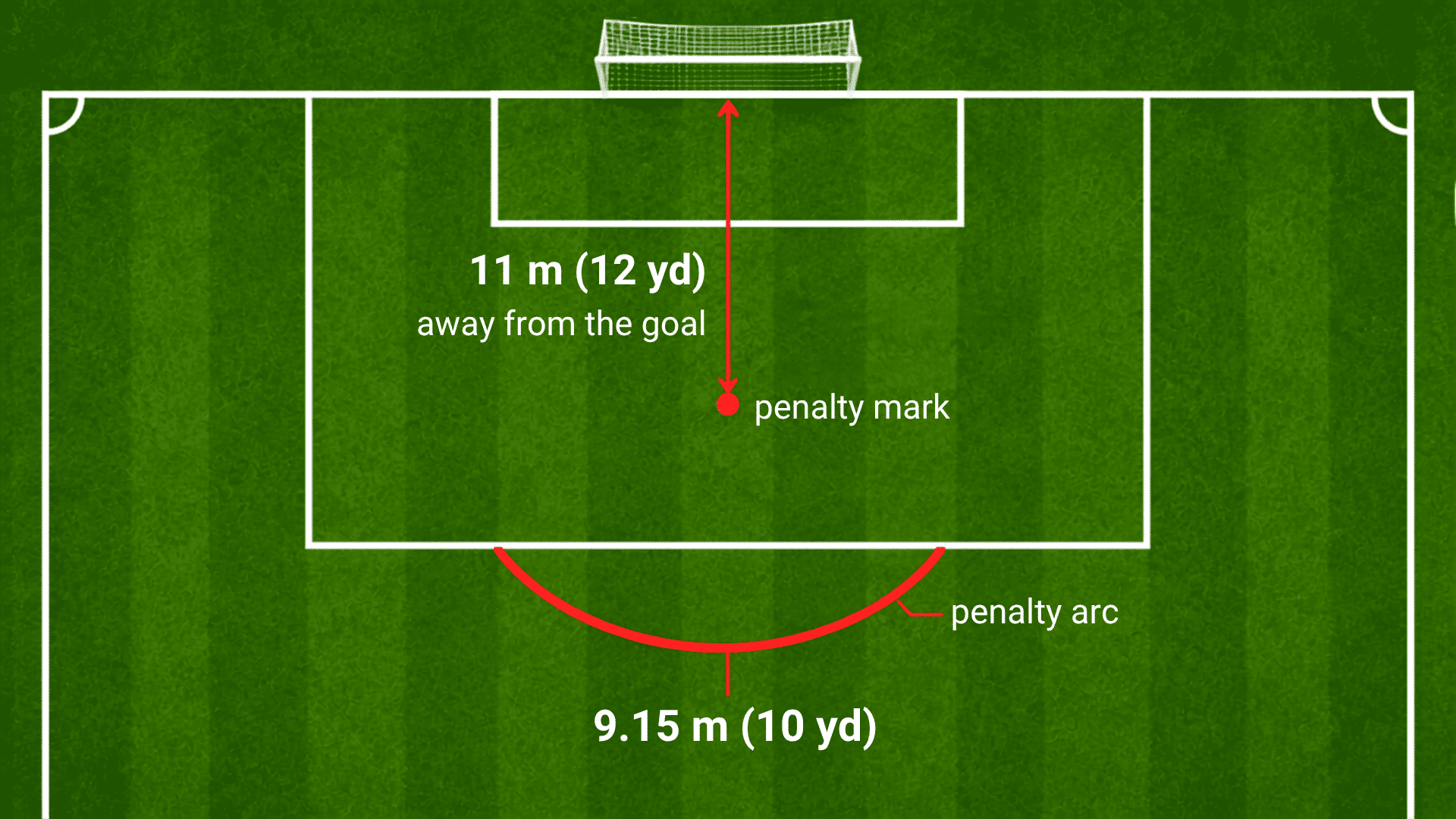
The penalty mark is the spot where a penalty kick is taken. It sits 11 m, or 12 yards, from the goal. The curved line outside the penalty area is called the penalty arc.
It is 9.15 m, or 10 yards, from the penalty mark and helps keep other players far enough away during a penalty kick.
4. Center Circle Dimensions
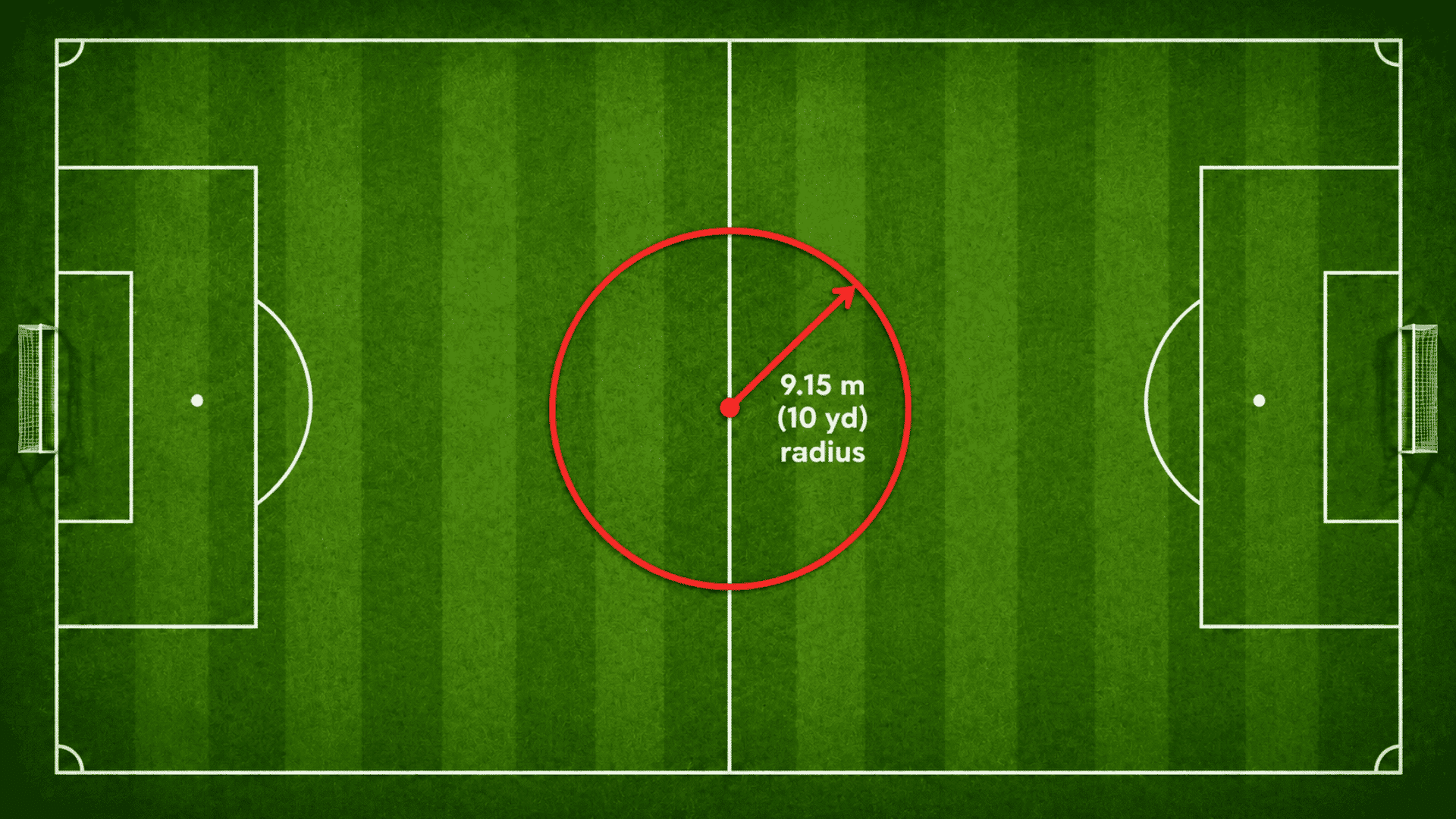
The center circle surrounds the center mark in the middle of the field. Its radius is 9.15 m, or 10 yards. This marking is mainly used during kickoffs.
Players from the team that is not taking the kickoff must stay outside the circle until the ball is put into play. The center mark shows exactly where the ball starts.
5. Corner Area Dimensions
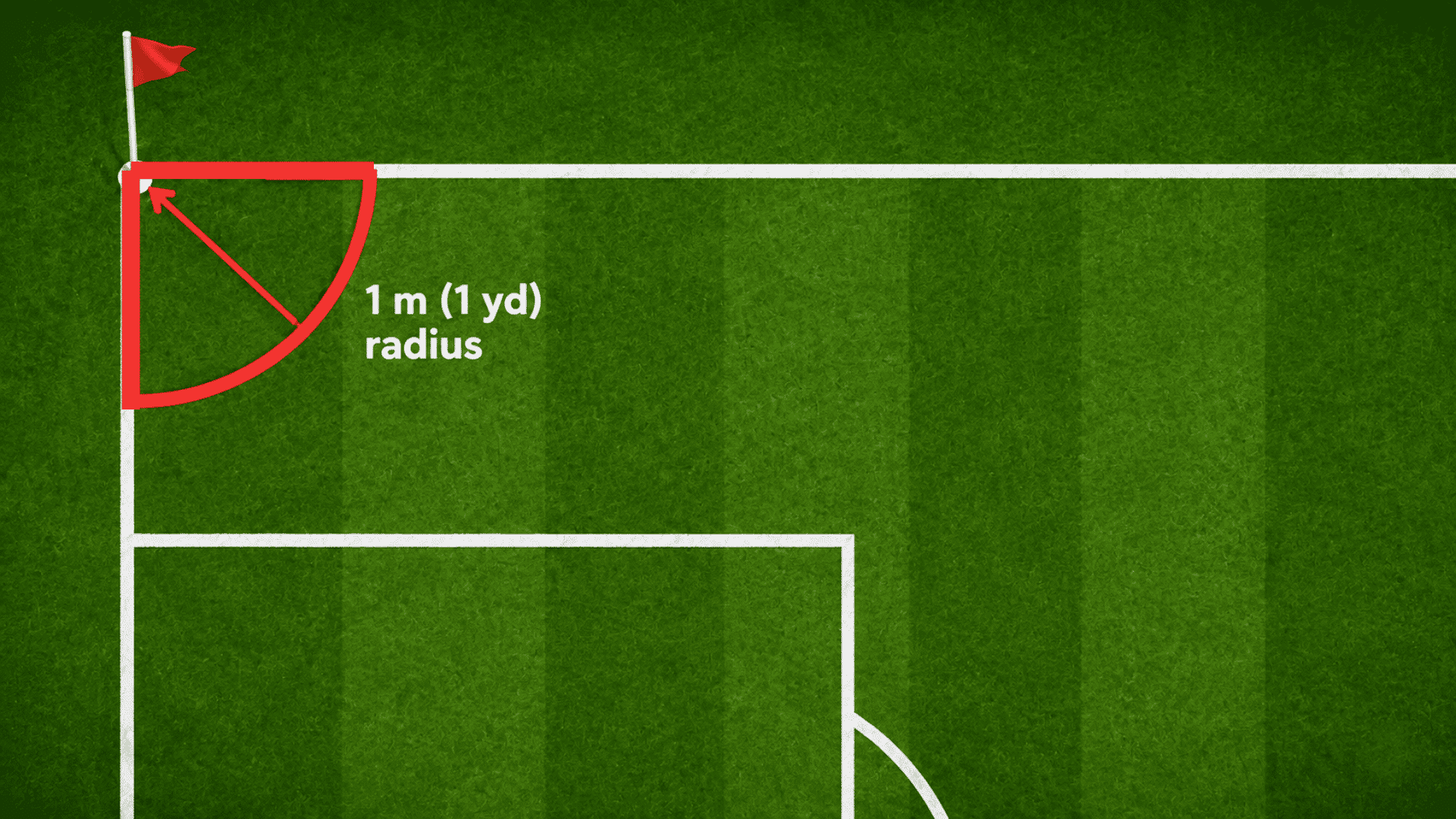
Each corner of the field has a small curved area around the corner flag. This is called the corner area. It has a radius of 1 m, or 1 yard.
When a corner kick is awarded, the ball must be placed inside or touching this area. The marking simply shows where the ball can be positioned before the kick is taken.
How Much Area Does a Soccer Field Cover?
A common 105 × 68 m soccer field covers 7,140 square meters. That works out to about 76,855 square feet, or roughly 1.76 acres of playing surface.
These dimensions come from FIFA’s recommended stadium field size. A field using a different permitted length or width will cover a different total area, so acreage is not fixed across every legal soccer field.
I cross-checked the calculation myself: 105 m × 68 m = 7,140 m² .
That distinction is useful when comparing the field itself with the total land needed for a soccer venue.
How Big are Youth Soccer Fields?
Youth soccer fields get larger as players move through school and progress from small-sided games toward full 11v11 soccer.
U.S. Soccer uses smaller fields through U12, while high school soccer generally follows NFHS field rules.
As players move into larger formats, the number of players on a soccer team also increases, which is one reason the field needs more space.
Refer to the table below to understand how the sizes roughly line up by grade:
| School Grade | Common Format | Field Length | Field Width |
|---|---|---|---|
| Kindergarten–Grade 2 | 4v4 | 25–35 yd | 15–25 yd |
| Grades 3–4 | 7v7 | 55–65 yd | 35–45 yd |
| Grades 5–6 | 9v9 | 70–80 yd | 45–55 yd |
| Grades 7–8 | Usually moving toward 11v11 | Set by local or state competition | Set by local or state competition |
| Grades 9–12 | 11v11 | 100–120 yd | 55–80 yd |
For high school soccer, 110 × 65 yards is the NFHS-recommended field size, although fields within the wider permitted range can still be used.
Grade bands are only a practical comparison because U.S. Soccer officially organizes its youth standards by age group rather than school grade.
Final Takeaway
A soccer field does not have one universal size. Under IFAB rules, regulation fields can range from 100–130 yards long and 50–100 yards wide, while international matches follow narrower limits.
For professional soccer, 105 × 68 m, or about 115 × 74 yards, is the most common benchmark.
The overall dimensions may change, but key markings such as the penalty area, goal area, center circle, penalty mark, and corner areas use fixed measurements.
A 105 × 68 m field covers about 7,140 m², or 1.76 acres, while youth fields are smaller to suit different age groups and playing formats.
So, when asking how big a soccer field is, always consider the competition level and format.
Have you played on fields of different sizes? Share your experience in the comments.
Frequently Asked Questions
Are Women’s Soccer Fields the Same Size as Men’s?
Yes. Women’s and men’s 11v11 soccer use the same field-dimension rules. The exact size can still vary according to competition regulations.
How Big is a Soccer Goal?
A full-size soccer goal is 8 yards wide and 8 feet high. Youth competitions often use smaller goals suited to the age group.
Is a Soccer Field Bigger Than an American Football Field?
Usually, yes. Soccer fields are generally longer and wider than American football fields, although exact soccer dimensions can vary between venues.
Can a Soccer Field Have Artificial Turf?
Yes. Soccer can be played on natural grass or approved artificial turf, as long as the playing surface meets the competition’s rules and safety requirements.
How Much Space is Needed Around a Soccer Field?
At least 3 meters of clear space is recommended around a soccer field to support match operations and reduce injury risk.