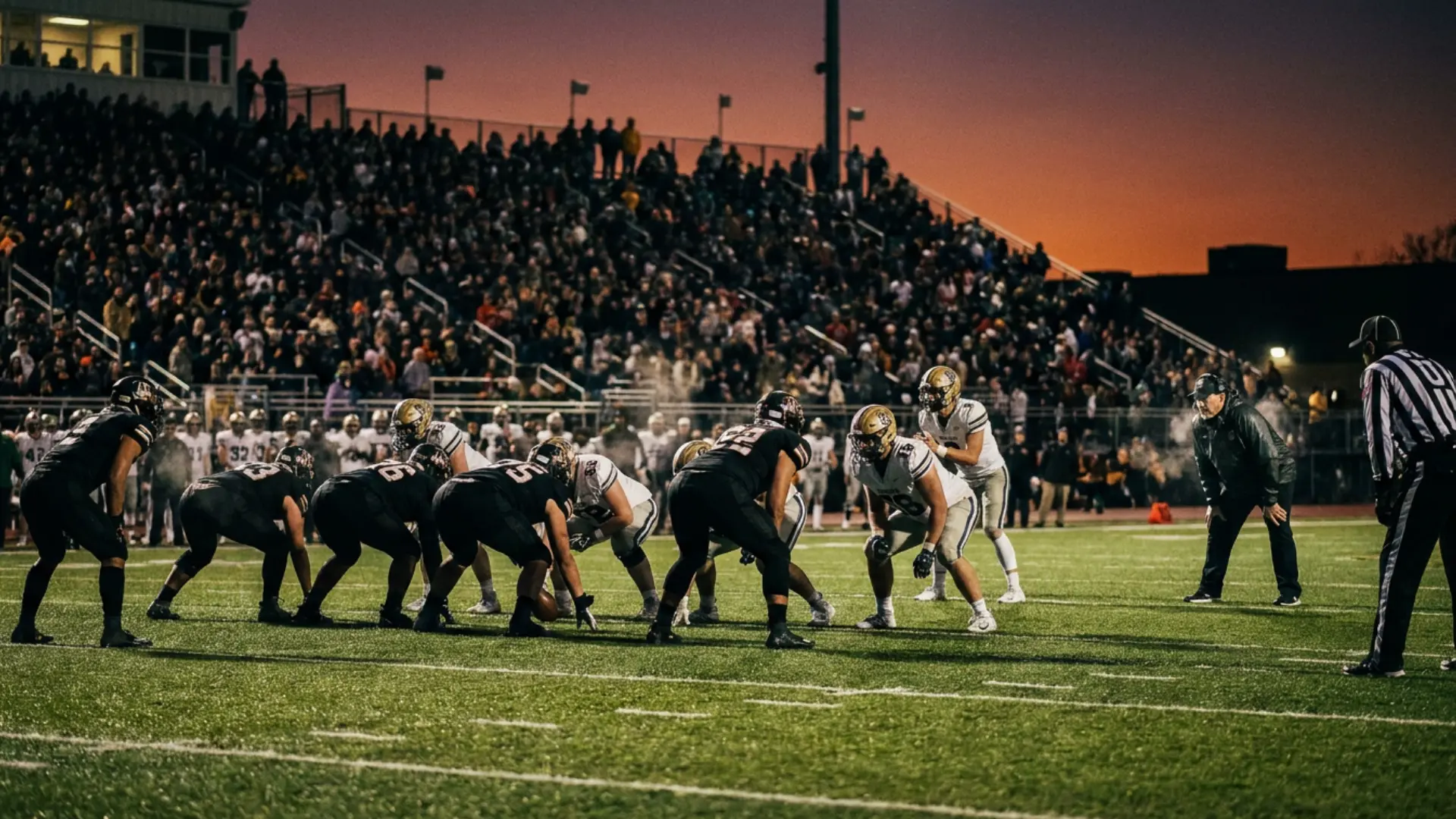



I’ve spent years working with football data, and one number I see repeated constantly is that the average NFL player stands about 6 feet 2 inches tall and weighs roughly 244 pounds. On its own, though, that figure does not tell you much.
The average includes everyone from 5-foot-5 running backs to 6-foot-10 tackles, so very few players actually match that “typical” build. What matters more is how height changes from one position to another.
Tackles are much taller than running backs, while cornerbacks are often similar in height to the receivers they cover.
Below, I’ll break down the average football player height by position and explain what the numbers actually tell us about size and performance in the NFL.
What is the Average Height of a Football Player?

The average NFL player is about 6 feet 2 inches tall. According to the NFL’s 2024 Kickoff Weekend roster data, the league-wide average height was 6.20 feet, or about 6 feet 2.4 inches.
That makes NFL players noticeably taller than the average American man. The CDC reports an average male height of 68.9 inches, or about 5 feet 9 inches.
Height also varies by position. Quarterbacks and offensive linemen are generally taller, while running backs and defensive backs tend to be shorter.
Body composition differs by position too, with research placing running backs near 12 percent body fat and receivers around 12.5 percent.
Average Football Player Height and Weight by Position
Here is the full board, using roster measurements grouped by position.
| Position | Average height | Average weight |
|---|---|---|
| Offensive tackle | 6’5” | 318 lbs |
| Offensive guard | 6’4” | 315 lbs |
| Tight end | 6’4” | 251 lbs |
| Defensive end | 6’4” | 290 lbs |
| Center | 6’3” | 306 lbs |
| Defensive tackle | 6’3” | 310 lbs |
| Quarterback | 6’2.7” | 222 lbs |
| Long snapper | 6’2” | 240 lbs |
| Linebacker | 6’2” | 239 lbs |
| Safety | 6’1” | 205 lbs |
| Kicker and punter | 6’1” | 212 lbs |
| Wide receiver | 6’0” | 200 lbs |
| Cornerback | 6’0” | 195 lbs |
| Running back | 5’10” | 214 lbs |
| League average | 6’2” | 244 lbs |
| Note: The average height of an NFL player varies by position, as each role requires different traits, builds, & strength levels. | ||
In the table, you can see that height and weight don’t move together. Tight ends and defensive ends share an average height of 6 feet 4 inches and are separated by about 40 pounds because one job is catching and the other is holding a gap.
The second pattern is how narrow the skill position band is. Receivers, corners, and safeties all sit within an inch of each other. This is why receivers, cornerbacks, and safeties often have similar builds.
Tallest Position in American Football

Offensive tackle is the tallest position in football, averaging about 6 feet 5 inches and 318 pounds. Guards and centers are slightly shorter.
Height matters mainly because taller players often have longer arms. That extra reach helps offensive tackles make first contact and control defensive ends during pass protection.
Tight ends and defensive ends are also among the tallest positions, averaging around 6 feet 4 inches. Their size improves catching range, blocking, and tackling ability.
The tallest NFL players are usually offensive tackles. Recent seasons have featured players listed at 6 feet 9 inches and 6 feet 10 inches, with Dan Skipper and Christian Jones among the tallest depending on the roster snapshot.
Shortest Position in American Football
Running back is the shortest position in football, averaging about 5 feet 10 inches and 214 pounds. Their shorter, heavier build can improve balance and help them absorb contact.
Cornerbacks and wide receivers follow at around 6 feet tall, while kickers and punters average about 6 feet 1 inch.
Some NFL players are much shorter than these averages. Kicker Blake Grupe is listed at 5 feet 7 inches, while running back Deuce Vaughn stands around 5 feet 5 inches.
However, running backs vary greatly in size. Derrick Henry, at 6 feet 3 inches and 247 pounds, shows how different body types can succeed at the position.
Does Height Matter in American Football?
Yes! Height matters in American football because different positions benefit from different body types. However, height alone does not determine how well a player performs.
- Taller quarterbacks may see over the offensive line more easily, but accuracy, decision-making, and mobility are just as important.
- Offensive linemen often benefit from greater height and longer arms because these traits can help them block defenders and control space.
- Wide receivers and tight ends can use extra height to reach high passes and compete for contested catches.
- Shorter running backs may benefit from a lower center of gravity, which can improve balance and help them stay upright through contact.
- Defensive players can use height and reach to break up passes, pressure quarterbacks, and match up against bigger offensive players.
Famous NFL Players Who Were Shorter Than Average Height
Several shorter NFL players still produced at an elite level. Here’s a quick comparison:
| Player | Height | Player Description |
|---|---|---|
| Jack Shapiro | 5’1” | Shortest player in NFL history; played blocking back for the Staten Island Stapletons in 1929 |
| Trindon Holliday | 5’5” | Built his career on return ability, including two return touchdowns in one playoff game |
| Darren Sproles | 5’6” | Became one of the NFL’s most productive all-purpose players |
| Maurice Jones-Drew | 5’7” | Led the NFL in rushing in 2011 despite being below the position average |
| Barry Sanders | 5’8” | Hall of Famer who finished with more than 15,000 rushing yards |
Are NFL Players Taller Than College Football Players?
Division I college football players are nearly the same height as NFL players, averaging close to 6 feet 2 inches. However, in lower college divisions, players are usually a little shorter and lighter.
The main difference between the two levels is not height, but weight and overall physical development.
Division I players average around 237 pounds, while NFL players average closer to 244 pounds.
Attention! Height alone does not separate college players from NFL players. Strength, speed, technique, and positional fit usually make the bigger difference.
How to Know If You are Taller Than Average Height?

Here’s how to compare your height with other football players and understand where you fit by position.
- Compare by Position: Compare your height with players at your position, not the average height of all football players.
- Small Differences are Normal: Being one or two inches above or below your position average usually doesn’t matter much.
- Skills Can Offset Size: Speed, strength, route running, tackling, and agility can make height less important to coaches.
- Reach Matters Too: Arm length and wingspan can be more important than height for linemen, receivers, and defensive players.
- Consider Your Playing Role: Different roles within the same position may favor shorter, taller, quicker, or stronger players.
- Try Another Position: If height limits one role, switching positions may help you use your strongest skills more effectively.
In a nutshell
The average NFL player stands about 6 feet 2 inches tall, but that number varies a lot by position.
Offensive tackles are the tallest at around 6 feet 5 inches, while running backs average closer to 5 feet 10 inches. Height can help with reach, blocking, catching, and coverage, but it doesn’t determine performance on its own.
Strength, speed, technique, and positional fit matter just as much.
The next step is to compare your own height with the average for the position you play.
Drop your height and position in the comments and share your thoughts on how much size really matters in football.
Frequently Asked Questions
Are NFL Players Measured With or Without Shoes?
Official measurements taken at events such as the NFL Combine are typically recorded without shoes, giving teams a more consistent way to compare player height.
Can a Football Player be too Tall for a Position?
Yes. Extra height can sometimes make it harder to stay low, change direction quickly, or maintain leverage, especially at positions that depend on balance and agility.
Do NFL Teams Have Minimum Height Requirements?
The NFL does not set official minimum height requirements for players. Individual teams may still prefer certain size ranges when evaluating prospects for specific positions.
Does Height Affect a Quarterback’s Ability to See Over the Offensive Line?
Height can help quarterbacks see passing lanes, but footwork, pocket movement, timing, and throwing angles can allow shorter quarterbacks to compensate effectively.
Why are Offensive Linemen Usually Taller and Heavier Than Skill Players?
Linemen need size, reach, and mass to block powerful defenders. Skill positions emphasize speed, acceleration, route running, and quick changes of direction.