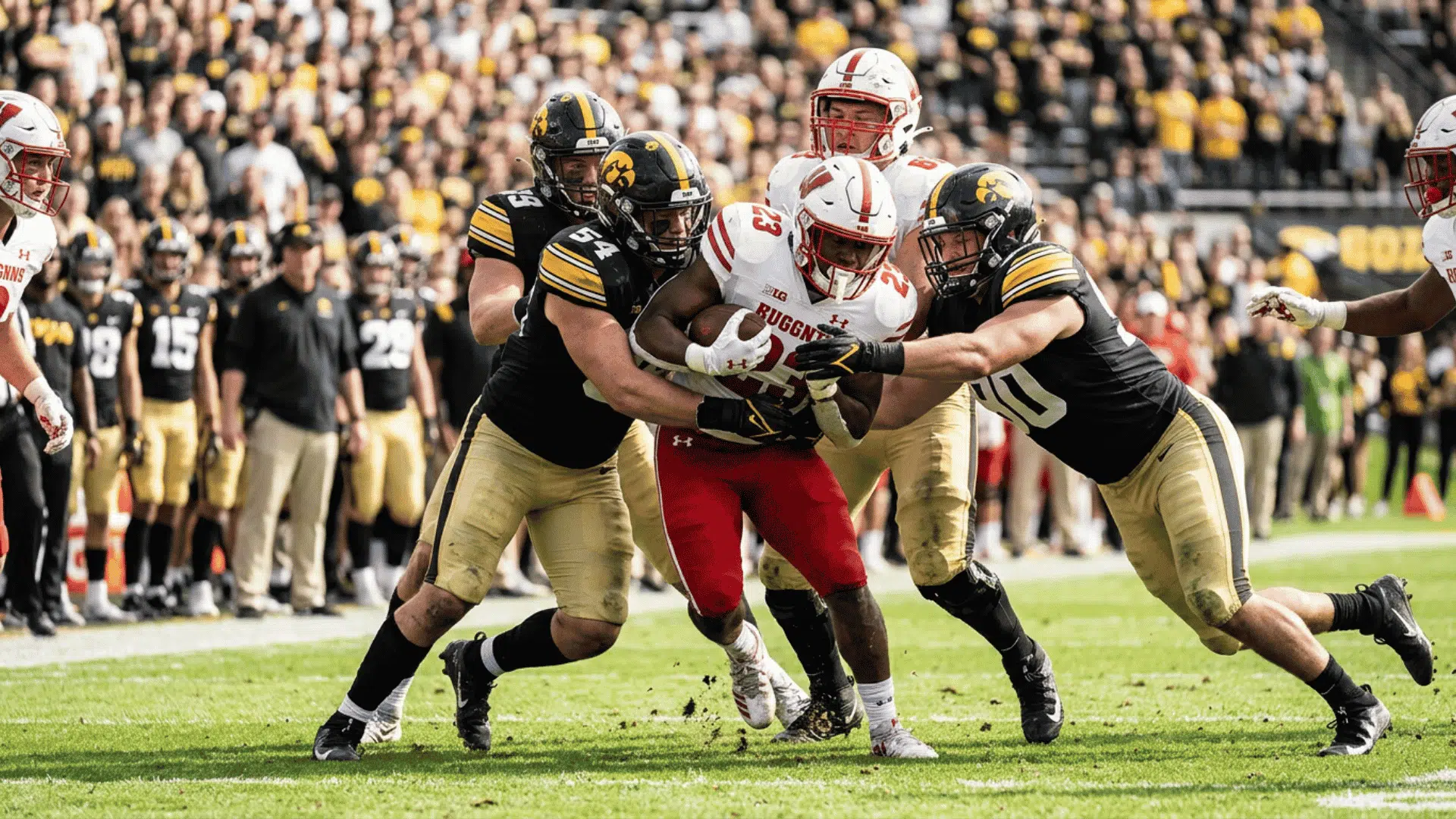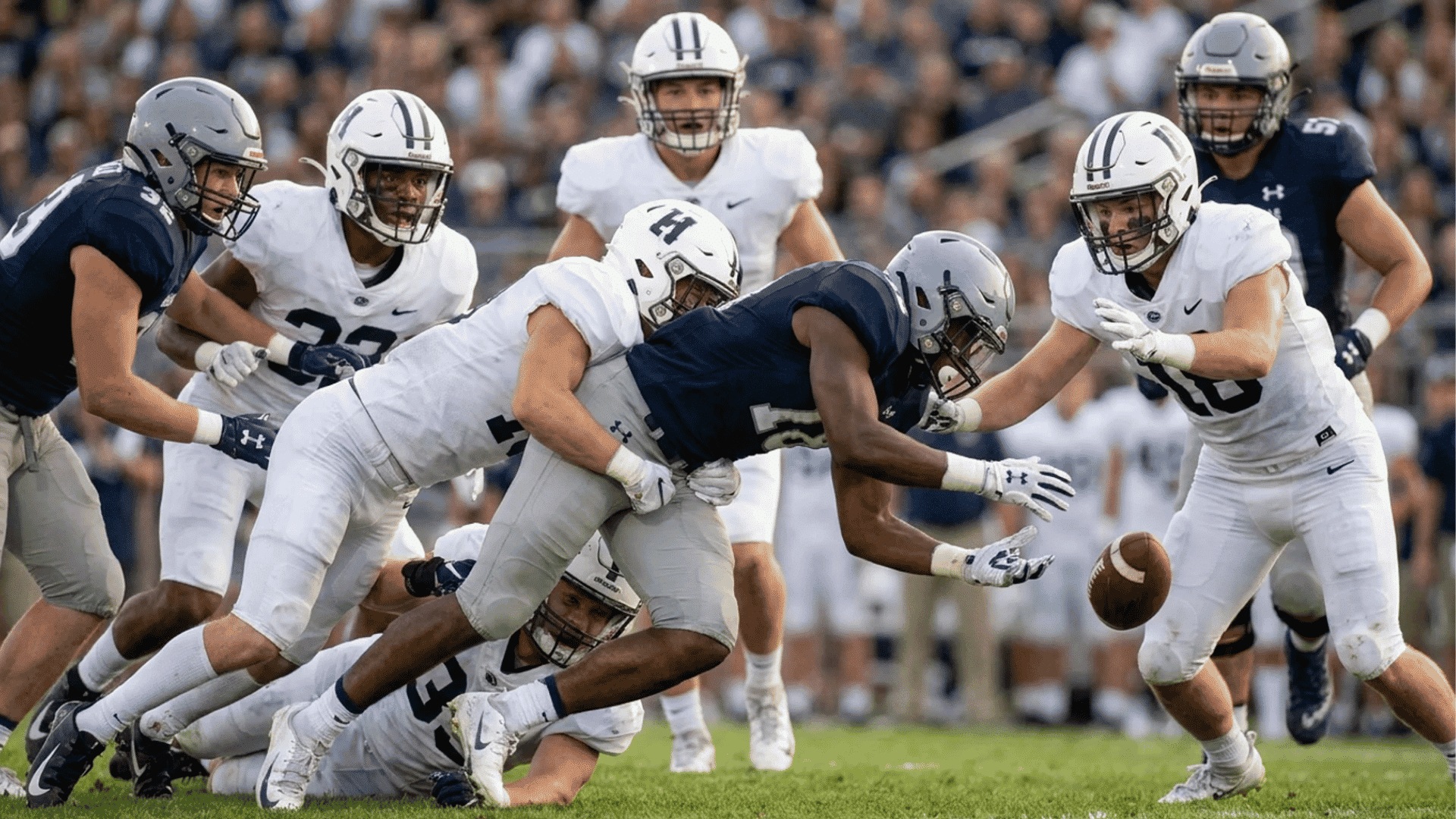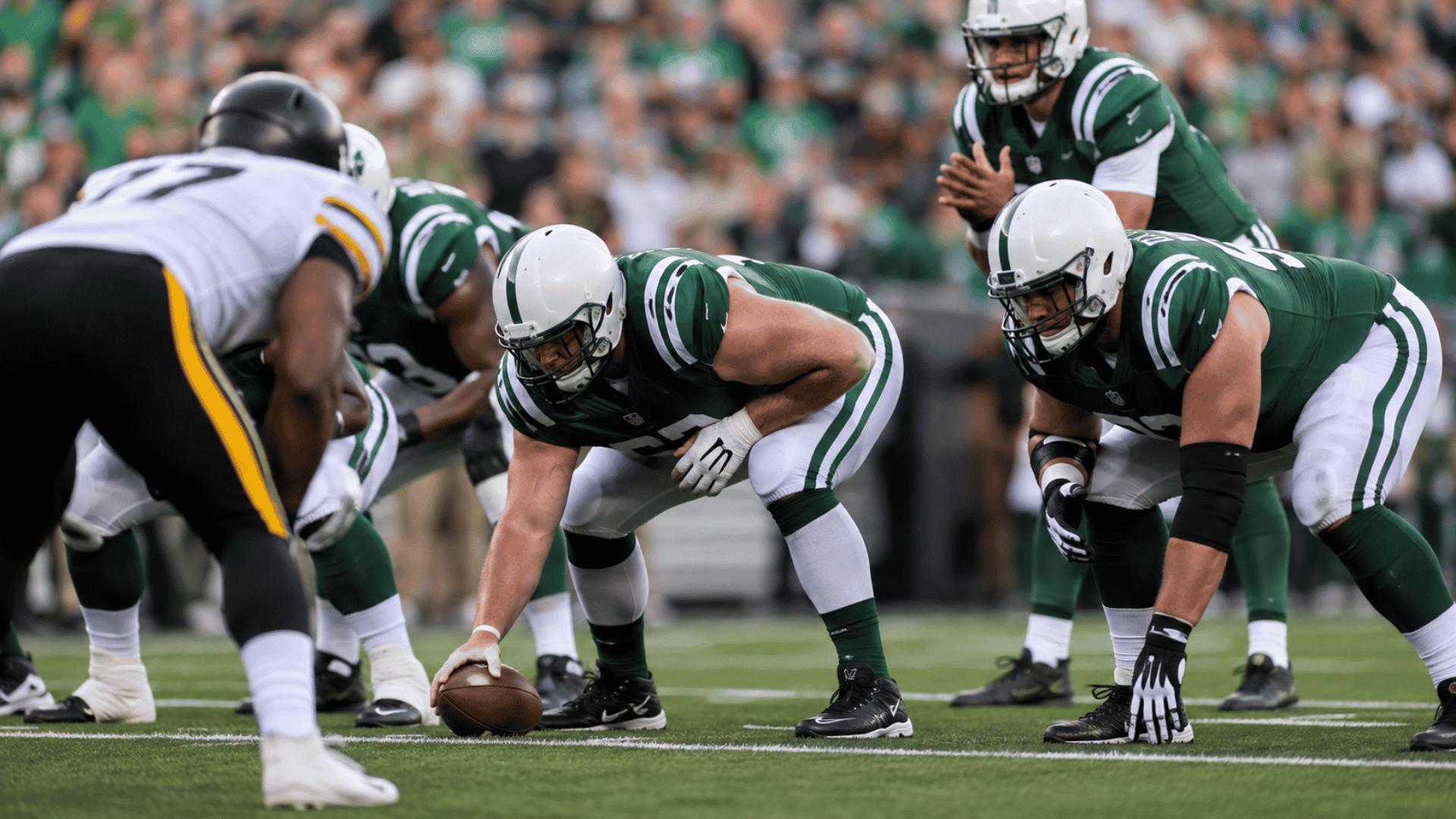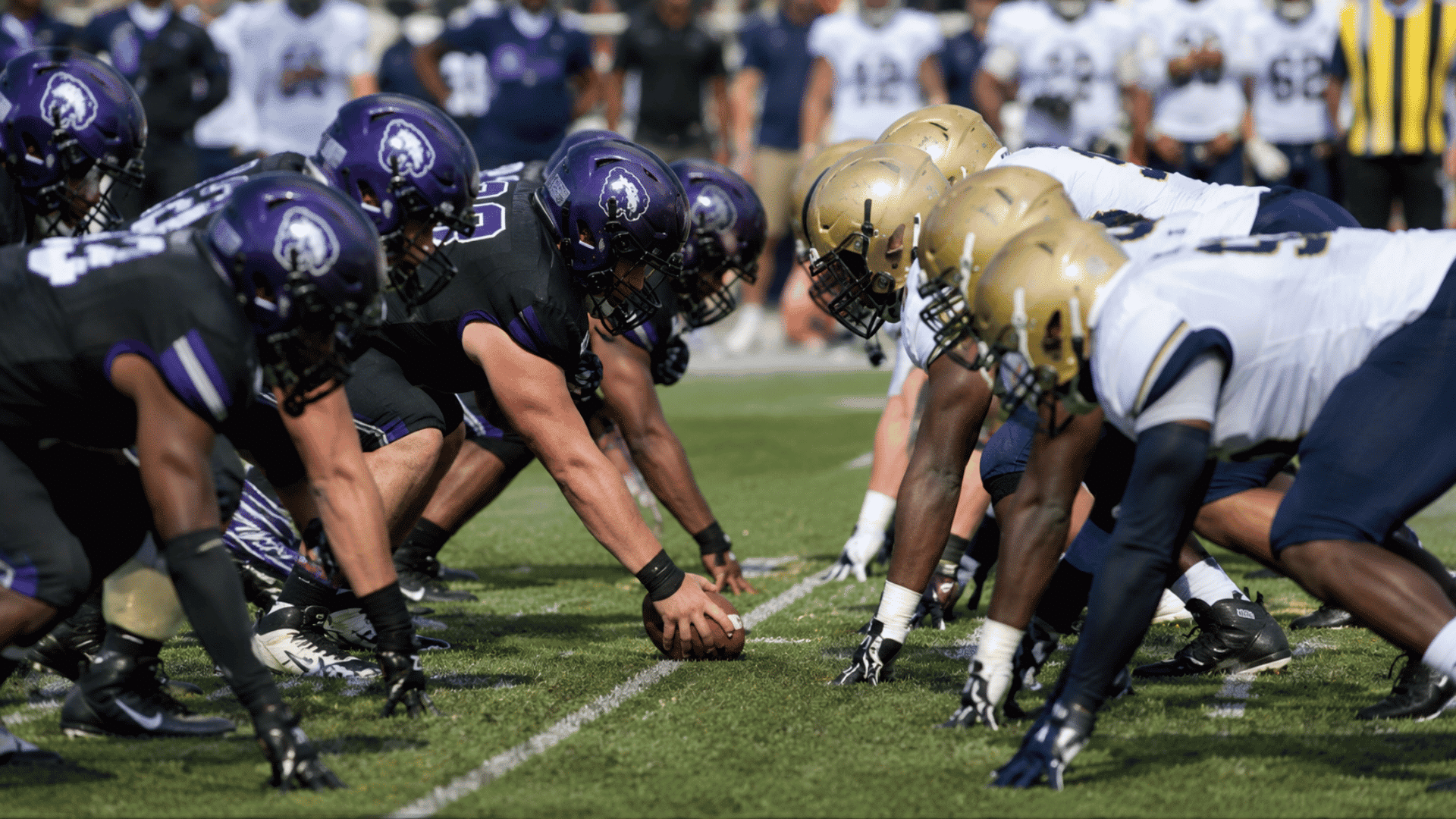

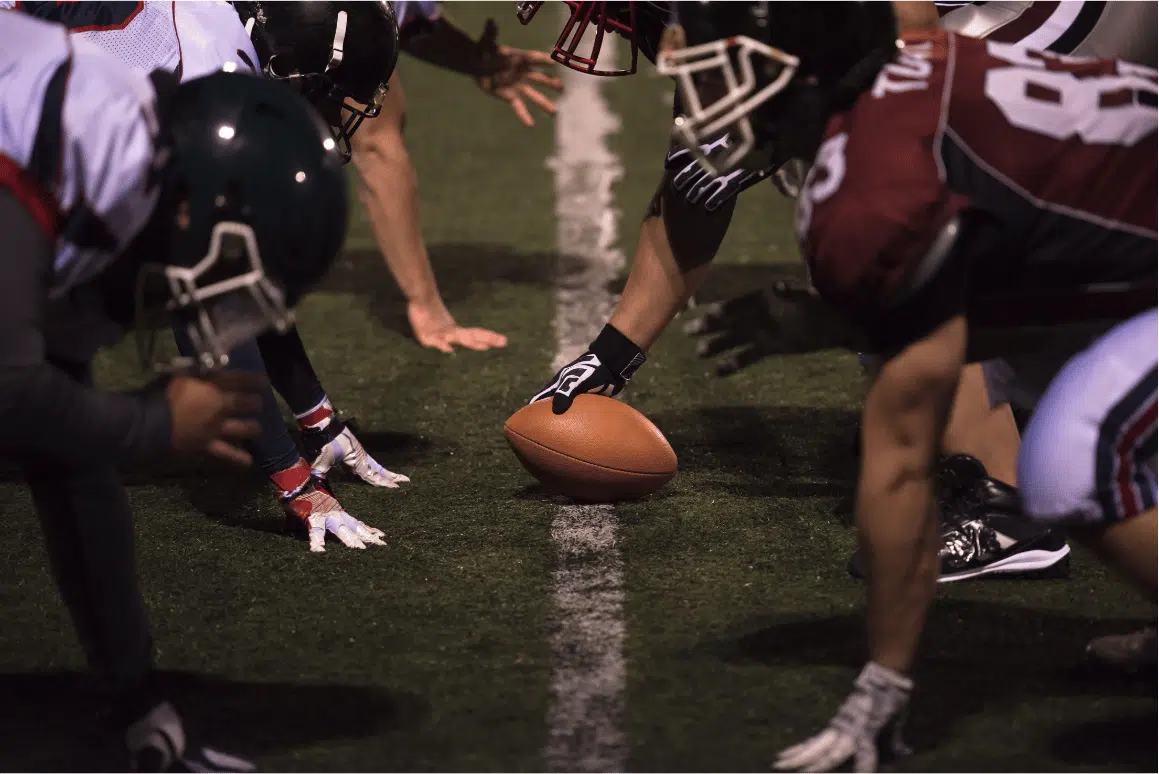

A defensive tackle jumps early, bumps the guard across from him, and the whistle blows before the ball ever moves. That flag is usually encroachment.
Encroachment? Is that a serious crime? No, the word itself reads like one, but it’s a five-yard, dead-ball foul on the defense in the NFL.
A defender commits it by entering the neutral zone and touching an offensive player or the ball before the snap. Officials stop play at once, the down is replayed, and there is no free play.
More on it as you continue reading.
I’ll explain what Encroachment means, how it differs from offside, neutral zone infraction, and false start, how the penalty works, and why referees call it.
Encroachment in Football (Meaning)
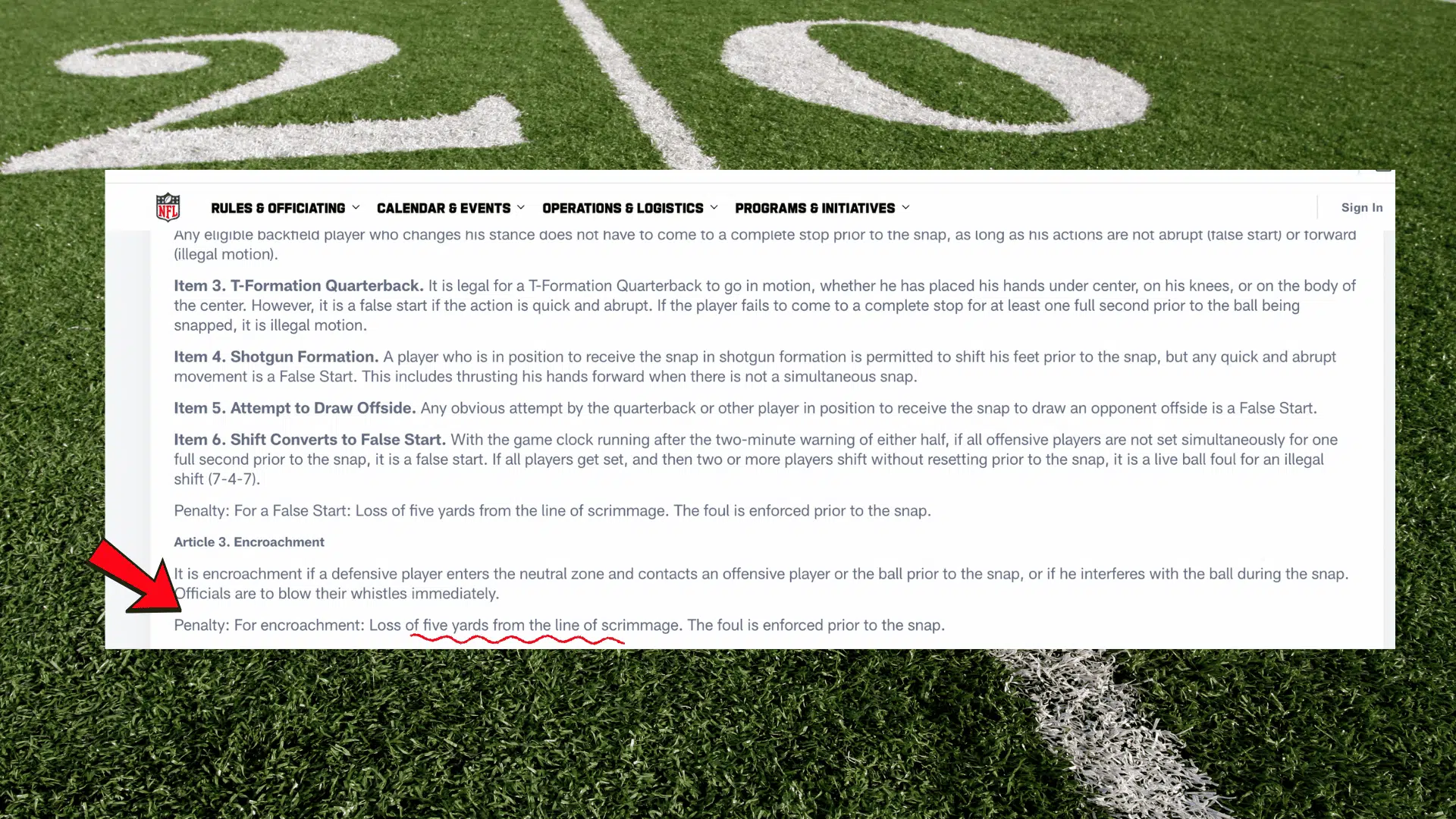
The NFL defines encroachment in Rule 7, Section 4, Article 3 of its rulebook.
A defensive player commits it when he enters the neutral zone and contacts an offensive player or the ball before the snap. It also covers a defender who interferes with the ball during the snap.
Officials are told to blow their whistles immediately, so the ball never becomes live.
Did you know? NFL teams were called for 678 false start penalties during the 2024 season, showing how often mistakes can happen before a play even begins.
A Simple Example of Encroachment During a Game
Say the offense has the ball on its own 40-yard line.
It is second-and-seven (2nd down out of 4), and the quarterback is calling signals before the snap.
A defensive lineman steps across the line of scrimmage, enters the neutral zone, and bumps into the center before the ball is snapped.
An official on the line of scrimmage blows the whistle right away, so the play never starts. The ball moves up to the offense’s 45-yard line, and second-and-seven becomes second-and-two.
The offense still has its second down.
At second-and-two, the defense must respect both run and pass, so the whole call sheet opens up.
How Does Encroachment Happen Before the Snap?
Before each play, the offense and defense line up on opposite sides of the ball.
The imaginary line that marks where the ball is placed is called the line of scrimmage. It helps both teams know where they must line up.
Imagine a defensive lineman trying to get closer to the quarterback. He steps across the line of scrimmage and enters the neutral zone.
If he then touches an offensive player or the ball before the snap, the referee calls Encroachment. A five-yard gift like that can be difficult to unwrap, but it can put the offense in a better position to earn a first down.
Important! Crossing into the neutral zone alone does not always mean encroachment. Contact does.
What is the Penalty for Encroachment in Football?
The penalty is five yards against the defense, marked off from the line of scrimmage before the snap.
Rule 7-4-3 calls for a 5-yard loss and nothing more, unlike defensive holding, which awards an automatic first down.
Two situations change what those five yards do.
1. If the penalty takes the ball to or past the line to gain, the offense gets a first down. Third-and-three becomes first-and-ten, for example.
2. If the ball is inside the defense’s 10-yard line, the penalty is cut to half the distance to the goal line. From the 6, the ball moves to the 3. From the 2, it moves to the 1.
What is the Difference Between Encroachment, Offside & False Start?
All four of these penalties happen at the line of scrimmage, and all four cost five yards in the NFL. What separates them is who commits the foul, what the player does, and whether the ball becomes live.
Encroachment needs contact before the snap.
Offside is about where a defender is when the ball is snapped.
A false start is an offensive player moving early in a way that simulates the snap.
A neutral zone infraction is a defender who draws a flinch or gets a free path to the quarterback or kicker.
More detailed differences unpacked using a table!
Encroachment vs. Offside
Encroachment | Offside |
A defensive player enters the neutral zone and contacts an offensive player or the ball before the snap. | A player is in or beyond the neutral zone when the ball is put into play. |
The play is stopped immediately. | The play may continue until the relevant rule is enforced. |
Five-yard penalty in the NFL. | Five-yard penalty in the NFL. |
Encroachment vs. False Start
Encroachment | False Start |
Committed by a defensive player under the NFL definition. | Committed by an offensive player. |
Involves entering the neutral zone and making contact with an offensive player or the ball. | Involves an offensive player making an illegal movement that simulates the start of a play. |
Five-yard penalty. | Five-yard penalty. |
Encroachment vs Neutral Zone Infraction
Encroachment | Neutral Zone Infraction |
Defender enters the neutral zone and makes contact with an offensive player or the ball. | A defender enters the neutral zone without contact but has a free path to the QB or kicker, or makes a nearby offensive player flinch. |
The whistle blows right away. | The whistle blows right away. |
Five-yard penalty (Rule 7-4-3). | Five-yard penalty (Rule 7-4-4). |
How Often is Encroachment Called in the NFL?
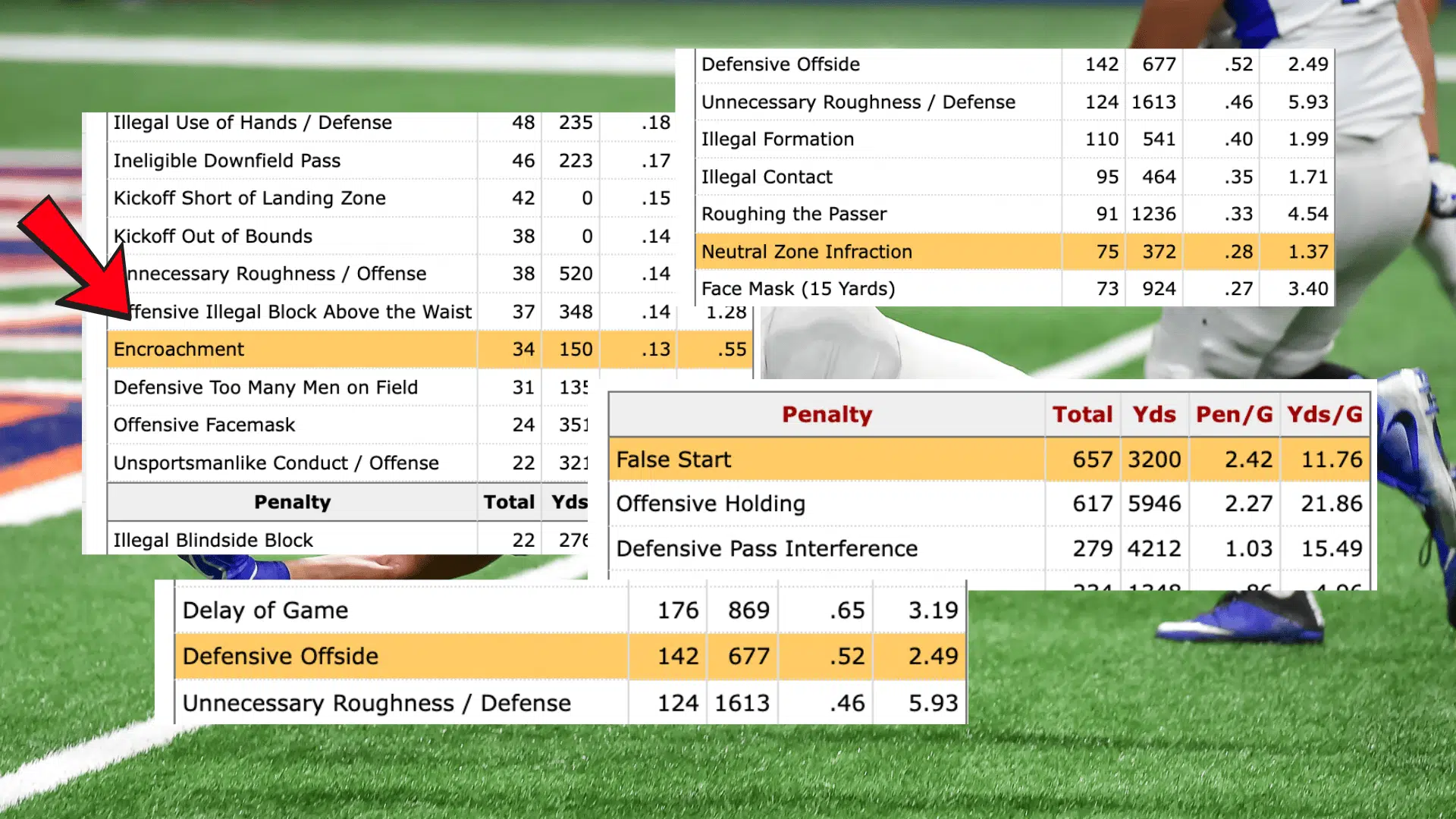
Quite often, I’d say. Thirty-four accepted encroachment penalties across the 2025 regular season, worth 150 yards in total. That is roughly about one every eight games.
Source: Pro Football Reference
It is also visible that there are 657 false starts, 142 defensive offside calls, and 75 neutral zone infractions.
The yardage is lower than 34 times five because some of those fouls were cut to half the distance near the goal line.
One likely reason: most defenders who jump early pull up before contact, so those plays end as offside or neutral zone infractions instead.
Encroachment Rules in College and High School Football
College games use NCAA rules, and most U.S. high schools use rules written by the NFHS.
In college football, encroachment is an offensive foul. It’s called when an offensive player other than the snapper is in the neutral zone after the snapper touches the ball.
A defender who touches an opponent early is flagged for offside instead, a five-yard dead-ball foul.
After the ball is ready for play, a defender who breaks the plane of the neutral zone has encroached, contact or not.
How Can Players Avoid an Encroachment Penalty?
Encroachment flags come from a lineman guessing, so the fix is to remove the guess. My officiating experience helped me round up these three simple habits to help players avoid an encroachment penalty:
Watch the ball: Keep your eyes on the ball and avoid stepping into the neutral zone before the snap.
Stay balanced: Keep a steady stance instead of leaning or lunging forward while waiting for the play.
Listen for the snap: Pay attention to the quarterback’s signals, but don’t move early or guess when the ball will be snapped.
Knowing the roles and positions in the football defense can also help players understand where they should line up.
The FINAL Say!
Encroachment may cost a team only five yards, but those yards can make a real difference on the field. In the NFL, it is a defender entering the neutral zone and touching an opponent or the ball before the snap.
It is also rare, with about one call every eight games in 2025.
If you mix up the four line-of-scrimmage fouls, this memory aid helps.
Contact before the snap: encroachment.
A flinch or a free path: neutral zone infraction.
Still across at the snap: offside.
An offensive player moves early: false start.
Have a rule you’d like explained? Leave it in the comments!
Frequently Asked Questions
Does Encroachment Happen In Soccer?
Yes, but it means something different. In soccer, encroachment is entering the penalty area too early during a penalty kick, which can force a retake.
What Is The Neutral Zone In American Football?
The neutral zone in American football is the space between offense and defense, equal to the football’s length. Only the center occupies it before the snap; players may cross once play begins.
What Is The Rarest Rule In Football?
The one-point safety is the rarest scoring play, while the fair catch kick and the palpably unfair act rank among the rarest rules and penalties.
Does Encroachment Count As A Dead-Ball Foul?
Yes. Under NFL rules, encroachment is an immediate dead-ball foul that results in a five-yard penalty. The down is replayed because the ball was never snapped.