



If you’re staring at your fantasy team wondering who to start, trade, or drop, you need the rest-of-season rankings, not draft-day rankings.
Jahmyr Gibbs and Bijan Robinson lead the overall rankings, while Ja’Marr Chase and Puka Nacua remain the top wide receiver options.
Once the season kicks off, everything changes. Injuries happen, target shares shift, and backups turn into starters overnight.
I track those numbers every week and rebuild my rankings around them, so you always know who’s worth rostering right now.
I’ll flag players worth trading for and players worth trading away before their value drops. I’ll also cover how your league’s scoring settings, like PPR, can shift these numbers.
Fantasy Football Rest of Season Rankings (Top Overall)
Before you get into individual positions, it helps to see how the best overall names compare side by side.
Here’s how the top names stack up right now. Based on where CBS Sports’ fantasy staff is drafting them this July, these fantasy football rest-of-season rankings show how the leading players compare at every position.
| Rank | Player | Pos | Team | Why He’s Here |
| 1 | Jahmyr Gibbs | RB | DET | Set to absorb even more work with David Montgomery gone; posted 21.6 half-PPR points per game last year |
| 2 | Bijan Robinson | RB | ATL | 287 carries, 79 catches last season; CBS’s Jamey Eisenberg has him going No. 2 overall |
| 3 | Ja’Marr Chase | WR | CIN | Averaged 15.8 half-PPR points per game, even with Joe Burrow missing nine games hurt |
| 4 | Puka Nacua | WR | LAR | Led all receivers in 2025 with 129 catches for 1,715 yards |
| 5 | Jaxon Smith-Njigba | WR | SEA | Broke out with 119 catches, 1,793 yards; little target competition in Seattle |
| 6 | Amon-Ra St. Brown | WR | DET | Three straight seasons of 115+ catches and 10+ touchdowns |
| 7 | Jonathan Taylor | RB | IND | Averaged 25.2 half-PPR points per game through 10 healthy games with Daniel Jones last year |
| 8 | Christian McCaffrey | RB | SF | Led all non-QBs at 20.7 half-PPR points per game in 2025 |
| 9 | James Cook | RB | BUF | Led the NFL in rushing yards (1,621) last season |
| 10 | CeeDee Lamb | WR | DAL | Coming off a down year, expected to reclaim the alpha role for Dak Prescott |
| 11 | Justin Jefferson | WR | MIN | Struggled with QB change last year; addition of Kyler Murray could restore him to elite status |
| 12 | Josh Allen | QB | BUF | Projected for 25.2 fantasy points per game, the only QB projected above 24 |
Right behind this group is a loaded “Round 2” tier that includes tight ends Brock Bowers and Trey McBride, running backs Chase Brown, De’Von Achane, Ashton Jeanty, and Derrick Henry, and receivers Rashee Rice, A.J. Brown, Drake London, and Nico Collins.
The Factors to Use to Weight These Rankings
Before you dig into the position breakdowns below, it’s worth knowing what actually goes into a ranking like this one.
CBS’s rankings blend season-long projections with round-by-round draft value, factoring in target share, offensive scheme changes, and injury history rather than leaning on any single number.
That’s the same approach I use: check the floor, check the ceiling, then weigh both against what the situation actually supports.
Rest of Season Running Back Rankings
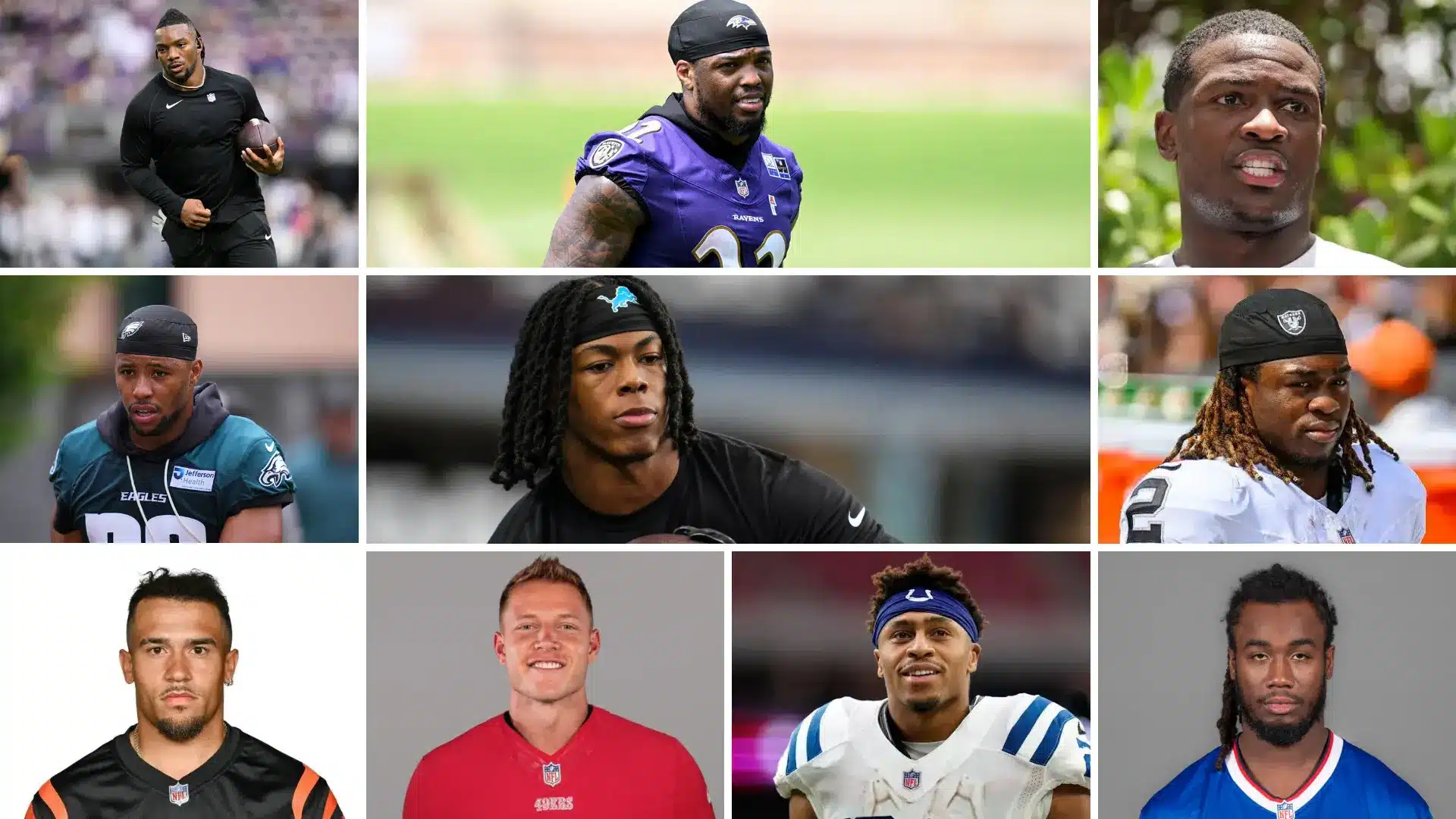
Running backs win and lose fantasy weeks faster than any other position, so let’s start with where the position sits by tier before getting into specific trade targets.
Here’s how the running back position breaks down right now, tier by tier:
| Tier | Player | Team | Why He’s Here |
| 1 | Jahmyr Gibbs | DET | Expected to be the workhorse now that Montgomery is gone |
| 1 | Bijan Robinson | ATL | Elite volume in both the run and pass game |
| 2 | Jonathan Taylor | IND | Averaged 25.2 half-PPR points per game with a healthy Daniel Jones |
| 2 | Christian McCaffrey | SF | Best receiving numbers among all RBs in 2025 |
| 2 | James Cook | BUF | Led the NFL in rushing yards |
| 3 | Chase Brown | CIN | Scored 16+ half-PPR points in four of his final five games |
| 3 | De’Von Achane | MIA | Home-run threat with at least 60 catches in each of the past two seasons |
| 3 | Ashton Jeanty | LV | Was No. 9 in total touches as a rookie despite a slow start |
| 3 | Derrick Henry | BAL | Averaged 1,758 rushing yards over the past two seasons in Baltimore |
| 3 | Saquon Barkley | PHI | Bounce-back candidate after a down 2025 |
Rest of Season Wide Receiver Rankings
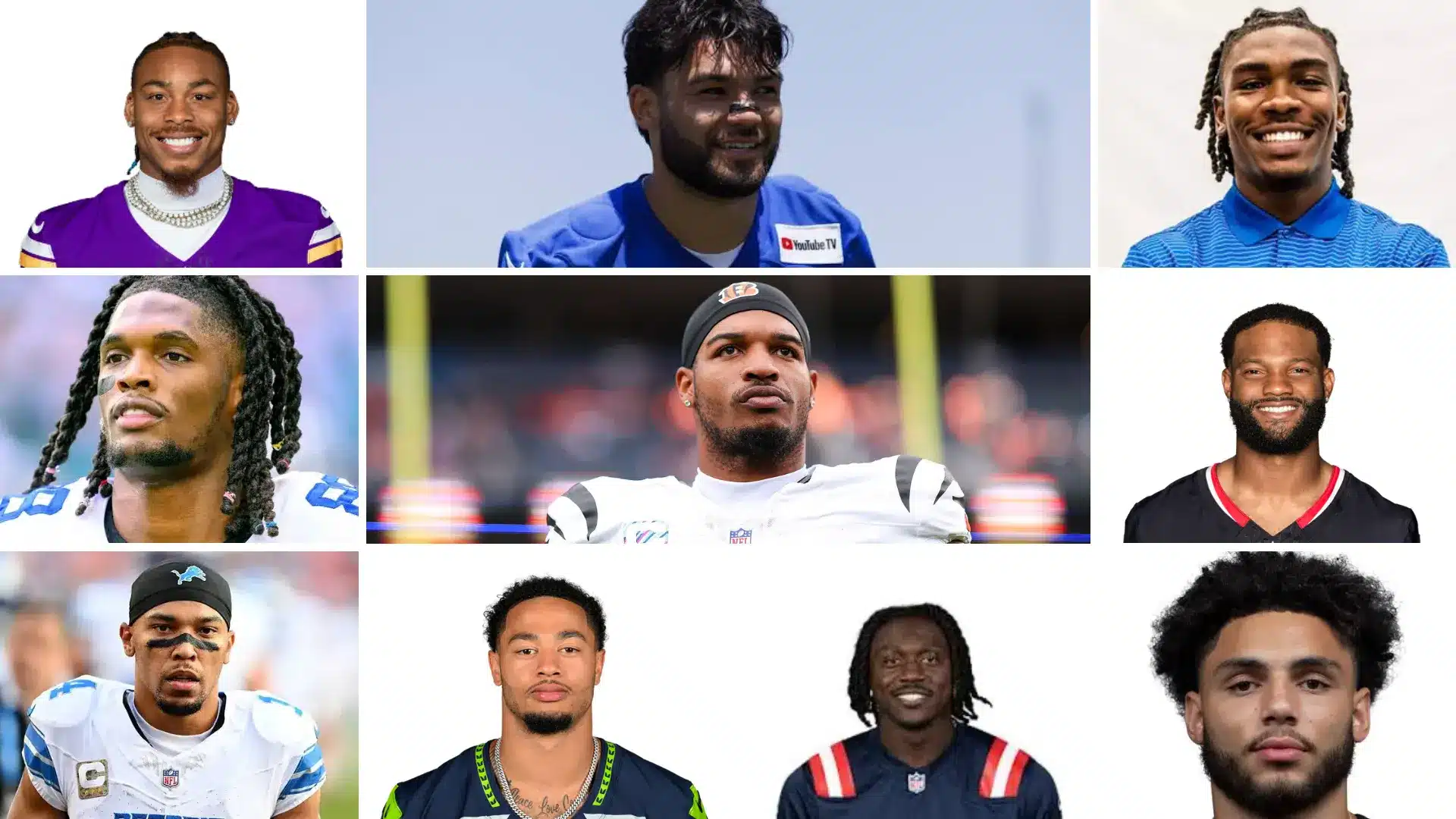
Receivers live and die by target share, so let’s look at how the position sorts into tiers before getting into specific names to trade for or away.
Here’s the current tier breakdown at receiver:
| Tier | Player | Team | Why He’s Here |
| 1 | Ja’Marr Chase | CIN | Elite target share; capable of a Triple Crown season with a healthy QB |
| 1 | Puka Nacua | LAR | Top receiver in football last season |
| 1 | Jaxon Smith-Njigba | SEA | Minimal competition for targets in Seattle |
| 1 | Amon-Ra St. Brown | DET | Model of consistency, three straight elite seasons |
| 1A | CeeDee Lamb | DAL | Buy-back candidate after an injury-shortened down year |
| 1A | Justin Jefferson | MIN | Buy-back candidate with a new, better quarterback situation |
| 2 | Rashee Rice | KC | Star production when healthy and active |
| 2 | A.J. Brown | NE | Now the clear No. 1 option in a new offense |
| 2 | Drake London | ATL | Dominates targets at 9.3 per game |
| 2 | Nico Collins | HOU | Go-to option for C.J. Stroud, though volume is a slight concern |
Rest of Season Quarterback Rankings

Quarterback depth runs deeper than any other position, so before getting into streaming strategy, take a look at how the top of the position separates into tiers.
Here’s where things stand at quarterback tiers:
| Tier | Player | Team | Projected FPPG | Why He’s Here |
| 1 | Josh Allen | BUF | 25.2 | No other QB projects above 24 FPPG; top-three finisher four years running |
| 2 | Lamar Jackson | BAL | 22.6–23.7 | Highest rushing upside of the tier |
| 2 | Drake Maye | NE | 22.6–23.7 | Sophomore breakout candidate |
| 2 | Joe Burrow | CIN | 22.6–23.7 | Elite, when healthy, plays with Chase and Higgins |
| 2 | Jalen Hurts | PHI | 22.6–23.7 | Best value in the tier, often available a round or two later |
| 2 | Dak Prescott | DAL | 22.6–23.7 | Plays in the pass-heavy offense in the league |
| 3 | Brock Purdy | SF | 20.9–22.1 | More upside than his ADP suggests |
| 3 | Trevor Lawrence | JAC | 20.9–22.1 | Closed last season with 23+ fantasy points in seven straight games |
Rest of Season Tight End Rankings

Tight end is usually a two-player position, so let’s start with the tiers before getting into the one name every fantasy manager is watching this year.
Here’s how the position breaks down at the top:
| Tier | Player | Team | Why He’s Here |
| 1 | Brock Bowers | LV | Projected to lead the position in targets if he stays healthy |
| 1 | Trey McBride | ARI | Led all tight ends in targets, catches, and yards in 2025 |
| 2 | Colston Loveland | CHI | Averaged 16.0 half-PPR points per game over his final four contests |
| 2 | Tyler Warren | IND | Scored 10.5+ half-PPR points in six of his first 10 games |
| 2 | Harold Fannin Jr. | CLE | Led all Browns pass-catchers in targets as a rookie |
PPR vs Non-PPR vs Superflex: How Format Changes These Rankings
Your league’s scoring settings move these numbers more than you’d think.
A running back who catches a lot of passes, like Christian McCaffrey or De’Von Achane, climbs several spots in PPR leagues but drops back down in non-PPR ones, since every reception adds a full point instead of nothing.
Superflex leagues flip things even more, since you can start two quarterbacks instead of one, which pushes names like Jalen Hurts and Dak Prescott far higher than they’d go in a standard league.
Tight end premium formats work the same way for pass-catching tight ends.
Always check your exact league settings before trusting any generic list, since a PPR-built ranking won’t fit a non-PPR or superflex league the same way.
How to Use Rest of Season Rankings
These rankings work best as a guide, not a strict rulebook, so lean on them differently depending on the decision at hand.
- Trades: Compare both players’ tiers side by side. Judge who wins the deal over the rest of the season, not just the current week.
- Waivers: Target players climbing the tiers quickly. A fast rise usually signals growing target share or touch count, and that trend tends to hold.
- Start/Sit: Pair the rankings with the actual matchup. A lower-tier player can still post a big week against a defense that struggles to stop his position.
- Bottom line: Use the tiers to build your shortlist, then let the matchup decide the final call.
Final Thoughts
The best fantasy football rest-of-season rankings reflect current roles, recent usage, injuries, and scoring settings, not draft-day expectations.
Gibbs and Robinson lead the overall group, while Chase and Nacua remain top receiver options. Allen gives you the strongest quarterback ceiling, and Bowers and McBride sit at the top of the tight end tiers.
Use these rankings to compare trade offers, identify waiver targets, and narrow your weekly lineup choices. However, check your league format and each player’s latest role before making a move.
Now compare your roster with these tiers. Which player are you unsure whether to start, trade, or drop? Share the name in the comments, and I’ll help you assess his rest-of-season value.
Frequently Asked Questions
What Does ROS Mean in Fantasy Football?
ROS stands for “rest of season.” It refers to rankings or projections that assess a player’s expected value from now through the end of the year.
Are Rest of Season Rankings Useful for Dynasty Leagues?
Not really. ROS rankings focus on this season only. Dynasty leagues need rankings that factor in age, contracts, and long-term value instead.
Do Rest of Season Rankings Factor in Injured Players?
Yes, but carefully. Injured players usually drop in the rankings until they return to practice and their role becomes clear again.
Should I Trust ROS Rankings Over My Own Research?
Please use them as a guide, not as gospel. Combine rankings with your own read on matchups and coaching tendencies for the best results.