



Quick Answer: FAAB fantasy football gives each manager a fixed budget for placing blind bids on available players throughout the season.
You are staring at your phone on a Tuesday night, feeling that familiar gut-check moment. A breakout waiver wire name just popped up, and you have no idea how much of your budget to risk on him.
Bid too low, and your league rival grabs him. Bid too high, and your wallet is empty by October.
FAAB fantasy football uses a season-long budget that managers spend through blind bids to claim available free agents
Across the leagues I’ve managed, the managers who win the wire aren’t the ones with the deepest pockets in December; they’re the ones who decide what a player is worth before the bidding opens.
This guide walks through a reliable bidding strategy, common beginner tips, and best practices to keep your roster highly competitive all season long.
What Is FAAB Fantasy Football and How Does It Work?
What exactly is FAAB in fantasy football? It stands for Free Agent Acquisition Budget. Every manager starts the season with a set amount of virtual money to spend on available free agents.
Instead of relying on a strict priority list where the worst team always gets the first pick, everyone gets a fair shot at claiming top players. Leagues love this system because it rewards smart planning over blind luck.
Here is why most leagues prefer it:
- Equality: Every manager gets the same starting budget.
- Strategy: You decide how much a free agent is actually worth.
FAAB Uses a Set Budget for Blind Bids

The process relies entirely on blind bidding. You submit your offer for a player in secret, meaning nobody else sees your number until the waiver period clears.
If you have the highest offer, you win the player, and that money is permanently removed from your budget. If two managers submit the same amount, the platform breaks the tie using the standard waiver priority order.
FAAB Replaces Waiver Priority With Blind Bidding
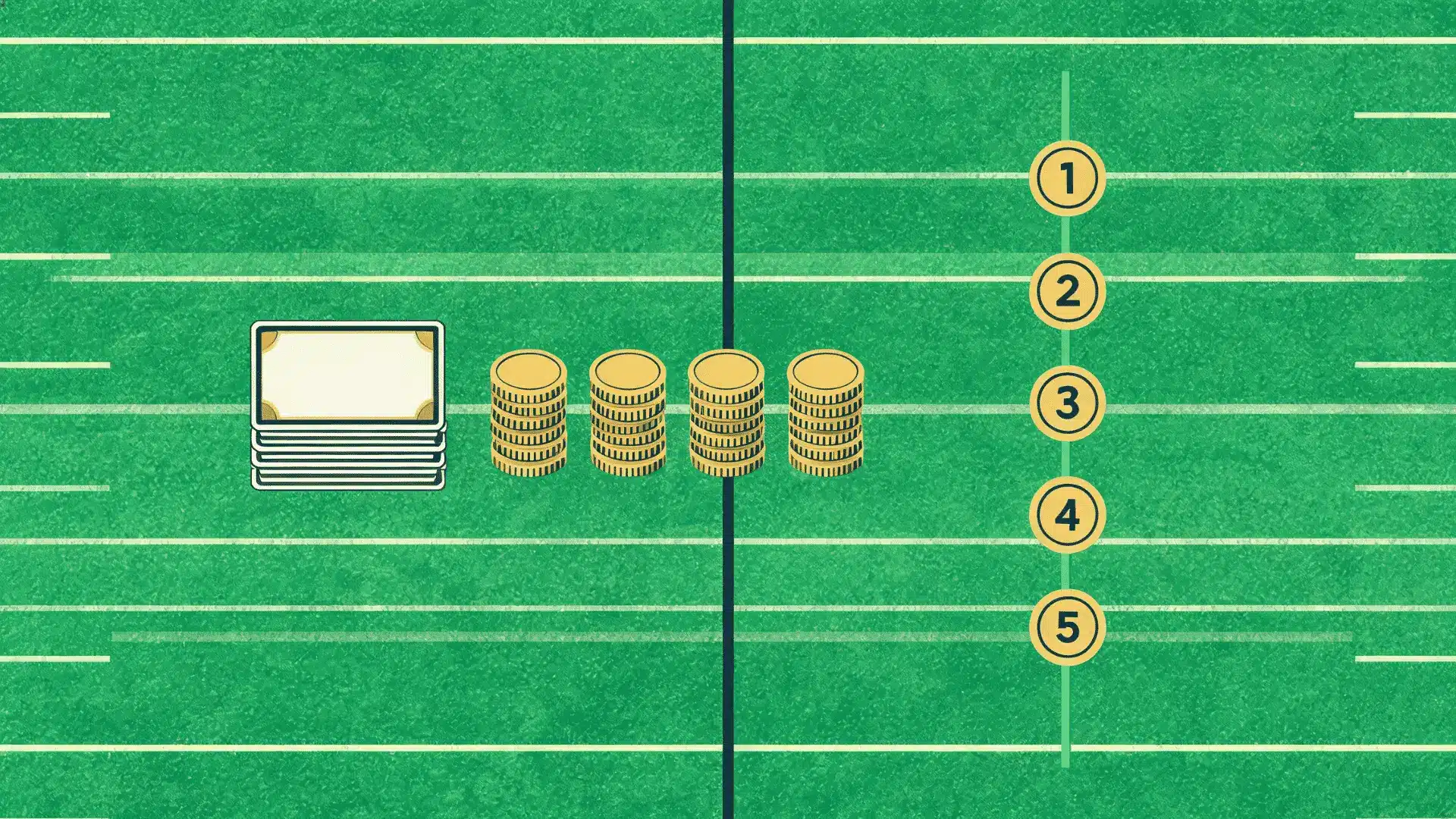
FAAB changes how managers compete for players on waivers. Instead of waiting for your place in an ordered list, you submit a hidden bid from your available budget.
The highest valid bid usually wins the player. In a waiver-priority system, the manager highest in the current order receives the player when several managers submit a claim.
Here is how the two claim systems compare:
| Rule Set | Claim Method | How the Winner Is Decided | Main Consideration |
| FAAB | Blind budget bid | Highest valid bid wins | Requires season-long budget management |
| Waiver priority | Standard player claim | Highest-priority manager wins | Claim order affects access to players |
How Should You Plan Your FAAB Bidding Strategy and Budget?
Your bid size should always scale with role certainty. If a running back suddenly gets the starting job because the player ahead of him is out for the season, that guaranteed volume is worth a massive percentage of your budget.
You want to buy guaranteed volume, not past box scores. Managing your money requires a long-term plan that changes as the weeks pass.
1. Set FAAB Bid Percentages by Player Value

Determining the exact dollar amount for a bid can feel like guessing, but breaking your budget into percentage tiers makes it much simpler.
Using percentages helps you adjust your spending, regardless of whether you start the year with $100 or $1,000.
Here is a baseline guide for how much of your FAAB budget to allocate based on the type of player you want to claim:
| Tier | % of budget | Example Use Case |
| League Winner | 40% – 100% | Backup running back taking over a full-time starting role due to a season-ending injury. |
| Weekly Starter | 15% – 30% | Wide receiver with a sudden, consistent increase in targets over multiple games. |
| Bench Depth | 5% – 10% | Handcuff a running back or a player with a favorable upcoming schedule. |
| Streamer | 1% – 2% | Defense or kicker with a great matchup for just one week. |
2. Spend Aggressively on Major Role Changes
Emptying your wallet early in the season feels scary, but sometimes a player is absolutely worth the risk. You should go all in when a clear role change occurs.
Look for a backup stepping in for an injured starter, a sudden jump in a player’s snap share, or a favorable landing spot following an actual NFL trade. Guaranteed weekly volume wins fantasy championships.
3. Use Odd-Number Bids to Beat Common Amounts

Because blind bidding hides everyone’s offers, human psychology plays a big part in who wins. Most people naturally bid in round numbers like $10, $20, or $50.
You can easily outsmart them by adding one extra dollar to your offer. Bidding $21 instead of $20 often wins you the claim without draining your budget. Always use odd numbers when setting your final price.
4. Target Long-Term Value Early in the Season
This is your heaviest spending window because player roles are clearest early in the year. If an undrafted player suddenly wins a major role or a starter gets hurt, do not be afraid to drop a large portion of your cash.
These early pickups provide value to your starting lineup for months, giving you a massive return on your initial investment.
5. Address Short-Term Needs During Midseason

Your spending during October should be much more measured. By this point, most surprise breakouts have already been claimed by other managers.
Instead, focus your remaining budget on targeted opportunities created by sudden short-term injuries or performance drops.
Look for solid temporary fill-ins who can help you win close matchups during heavy bye weeks without completely draining your wallet.
6. Save FAAB for Playoff Matchups and Late Injuries

As you approach the end of the year, your budget needs to cover late bye-week fill-ins and championship-week streamers.
Save a small portion of your money so you can outbid opponents on defensive units or kickers with great schedules. Having even five dollars left in December can help you block a rival from adding a critical starter.
To keep your team on track, you can divide the season into four distinct periods.
| Season Stage | Weeks | Target Remaining Budget |
| Early Season | Weeks 1 – 4 | 50% |
| Mid Season | Weeks 5 – 9 | 20% – 40% |
| Late Season | Weeks 10 – 13 | 10% – 15% |
| Playoffs | Weeks 14 – 17 | 0% – 5% |
FAAB Best Practices for Long-Term Success

Once you understand your budget tiers and your platform’s specific rules, you can start building better long-term habits. Consistently managing your money requires looking past the current week.
1. Track Competitor Cash: Regularly review your league-mates’ remaining balances. Knowing their financial limits helps you bid precisely without overspending on critical targets.
2. Forecast Future Schedules: Evaluate upcoming team matchups before bidding on defenses or kickers. Planning ensures you get multiple weeks of production from cheap additions.
3. Leverage Waiver Priority: Keep tabs on the secondary tiebreaker list. Knowing you have higher priority lets you confidently match rival bids at the same dollar amount.
4. Stream Cheap Positions: Avoid overpaying for average quarterbacks or tight ends. Save your primary funds for top-tier running backs by making small bids on soft defensive matchups instead.
5. Trade Waiver Funds: Use your cash balance as a sweetener in player deals. Throwing in an extra $10 can easily convince a hesitant manager to accept.
How FAAB Fantasy Rules Differ Across Platforms
Fantasy football platforms are websites and apps where managers create leagues, draft players, set lineups, track scores, make trades, and submit waiver claims.
Platforms such as Yahoo, ESPN, Sleeper, NFL Fantasy, and CBS Sports provide these league-management tools. However, their FAAB terminology, bidding limits, waiver schedules, and commissioner controls can differ.
Here is what separates the main platforms:
| Platform | What It Is | Main FAAB Difference |
| Yahoo Fantasy | Yahoo’s fantasy sports website and app | Commissioners can configure the budget, minimum bid, and waiver settings |
| ESPN Fantasy | ESPN’s fantasy league website and app | Calls the system FAB and offers different waiver-processing options |
| Sleeper | A fantasy sports app with league chat and management tools | Supports adjustable FAAB budgets and custom daily waiver schedules |
| NFL Fantasy | The NFL’s official fantasy football platform | Waiver and budget options depend on the league configuration |
| CBS Sports Fantasy | CBS Sports’ fantasy league platform | Provides commissioner-controlled player-acquisition settings |
Before bidding, check your league’s budget, minimum bid, processing time, and tiebreaker, as commissioner settings may override the platform defaults.
Beginner FAAB Fantasy Mistakes to Avoid
First-time managers often lose value by reacting to a single performance or by protecting their budget for too long. The main mistakes to avoid are:
- Chasing past points: Do not overbid because a player scored twice on limited touches. Check targets, carries, routes, and snap share first.
- Hoarding your budget: Unused FAAB cannot improve your lineup. Spend when a player gains a reliable role and can help for several weeks.
- Panic bidding: One loss should not change your entire plan. Set a maximum bid based on player value and roster need.
- Ignoring rival budgets: Check how much FAAB other managers have left before deciding your final bid.
- Forgetting league depth: Available players are worth more in deeper leagues because useful replacements are harder to find.
Final Thoughts
Moving to a blind bidding system completely changes how you play fantasy football. It removes the blind luck of a traditional priority list and replaces it with pure, calculated strategy.
By shifting your focus from simply understanding what the budget is to actively planning how you spend it, you immediately gain an edge.
Remember to lean on percentage-based player tiers, stick to the stage-by-stage spending timeline, and always double-check your platform’s specific rules before making that first offer.
Try using the stage-by-stage budget planner for your next big waiver period, or jump into the comments below to share your worst FAAB horror story!
Frequently Asked Questions
Does FAAB Carry Over to the Next Season?
No. FAAB resets to the league’s starting budget each season, regardless of how much you had left. Any unused dollars from last year don’t carry over, so there’s no advantage to finishing the season with money left over.
What Happens When Two FAAB Bids Tie?
When two managers submit the same bid, most platforms break the tie using waiver priority order, not a coin flip. The manager with the higher priority at that moment wins the player, and the other bid is refunded in full.
Can a Commissioner Change Midseason?
Midseason adjustments allow commissioners to adjust league settings, including FAAB budgets, at any time. Doing midseason can feel unfair to managers who’ve already spent strategically, so most leagues lock the budget after week one.
Does FAAB apply in Best-ball Leagues?
No. Best ball leagues set rosters through the draft alone and don’t include a weekly waiver wire, so there’s no bidding budget involved. FAAB strategy only matters in leagues with active, in-season roster management.