



Some players are remembered for their numbers, while others are known for the moments those numbers cannot capture. Drew Pearson happens to be both.
When I look up Drew Pearson’s stats, I am really looking at the story of an undrafted receiver who became the Dallas Cowboys’ all-time leading pass-catcher of his time.
If you want to know what made him a football icon, you are in the right place.
I will cover his career totals, year-by-year game logs, physical profile, and college background. We will also look at the clutch playoff plays that defined his Hall of Fame career.
Who Is Drew Pearson?
Before the numbers make sense, it helps to know the man behind the No. 88 jersey.
I always find it inspiring to look at players who beat the odds, and Pearson did exactly that. He played as a wide receiver for the Dallas Cowboys from 1973 to 1983.
He joined the team as an undrafted free agent out of Tulsa and fought his way onto the roster. Fans quickly grew to love him, earning him the nickname “Mr. Clutch” for his ability to make plays under the highest pressure.
His incredible impact on the field eventually led to his induction into the Pro Football Hall of Fame in 2021.
Drew Pearson Player Profile at a Glance
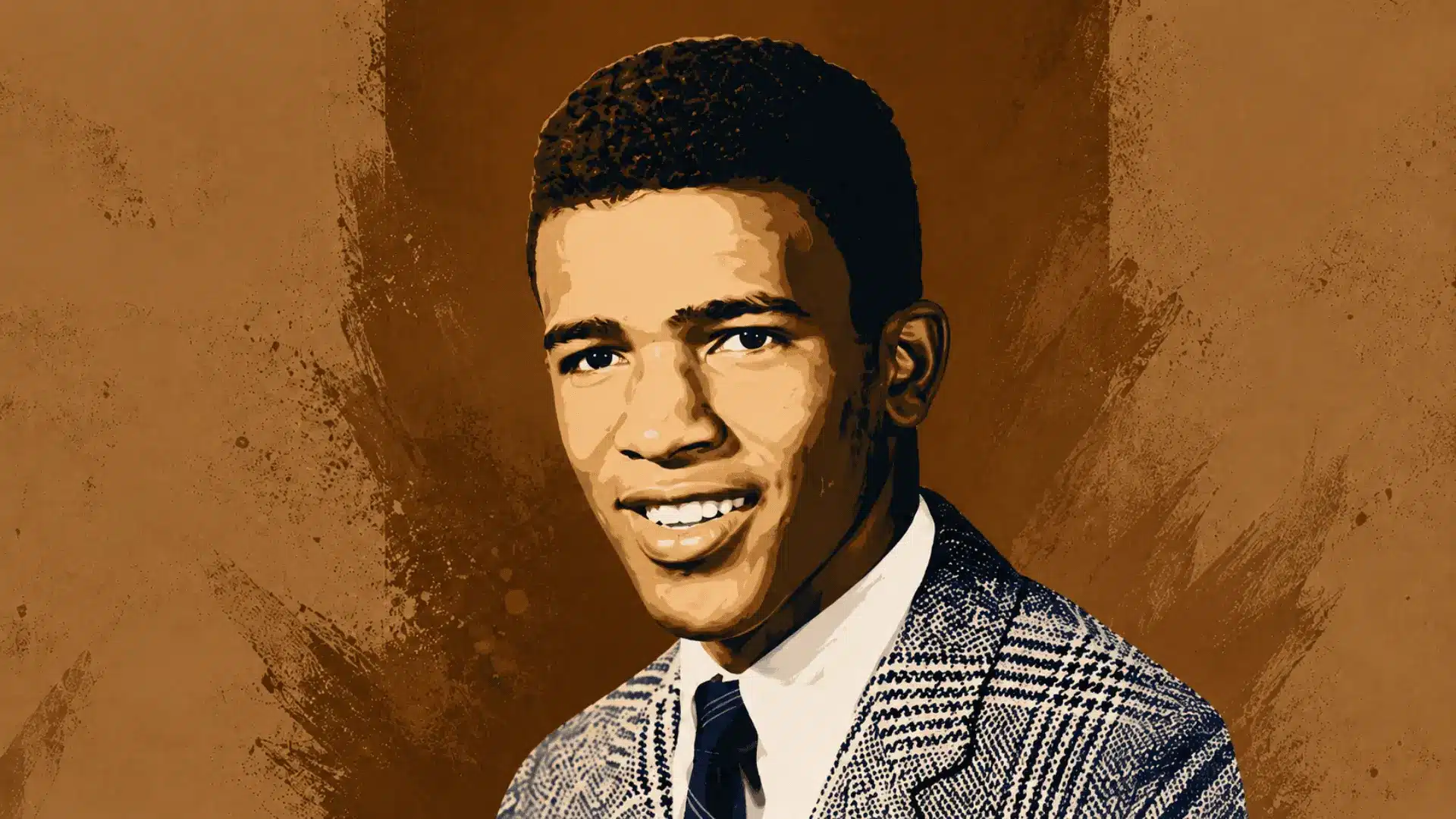
If you want a quick summary of his background, I’ve put together the essential details right here. This table covers everything from his birthdate and college to his measurements during his playing days with the Cowboys.
Seeing these basic facts helps you understand the foundation of his career before looking at his full year-by-year production statistics.
| Detail | Info |
| Full position | Wide receiver (No. 88) |
| Born | January 12, 1951, South River, New Jersey |
| Height / Weight | 6 ft 0 in / 184 lb |
| College | Tulsa |
| NFL Draft | 1973, undrafted free agent |
| Team | Dallas Cowboys (1973–1983) |
How Drew Pearson’s NFL Career Began
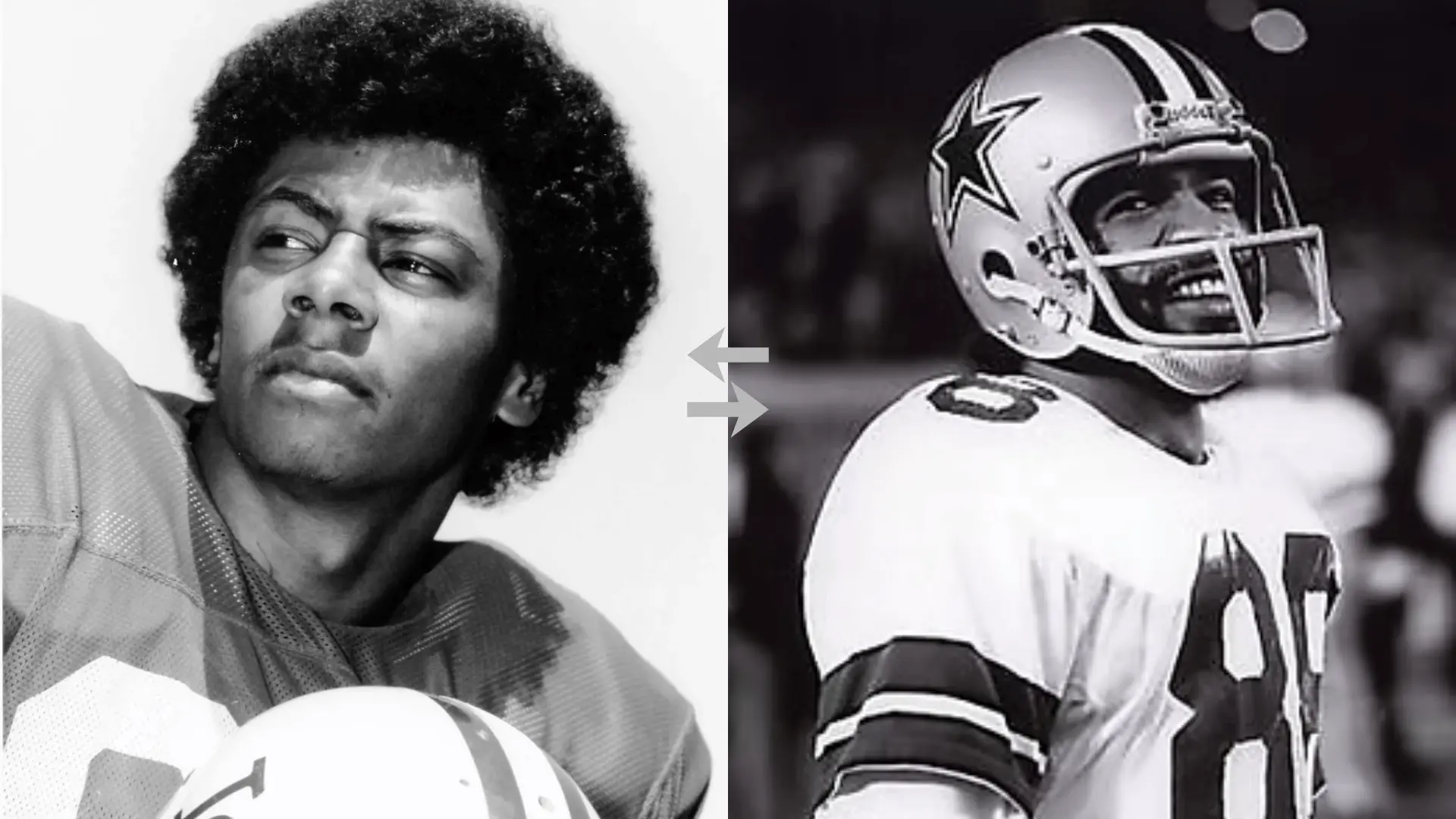
I love telling this part of Drew Pearson’s career because it shows his determination. The Dallas Cowboys signed him as an undrafted free agent in 1973.
However, his place on the roster was not guaranteed. Pearson first proved his value on special teams. His effort and reliable play helped him earn more opportunities.
Pearson’s big break came midway through his rookie season. He replaced injured receiver Otto Stowe and started six games.
Pearson quickly became a dependable target for the Cowboys. He finished his first NFL season with 22 receptions, 388 receiving yards, and two touchdowns. Those numbers proved he belonged in the NFL.
Drew Pearson Career Stats Overview
With the background set, here is what his eleven seasons actually added up to.
When analyzing Drew Pearson’s stats, you see the sustained dominance of a premier receiver in a run-heavy era. He was the main downfield target for Dallas, stepping up consistently in big moments to move the chains.
His combination of speed, reliable hands, and precise route-running made him one of the most feared weapons of the 1970s.
Let’s look at the baseline numbers that defined his legacy, from his primary role as a pass-catcher to his contributions on special teams and rushing plays.
1. Career Receiving Totals
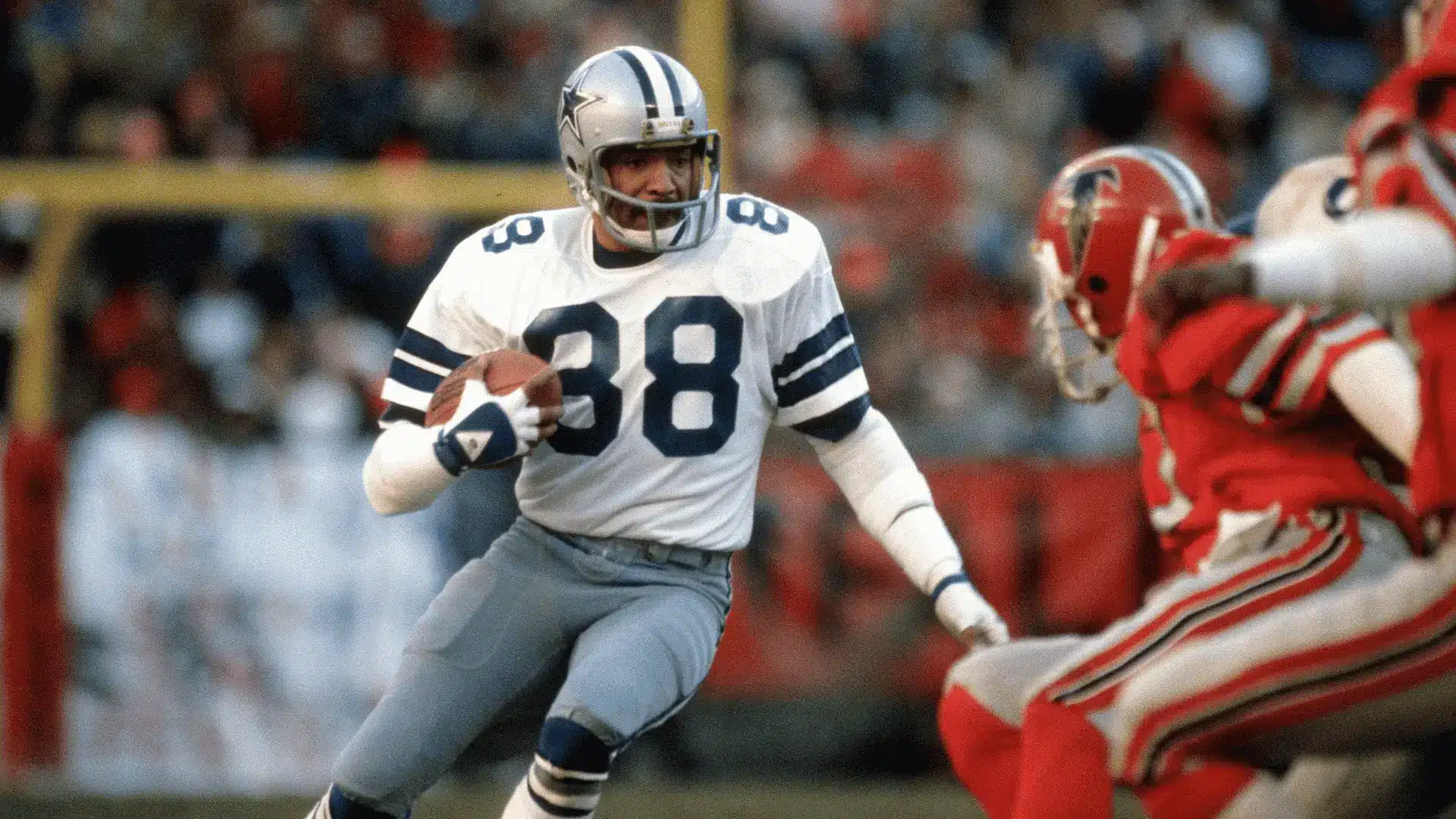
To understand his impact on the field, we can look closely at his final receiving production numbers.
He spent his entire eleven-year career with Dallas, building a steady production record that placed him among the elite players of his generation.
This table breaks down his major career totals across his 156 regular-season games.
| Stat | Career Total |
| Games played | 156 |
| Receptions | 489 |
| Receiving yards | 7,822 |
| Yards per catch | 16.0 |
| Longest reception | 67 |
| Receiving touchdowns | 48 |
2. Beyond Receiving: Rushing and Returns
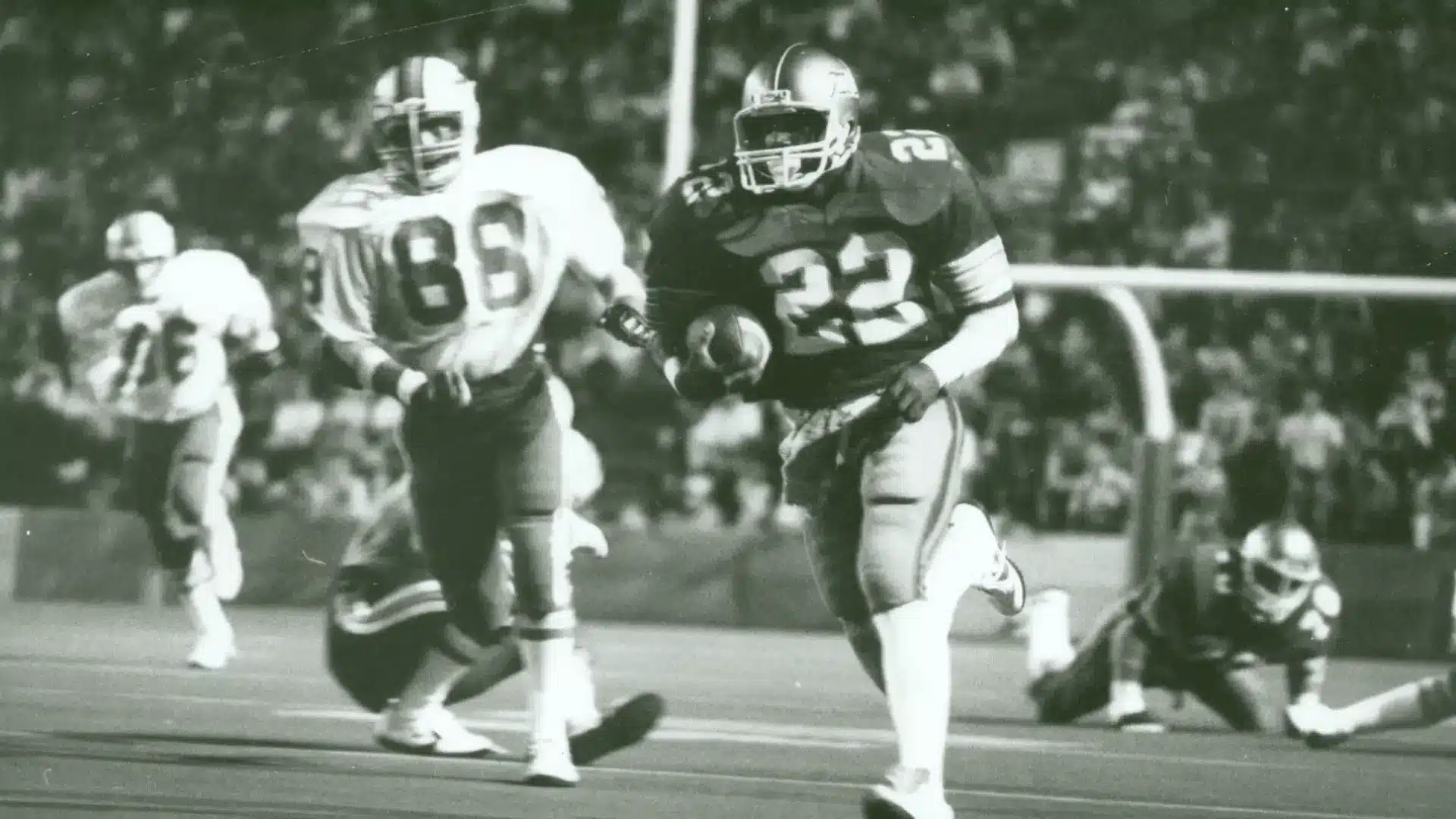
While catches made him a star, he contributed to the team in multiple ways throughout his career. He was a versatile athlete who could pick up yards when the coaches gave him unique roles on offense or special teams.
Here are his other major statistical contributions:
- Rushing: 21 carries for 189 yards over his career
- Returns: 7 kickoff returns for 155 yards as a rookie
- Touchdowns: 50 total scores, including two on fumble recoveries
3. Regular Season Receiving by Year
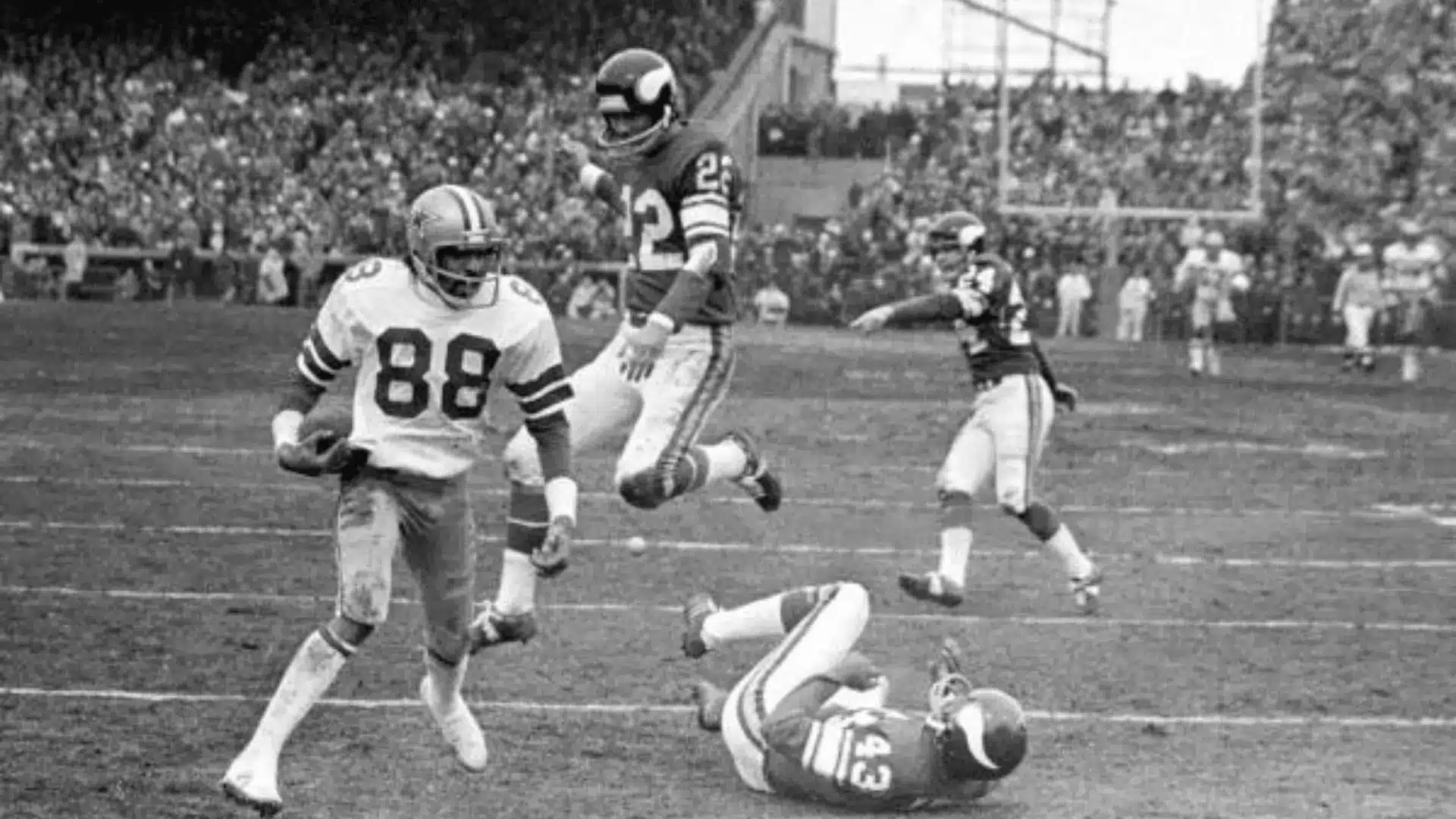
His annual stats reflect his steady presence on the field. He played in all 14 games during the 14-game era and handled the transition to the 16-game schedule smoothly.
Even during a shortened nine-game season in 1982, he maintained his solid production. The table below breaks down his receiving stats across his eleven years in the league.
| Year | G | Rec | Yds | Avg | TD |
| 1973 | 14 | 22 | 388 | 17.6 | 2 |
| 1974 | 14 | 62 | 1,087 | 17.5 | 2 |
| 1975 | 14 | 46 | 822 | 17.9 | 8 |
| 1976 | 14 | 58 | 806 | 13.9 | 6 |
| 1977 | 14 | 48 | 870 | 18.1 | 2 |
| 1978 | 16 | 44 | 714 | 16.2 | 3 |
| 1979 | 15 | 55 | 1,026 | 18.7 | 8 |
| 1980 | 16 | 43 | 568 | 13.2 | 6 |
| 1981 | 16 | 38 | 614 | 16.2 | 3 |
| 1982 | 9 | 26 | 382 | 14.7 | 3 |
| 1983 | 14 | 47 | 545 | 11.6 | 5 |
4. His Two 1,000-Yard Seasons
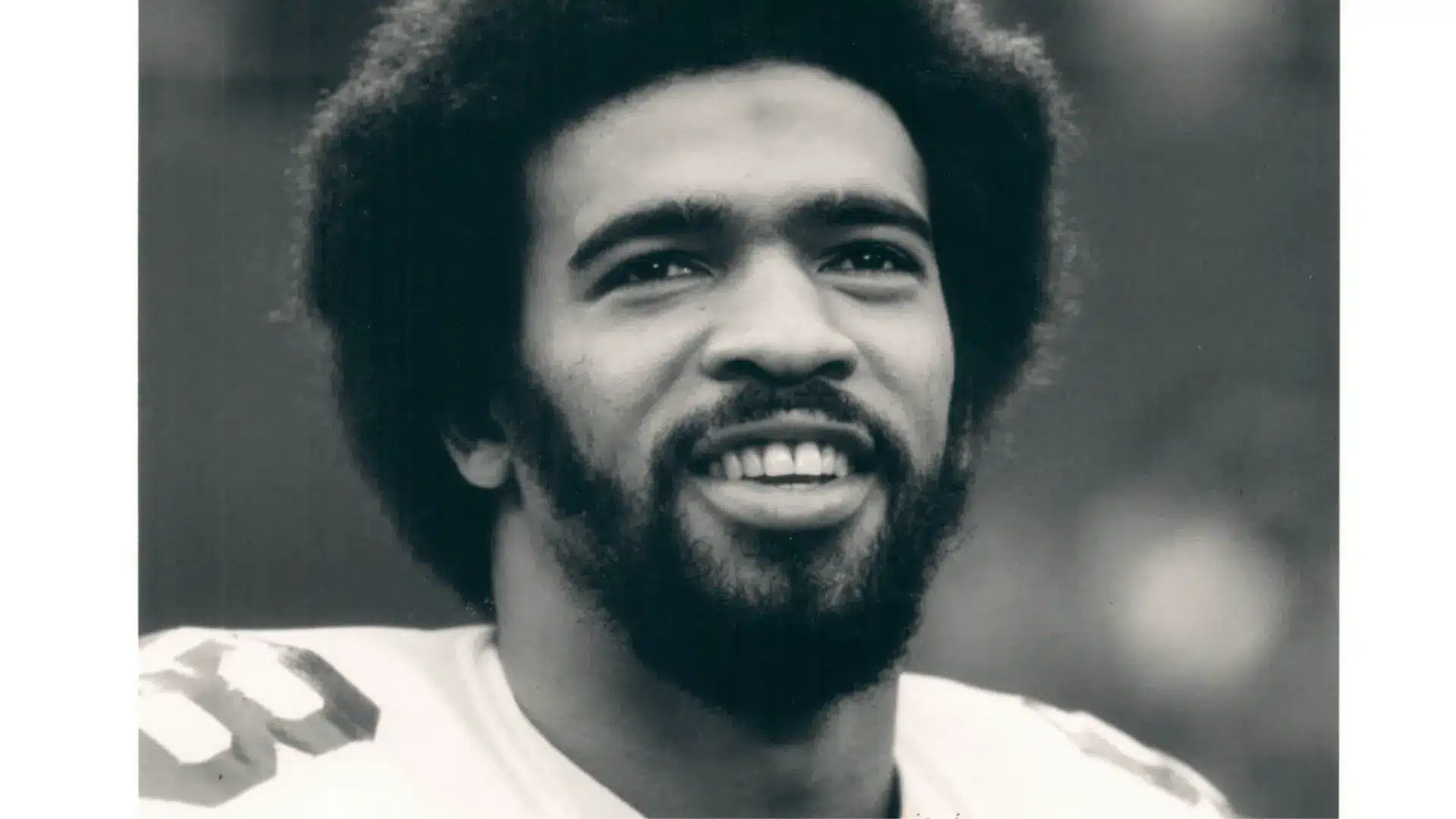
Reaching 1,000 receiving yards in the 1970s was a major accomplishment for any receiver. He achieved this milestone twice, first in 1974 with 1,087 yards and again in 1979 with 1,026 yards.
The 1979 season was particularly special for the franchise. That year, he and Tony Hill became the first receiving duo in Dallas history to both record 1,000-yard seasons.
The Cowboys also became the first team in the league to feature two 1,000-yard receivers and a 1,000-yard running back at the same time.
5. Career Playoff Receiving Numbers
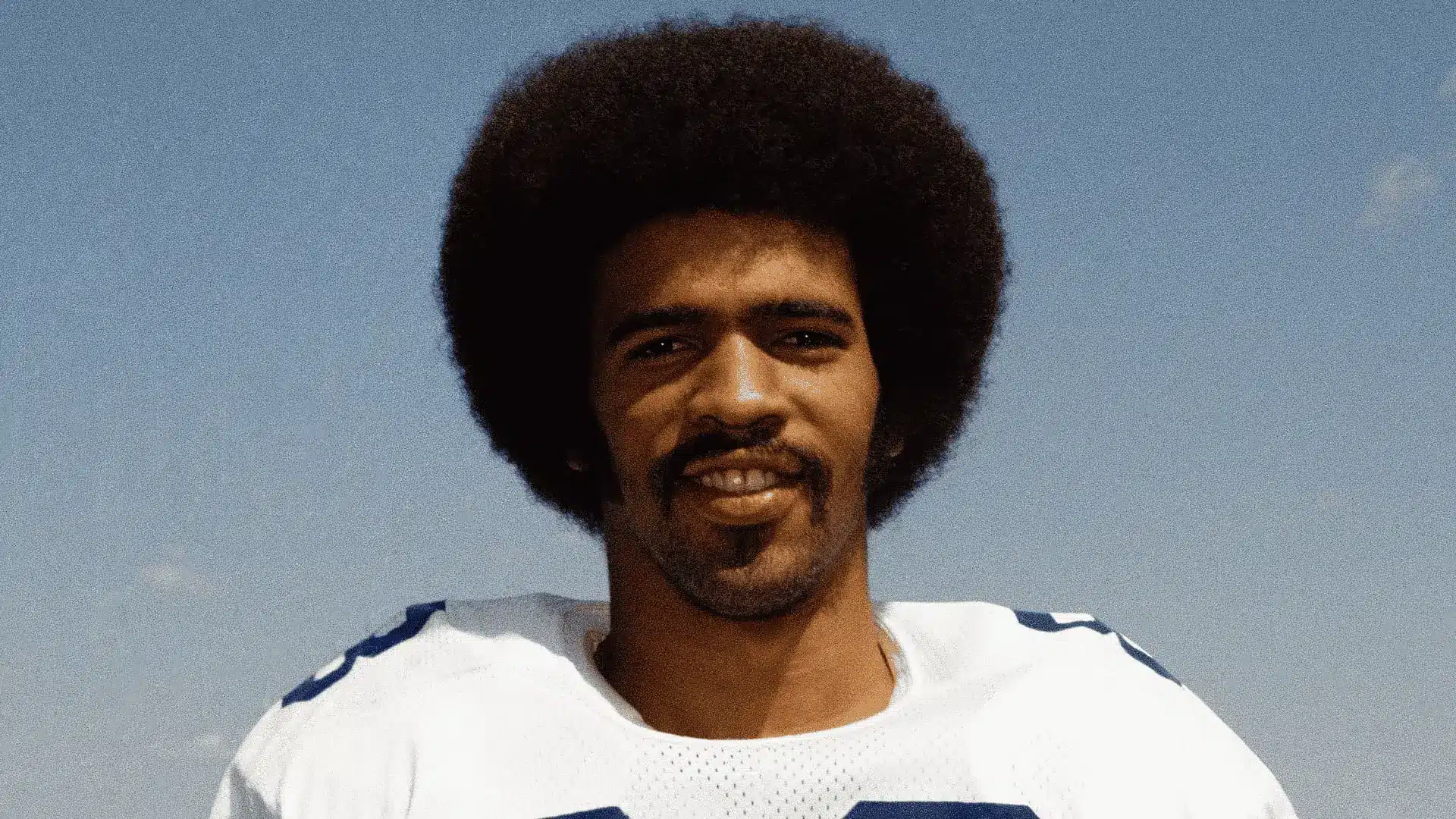
His playoff production shows how much his coaches relied on him in big postseason matches. He consistently rose to the occasion against the best defenses in the league, giving Dallas a constant threat on the perimeter.
The table below lists his final playoff receiving totals across his eleven years with the franchise.
| Postseason Stat | Total |
| Games | 22 |
| Receptions | 67 |
| Receiving yards | 1,105 |
| Yards per catch | 16.5 |
| Touchdowns | 8 |
6. The Plays That Made Him “Mr. Clutch”
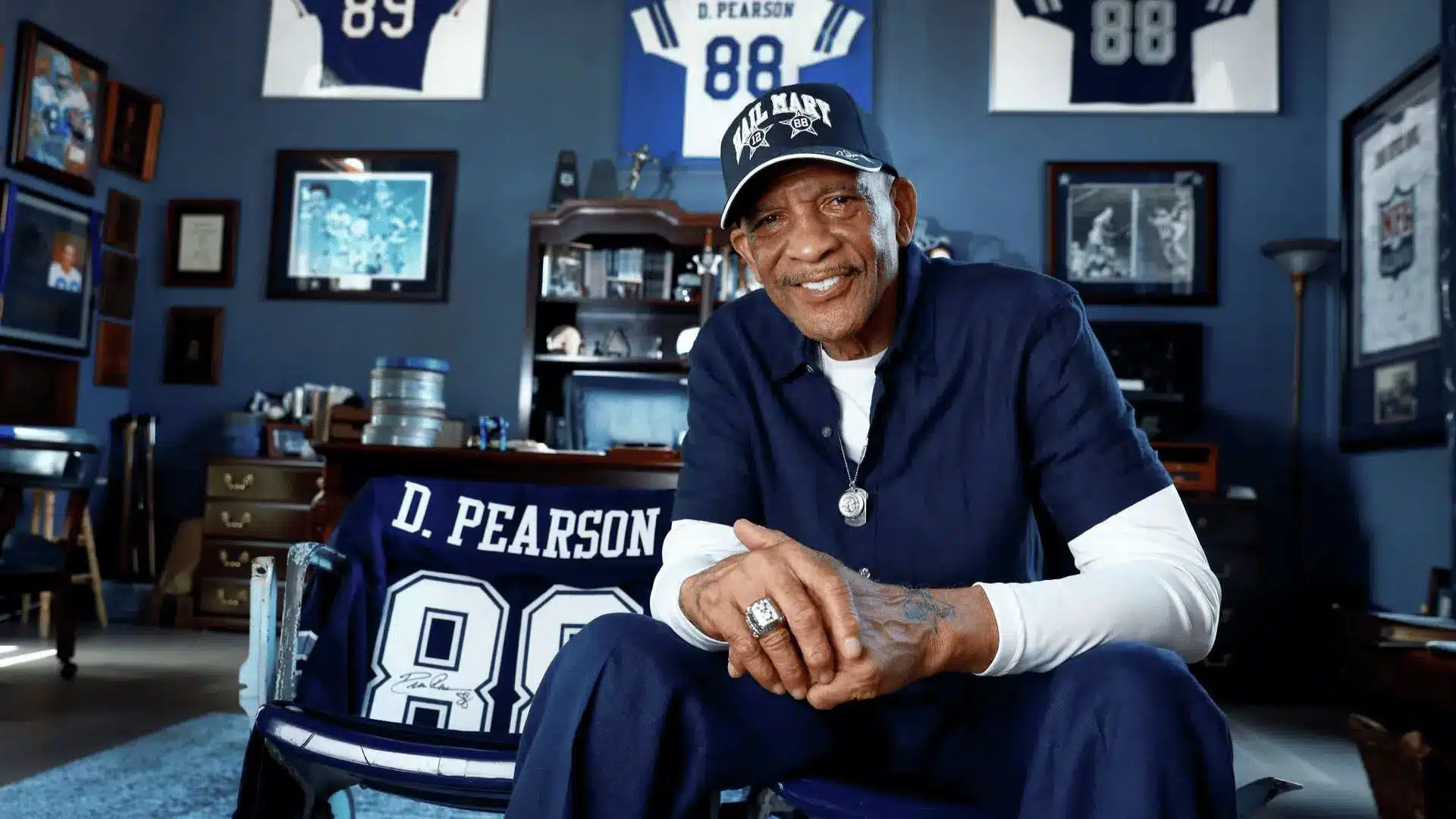
I always enjoy looking back at these specific historical moments because they show exactly why defensive coordinators feared him.
He did not just accumulate statistics; he made catches that altered the course of NFL history. Here are his most famous postseason and crunch-time plays:
- Hail Mary: The 1975 divisional-round game-winner from Roger Staubach to beat Minnesota in the final seconds.
- Thanksgiving 1974: Caught a dramatic late game-winning touchdown pass from backup quarterback Clint Longley to beat Washington.
- 1973 Playoffs: Broke free for a crucial 83-yard touchdown pass that clinched a postseason victory against the Los Angeles Rams.
Pearson’s College and Pre-NFL Stats
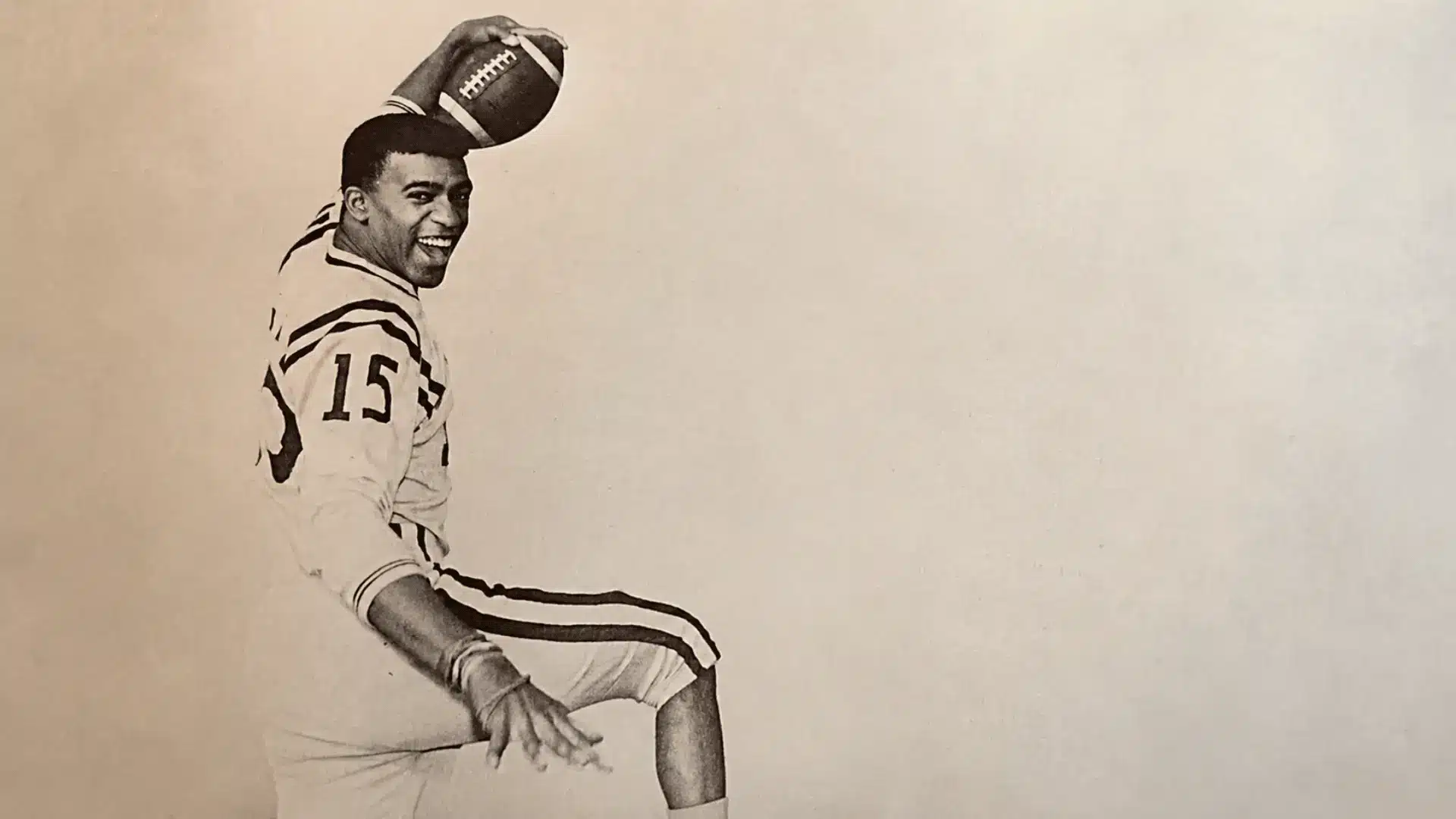
Long before the Hail Mary, he was throwing passes, not catching them. It is easy to assume that a Hall of Fame receiver spent his whole life perfecting his routes.
However, his path to the NFL started in a completely different role during his college days at the University of Tulsa.
Many sources mention his alma mater in passing, but his actual college numbers provide much stronger evidence of his athletic versatility.
He did not have years of film at the receiver position, which explains why NFL scouts initially overlooked him. Here is a look at the college production that eventually earned him an undrafted free agent contract with Dallas.
From Quarterback to Wide Receiver
During his 1970 sophomore season, he actually served as Tulsa’s backup quarterback. He started four games behind center, completing 36 of his 86 passing attempts for 423 yards.
Recognizing his athletic potential, the coaching staff moved him to wide receiver before his junior year in 1971.
That transition changed his football trajectory forever, allowing his natural speed and playmaking ability to shine on the perimeter.
Tulsa Receiving Numbers
Once he moved to receiver, he quickly became the top downfield threat in a run-heavy Golden Hurricane offense.
In his two seasons at the position, he averaged a remarkable 20.3 yards per catch, proving his ability to stretch the field.
Though the team’s offensive style limited his overall volume, his big-play capability was undeniable. Here is a breakdown of his receiving production at Tulsa.
| Season | Rec | Yds | Avg | TD |
| 1971 (Jr) | 22 | 429 | 19.5 | 3 |
| 1972 (Sr) | 33 | 690 | 20.9 | 5 |
| College total | 55 | 1,119 | 20.3 | 8 |
Drew Pearson’s Awards, Honors, and Hall of Fame
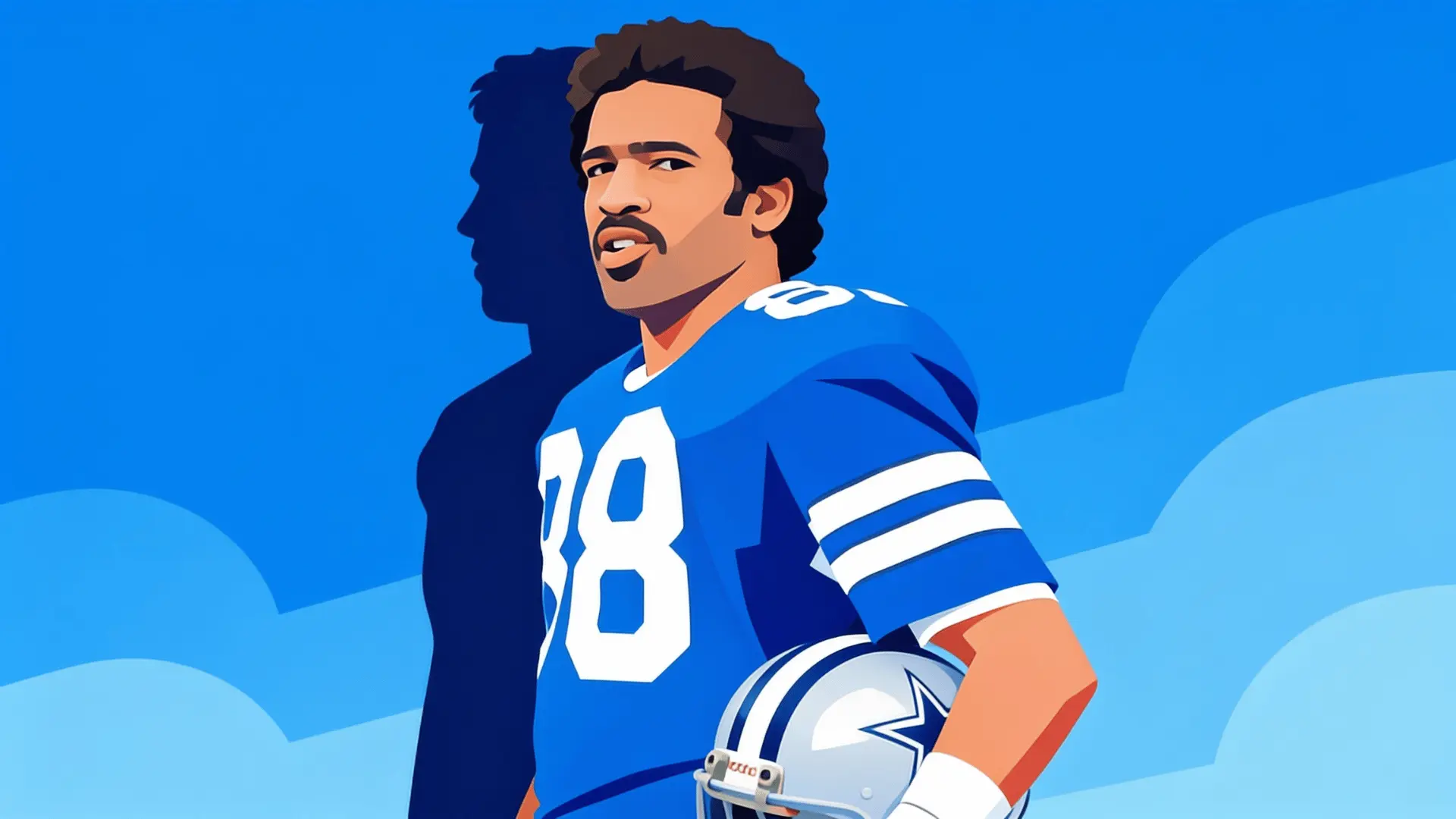
The stats eventually earned him the sport’s highest recognition, though it took longer than most expected. He did not just pile up yards; he earned respect across the entire league during a time when defensive players could play very physical football.
His trophy case features the ultimate team achievement alongside multiple individual selections that proved his status as a top target.
His Major Career Honors
When you look at his trophy room, you see how dominant he was in his decade. He was regularly selected as one of the best targets in the league by coaches and sports writers.
These awards prove that his peers knew exactly how dangerous he was on any given Sunday. Here is a look at his primary achievements during his time in the league:
- Pro Bowl: Selected in 1974, 1976, and 1977
- All-Pro: First-team selection in 1974, 1976, and 1977
- Championships: Super Bowl XII winner and member of the NFL 1970s All-Decade Team
- Dallas: Inducted into the Cowboys Ring of Honor in 2011
A 33-Year Wait for Canton
I remember watching the pure joy on his face when he finally received his gold jacket. He retired from football in 1983, but he had to wait more than three decades to be inducted into the Pro Football Hall of Fame.
His induction finally happened in 2021 as a senior finalist. This long delay made the moment even sweeter for his family and fans.
It also highlighted his rarity, as he is one of the few undrafted modern-era players ever enshrined in Canton.
Final Thoughts
Tracking the numbers behind a football career helps us see the exact footprint a player left on the game. For this Dallas star, an undrafted start led to a remarkable 489 catches and 7,822 regular-season yards.
Those two 1,000-yard seasons showed his durability, but his clutch playoff moments are what truly carried him all the way to Canton.
When you look up these statistics, you quickly realize that the numbers and the legend are tightly linked. He proved that true greatness is measured by stepping up when the game is on the line.
Feel free to look through our other Dallas legend profiles to read about the stars who built the franchise.
What is your favorite play from his time on the field? Leave a comment below to share your thoughts!
Frequently Asked Questions
Is Drew Pearson in the Pro Football Hall of Fame?
Yes. He was inducted in 2021 as a senior finalist, ending a wait of more than three decades after his retirement. He is among the few undrafted players enshrined in the modern era.
Why Was Drew Pearson Undrafted Out of College?
He spent part of college as a quarterback before switching to receiver, so scouts had limited film of him at the position. He signed with Dallas as a free agent and earned his spot on special teams.
What Ended Drew Pearson’s Playing Career?
A car accident in March 1984 caused a severe liver injury that forced his retirement at age 32. The crash also took the life of his brother, making it a deeply personal loss.
Who Wore Number 88 for the Cowboys After Pearson?
Pearson started the legacy of the No. 88 receiver jersey in Dallas. It was later worn by Michael Irvin, Dez Bryant, and currently CeeDee Lamb, linking generations of Cowboys receivers.