



I’ve watched a fully stacked roster get wiped out in a single bad week, and it never gets any easier to see. In a guillotine league, that’s not luck. That’s the whole point of the format.
Every week, whichever team scores the fewest points gets cut, no second chances, no matchup to hide behind. When a team goes down, their roster hits free agency for the rest of us to fight over.
It sounds harsh because it is. But once you understand it, guillotine fantasy football becomes one of the most engaging ways to play.
This blog covers how to rank players for survival, draft to win week one, and spend your FAAB the right way.
What is Guillotine Fantasy Football?
Guillotine fantasy football eliminates the lowest-scoring team every single week until one team remains. That single rule changes how you build and manage your roster, since you need a plan for staying safe every week.
- How Weekly Elimination Works: Every week, all teams get ranked by total points scored, not wins or losses.
Whoever scores the least points that week is eliminated, no matter how good their team looked on paper going into it. This continues week after week until only one team survives. - What Happens to a Cut Team’s Roster: Once your team gets cut, every player on your roster becomes a free agent right away.
Other teams in the league can try to grab them, even your best picks from the draft. Most leagues use FAAB bidding, where each team submits a secret dollar amount to win a player.
This keeps the format exciting, since a star player can become available in Week 2 or 3. - Guillotine vs. Traditional Head-to-Head Leagues: In a normal fantasy league, you play one team each week. Even after a rough week, a weak opponent might still let you win.
In Guillotine, you’re compared to every team in the league, every week, based on points alone. Most guillotine leagues also skip trades, playoffs, and keepers by default, though some platforms let your commissioner turn these on if the group agrees.
2026 Guillotine Fantasy Football Rankings
Rankings for a guillotine league look nothing like a normal cheat sheet, since raw talent takes a back seat to weekly reliability.
These rankings are my pre-season projections heading into the year, not guarantees, so treat them as a floor-focused starting point you’ll adjust as the season unfolds.
| Position | Rank | Player | Team | Why He Makes the Cut |
|---|---|---|---|---|
| QB | 1 | Josh Allen | Bills | Elite rushing floor plus passing volume |
| 2 | Lamar Jackson | Ravens | Rushing production keeps his floor high | |
| 3 | Drake Maye | Patriots | Efficient passer with real rushing upside | |
| 4 | Joe Burrow | Bengals | High-volume offense built around him | |
| 5 | Jayden Daniels | Commanders | Proven dual-threat production | |
| RB | 1 | Jahmyr Gibbs | Lions | Heavy touches in the run and pass game |
| 2 | Bijan Robinson | Falcons | Full three-down workload | |
| 3 | Christian McCaffrey | 49ers | Proven volume every game he’s played | |
| 4 | Jonathan Taylor | Colts | Lead back with a heavy carry share | |
| 5 | Ashton Jeanty | Raiders | Featured rushing and receiving role | |
| WR | 1 | Puka Nacua | Rams | Clear top target, heavy target share |
| 2 | Ja’Marr Chase | Bengals | Alpha receiver in a pass-heavy offense | |
| 3 | Jaxon Smith-Njigba | Seahawks | Primary target with consistent volume | |
| 4 | Amon-Ra St. Brown | Lions | High floor from steady target share | |
| 5 | CeeDee Lamb | Cowboys | Locked in as the offense’s top option | |
| TE | 1 | Brock Bowers | Raiders | Focal point of the passing game |
| 2 | Trey McBride | Cardinals | Heavy target share among tight ends | |
| 3 | Colston Loveland | Bears | Featured role in the offense | |
| 4 | Tyler Warren | Colts | Expanding, consistent involvement | |
| 5 | Harold Fannin | Browns | Rising target share worth trusting |
Here’s why I think these players deserve the first rank:
1. Josh Allen: My Top Quarterback for a Reason

Allen finished 2025 as the top-scoring quarterback in fantasy for the fourth time in six years, and I don’t see that changing. He threw for 3,668 yards and 25 touchdowns, but his legs made the real difference.
He rushed for 579 yards and a league-leading 14 touchdowns, giving him a rushing floor no other quarterback can match. That combination is exactly why he tops my list.
2. Jahmyr Gibbs: The Running Back I Trust Every Week
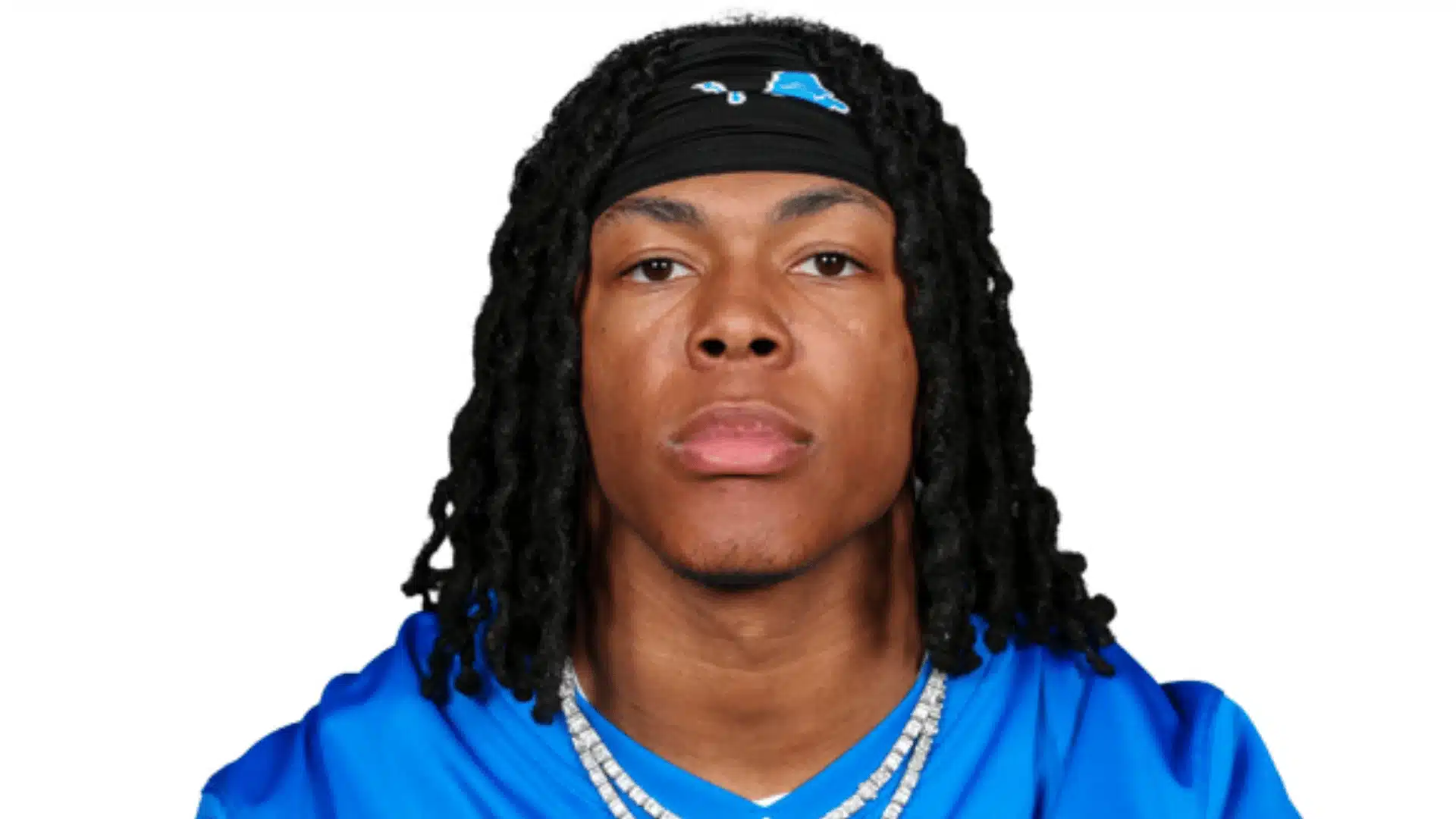
Gibbs became Detroit’s clear lead back in 2025, starting all 17 games and finishing with 1,223 rushing yards and 13 rushing touchdowns.
He also caught a career-high 77 passes for 616 yards and five more scores, giving him 18 total touchdowns on the year.
With David Montgomery gone, Gibbs now handles the backfield alone, and that workload makes him my top Guillotine running back.
3. Puka Nacua: My Top Wide Receiver Pick

Nacua led the entire NFL with 129 receptions in 2025, adding 1,715 receiving yards and 10 touchdowns, all career highs.
That target volume gives him one of the safest floors at wide receiver, since he doesn’t need a big play to score points for me.
With Los Angeles’ passing game built around him, I expect that heavy workload to continue in 2026.
4. Brock Bowers: The Tight End Worth His Draft Slot

Bowers dealt with a knee injury for most of 2025, but he still caught 64 passes for 680 yards and seven touchdowns in just 12 games.
His rookie year showed what he can do at full health, with an NFL-record 112 receptions and 1,194 yards. I still rank him my top tight end, since his target share stays high even when the offense struggles.
Guillotine Fantasy Football Draft Strategy
Your draft strategy needs a full reset for guillotine leagues. Chasing players with big touchdown upside gets you cut fast here.
1. Prioritize Floor Over Ceiling
I look for players with a locked-in role first, not raw talent. A running back who touches the ball 15 times per game, almost every week, gives me a safer floor than a boom-or-bust receiver who needs a long touchdown to matter.
Quarterbacks who add rushing yards give me extra safety too, since that rushing floor holds up even on a rough passing day.
2. Build Your Running Back Depth Early
Running backs disappear off the board faster than any other position in guillotine drafts.
I’ve seen drafts where five running backs, names like Christian McCaffrey, James Cook, and Saquon Barkley, come off the board within just a few picks of each other.
I try to grab two solid running backs in my first two rounds. The very top receivers go just as early, but depth at wide receiver holds up much longer than depth at running back, so I lean on that depth in the middle rounds instead.
3. Watch Out for Aging Veterans
Age matters more in guillotine leagues than most players realize. Running backs often see a sharp drop in production once they hit 29, and I treat that age as a real warning sign rather than just a number on a birth certificate.
Saquon Barkley turned 29 this past February, adding risk to his profile. Wide receivers face a similar decline between ages 32 and 34.
I draft proven veterans, but I watch their age before locking them into my lineup.
Winning the Waiver Wire and FAAB Bidding
The waiver wire is where guillotine leagues actually get won or lost. An entire eliminated roster drops into free agency every week, and that pool gets deeper as the season goes on.
1. How Blind Bidding (FAAB) Works
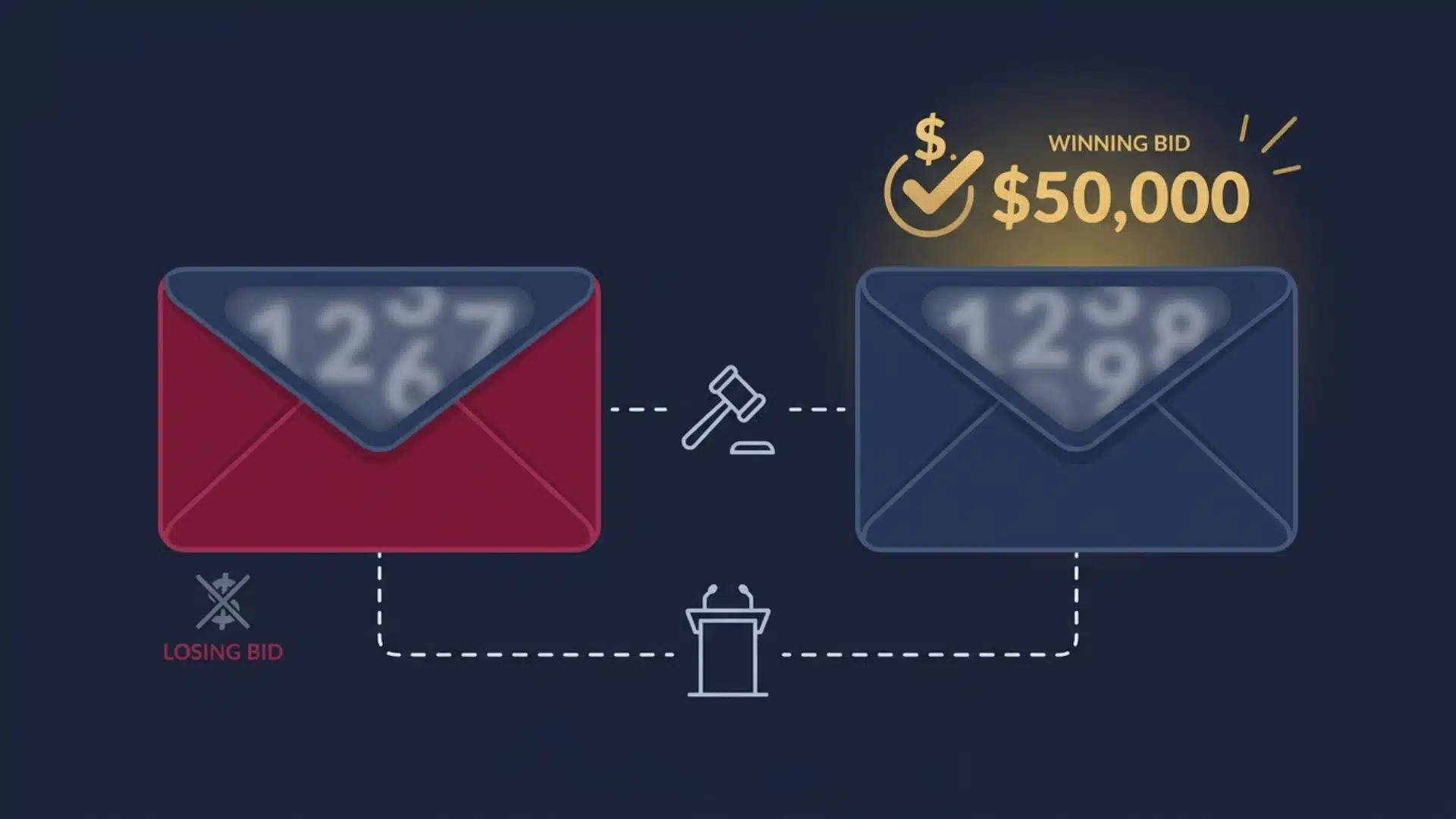
Most guillotine leagues use a system called FAAB, short for Free Agent Acquisition Budget.
My league gives every team $1000 to spend for the entire season, and I submit a secret bid on any player I want.
Nobody sees my bid, and I don’t see anyone else’s either. The highest bid wins the player, and that amount is deducted from my total budget.
2. When to Spend Big on a Free Agent
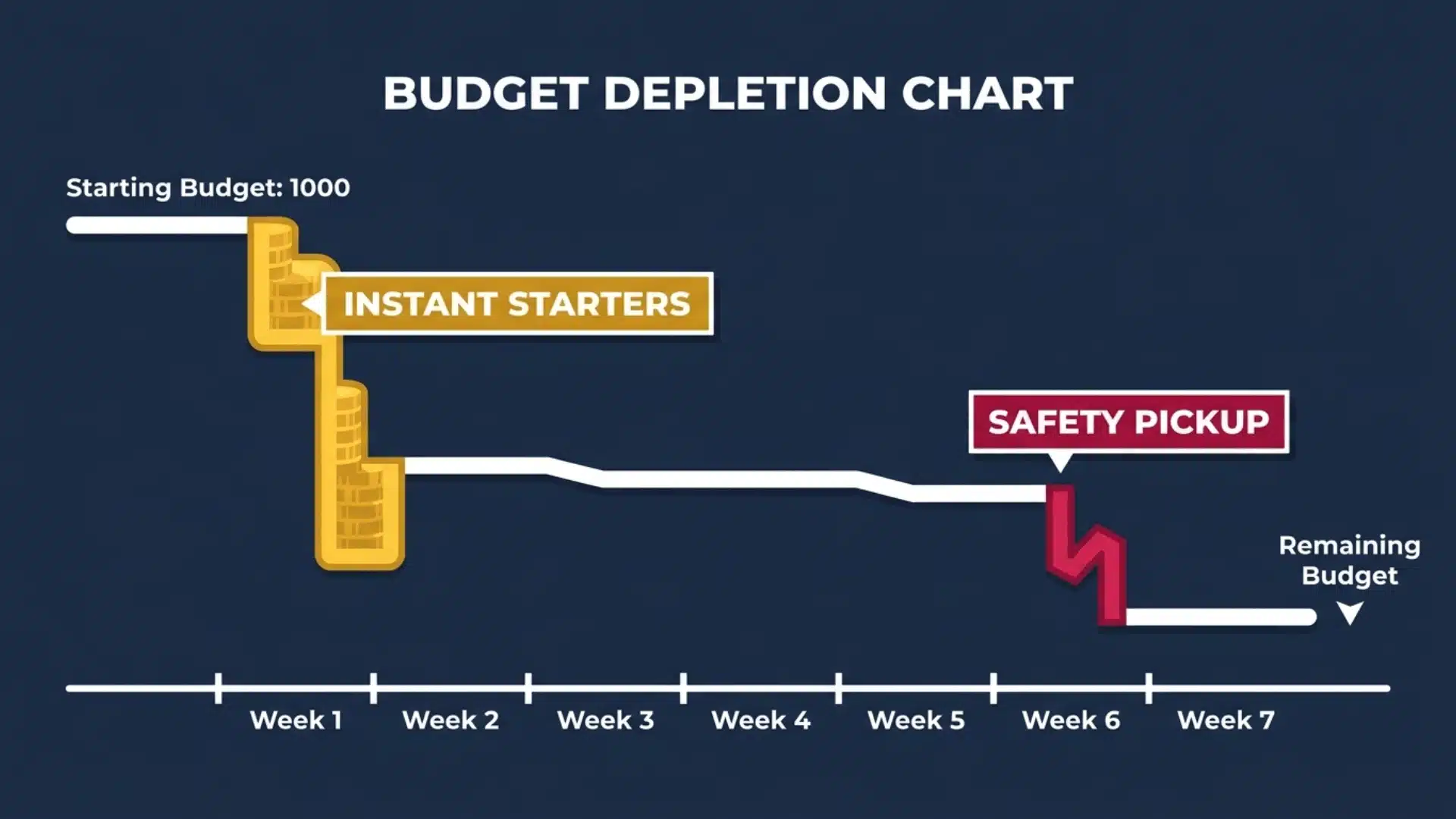
I like to spend early on players who instantly upgrade my starting lineup, not bench depth.
Say your league gives you a $1000 FAAB budget. I’d feel comfortable spending around a third of it right after week 1 if it lands three instant starters.
Later, if you have a scary close call around week 6, it’s worth spending a quarter of your remaining budget on one proven running back for extra safety.
3. Setting Your Weekly Bid Priorities
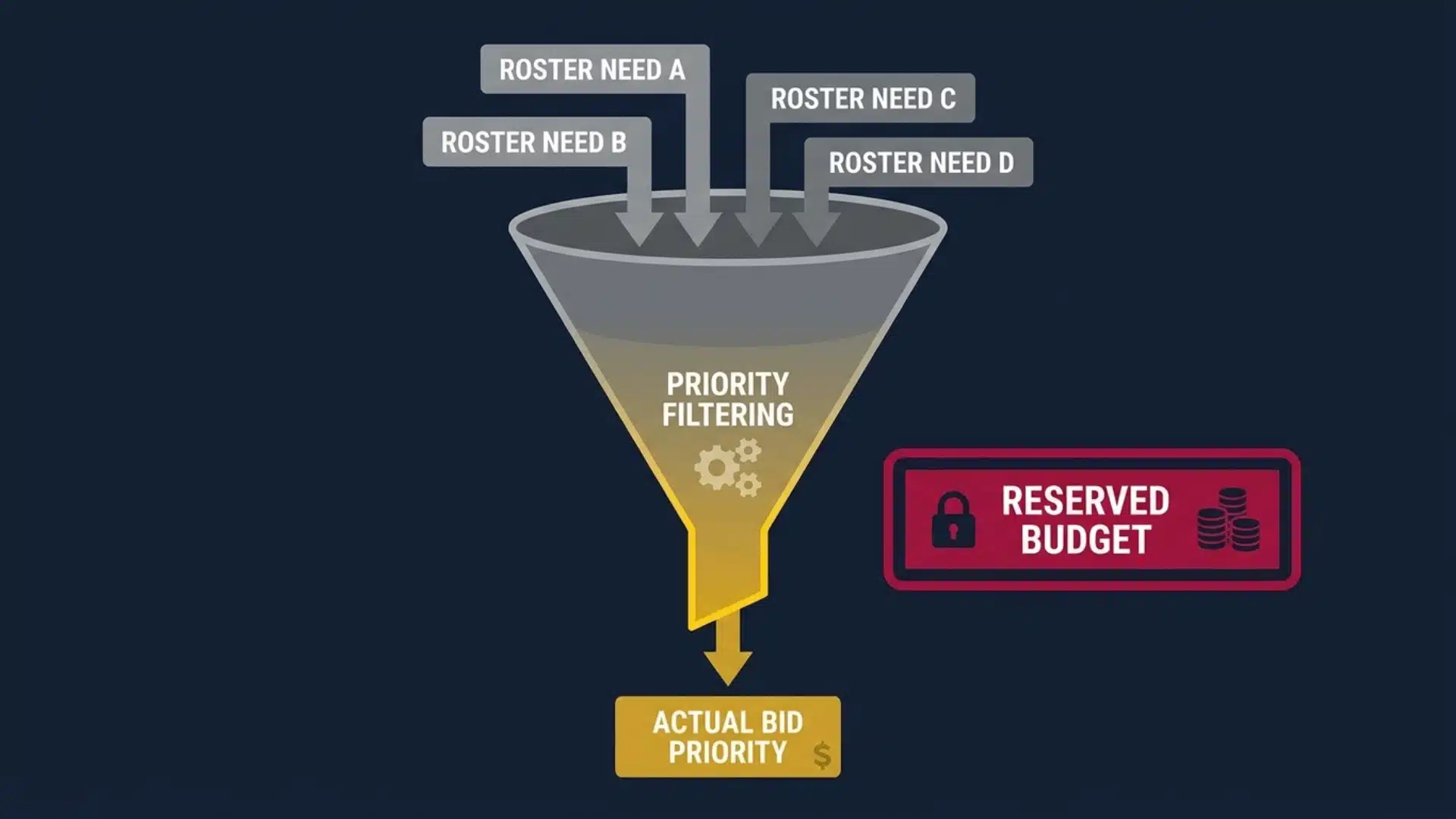
I rank my roster needs before every waiver period, not just my wish list. A weak flex spot gets priority over adding a third-string tight end I might never start.
I also hold back some budget for later in the season, since eliminated rosters often include real difference-makers by November and December.
Spending everything early can leave me stuck when a genuine star hits the wire later on.
Weekly Lineup Strategy to Avoid the Chop
Your draft and waiver moves only matter if you set the right lineup every week. I’ve watched managers build a great team, only to be sent to the Guillotine over one careless mistake.
- Managing Bye Weeks Strategically: Bye weeks in the 2026 season run from Week 5 through Week 14, with no team resting in Week 12 due to the Thanksgiving schedule. Week 11 is the most crowded, with six teams off at once.
- Building a Low-Variance Starting Lineup: I build my lineup around players who touch the ball a lot, not players who need one big play to score. A running back with 18 carries gives me a safer floor than a receiver waiting on a deep touchdown. I avoid starting rookies or backups in a featured role unless I have no other choice, since unproven players carry more week-to-week swing than my season can afford.
- Tracking Projected Low Scores Before Locks: Some platforms, like Yahoo, actually show you where your team stands before kickoff. They label teams Safe if projected in the top third that week, At Risk if you’re in the middle third, and On the Block if projected to finish last. I check this every single week before games lock, since it tells me where I need a last-minute change.
Where to Play Guillotine Fantasy Football
Guillotine leagues aren’t available everywhere, so picking the right platform matters before your draft. Some sites built dedicated tools for the format, while others need manual setup.
1. Yahoo Fantasy Guillotine Leagues
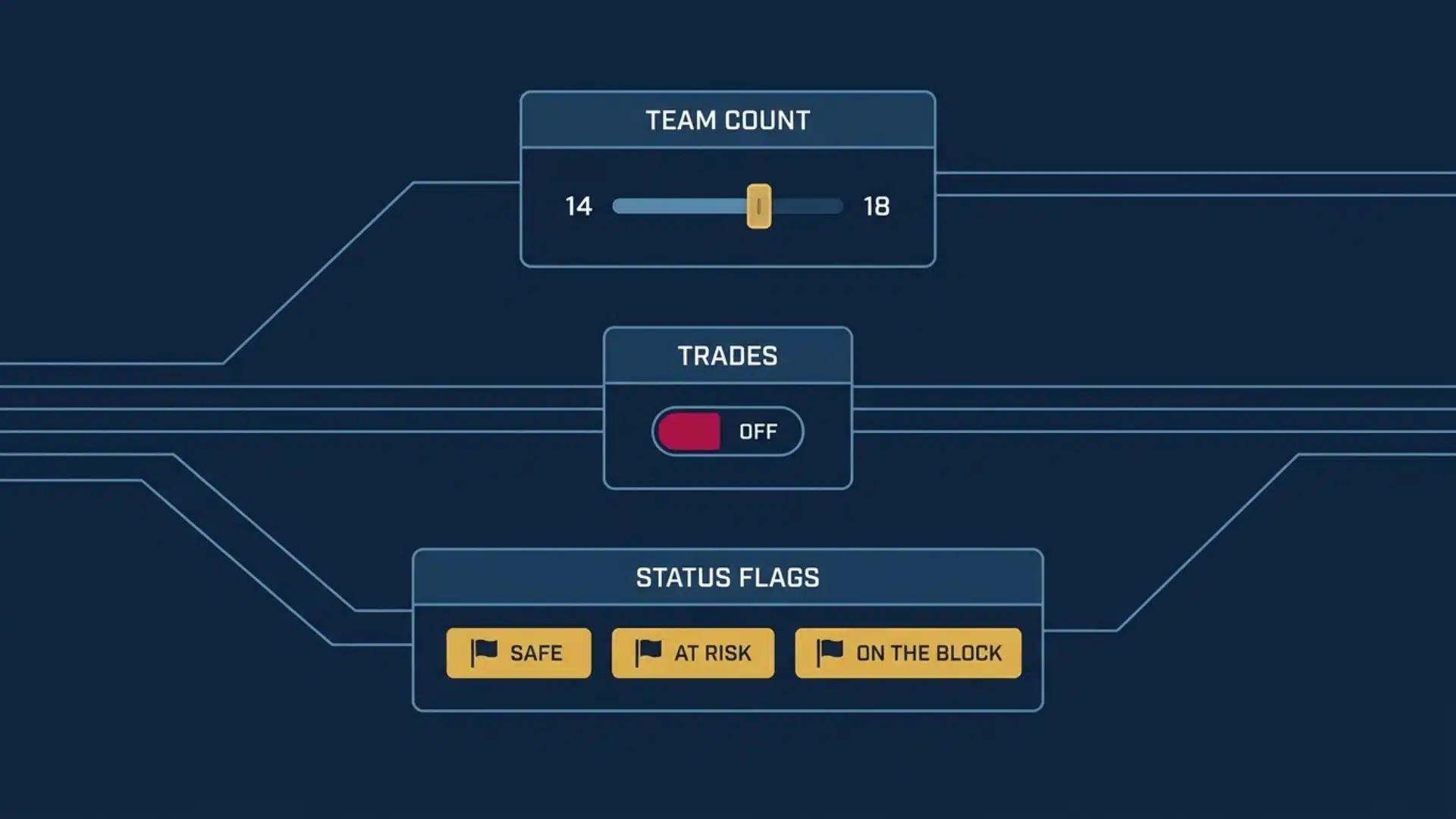
As of this season, Yahoo’s public guillotine setups default to 14 teams, while private leagues can go up to 18. It’s worth double-checking your league settings before draft day, since platforms do update these over time.
Yahoo also flags your team as Safe, At Risk, or On the Block each week, so you always know exactly where you stand before games lock.
2. Sleeper Guillotine Format
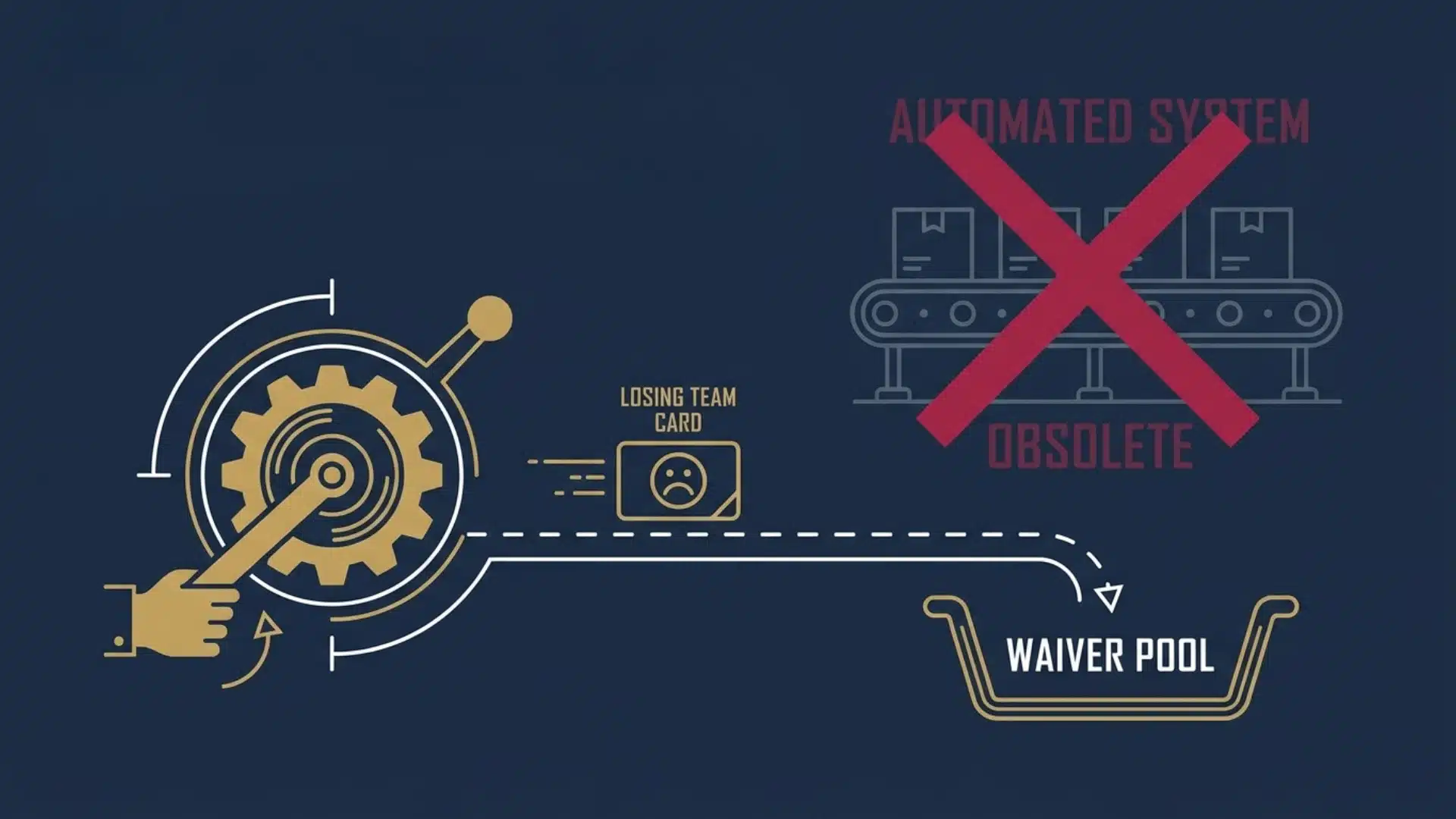
Sleeper doesn’t have a built-in guillotine mode, so your commissioner has to manually identify the lowest-scoring team and force-drop that roster to waivers every week.
Most Sleeper guillotine leagues run 14- to 16-player rosters and skip kickers and defenses, since both score too unevenly for this format.
The FAAB budget tends to run higher than normal, since an entire roster hits the wire almost every week.
3. Private and Custom League Platforms
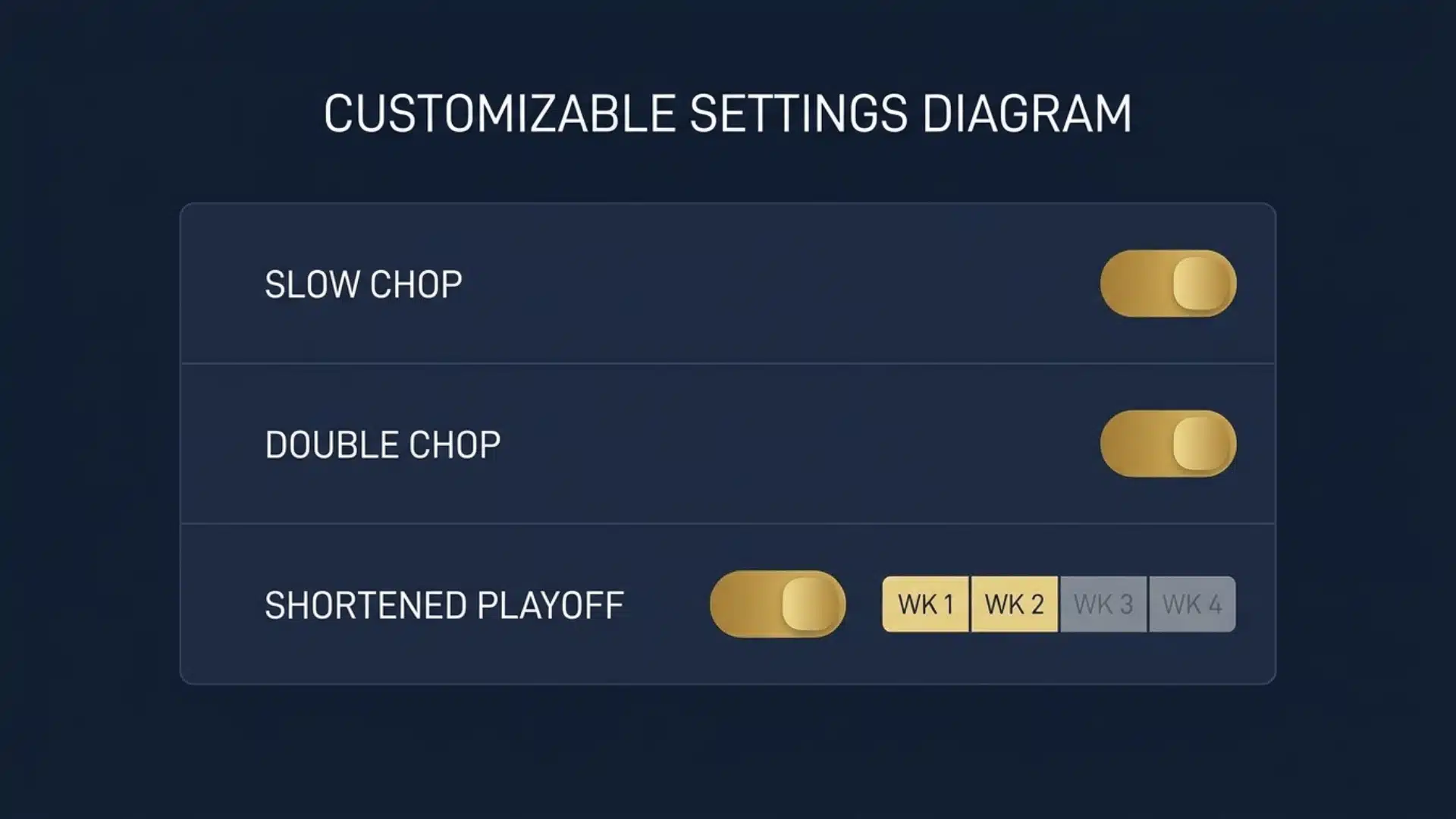
Guillotineleagues.com is a site built only for this format, with no other league types offered at all.
It runs both fast and slow drafts, and commissioners can pick different cut settings, including a slow chop or a double chop in the same week.
There’s even a Guillotine version made just for the playoffs, using a shortened four-week format with no bench spots at all.
Final Thoughts
Here’s the truth about guillotine leagues: the winner usually isn’t the flashiest drafter. It’s the manager who plans. I’ve watched patient rosters outlast flashy ones again and again.
Rank your players for steady weeks, not big ceilings. Build a roster that can survive Week 1, even if it means picking a side in the running back-versus-receiver debate.
Budget your FAAB like real money, because by December, it basically is. And never stop working the waiver wire. Your bench isn’t your safety net here. The free agent pool is.
Got a draft coming up? Save this guide, pull up your rankings, and build a team that’s built to last.
Frequently Asked Questions
Are Trades Allowed in Guillotine Leagues?
Not usually. Most guillotine leagues, including Yahoo’s built-in format, block trades by default. Private leagues can turn trading on if the whole group agrees.
What Happens to Your Team After You Get Eliminated?
Your season ends right there, with no consolation bracket. Your entire roster gets released to the waiver wire for the surviving teams to pick apart.
How is a Guillotine League Different from a Survivor Pool?
Survivor pools have you pick one NFL team to win each week, and you can’t pick the same team more than once. Guillotine eliminates based on your fantasy roster’s total points instead.