



A drag route is a shallow crossing route in football. A receiver runs flat across the field, usually 3 to 5 yards past the line of scrimmage.
The throw is quick, but the route isn’t just a checkdown. When timed right, the receiver catches in stride and gains yards after the catch.
That is why coaches keep using it.
A good drag route makes defenders react before tackling, forcing linebackers to widen, nickel defenders to chase, and safeties to move toward short throws.
Spacing matters in mesh designs; NFL rules prohibit contact more than 1 yard downfield, so a drag route must create traffic without turning into an illegal screen.
A drag route is when a receiver runs across the field on a short path, giving the quarterback an easy throw while the defender has to chase.
How a Drag Route Works in a Passing Play
A drag route runs through three steps:
- Release from the formation, inside or outside
- Flatten into a shallow stem around 3 to 5 yards
- Work sideways across the field at a steady pace
The quarterback throws it on rhythm, usually off a three- or five-step drop, leading the receiver so he catches it moving.
- Receiver’s job: hold the depth, stay flat, find the quarterback early
- Quarterback’s job: lead the route, throw before the defender closes
Get either piece wrong, and the timing breaks down fast.
| Mistake | Quick Fix |
|---|---|
| Receiver drifts too deep | Hold the depth at 3 to 5 yards |
| The quarterback throws behind the receiver | Lead the receiver ahead of his path |
| Route spacing ruins timing | Rep spacing until crossers stay tight but clean |
How a Drag Route Beats Man and Zone Coverage
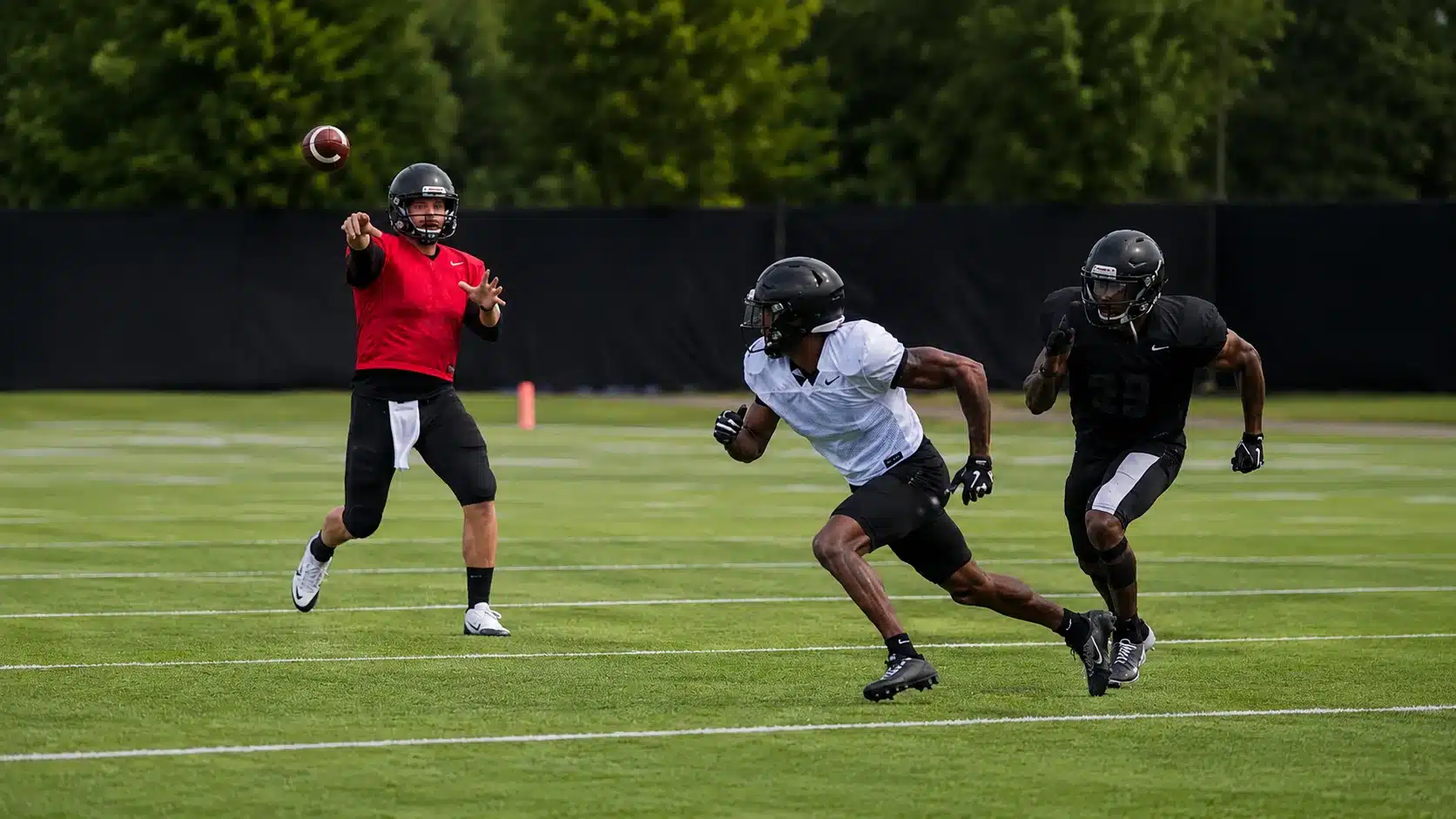
A drag route attacks coverage in two different ways:
- Man coverage: forces a defender to chase through traffic near the mesh point, where incidental contact can spring the receiver open
- Zone coverage: stretches underneath defenders sideways, forcing linebackers and safeties to widen their drops and opening throwing lanes behind them
Either way, the defense gives up ground somewhere on the field, and each position feels it differently:
- Linebacker: a low-high conflict when the drag route pairs with a deeper dig route. Step down to stop the drag route, and the dig opens behind him
- Nickel defender: a footrace through the mesh point, where incidental contact is legal but a deliberate screen is not
- Safety: a pull on his eyes toward the line of scrimmage, which can delay his reaction to a deeper route developing behind it
Expert Note: Against man coverage, watch the defender’s path. If he has to run around traffic, the drag route has already helped the offense.
When Should an Offense Call a Drag Route?
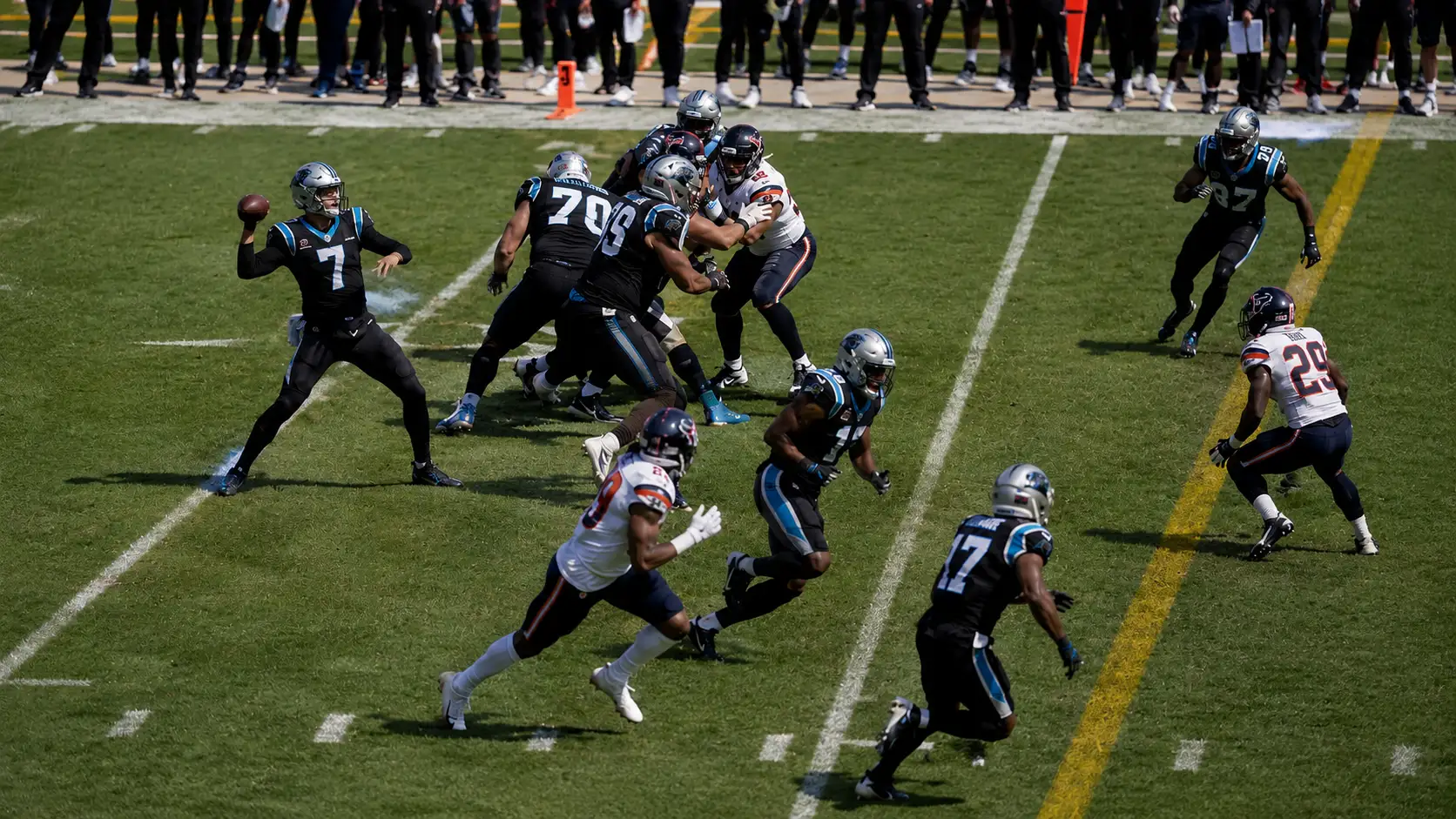
An offense should call a drag route when it needs a quick throw with room after the catch. It works best when the defense is chasing, blitzing, or leaving space underneath.
| Situation | Why the Drag Route Works |
|---|---|
| Third-and-short | Gives the quarterback a quick throw near the first-down marker. |
| Against a blitz | Let the quarterback release the ball before pressure arrives. |
| Against man coverage | Forces the defender to chase the receiver across the field. |
| Against off-man coverage | Allows the receiver to build speed and run into open space. |
| With a dig route | Pulls the linebacker down, opening space behind him. |
| On play-action | Let the receiver cross behind linebackers as they react to the run fake. |
| Late in the play clock | Develops quickly without needing long pass protection. |
Coaches lean on the drag route when they want a low-risk call that still threatens real yardage after the catch.
How Defenses Adjust to Stop a Drag Route
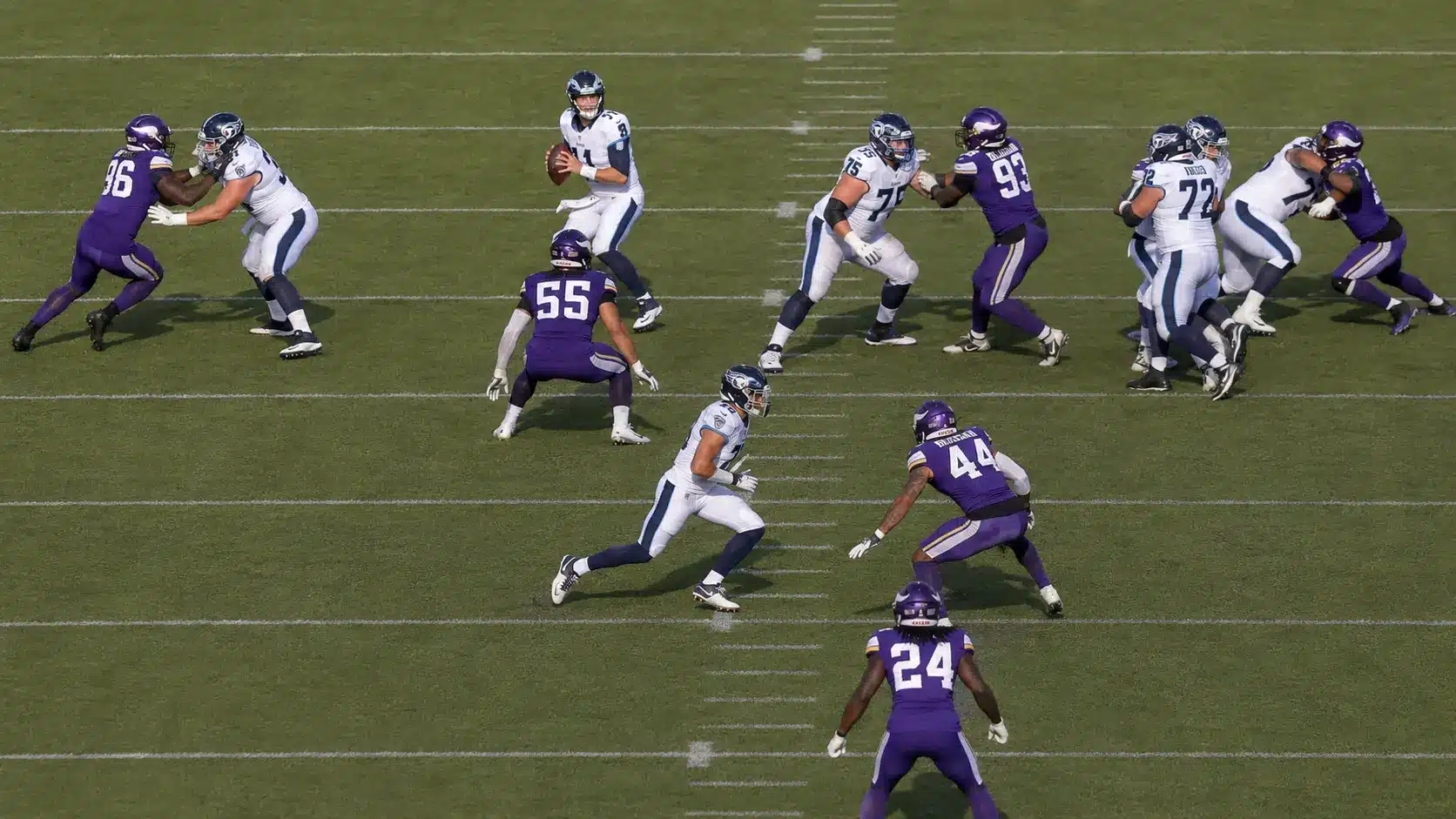
Defenses do not just react to a drag route. They build specific answers into the game plan before the snap.
- Press at the line: jams the receiver early and disrupts the timing of the release
- Rob the middle: a defender sits in the shallow middle and reads the quarterback’s eyes
- Lower the safety: adds extra depth support underneath instead of staying over the top
- Tighten zone spacing: shrinks the throwing window between underneath defenders
- Pass off the crosser: defenders switch coverage cleanly instead of chasing across the whole field
None of these adjustments stop a drag route completely. They just shrink the space and raise the risk on the throw.
Good tackling and communication decide whether the adjustment actually works.
Drag Route Vs Slant Route and Crossing Route
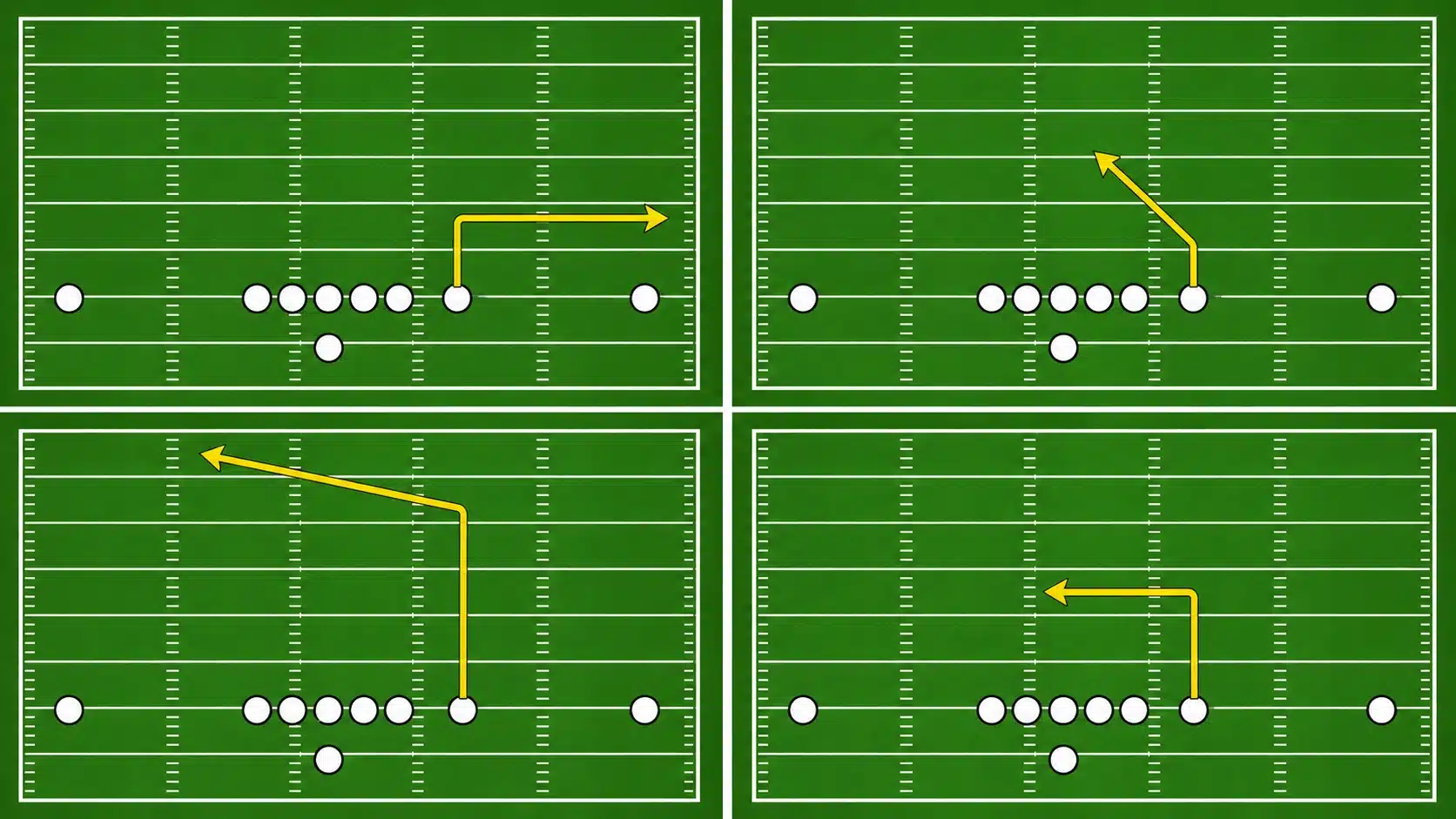
A drag route, a slant route, and a crossing route all attack different spaces.
A slant breaks at a sharp angle near the line.
A drag route stays flat and horizontal a few yards deeper.
A deep crossing route runs the same idea 8 to 15 yards downfield and takes longer to develop.
| Route | Depth | Direction | Best Use | Main Risk |
|---|---|---|---|---|
| Drag route | 3 to 5 yards | Flat, horizontal | Quick rhythm throw, YAC vs man or zone | Drifts too deep or too slow |
| Slant route | 3 to 6 yards | Sharp diagonal | Beating off-man or press coverage | Undercut by inside leverage |
| Deep crossing route | 8 to 15 yards | Horizontal to diagonal | Attacking the intermediate middle | Longer to develop, coverage rallies |
| Dig route | 10 to 15 yards | Sharp inward break | High-low stress with a drag route | Needs time, exposed to pressure |
Drag Route in Mesh Concepts and Air Raid Offense
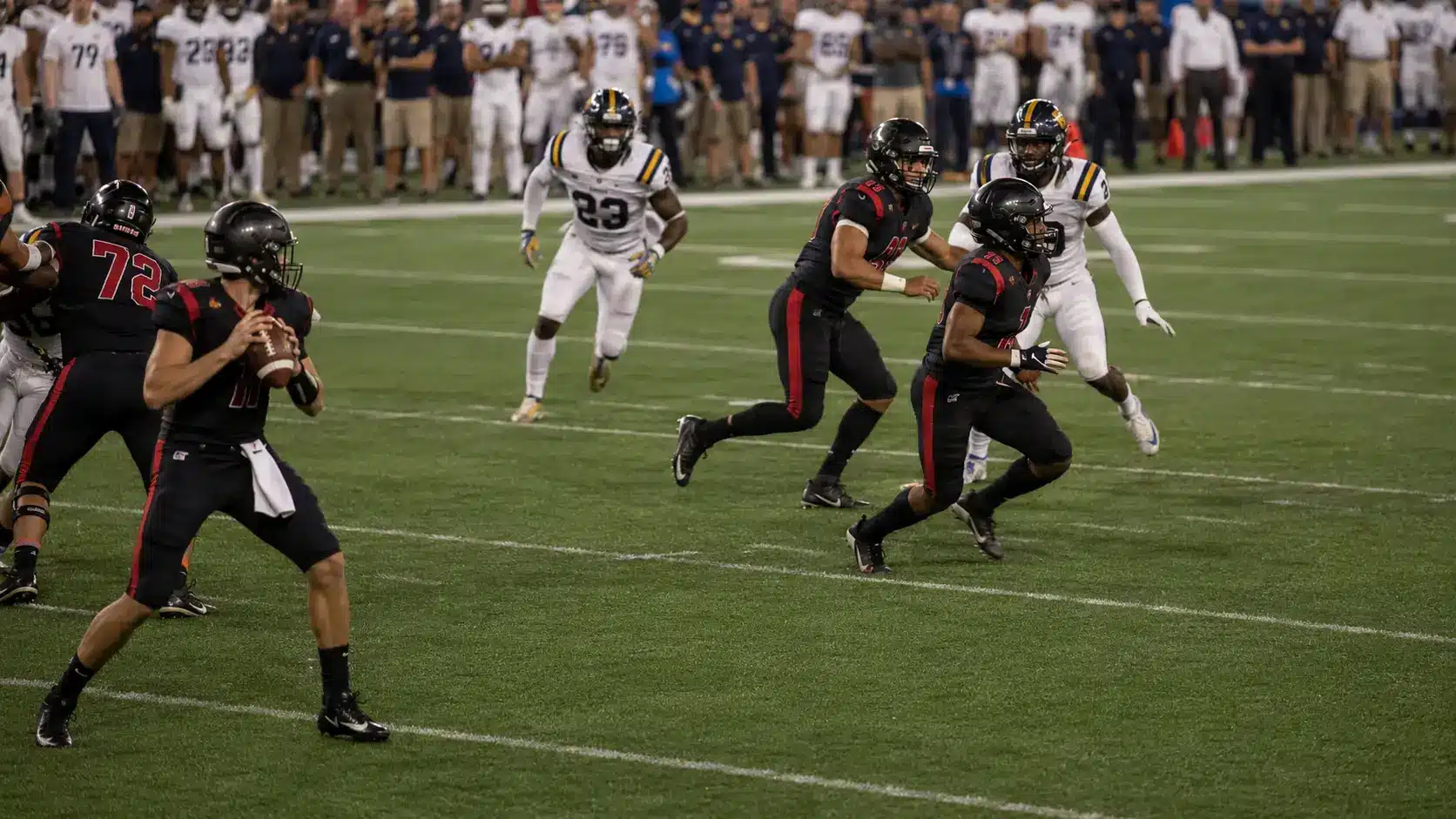
A drag route gets dangerous inside mesh concepts, where two shallow crossers run close together near the line of scrimmage.
The traffic they create forces trailing defenders to fight through bodies, slowing man coverage even when a receiver never throws a real block.
The mesh concept has strong Air Raid roots, built around getting the ball out fast on quick, repeatable reads.
That traffic has a legal limit. According to NFL Football Operations rules, pass interference covers contact more than one yard past the line of scrimmage. That contact must significantly hinder a player’s chance to catch the ball.
- Legal: incidental contact during a natural crossing route
- Illegal: a receiver deliberately screening a defender to spring a teammate open
Rule Reminder: A mesh route should create traffic, not contact. The receiver has to keep running his route instead of screening the defender.
Why the Drag Route Still Works in Football
A drag route still works because it turns simple spacing into a real problem for a defense. It stays shallow, moves fast, and gives the quarterback a clean rhythm throw before pressure can arrive.
When the receiver catches it in stride, a short pass can turn into useful yards after the catch.
The route also stresses defenders at every level. Linebackers must choose between closing on the drag or protecting the dig behind them.
Nickel defenders have to chase across traffic. Safeties can get pulled toward short throws and react late to deeper routes.
That is why coaches keep calling it. If the timing and spacing are right, the drag route stays simple for the offense and stressful for the defense.
Frequently Asked Questions
Is a Drag Route Good Against Man Coverage?
Yes, a drag route works well against man coverage because the defender has to chase across traffic, which can create quick separation.
How Many Yards is a Drag Route?
Most drag routes run 3 to 5 yards past the line of scrimmage, keeping the throw quick and easy to time.
Can a Tight End Run a Drag Route?
Yes, tight ends can run drag routes. Their size helps them shield defenders while crossing underneath linebackers and safeties.
Is a Drag Route the Same as a Mesh Route?
No, a mesh route is a play concept. It often uses two drag routes crossing near the middle of the field.
Why Do Quarterbacks Like Drag Routes?
Quarterbacks like drag routes because they create fast throws, clear reads, and chances for yards after the catch.