



Football looks chaotic until someone explains the pattern behind it. Players crash into each other, whistles blow, and the crowd roars. It can feel like too much to follow at once.
New fans often nod along without knowing what just happened. But once you understand how football works, the chaos turns into a clear story. Every play has a purpose.
Every rule shapes a decision. You don’t need to memorize a thick rulebook to enjoy the game. You just need the basics explained in plain words.
Soon you’ll spot patterns other viewers miss. Grab a seat, because football is about to make total sense.
What is American Football?
American football is a strategic, physical game played between two teams. One team plays offense and tries to score points. The other team plays defense and tries to stop them.
The main goal is scoring more points than the other team before time runs out. Teams move the ball by running or passing toward the end zone.
A touchdown is worth six points and ends most scoring drives. Each team has eleven players on the field during a play.
Full rosters carry many more players for offense, defense, and special teams. Players switch in and out often, since each role needs different skills and strengths.
Understanding the Football Field

To follow the action in American football, it’s important to understand the layout of the field. The markings, zones, and boundaries help determine field position, scoring opportunities, and game strategy.
Once you’re familiar with the key areas of the field, concepts like first downs, yardage, and touchdowns become much easier to understand.
Football Field Dimensions and Layout
A standard American football field is 100 yards long between the goal lines and 53.3 yards wide. At each end of the field is a 10-yard end zone, bringing the total length to 120 yards.
The field is marked with yard lines every five yards and numbered every 10 yards. These markings help players, coaches, officials, and fans track the ball’s location and measure progress during a drive.
Key Areas of the Field
To better understand how the game works, it’s important to become familiar with the key areas of a football field and the role each one plays during gameplay.
- End Zones: Located at both ends of the field, the end zones are where teams score touchdowns. Each end zone is 10 yards deep.
- Goal Lines: These lines separate the playing field from the end zones. A touchdown is scored when the ball crosses the opponent’s goal line.
- Sidelines: Running along both sides of the field, the sidelines mark the boundary of play. A player is considered out of bounds when they step on or beyond these lines.
- Hash Marks: These short lines near the center of the field indicate where the ball is placed to begin the next play after the previous one ends.
- Goalposts: Positioned at the back of each end zone, goalposts are used for field goal attempts and extra-point kicks after touchdowns.
Why Yard Lines Matter
Yard lines play a crucial role in tracking field position throughout the game. Officials use them to determine how far a team has advanced and whether it has gained enough yards for a first down.
Coaches also rely on field position when making strategic decisions about punting, attempting field goals, or taking risks on fourth down. Controlling territory often gives teams a significant advantage.
Common Football Terms Every Beginner Should Know
Football has its own language that can confuse new fans at first. Learning a few key terms makes the game much easier to follow:
| Term | What It Means | Who It Affects |
|---|---|---|
| Line of Scrimmage | The line where the ball is placed before each play starts | Offense and defense |
| Red Zone | The area near the goal line where scoring chances are high | Mostly the offense |
| Sack | A tackle on the quarterback behind the line of scrimmage | Quarterback and offense |
| Penalty | A rule violation that costs a team yards or a down | Whichever team breaks the rule |
These terms show up in almost every game you watch. Once you know them, commentary and strategy start to make a lot more sense.
The Basic Rules of American Football
American football runs on a set of basic rules that shape every play. Knowing these rules helps you understand why officials make certain calls:
- Only One Forward Pass is Allowed Per Play: The offense may throw one forward pass during a play, and it must be thrown from behind the line of scrimmage.
- The Ball Carrier can be Tackled: Defenders can stop a play by tackling the player carrying the football.
- Touchdowns and Field Goals Score Points: Teams earn points by scoring in the opponent’s end zone or by kicking the ball through the goalposts.
- Possession can change through Turnovers: A team can lose possession by throwing an interception, fumbling the ball, or failing to gain enough yards on fourth down.
- Penalties Result in Yardage Gains or Losses: Rule violations such as offside, holding, or pass interference can move the ball forward or backward, affecting the outcome of a drive.
- The Team with the Most Points Wins: At the end of regulation time, the team with the higher score is declared the winner. If the score is tied, overtime rules may apply.
These rules form the backbone of every football game you watch. Once you know them, plays and penalties start to make a lot more sense.
What are Downs in Football?
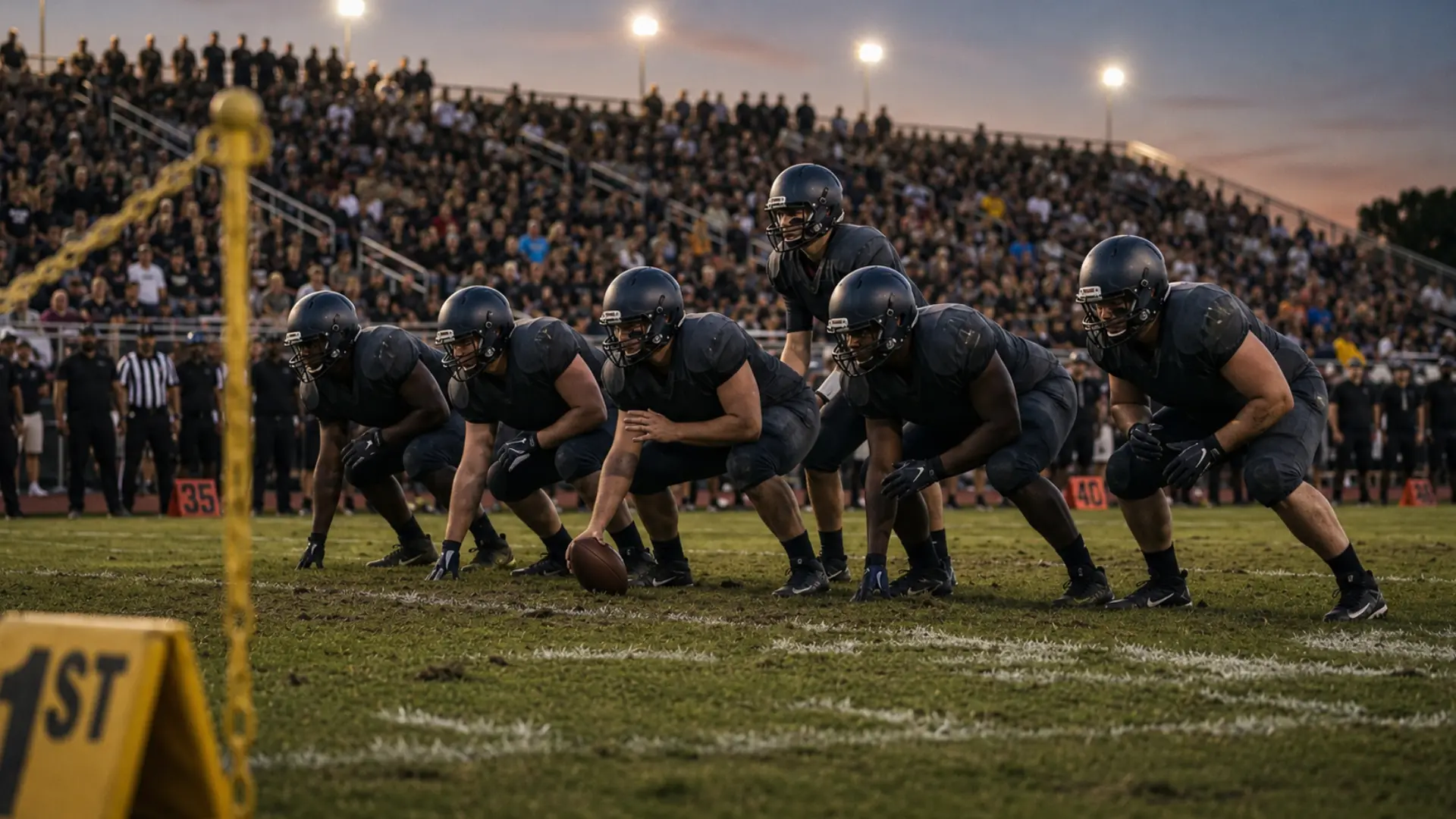
Downs are the system used to determine how long an offensive team can keep possession of the ball. To continue its drive, the offense must gain 10 yards within four plays (downs).
If it succeeds, it receives a new set of four downs and continues moving toward the opponent’s end zone. Here’s how the down system works:
- First Down: The offense begins with four opportunities to gain 10 yards.
- Second Down: If the team doesn’t gain all 10 yards on the first play, it gets another attempt.
- Third Down: The offense continues trying to reach the 10-yard target.
- Fourth Down: This is the final chance to gain the required yards before possession is typically lost.
If a team reaches the required 10 yards at any point, it earns a new first down, resetting the count and giving it another four attempts.
When teams reach fourth down, they may choose to go for the remaining yards, punt the ball, or attempt a field goal, depending on the game situation.
How Scoring Works in American Football
Scoring points is the main goal in every football game you watch. Teams use several plays to earn points, each with its own value:
| Scoring Method | What It Means | Points Awarded |
|---|---|---|
| Touchdown | A player carries the ball into the opponent’s end zone or catches a pass there | 6 Points |
| Extra Point Kick | A kick through the goalposts after a touchdown | 1 Point |
| Two-Point Conversion | A team runs or passes the ball into the end zone after a touchdown instead of kicking | 2 Points |
| Field Goal | A player kicks the ball through the goalposts during regular play | 3 Points |
| Safety | The defense tackles the offense in its own end zone or forces certain penalties there | 2 Points |
Each scoring method plays a role in shaping game strategy. Knowing these point values helps you understand why teams make certain choices late in a game.
Key Football Positions for Beginners
Football has many positions, but beginners only need a few to follow most plays. These key roles explain who throws, runs, catches, blocks, and defends:
- Quarterback (QB): Leads the offense, throws passes, hands off the ball, and makes play decisions.
- Running Back (RB): Carries the ball on running plays and can also catch short passes.
- Wide Receiver (WR): Runs routes and catches passes from the quarterback.
- Tight End (TE): A versatile player who helps with both blocking and receiving.
- Linebacker (LB): Helps stop running plays, pressures the quarterback, and defends against passes.
- Defensive Back (DB): Covers receivers, breaks up passes, and looks for interceptions.
Knowing these positions helps you spot each player’s job during a game. Once you learn their roles, the action on the field starts to make sense.
Offense vs Defense: What Sets Them Apart
Every football game is a battle between two very different units. Offense and defense each have their own goals and jobs on the field:
| Aspect | Offense | Defense |
|---|---|---|
| Main Goal | Move the ball and score points | Stop the offense and prevent scoring |
| Possession of the Ball | Has possession of the football | Tries to regain possession |
| Primary Responsibilities | Running plays, passing plays, and gaining yards | Tackling players, defending passes, and forcing mistakes |
| Objective for each Play | Advance toward the opponent’s end zone | Prevent the offense from gaining yards |
| How They Create Success | Score touchdowns and field goals | Force punts, fumbles, and interceptions |
These two units work against each other on every single play. Understanding their goals makes it much easier to follow game strategy.
How a Football Game Plays Out: Step-by-Step Process
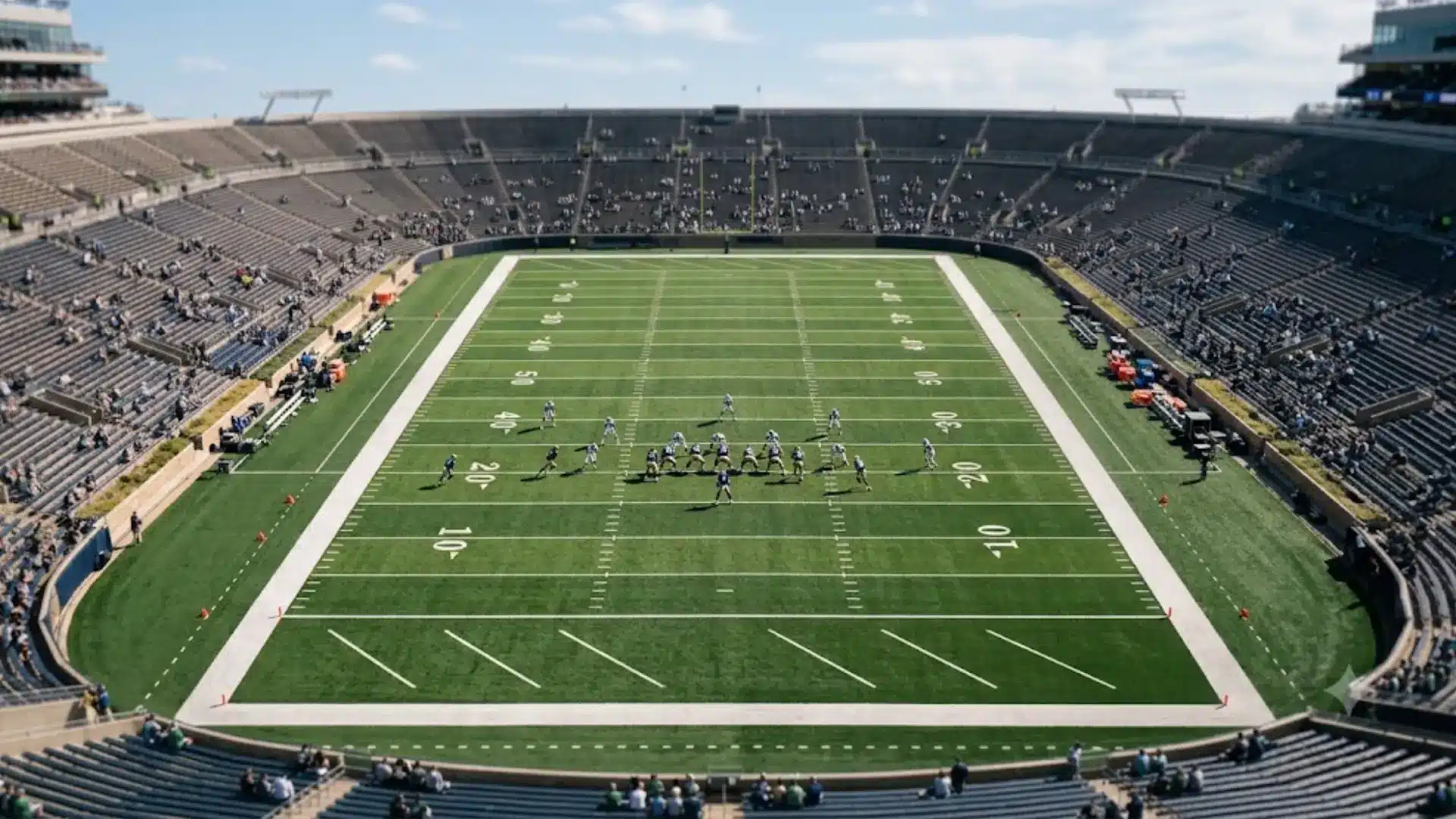
A football game follows a set pattern from start to finish. Here is how each part of the game comes together:
Step 1: Kickoff and First Possession
Every football game begins with an opening kickoff, where one team kicks the ball to the other. The receiving team attempts to return the kick and gain as much yardage as possible before being stopped.
Once the play ends, the offense takes possession and begins its first drive. The starting field position gained from the kickoff can influence early strategy and the aggressiveness with which a team approaches its opening plays.
Step 2: Offensive Drive
The offense begins its drive by moving the ball downfield with a combination of running and passing plays.
Teams aim to gain enough yards to earn first downs, maintain possession, and advance toward the opponent’s end zone.
Coaches select plays based on field position, game situation, and defensive alignment. A successful drive can result in points or at least improve field position for future possessions.
Step 3: Defensive Response
While the offense attempts to advance the ball, the defense works to stop that progress. Defensive players make tackles, defend passes, pressure the quarterback, and try to prevent first downs.
A strong defensive series can force the offense to punt, lose possession through a turnover, or settle for fewer points than expected.
Successful defensive plays often shift momentum and create opportunities for the opposing offense.
Step 4: Scoring and Possession Changes
When an offense reaches scoring range, it may score a touchdown or field goal. After points are scored, possession typically changes through a kickoff, giving the opposing team a chance to start its own drive.
Possession can also change through punts, turnovers, or unsuccessful fourth-down attempts.
This ongoing cycle of offense, defense, scoring, and possession changes continues throughout the game, shaping its overall flow.
Step 5: Final Minutes and Winning the Game
As the game enters its final minutes, teams often adjust their strategies based on the score and remaining time.
A team with the lead may focus on controlling the clock, while a trailing team may take more risks to score quickly.
Coaches carefully manage timeouts, play selection, and field position during this stage. When the final whistle sounds, the team with the most points is declared the winner.
Game Timing and Structure
A football game is built around set time blocks and breaks. Here is how the game is divided from start to finish:
| Structure | What It Means | Time Length | When It Happens |
|---|---|---|---|
| Four Quarters | The game is split into four separate playing periods | 15 minutes each | Throughout the entire game |
| Halftime Break | A longer break for teams to rest and adjust strategy | Around 12 to 20 minutes | Between the second and third quarters |
| Overtime Rules | Extra time is played if the score is tied after regulation | Varies by league rules | Only when the game ends in a tie |
These time blocks give the game its rhythm and structure. Knowing them helps you follow when breaks happen and why extra time gets added.
What to Watch for During a Football Game

Football involves many moving parts, but you don’t need to understand every rule to enjoy the game.
By focusing on a few key elements, you can follow the action more easily and better understand how teams build drives, score points, and compete for field position throughout the game.
- Watch the Down and Distance: Pay attention to the down number and the yards needed for a first down, as these determine a team’s options on each play.
- Follow Field Position: Notice where the ball is on the field. Better field position often increases a team’s chances of scoring.
- Identify the Quarterback: The quarterback usually directs the offense and is involved in most plays, making them one of the easiest players to follow.
- Focus on How Teams Score: Keep track of touchdowns, field goals, and extra points to understand how teams build their score throughout the game.
- Don’t Worry About Every Penalty: Some penalties can be confusing at first. Focus on the overall flow of the game, and the details will become clearer with experience.
At the End
Football combines quick decisions, teamwork, and raw physical effort on every play. Once you know how football works, every snap makes sense.
Downs, yards, and scoring plays fit together like puzzle pieces. Watching becomes exciting instead of confusing. You can follow the quarterback, track the field position, and predict what happens next.
Even penalties stop feeling random once you learn the reasons behind them. Football rewards patience and attention, not just knowledge of stats.
Keep watching a few games, and the details will click naturally. Share this with a friend who still feels lost during game day. Drop your favorite football term in the comments below.
Frequently Asked Questions
Why do Football Teams Change Players so Often?
American football uses specialized offensive, defensive, and special teams units. Frequent substitutions allow teams to put the best players on the field for specific situations.
What do Coaches do During a Game?
Coaches make strategic decisions, call plays, manage timeouts, adjust tactics, and respond to the opponent’s strengths and weaknesses throughout the game.
Why is Field Position Important in Football?
Field position affects scoring chances and strategy. Teams closer to the opponent’s end zone generally have a better opportunity to score points.
Do You Need to Know Every Rule to Enjoy Football?
No. Most fans start by understanding possession, scoring, and downs. The finer details become easier to learn through watching games regularly.