


Football fans toss around plenty of terms that sound made up at first. One word that trips people up quickly is “edge”. Understanding the edge football position clears up so much confusion about defense.
You hear it during broadcasts, in draft coverage, and across stat sites. Coaches use it, scouts use it, and fans repeat it without always knowing why.
This term groups together players who look different but share the same main job. You will see how alignment, skill, and scheme all shape this role.
By the end, edge will feel less like jargon and more like plain football sense. Get ready to see the game through a sharper lens.
What Position is Edge in Football?
Edge is a simple word for a specific job on defense. An edge player lines up near the outside of the offensive line. This spot is close to the tackles, right where pass plays often start.
Most of the time, “edge” refers to a pass-rushing defensive end or an outside linebacker. It is more of a role label than an official position name.
Teams, analysts, draft boards, and stat sites all use it because defenses run so many different schemes.
You might see edge players as defensive ends in a four-three, outside linebackers in a three-four, or stand-up rushers in hybrid fronts.
PFF even uses “Edge Defender” as its own position category for grades and snap counts, showing how mainstream the term has become.
Why is It Called the Edge Position?
The name “edge” comes from where a player stands and what he does there. It points to both his spot on the field and his main job.
1. Alignment and the Edge
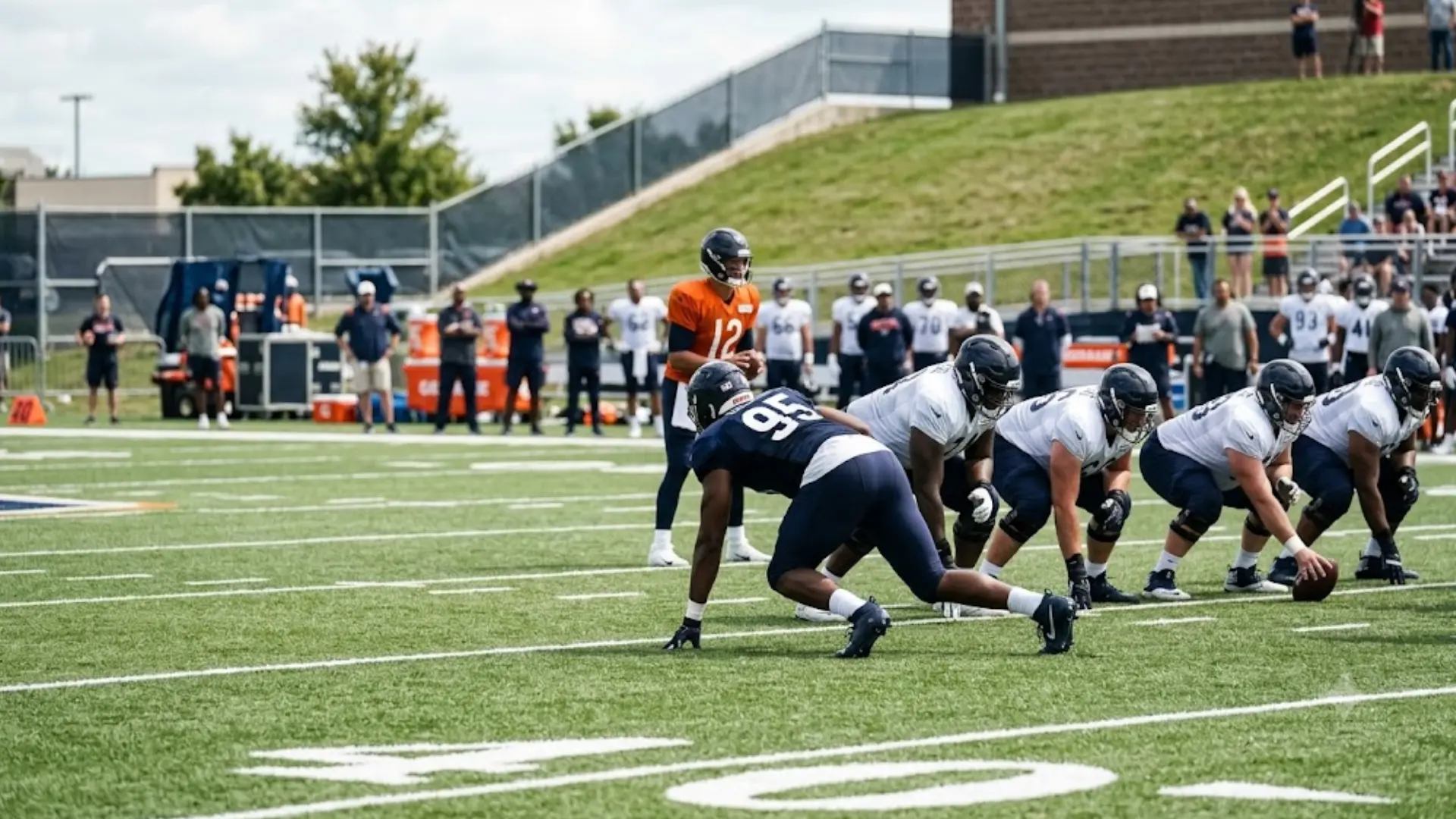
The edge is the outside area of the line of scrimmage. It usually sits outside the offensive tackle or tight end. This spot sits away from the crowded middle of the line.
From here, a player has an open lane to the quarterback. He attacks from the outside rather than pushing through the middle.
That angle gives him room to use speed instead of pure strength. It is a clear choice for alignment, not a random spot.
2. The Player’s Job and the Name
Edge players try to beat blockers around the outside. Their path to the quarterback often starts from the widest point of the defensive front. Speed and quick angles matter more here than raw power.
They bend around tackles and race toward the pocket. Edge players also “set the edge” against outside runs.
This means they hold their ground so runners cannot escape outside. Both jobs, rushing and containing, define what “edge” really means.
3. Edge Versus Defensive End
A defensive end is a traditional position label. Edge can include defensive ends and outside linebackers. This makes “edge” a broader term than “defensive end” alone.
The term focuses on where the player lines up and what they do. It does not care about the exact position title.
A three-four outside linebacker and a four-three end can both be edge players. That is why teams use “edge” so often today.
When Did the Term ” Edge” Start Being Used in Football?
The word “edge” did not always exist in football. It grew out of older labels as the game changed over time.
Old Labels Before “Edge”
Older football language used fixed labels for pass rushers. These labels worked when defensive schemes were easier to separate. Here are the terms coaches and fans relied on back then:
- Defensive end: lined up at the end of the line to rush the passer
- Outside linebacker: stood off the line and rushed from a wider angle
- Rush linebacker: focused mainly on pressuring the quarterback
- Stand-up end: played upright instead of using a three-point stance
Each label pointed to a single job in a single scheme. Coaches and fans understood exactly what each name meant.
Edge Growing With Defensive Changes
“Edge rusher” grew in use as NFL defenses mixed four-three and three-four looks. Many pass rushers no longer fit one clean old-school label. A player could rush like a defensive end on one snap.
On the very next snap, he might stand up like a linebacker. Teams needed a word that covered both situations at once. “Edge” became the word, since it described the role rather than a single scheme.
Media and Analytics Spreading the Term
Draft analysts needed a single bucket for pass rushers from different schemes. Sports media, NFL scouting reports, and grading platforms all helped spread the word.
- Draft analysts grouped pass rushers from different schemes under one label.
- Sports media used “edge rusher” in game coverage and player profiles.
- Grading platforms created stat categories built around the edge role.
- Betting and sports sites describe edge as a role label rather than a strict position name.
The phrase “edge rusher” is now used everywhere to refer to players whose primary job is to pressure the quarterback.
BetMGM notes that positional confusion around the edge label comes from different teams running different base defensive schemes.
Why did Edge Replace Older Position Labels?

Older labels no longer fit the way defenses actually play today. Several factors pushed the game toward one simpler term:
1. Defensive Schemes Became More Flexible
Four-three defensive ends and three-four outside linebackers often do similar jobs now. Both groups are asked to rush the passer from outside. Modern defenses also disguise their fronts before the snap.
Players move around before the play to create better pass-rush matchups. A single label could not keep up with all that movement. Edge became the simple fix for this problem.
2. Old Labels Did Not Fit Hybrid Players
Some players are too small for a classic defensive end role. They lack the bulk teams once required at that spot. Some players are too pass-rush-focused to be called regular linebackers.
They rarely drop into coverage as a true linebacker would. Edge became a cleaner term for these in-between defenders. It skips the debate over which old label fits best.
3. The NFL Draft Needed a Better Category
Draft boards often compare pass rushers from different college systems. Some prospects played defensive end, while others played outside linebacker.
Calling them all “edge” helps scouts fairly compare similar roles. It puts every pass rusher into one shared group.
This avoids confusion between defensive end and outside linebacker labels. Scouts can focus on skills instead of arguing over titles.
4. Analytics Focused More on Role than Depth Chart
Modern grading looks at pressure, pass-rush snaps, run defense, and alignment. These numbers matter more than whatever title a team uses. These are role-based metrics, not old-school position metrics.
They track what a player actually does on the field. That makes “edge defender” more useful than older labels in many contexts. Stat sites can group similar players regardless of listed position.
Edge Rusher vs Edge Defender: What is the Difference?
Edge rusher and edge defender sound alike, but they mean different things. The gap comes down to how wide each job really is:
| Term | Main Focus | Key Duties | Typical Use |
|---|---|---|---|
| Edge Rusher | Pressuring the quarterback | Beat the tackle, force hurried throws, get sacks | Used for pass-first players |
| Edge Defender | Full defensive role | Set the edge, tackle, contain quarterbacks, and handle tight ends | Used for complete, all-around players |
| Edge (general) | Overall category | Covers both pass rush and run defense | Used in drafts and general position talk |
Edge rusher fits best when the talk is only about pass rush. Edge defender fits better when someone means the whole job on defense.
What does an Edge Player do on the Field?
An edge player handles several jobs on every single defensive snap. These duties shift depending on whether it is a run or a pass:
- Rushes the quarterback by beating the tackle and collapsing the pocket
- Sets the edge against the run to stop outside runs from breaking wide
- Contains mobile quarterbacks by keeping them from escaping outside the pocket
- Drops into coverage at times to disguise blitzes and confuse the offense
- Stays disciplined in his rush lane instead of running too far upfield
Each duty demands a different mix of speed, strength, and smart decision-making. Together, these jobs make the edge one of the busiest roles on defense.
Where does the Edge Line Up?
The edge lines up on the outside part of the defensive front. Most of the time, this spot sits right outside the offensive tackle. From there, the edge player attacks the tackle’s outside shoulder on the snap.
When the offense uses a tight end, the edge may widen even further. This wider spot means handling run support and pass rush from a longer angle.
Some edge players stand up like linebackers before the snap starts. Others put a hand in the dirt just like defensive ends. Many modern edge players can do both, depending on the play call.
This flexibility makes the edge a key piece of every defensive front.
How does the Edge Role Change by Defensive Scheme?

The edge job does not look exactly the same in every defense. Here is how the role shifts between the two most common base schemes:
Edge in a Four-Three Defense
In a four-three front, edge players are often defensive ends. They line up at the end of the defensive line. Their job is to rush the passer, contain the pocket, and defend outside runs.
Four-three edge players often start in a three-point stance. They may be bigger than stand-up rush linebackers in other schemes. They often face offensive tackles directly on most snaps.
Edge in a Three-Four Defense
In a three-four front, edge players are often outside linebackers. They stand up outside the defensive line instead of using their hand down. Their main job can still be rushing the passer on most downs.
Three-four outside linebackers may drop into coverage on certain plays. They may rush on one snap and cover a flat zone on the next. This is one reason the older “linebacker” label can be misleading.
Is Edge an Official Football Position?
Edge is not always an official position on a team roster. Many teams still list players as defensive ends or linebackers instead. The word “edge” may not show up as the exact roster title everywhere.
Broadcasts and draft coverage use it anyway because it explains the role so well. It describes where a player lines up and what he is asked to do.
Different sites often disagree on labels, and that adds to the mix. A player might show up as DE on one site and EDGE on another. In the end, the actual role matters more than whatever label gets used.
Edge vs Defensive End vs Outside Linebacker
These three terms overlap, but they are not all the same thing. Here is how each label compares to the general term “edge”:
| Term | Relationship to Edge | Key Difference |
|---|---|---|
| Defensive End | Often included under the edge label | A traditional line position; not every defensive end is used the same way |
| Outside Linebacker | Sometimes included under the edge label | Only counts as edge if the player rushes often enough |
| Linebacker (general) | Rarely matches the edge role | Regular linebackers play off the ball; edge players line up closer to the line |
The real difference between these terms comes down to alignment and assignment. Edge simply groups together the players who line up wide and attack from the outside.
What Skills does an Edge Player Need?
Playing edge takes more than just size and speed. Here are the core skills every strong edge player needs:
- First-step quickness: helps the player beat the snap and threaten the tackle early
- Bend and flexibility: help the rusher turn the corner without losing speed
- Power: helps convert speed into force, useful against bigger offensive tackles
- Hand technique: helps shed blocks using swipes, chops, rips, clubs, and counters
- Run discipline prevents outside runs from breaking open and keeps the defense sound
- Motor and pursuit: keeps the player chasing plays from behind even after a failed rush move
These skills work together rather than standing alone on the field. A player who masters most of them can handle almost any assignment an edge role demands.
Why Edge Players are so Valuable in Modern Football?
NFL and college offenses throw the ball far more often than they used to. Defenses now need players who can disrupt the quarterback without sending extra blitzers.
A strong edge rush can force a bad throw before the play fully develops. It can wreck the timing between a quarterback and his receivers.
This pressure often leads to sacks, turnovers, and costly holding penalties. Elite edge players even shape how offenses plan their protection before the snap.
Teams may use tight ends, running backs, or slide protections just to slow them down. This extra attention can limit route options across the entire offense.
Even without a single sack, a great edge player can still control the game.
Examples of Edge Players in the Modern NFL
Seeing real NFL players makes the meaning of edge easier to understand.
Modern NFL teams use edge players in different defensive systems, but their main job is usually the same: pressure the quarterback from the outside.
- Parsons is often used as a modern edge rusher.
- He lines up outside, attacks the quarterback, and can also help against the run.
Maxx Crosby, Las Vegas Raiders
- Crosby is a strong example of a true edge player.
- He brings constant pressure from the perimeter and plays with high effort on nearly every snap.
Myles Garrett, Cleveland Browns
- Garrett is one of the clearest examples of an elite edge rusher.
- His quick first step, bend, strength, and hand technique show what scouts want in at player at the position.
These players may have different roster labels, such as defensive end or outside linebacker. What connects them is their role: they create steady outside pressure and disrupt the quarterback.
The Bottom Line
The edge football position shapes modern defense more than most fans realize. It combines speed, power, and smart alignment into one demanding job.
You now know why teams value this role so highly today. You also know how scheme and skill decide who plays edge best. This role continues to grow as offenses find new ways to attack.
Understanding it helps you watch games with sharper eyes and better instincts. Keep this knowledge handy the next time a broadcast mentions edge rushers.
Drop a comment below and share which edge player you rate the highest.
Frequently Asked Questions
What Does an Edge Rusher Do?
An edge rusher attacks the quarterback from outside the offensive line and tries to create sacks, hits, and hurried throws.
What Does It Mean to Set the Edge?
Setting the edge means stopping outside runs from getting wide and forcing the ball carrier back toward inside defenders.
Is an Edge Player a Linebacker?
Sometimes. In a three-four defense, many edge players are outside linebackers. In a four-three defense, they are often defensive ends.
Can an Edge Player Drop Into Coverage?
Yes. Some edge players, especially stand-up outside linebackers, may drop into short coverage zones on certain plays.